 Bellingham Siding
 Siding Built for Blaine's Coastal Exposure
Blaine sits at the northwest corner of Whatcom County, right on the water where Semiahmoo Bay meets the Strait of Georgia and the US-Canada border runs through town. That location is part of what makes Blaine a great place to live, and it's also exactly why homes here take a harder beating than houses twenty miles inland in Bellingham. Salt-laden air off the bay, wind-driven rain that comes in sideways off the water, and a long, damp moss season all work on exterior surfaces year-round. We've built our siding, roofing, window, and deck work around that reality rather than treating Blaine like a generic Pacific Northwest job site.
Homeowners in Blaine, and in nearby waterfront and near-water neighborhoods, tend to ask us the same core question in different words: what's actually going to hold up out here? That's the question this page answers.
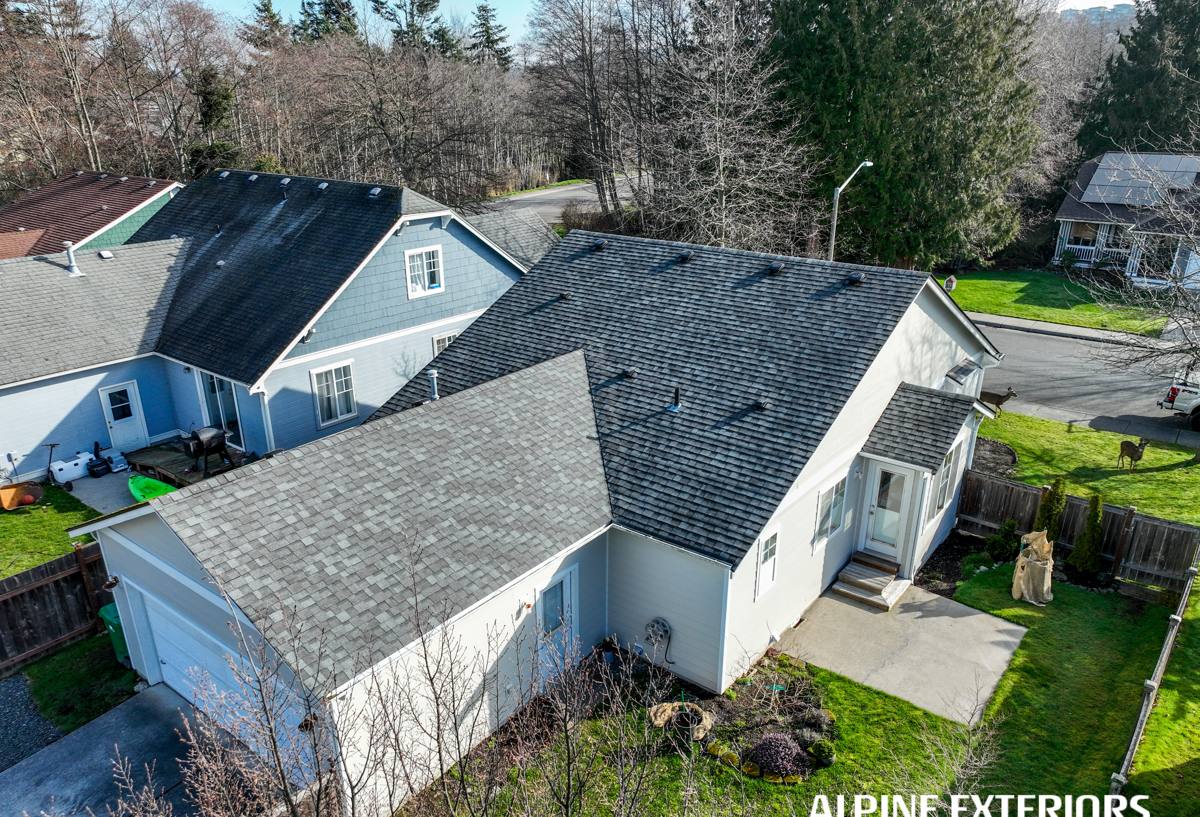
What Blaine's Climate Does to a House
Salt Air and Corrosion
Airborne salt from Semiahmoo Bay and the Strait doesn't just affect boats and dock hardware. It settles on siding, trim, fasteners, and flashing, and over years it accelerates corrosion on anything metal that isn't rated for a marine-adjacent environment. Cheap or mismatched fasteners are one of the more common failure points we find on older homes closer to the water — a siding system is only as good as the nails and flashing holding it together.
Driving Rain
Blaine gets wind off open water, and wind-driven rain behaves differently than a straight-down shower. It gets pushed up under laps, into butt joints, and around poorly sealed penetrations — windows, hose bibs, vents, deck ledgers. A siding and flashing system that's fine in a sheltered inland yard can leak within a few seasons on an exposed Blaine lot if it wasn't detailed for wind-driven moisture in the first place.
Moss and Prolonged Dampness
Whatcom County's long wet season means anything that stays damp — north-facing walls, shaded siding under mature trees, low decks with poor airflow underneath — grows moss and algae readily. On wood-based siding products, sustained moisture and organic growth are a direct path to rot. On fiber cement, it's mostly a cosmetic and maintenance issue, but it still needs to be accounted for in how a house is sited, trimmed, and washed.
Why We Install Only James Hardie Fiber Cement Siding
We made a decision as a company to install James Hardie fiber cement exclusively, and not vinyl, not LP SmartSide, not Cemplank, not Allura, and not primed spruce or cedar. That's not a marketing position — it's a standard we settled on after weighing how each of those products actually performs against the kind of exposure Blaine homes deal with.
What We Ruled Out, and Why
- Vinyl siding is affordable and low-maintenance in mild conditions, but it can distort in strong wind gusts and doesn't handle wind-driven rain intrusion behind the panel as well as a rigid, properly flashed fiber cement system. In a wind-exposed waterfront setting, that matters more than in a sheltered subdivision.
- LP SmartSide and other engineered wood products use treated wood strand technology and can perform well when maintenance stays current, but they remain wood-based — meaning cut edges, fastener penetrations, and any coating failure are entry points for moisture, and moisture is Blaine's dominant climate stress. We're not comfortable recommending a wood-based product for this level of salt and rain exposure.
- Cemplank and Allura are also fiber cement, and reasonable products in general terms. We standardized on Hardie specifically for its ColorPlus factory finish, its regional HZ5 engineering, and the depth of installer network and warranty support we can stand behind locally — consistency in one system lets us install it correctly every time rather than juggling install specs across brands.
- Primed spruce or cedar are traditional, attractive materials, but they need a disciplined repaint and recaulk cycle to keep water out, and that maintenance schedule is unforgiving in a marine climate. We'd rather put a product on a Blaine home that tolerates a missed maintenance year without rot setting in.
What Hardie Gets Right for This Location
James Hardie fiber cement is non-combustible, dimensionally stable in swings between wet and dry, and it holds its factory-applied ColorPlus finish far longer than field-applied paint on wood siding. The HZ5 product line is engineered for the wetter, harsher climate zones of the Pacific Northwest, which is exactly the profile of a Whatcom County waterfront town. It doesn't rot, it resists moisture intrusion at the panel itself, and the finish holds color without the repaint cycle that wood-based sidings demand.
How We Install Siding in Blaine
Assessment and Exposure Mapping
Every project starts with a walk-around that looks specifically at which walls take the worst of the wind and salt spray, where moss and staining are already showing, and where existing flashing and trim have failed. A wall facing open water gets different flashing detail attention than a sheltered side yard, even on the same house.
Water Management Comes Before Siding
Housewrap, window and door flashing, kick-out flashing at roof-wall intersections, and proper laps are what actually keep water out — the siding panel itself is the visible layer, but it's the second line of defense. We take the time to get flashing details right before the first piece of Hardie board goes up, because that's where most long-term leaks actually originate.
Fasteners and Hardware
Given the salt exposure, fastener choice matters more in Blaine than it does further inland. We use corrosion-resistant fasteners and hardware appropriate to coastal exposure, following Hardie's installation specifications for nailing patterns, clearances, and joint treatment.
Finish Work
Trim, caulking at penetrations, and touch-up on cut edges are finished to Hardie spec so the factory finish and the field work meet cleanly, without gaps that give moisture or salt air a way in.
Beyond Siding: Roofing, Windows, and Decks in the Same Climate
Siding doesn't work in isolation. A roof that's shedding granules or has failing flashing sends water down onto siding and trim it was never meant to handle. Windows with degraded seals let moisture into the wall cavity behind good siding. A deck built low to the ground without airflow underneath stays damp and grows moss, which then creeps onto adjacent siding and fascia. We handle all four — siding, roofing, windows, and decks — because in a climate like Blaine's, they're really one connected water-management system, not four separate products.
Common Signs a Blaine Home Needs Exterior Attention
- Soft or spongy spots on wood trim or siding, especially near ground level or under windows
- Persistent moss or dark streaking on north-facing or shaded walls
- Visible rust staining running down from fasteners or metal flashing
- Paint that's chalking, peeling, or failing faster than expected
- Gaps or separation at butt joints and corner trim
- Window frames that feel damp or show staining on interior sills after storms
- Deck boards that stay wet long after rain has stopped elsewhere on the property
Cost Factors for Blaine Exterior Projects
Every home is different, but the same handful of factors drive cost on most Blaine siding and exterior projects. We give firm numbers only after an on-site look, but this table covers what typically moves the estimate up or down.
| Factor | Why It Matters in Blaine |
|---|---|
| Wall exposure to wind and water | Waterfront and open-exposure walls need more flashing detail and labor time than sheltered walls |
| Existing damage or rot | Salt and moisture exposure often mean more substrate repair than an inland home of the same age |
| Home size and complexity | Corners, dormers, and trim detail add labor beyond straight square footage |
| Access | Waterfront lots, steep grades, or tight setbacks can affect staging and equipment access |
| Scope beyond siding | Bundling roofing, window, or deck work in the same visit can reduce overall disruption and sometimes total cost |
Why a Local Crew Matters Here
A contractor who mostly works inland Bellingham neighborhoods and only occasionally comes out to Blaine doesn't build the same instinct for wind-driven rain and salt exposure that a crew working this coastline regularly develops. We pay attention to which details actually fail out here versus which ones just look fine on paper, and we adjust flashing, fastener choice, and siting decisions accordingly. That local pattern recognition is hard to substitute with a generic install spec.
What to Expect Working With Us
We'll walk your property, look at how your specific walls are exposed to wind and water, and tell you honestly what's driving wear on your current siding, roof, windows, or deck. If Hardie fiber cement is the right fix, we'll explain why in plain terms. If a smaller repair solves the problem for now, we'll say that instead of pushing a full replacement you don't need yet.
If you're seeing early wear, planning ahead, or just want a straight answer about what your Blaine home's exterior actually needs, we're happy to take a look. Use the form below to request a free, no-pressure estimate.