 Bellingham Siding
 Ferndale's Exterior Challenge: Salt Air, Rain, and a Long Moss Season
Ferndale sits close enough to Puget Sound and the Strait of Georgia that salt-laden air is a regular part of the weather here, on top of the wind-driven rain that rolls through Whatcom County most of the year. That combination is harder on a house exterior than either factor alone. Salt air accelerates corrosion on fasteners, flashing, and anything metal, while sustained damp conditions keep wood-based siding, trim, and roofing materials wet for long stretches at a time. Add in the region's mild temperatures and low sun exposure through the fall and winter, and you get ideal conditions for moss, algae, and mildew to take hold on north-facing walls, rooflines, and anywhere water sits instead of shedding off.
Homes in and around Ferndale, whether close to the water or set back on acreage near the Nooksack lowlands, deal with this every year. It's not a dramatic storm event that causes most of the damage — it's the slow, cumulative effect of moisture cycling in and out of building materials for months on end. That's the lens we use when we talk to Ferndale homeowners about siding, roofing, windows, and decks: what will hold up under years of this pattern, not just look good on installation day.
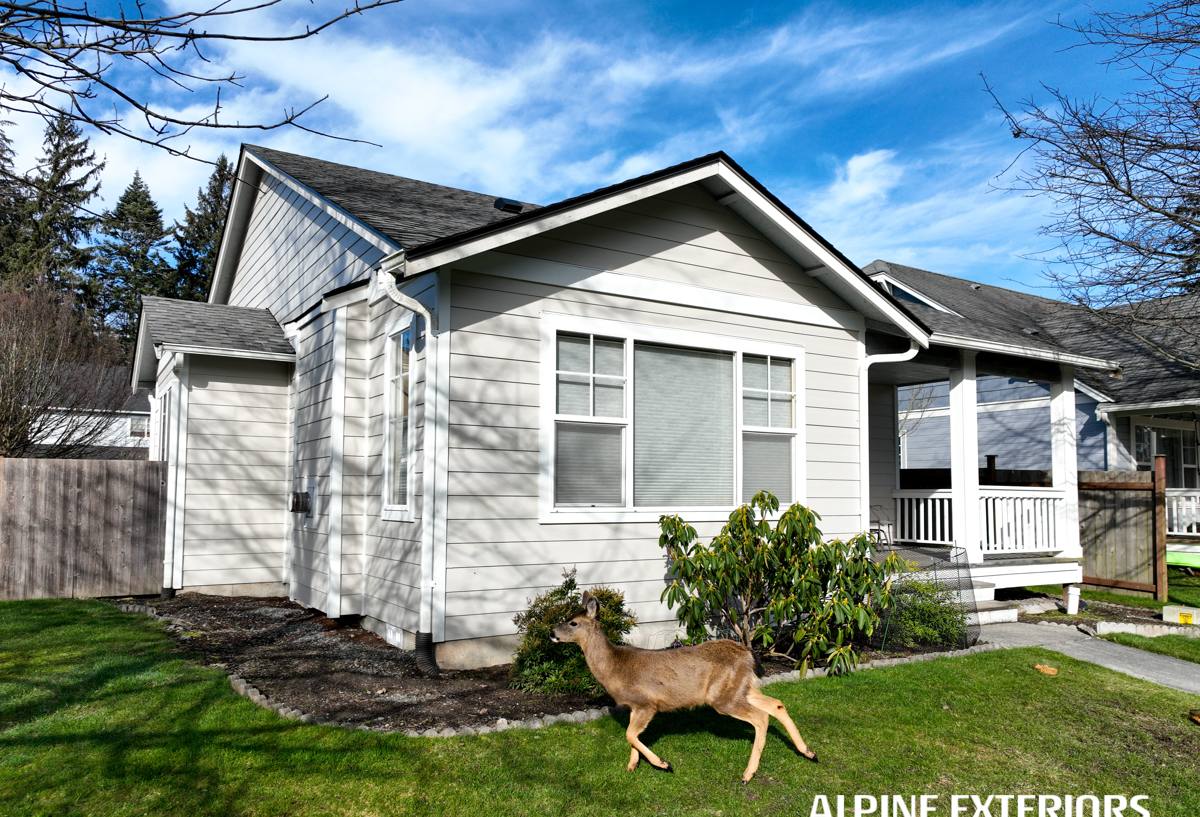
Why We Install James Hardie Fiber Cement and Nothing Else
We made a decision years ago to standardize on James Hardie fiber cement siding exclusively. We don't install vinyl, LP SmartSide, Cemplank, Allura, primed spruce, or cedar lap siding. That's a narrower lineup than most contractors offer, and we think that's the point — it lets us get very good at one system instead of being average at several.
What Makes Fiber Cement Different in This Climate
Fiber cement is made from cement, sand, and cellulose fiber. It doesn't absorb moisture the way wood-based products do, it doesn't expand and contract with humidity swings the way vinyl does, and it's non-combustible. In a marine climate with year-round moisture exposure, those properties matter more than they would in a drier region. James Hardie also engineers specific product lines for different climate zones — their HZ10 formulation is built for regions like ours with consistent moisture and moderate temperatures, which is a meaningful detail most homeowners never hear about when comparing siding quotes.
The Trade-Offs of the Alternatives
To be fair, other products have real advantages. Vinyl is inexpensive and low-maintenance in the sense that it never needs painting. Cedar has a natural look many people love. Primed spruce and engineered wood products are less expensive upfront than fiber cement. But in a wet, salt-influenced climate, these products carry trade-offs we're not willing to build our business around: vinyl can warp and fade, and its seams are a weak point for water intrusion over time; wood-based sidings need diligent maintenance and are vulnerable to moisture damage if that maintenance slips even for a season or two; and engineered wood products are more sensitive to installation quality than fiber cement is. None of this means those products are junk — it means they ask more of the climate and more of the homeowner's upkeep schedule than we think is reasonable to recommend here.
ColorPlus and the Warranty Behind It
James Hardie's ColorPlus finish is baked on in a factory-controlled process rather than field-applied, which gives it better fade and chip resistance than a job-site paint job. It also carries a stronger, transferable warranty than most site-painted siding — something that matters to Ferndale homeowners who plan to sell in the next decade or two, since a documented warranty on the exterior can be a selling point in itself.
It's Not Just Siding: Roofing, Windows, and Decks Work Together
Siding doesn't act alone. A house's exterior is a system, and in this climate every component affects the others. A roof that's shedding water properly protects the top course of siding and the fascia beneath it. Windows that are flashed and sealed correctly keep water from tracking behind the siding at every opening. Decks exposed to the same rain and moss conditions need materials and fastening details that account for standing water and slow-drying wood.
We handle all four — siding, roofing, windows, and decks — because treating them separately is how gaps happen. A siding crew that isn't thinking about roof drainage can leave a house with a beautiful new wall that still takes on water at the roofline. A window replacement done without attention to the surrounding siding integration can create a leak path that shows up two winters later. Coordinating these trades under one crew means the flashing details, water management, and sequencing are handled with the whole house in mind, not just the piece being installed that week.
What Correct Installation Actually Involves
James Hardie siding performs well when it's installed to the manufacturer's specifications — and performs poorly when it isn't. This is one of the more important things for Ferndale homeowners to understand, because most siding failures we get called out to inspect aren't material failures at all. They're installation shortcuts.
- Correct clearance from grade, roofing, and decking so the bottom edge of the siding never sits in standing water or snow
- Proper fastener placement and depth — over-driven or under-driven nails are a common source of early cracking
- Rain screen or drainage plane detailing appropriate for a wet climate, not just a flat nail-to-sheathing installation
- Correctly lapped and sealed house wrap or weather-resistive barrier behind every course
- Caulking and sealant only where James Hardie's install guide calls for it — over-caulking traps moisture rather than keeping it out
- Butt joints, corners, and trim treated as water-management details, not just cosmetic seams
None of this is exotic knowledge, but it does require a crew that installs this specific product regularly and follows the spec sheet rather than habits carried over from other siding types.
Comparing Siding Options for a Ferndale Home
| Factor | James Hardie Fiber Cement | Vinyl | Cedar / Wood | Engineered Wood (LP-type) |
|---|---|---|---|---|
| Moisture resistance | High — doesn't absorb or swell | Good, but seams can leak | Moderate — needs upkeep | Moderate — sensitive to gaps |
| Combustibility | Non-combustible | Combustible | Combustible | Combustible |
| Finish durability | Factory ColorPlus, long fade resistance | Can fade/chalk over time | Needs repainting/staining cycles | Factory finish, repaint eventually needed |
| Maintenance burden | Low | Low, but repairs are visible | High | Moderate |
| Upfront cost | Higher | Lowest | Higher (materials + upkeep) | Moderate |
| Warranty structure | Strong, transferable | Varies widely by brand | Typically none on material | Varies by manufacturer |
This table reflects general, honest trade-offs — not a claim that any of these products are defective. It's simply the reasoning behind why we stopped offering the alternatives and put our name behind fiber cement instead.
Signs Your Current Siding Is Losing the Fight With the Climate
If your home in the Ferndale area has original siding that's more than 15-20 years old, or if it was installed with any of the shortcuts described above, it's worth a walk-around inspection. Common warning signs include:
- Persistent moss or algae staining, especially on north- or west-facing walls that stay shaded and damp
- Soft spots, bubbling, or visible swelling in wood-based or engineered siding panels
- Paint that's peeling or bubbling rather than just fading evenly
- Visible gaps at butt joints, corners, or window trim where caulking has failed
- Warping or waviness in vinyl panels, particularly on south-facing walls
- Rust streaking from fasteners bleeding through the surface
- Interior signs like musty smells or discoloration on walls that back up to exterior siding
Any one of these on its own might be minor. Several together, especially paired with an aging roof or original windows, usually means the whole exterior envelope is due for a look.
Why a Local Crew Matters in This Kind of Climate
Whatcom County's coastal exposure isn't uniform — a home a few blocks from the water deals with more salt and wind than one set further inland, and drainage, tree cover, and sun exposure vary block to block. A crew that works this area regularly recognizes those differences and adjusts details accordingly: extra attention to fastener corrosion resistance near the water, different drainage planning on a shaded lot with heavy moss pressure, and so on. That local pattern recognition is hard to replicate for a crew driving in from outside the region for a one-off job.
It also matters for accountability. A warranty is only as good as the company standing behind it, and a local crew with a real presence in the area has a reason to make sure the work holds up, not just to move on to the next job.
What to Expect When You Request an Estimate
A siding, roofing, window, or deck estimate should start with an honest look at what's actually happening on your house — not a sales pitch. We walk the exterior, check for the moisture and installation issues described above, and talk through what's realistic for your home's age, exposure, and budget. If fiber cement siding isn't the right call for your situation this year, we'll say so.
If you're in the Ferndale area and want a straightforward look at your home's exterior, we're happy to come take a look. There's no pressure and no obligation — just a clear read on where things stand and what your options are. Use the form below to request a free estimate.