 Bellingham Siding
 Lynden's Climate Is Not Quite Coastal Bellingham, and That Matters
Lynden sits inland from Bellingham Bay, tucked into the farmland of northern Whatcom County near the Canadian border. It doesn't take the direct salt spray that homes right on Bellingham's waterfront deal with, but it shares the same marine air mass, the same long wet season, and a few weather quirks of its own. Homeowners here sometimes assume that being a few miles from saltwater means their siding has an easier life. In some ways it does. In other ways, Lynden's exposure is its own animal, and it deserves its own conversation rather than a copy-paste of what we'd tell a homeowner on Chuckanut Drive.
The biggest difference: Lynden and the rest of the Fraser Valley gap communities catch outflow wind events that Bellingham proper is more sheltered from. When cold, dry air builds up over the interior of British Columbia in winter, it funnels down through the Fraser River Valley and spills across the border into northern Whatcom County, often as sustained, gusty, cold wind. These events don't happen every week, but they're a known feature of winters here, and they put real mechanical stress on exterior materials — siding, trim, fascia, fence lines — in a way that calmer parts of the county don't experience as often.
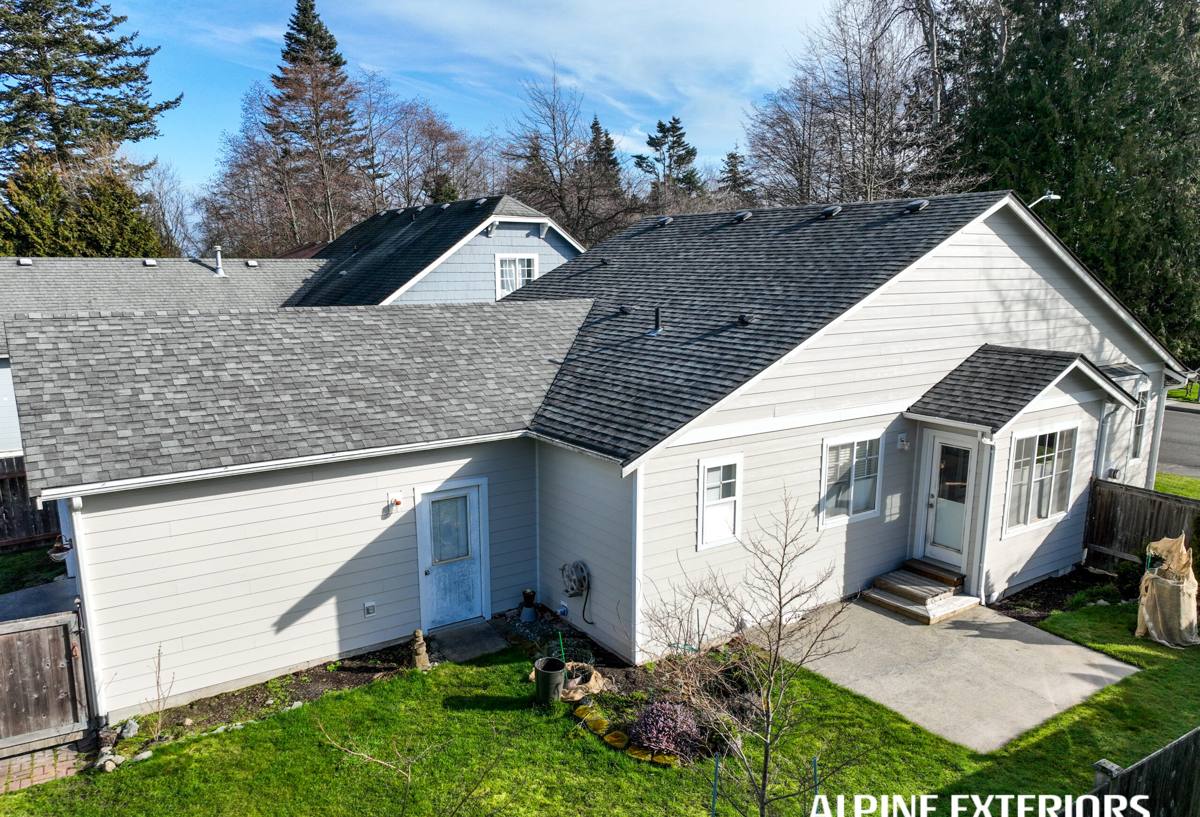
What the Local Climate Actually Does to a House
Put together, Whatcom County's weather pattern is: long stretches of low-intensity rain, a genuine moss and algae season that runs roughly October through April, humidity that rarely fully clears even on dry days, and — specific to Lynden and its neighbors near the Fraser Valley gap — periodic hard wind events in the colder months. None of these alone is dramatic. Together, over 10 or 20 years, they add up.
- Moisture cycling. Siding gets wet, dries slowly, gets wet again. Materials that absorb water and don't dry out cleanly are the ones that eventually cup, swell, or delaminate.
- Moss and algae growth. North-facing walls, areas under eaves, and anything shaded by trees or a neighboring structure stay damp longer and grow moss or mildew faster than sun-exposed walls.
- Wind-driven rain. During storms and outflow events, rain doesn't just fall — it gets pushed sideways into seams, laps, and trim joints. Housewrap, flashing, and caulk quality matter more here than in drier climates.
- Freeze snap during outflow events. Cold outflow wind can drop temperatures quickly for a day or two at a time. It's not the deep, sustained freeze of a continental climate, but it's enough to stress materials that are already compromised by trapped moisture.
- UV is a minor player. Compared to sunnier regions, UV fading is a smaller factor here than moisture damage — which changes which failure modes actually show up on local houses.
Where the Damage Actually Shows Up
On a typical Lynden home, the first signs of trouble aren't usually where people expect. It's rarely the sun-facing wall. It's the north or west elevation, the wall closest to a fence line or hedge that blocks airflow, the trim around windows where caulk has failed, and the bottom courses of siding near grade where splashback keeps materials wet longer than the rest of the wall.
Why the Material You Choose Changes the Whole Equation
Every siding material handles moisture cycling differently, and in a climate like this, that difference isn't cosmetic — it determines how long a wall looks good and how much maintenance it demands in between. This is the core reason we made a decision that some homeowners ask us about directly: we install James Hardie fiber cement siding, and we don't install vinyl, LP SmartSide, or other engineered wood products, cedar, or primed spruce.
That's not a knock on every product we don't install. Vinyl is affordable and low-maintenance in the sense that it doesn't need painting, but it's a thin material that can warp in sustained heat and become brittle and crack in cold snaps — including the kind of quick temperature drop an outflow event can bring. Engineered wood products use real wood fiber, which means they're vulnerable to moisture intrusion at cut edges, seams, and any spot where the factory coating gets compromised; once moisture gets into the substrate, swelling and delamination can follow, and that clock starts the day water finds a way in. Cedar and primed spruce are honest, traditional choices, but they require an ongoing maintenance commitment — recoating, caulking, watching for rot — that a lot of homeowners don't want to sign up for on a house they're keeping for decades in a wet county.
Fiber cement, by contrast, is made from cement, sand, and cellulose fiber. It doesn't warp in wind, it doesn't rot, and it isn't a food source for the organisms that cause the kind of soft, spongy decay you sometimes find behind failed wood-based siding. That combination is a large part of why it's what we put on homes.
Material Comparison for a Climate Like Whatcom County's
| Factor | James Hardie Fiber Cement | Vinyl | Engineered Wood | Cedar / Primed Spruce |
|---|---|---|---|---|
| Moisture absorption | Low; won't rot or swell | None, but seams can trap water behind panels | Moderate to high at compromised edges | High without diligent maintenance |
| Wind / cold snap durability | Rigid, holds shape | Can crack in cold, warp in heat | Generally stable if coating intact | Stable but prone to checking |
| Moss / algae resistance | Factory finish resists staining; cleans up well | Can stain and stay stained | Coating can wear, exposing substrate | Needs regular treatment |
| Maintenance over time | Occasional wash; repaint only if desired | Low, but not repairable if damaged | Caulk and coating upkeep required | Regular refinishing needed |
| Fire performance | Non-combustible | Combustible | Combustible | Combustible |
James Hardie's Climate-Engineered Product Lines
James Hardie makes different formulations for different climate zones, and the Pacific Northwest formulation — engineered for regions with high moisture exposure — is what we install here. Beyond the base material, every plank comes with a factory-applied ColorPlus finish, baked on in a controlled environment rather than field-painted. That matters in a county where field-applied paint has to cure in unpredictable, often damp conditions; a factory finish sidesteps that variable entirely and gives a more consistent, longer-lasting result than paint applied on-site during a break in the rain.
Hardie also backs its siding with a strong transferable limited warranty, which matters more than people expect when they eventually sell the house. A documented, transferable warranty on the exterior is a tangible asset in a real estate listing, not just a maintenance record.
Installation Details That Matter More Here Than Elsewhere
Fiber cement is only as good as the installation behind it. In a climate that drives rain sideways into seams and trim during storms and outflow events, a few details separate a wall that performs for decades from one that develops problems in five years:
- Proper clearances at grade. Siding installed too close to the ground or to a deck or patio surface wicks up moisture and splashback — a common issue we find on homes with additions or landscaping changes made after the original siding went up.
- Correct fastener pattern and gapping. Hardie specifies exact nailing patterns and expansion gaps at seams and trim. Skipping these to save time is one of the most common causes of premature failure we see on improperly installed fiber cement.
- Flashing at every penetration. Windows, doors, vents, and hose bibs all need proper flashing and sealant details behind the siding, not just at the visible surface.
- Housewrap and drainage plane continuity. A continuous, correctly lapped water-resistive barrier behind the siding gives any moisture that does get past the cladding a way to drain and dry out rather than sitting against the sheathing.
- Attention to north and shaded walls. These elevations dry slower and benefit from careful caulking and, where relevant, slightly increased ventilation clearance.
It's Not Just Siding — the Whole Exterior Fights the Same Battle
The same moisture cycle, moss pressure, and wind exposure that affects siding also affects roofing, windows, and decks, which is why we handle all four rather than treating siding as an isolated project. A roof with failing flashing sends water down behind siding that's otherwise in good shape. Old windows with degraded seals let moisture into the wall cavity from the inside out. A deck built without attention to ledger flashing can rot the band board it's attached to, and that damage often isn't visible until the siding above it is opened up. When we're on a Lynden property for a siding estimate, we're looking at the whole envelope, because these systems don't fail independently.
A Practical Homeowner Checklist
- Walk your home's north and west walls and look for moss, dark staining, or soft spots — these show up before visible cracking.
- Check caulking around windows, doors, and trim joints; cracked or missing caulk is an early entry point for wind-driven rain.
- Look at grade clearance — siding that touches soil, mulch, or a hard surface directly is at higher risk.
- Note any siding near a downspout discharge point or roof valley runoff — concentrated water flow accelerates wear.
- If your siding is original engineered wood or cedar from a build more than 15-20 years ago, a professional moisture check is worth scheduling before small issues become structural ones.
Why a Local Crew Makes a Practical Difference
A crew that works Whatcom County year-round knows which walls on a Lynden property tend to get hit hardest by outflow winds, what a healthy amount of moss looks like versus a sign of deeper trouble, and how local permitting and inspection processes actually run. That's different from a crew that installs siding across several states and treats every job with the same generic playbook. It also means someone is genuinely reachable if a question comes up two years after the job is done, not just during the sale.
If you're weighing a siding project in Lynden — whether it's a full replacement, repair work, or you're just trying to understand what's going on with your current siding — we're happy to take a look and give you a straight, no-pressure assessment. A free estimate doesn't commit you to anything; it just gets you real information about your specific house.