 Bellingham Siding
 Why This Comparison Matters in Bellingham
If you're re-siding a home in Bellingham or anywhere else in Whatcom County, you've almost certainly narrowed it down to two finalists: vinyl siding and fiber cement siding. Both are common, both have been installed on thousands of homes in this region, and both have real advocates. This page isn't here to tell you vinyl is a bad product — it isn't, for what it is. It's here to walk through the honest trade-offs so you can make a decision based on how each material actually behaves over 20-30 years in our specific climate, not just on the sticker price at the counter.
We're a fiber cement installer — specifically James Hardie — and we don't install vinyl. That's a real bias you should account for as you read this. But the reasoning below is about material behavior and long-term ownership cost, not brand loyalty, and we've tried to be fair to vinyl's genuine strengths.
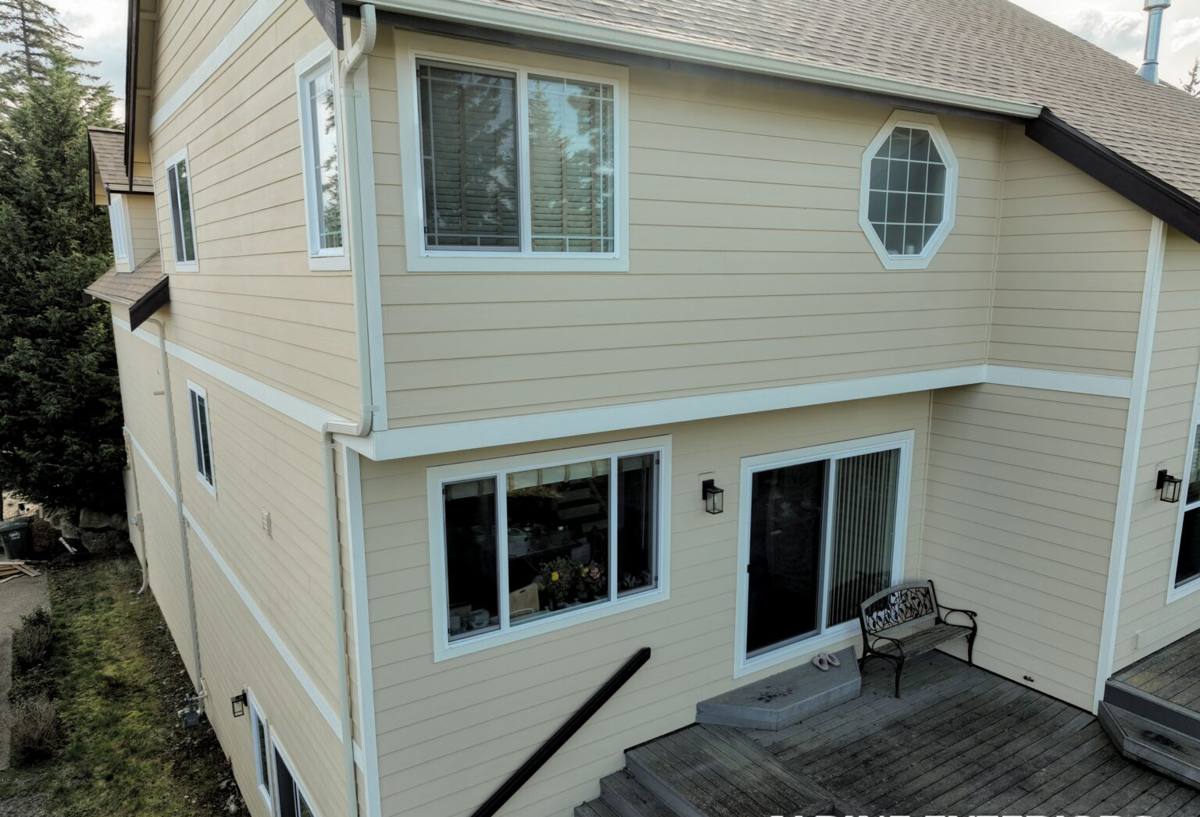
What Vinyl Siding Gets Right
Vinyl has stayed popular for decades for good reasons. It's worth naming them plainly:
- Lower upfront material and labor cost compared to most other siding types.
- No painting required — the color is molded through the panel, not applied as a surface coating.
- Lightweight and fast to install, which keeps labor time and cost down.
- Widely available in a large range of colors and profiles, including double-4 lap, board-and-batten, and shake styles.
- Low maintenance for basic upkeep — an occasional rinse is usually all it needs day to day.
For a homeowner on a tight budget who needs siding replaced and plans to move again within a decade, vinyl is a legitimate, honest choice. The problems show up further down the timeline, and they show up faster in a climate like ours.
Where Vinyl Struggles in Whatcom County's Climate
Moisture and the Long Wet Season
Vinyl siding is installed with expansion gaps and hung loosely on nail slots, which means it isn't a sealed water barrier by design — it relies on the water-resistive barrier and flashing behind it to do the real work of keeping moisture out. That's fine when installation is done correctly, but Bellingham's driving rain, blown in off the Strait and the Sound, tends to find every shortcut in flashing details, especially around windows, trim, and butt joints. Over years of our wet season, marginal installation details on vinyl tend to become visible as staining, warping, or moisture intrusion behind the panels.
Moss and Algae
Whatcom County's long moss season isn't just a roof problem — it affects siding too, particularly on north-facing walls and shaded elevations under mature trees, which describes a lot of Bellingham lots. Vinyl's surface texture and the way panels overlap create ledges and channels where moisture sits, and vinyl doesn't offer much resistance to the algae and moss growth that follows. Cleaning it helps but doesn't stop the cycle from starting again.
Expansion, Contraction, and Fading
Vinyl expands and contracts with temperature swings more than most siding materials, which is why installers leave room for panels to move in their nail slots. Get that detail wrong — or let a panel get pinned too tight — and you'll see buckling, waviness, or panels popping loose in a hard wind, which the Bellingham waterfront and open exposures get their share of. Vinyl color is also baked into the plastic, but it still fades with UV exposure over time, and because the color can't be refreshed with paint, a faded section is faded for good unless the whole wall is replaced.
Impact Damage
Vinyl is brittle in cold weather and can crack from a stray branch, a ladder bump, or hail. Cracked panels are usually a full-panel replacement, and matching an older, sun-faded color to new stock is often difficult or impossible.
What Fiber Cement (James Hardie) Gets Right
Fiber cement is a blend of cement, sand, and cellulose fibers, engineered to be dimensionally stable, non-combustible, and resistant to the specific things that wear down siding on the wet side of Washington. James Hardie makes region-specific product lines — including an HZ5 formulation engineered for climates with heavy moisture exposure, which fits Whatcom County's rainfall and salt-air proximity along Bellingham Bay.
- Non-combustible — fiber cement doesn't contribute fuel to a fire the way wood or vinyl-clad wood assemblies can.
- Dimensionally stable — it doesn't expand and contract with temperature the way vinyl does, so it holds its fastening and doesn't buckle or warp.
- Factory-applied ColorPlus finish — baked-on, warranted separately from the substrate, and far more fade- and chip-resistant than field-applied paint.
- Resists moisture-driven rot — it won't absorb water and swell or delaminate the way engineered wood products can.
- Holds paint and caulk lines cleanly for a crisp, low-maintenance look over the long term.
It isn't maintenance-free — no siding is — but the maintenance it needs is lighter and less urgent than what vinyl or wood products eventually require in this climate.
Installation Sensitivity: The Part Nobody Advertises
Both products are only as good as the installation. Fiber cement is heavier and requires correct fastening patterns, proper joint treatment, and caulking at the specific points Hardie's installation instructions call out — get it wrong and you can void the warranty and create moisture paths. Vinyl requires correct nailing (not too tight), attention to expansion gaps, and correct flashing behind every penetration.
The honest difference: a poorly installed vinyl job tends to fail quietly — a little water intrusion behind the panel that you don't see until there's rot in the sheathing. A poorly installed fiber cement job tends to show visible signs sooner (cracking at unsupported joints, caulk failure) which, while not desirable, at least surfaces the problem before it becomes a hidden structural issue. Either way, installation quality matters more than brand choice, and it's the main reason we ask homeowners to vet any contractor carefully before signing a contract — see the checklist below.
Cost and Longevity Compared
| Factor | Vinyl Siding | Fiber Cement (James Hardie) |
|---|---|---|
| Upfront cost | Lowest of the common siding options | Higher material and labor cost than vinyl |
| Typical service life | Shorter — panels often need full replacement sooner in wet, exposed climates | Longer service life when installed to spec |
| Repainting needed | Never repainted, but faded panels can't be refreshed and must be replaced | Factory finish resists fading for many years; can be repainted later if desired |
| Fire resistance | Combustible plastic | Non-combustible |
| Moisture/moss resistance | Vulnerable at seams and shaded walls | More resistant, especially with HZ5 formulation |
| Impact resistance | Brittle, especially in cold weather | More rigid and impact-resistant |
| Warranty structure | Varies by manufacturer, often prorated | Long-term, transferable manufacturer warranty |
Vinyl wins on day-one price. Fiber cement's case is a lower total cost of ownership — fewer replacement cycles, less risk of hidden moisture damage, and a finish that holds up without needing to be redone.
Maintenance Over the Life of the Siding
Vinyl's maintenance is mostly cosmetic cleaning, but when something goes wrong — a cracked panel, a warped section, moisture behind a seam — the fix usually means replacing sections and hoping the color still matches. Fiber cement's maintenance is periodic caulk inspection at joints and trim, and eventually a repaint decades down the road if you want to refresh the color, which is optional rather than forced by material failure. In a climate that includes a long moss season and salt-laden air off Bellingham Bay, we've found that the lower-maintenance story on vinyl tends to be true for the first several years and less true after that.
What We Tell Homeowners Before They Choose
Before hiring anyone to re-side a home in Bellingham or elsewhere in Whatcom County, it's worth asking a few pointed questions regardless of which material you're leaning toward:
- What water-resistive barrier and flashing details will be used behind the siding, and are they up to current code?
- How will the contractor treat joints, corners, and penetrations — the places where most siding failures actually start?
- What does the manufacturer's warranty actually cover, and does it survive a change of home ownership?
- Is the crew doing the installation certified or specifically trained on the product being installed?
- What does the contractor refuse to install, and why — a contractor with an honest answer to that question is worth listening to.
Why We Standardized on James Hardie
We made a deliberate decision to install only James Hardie fiber cement siding, and to not install vinyl, LP SmartSide, or other engineered wood and plastic sidings. That's not because those products have no legitimate use — it's because, given what we see repeatedly in this climate, we'd rather stand behind one system we trust completely than offer a lower-cost option we know is more likely to need attention again in 10-15 years. Hardie's HZ5 line, factory ColorPlus finish, non-combustible composition, and transferable warranty match up well against the specific conditions Bellingham and Whatcom County throw at a home's exterior — driving rain, salt air, and a moss season that doesn't let up for long.
If you're weighing vinyl against fiber cement for your own home, we're glad to walk the exterior with you, point out the areas most exposed to moisture and moss, and give you a straight answer about what we'd recommend — with no pressure to book anything. A free estimate is a good next step whenever you're ready.