 Bellingham Siding
 Two Products, Two Different Materials
When homeowners in Bellingham start pricing out new siding, they usually end up comparing two products that look similar on a spec sheet: fiber cement and engineered wood, most commonly sold under the LP SmartSide brand. Both come in lap, panel, and shingle profiles. Both can be painted to look like traditional wood siding. Both are a step up from vinyl in terms of appearance and durability. But they are fundamentally different materials, and that difference matters a lot in a climate like ours.
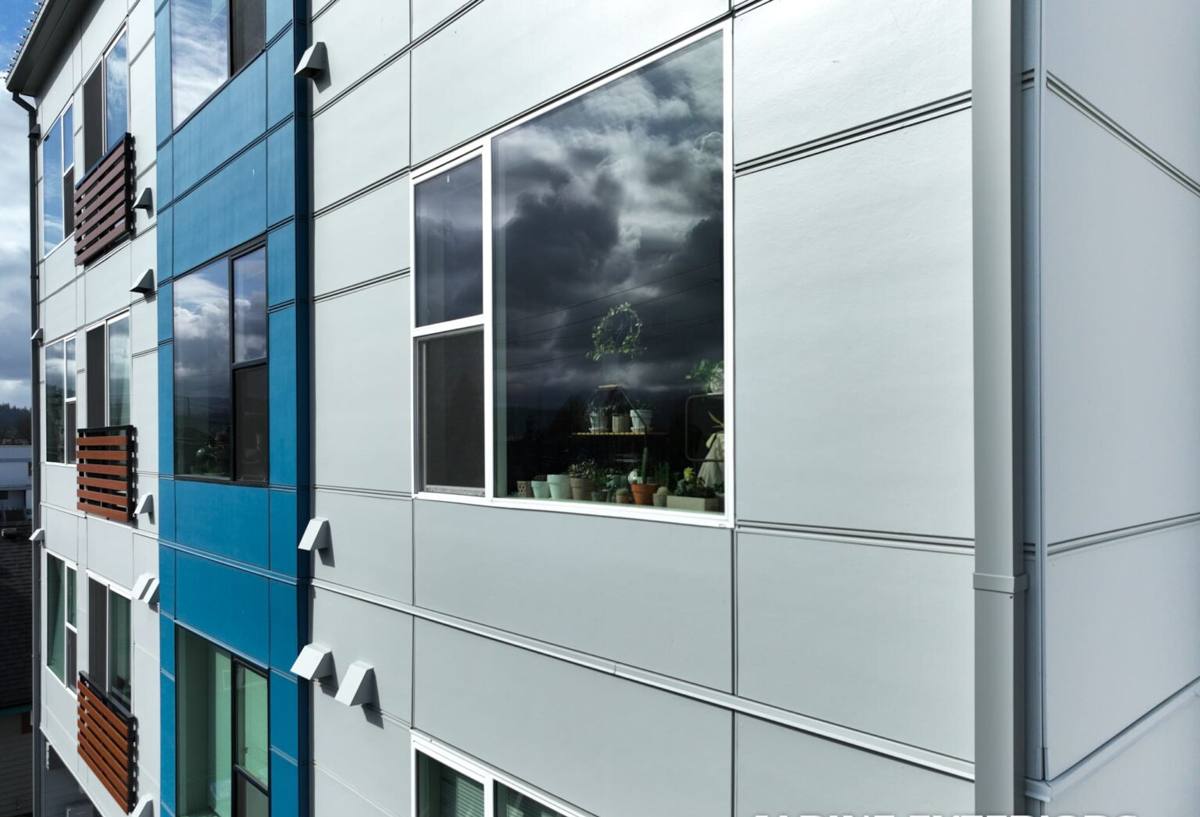
Fiber cement is a composite of Portland cement, sand, and cellulose fibers, cured into a rigid, non-combustible board. Engineered wood siding is built from wood strands or wood fiber bonded with resins, similar in concept to OSB, then treated and given a fully coated surface. One is a masonry-like product that happens to look like wood. The other is a wood product engineered to perform better than raw lumber. That distinction is the whole reason we only install James Hardie fiber cement on the homes we work on, and it's worth walking through honestly rather than just asserting it.
What Engineered Wood Siding Does Well
We're not going to pretend engineered wood is a bad product, because it isn't. LP SmartSide and similar products have improved a lot since the wood-composite siding failures of the 1990s. Modern versions use resin-saturated strands, zinc borate treatment for insect and fungal resistance, and factory coatings that are genuinely better than the primed hardboard of a generation ago. It's lighter than fiber cement, easier on a framing crew, generally less expensive up front, and it holds paint well when it's new. For a lot of markets and a lot of budgets, it's a reasonable choice.
Where it runs into trouble isn't the manufacturing — it's what happens over 15 to 25 years of real weather exposure, especially exposure like Whatcom County gets.
Where Engineered Wood Runs Into Trouble in Bellingham's Climate
Cut Edges and Swelling
Engineered wood siding is only as water-resistant as its factory coating. The moment a board is cut, drilled, or nailed on site — which is every board, on every job — you've exposed raw, uncoated wood fiber. Manufacturers require field-applied sealant on every cut edge, every fastener penetration, and every joint. If that step gets rushed, skipped, or done with the wrong product, water gets into the strand structure and the board swells, delaminates at the edges, or takes on the telltale "furry" texture that shows up on wood-composite siding that's been up for a decade or more in a wet climate. This isn't a defect in the product; it's a installation-sensitivity problem, and it's a big part of why we won't install it.
Moss and the Long Wet Season
Whatcom County doesn't just get rain — it gets a genuinely long moss season, roughly October through May, where north-facing walls, shaded elevations, and anything under a fir canopy stay damp for weeks at a time. Wood-based siding, even engineered wood, is an organic substrate. Moss and mildew get a foothold in surface texture and at seams faster on wood fiber than on cement board, and once established, they hold moisture against the surface, which accelerates coating breakdown.
Salt Air and Coastal Exposure
Homes closer to Bellingham Bay and the county's shoreline deal with a slow, steady dose of salt-laden air on top of the rain. Salt air degrades paint and coatings faster than inland exposure, and it's harder on any fastener or trim detail that isn't fully sealed. Combined with driving rain off the water, it's a tough combination for a wood-fiber product that depends on an intact factory coating to stay dry.
What Fiber Cement Is and Why It Handles Moisture Differently
Fiber cement doesn't rely on a coating to keep water out of its structure the way engineered wood does. Because it's a cement-based composite, it doesn't swell, rot, or delaminate when it absorbs moisture the way an organic wood product can. It also doesn't attract insects, and it's non-combustible — a real factor for anyone thinking about wildfire-adjacent insurance considerations or simply wanting one less thing to worry about. Cut edges still need to be primed and painted for appearance and long-term finish life, but a poorly sealed cut edge on fiber cement doesn't create the same structural failure mode that it can on wood fiber. That single difference is the biggest reason fiber cement holds up better through a Pacific Northwest wet season after wet season.
James Hardie's Climate-Engineered Lines and Factory Finish
James Hardie doesn't sell one fiber cement product nationwide — it engineers regional formulations (marketed as HZ5 and HZ10) tuned to the moisture and freeze-thaw conditions of different climate zones. For Western Washington, that means a formulation built around constant moisture exposure rather than dry-heat regions. That's a meaningfully different design intent than a one-size-fits-all wood composite panel.
Just as important is ColorPlus Technology, Hardie's factory-applied finish. It's baked on under controlled conditions rather than rolled or sprayed on site, which gives more consistent coverage and adhesion than field-applied paint — and it comes backed by its own finish warranty, separate from the substrate warranty. Site-applied paint, whatever the substrate, is only as good as the weather conditions and prep work on the day it goes on. A factory finish removes a lot of that variability.
Installation Sensitivity Matters as Much as the Product
Every siding product has an installation manual, and every manufacturer's warranty is conditioned on following it. The difference is how much room for error each product tolerates. Fiber cement is forgiving of the Bellingham weather window — it doesn't take on water damage the same way if a house sits partially wrapped for a few extra days during a wet stretch. Engineered wood is far less forgiving: gaps at butt joints, missed edge sealant, improper flashing at windows and trim, or fasteners driven at the wrong depth all show up as moisture problems years down the line, usually well after the installer has moved on. We standardized on one product in part because it lets our crews build in one consistent, repeatable process rather than juggling two very different moisture-management approaches on different jobs.
Warranty and Cost Comparison
Warranty language is where the two products diverge most sharply. Fiber cement warranties are typically longer and less conditional; engineered wood warranties tend to carry more exclusions tied to field-sealing and coating maintenance — the exact steps that are hardest to verify years after installation.
| Factor | Fiber Cement (James Hardie) | Engineered Wood (e.g., LP SmartSide) |
|---|---|---|
| Typical substrate warranty | 30 years, non-prorated in most cases | Often 5-year full, then prorated to 25-30 years |
| Finish | Factory-applied (ColorPlus), separate finish warranty | Factory-primed or coated; many installs still field-painted |
| Moisture behavior at cut edges | Requires priming for finish; not a structural failure point | Requires sealant; unsealed cuts are a common warranty exclusion |
| Combustibility | Non-combustible | Combustible (wood-based) |
| Upfront material cost | Moderate-to-higher | Generally lower |
| Expected maintenance over 20 years | Lower — repaint cycle longer, no rot risk | Higher — coating touch-up, edge sealant checks, moisture monitoring |
The upfront cost gap is real, and we don't pretend otherwise. But when you weight it against a 20-to-30-year ownership horizon in a climate that gets driving rain and a five-to-eight-month moss season, the maintenance and warranty picture usually closes that gap or reverses it.
A Checklist Before You Decide — and Why We Standardized on Hardie
Whatever siding you're considering, whether you hire us or someone else, these are the questions worth answering before you sign a contract:
- Is the warranty prorated, and after how many years does coverage start declining?
- Does the warranty require documented maintenance (recaulking, repainting) to stay valid?
- Is the finish factory-applied or will it be painted on site, and in what weather conditions?
- How does the manufacturer say cut edges and fastener penetrations must be treated?
- What's the manufacturer's own climate zone guidance for Western Washington?
- Is the product combustible, and does that affect your insurance?
We answer those questions the same way every time, on every job: James Hardie fiber cement, installed to spec. It's not that engineered wood is a scam or a bad product in every application — it's that we've made a professional judgment, based on what holds up in this specific climate over decades rather than years, that one material handles Bellingham's rain, moss, and salt air with fewer long-term surprises. Standardizing on one product also means our crews aren't relearning two different moisture-management systems from house to house, which is its own quality safeguard.
If you're weighing your options for an upcoming siding project, we're happy to walk your specific house — orientation, exposure, existing siding condition — and give you a straight answer, not a sales pitch. Reach out for a free, no-pressure estimate using the form below.