 Bellingham Siding
 What Board & Batten Siding Actually Is
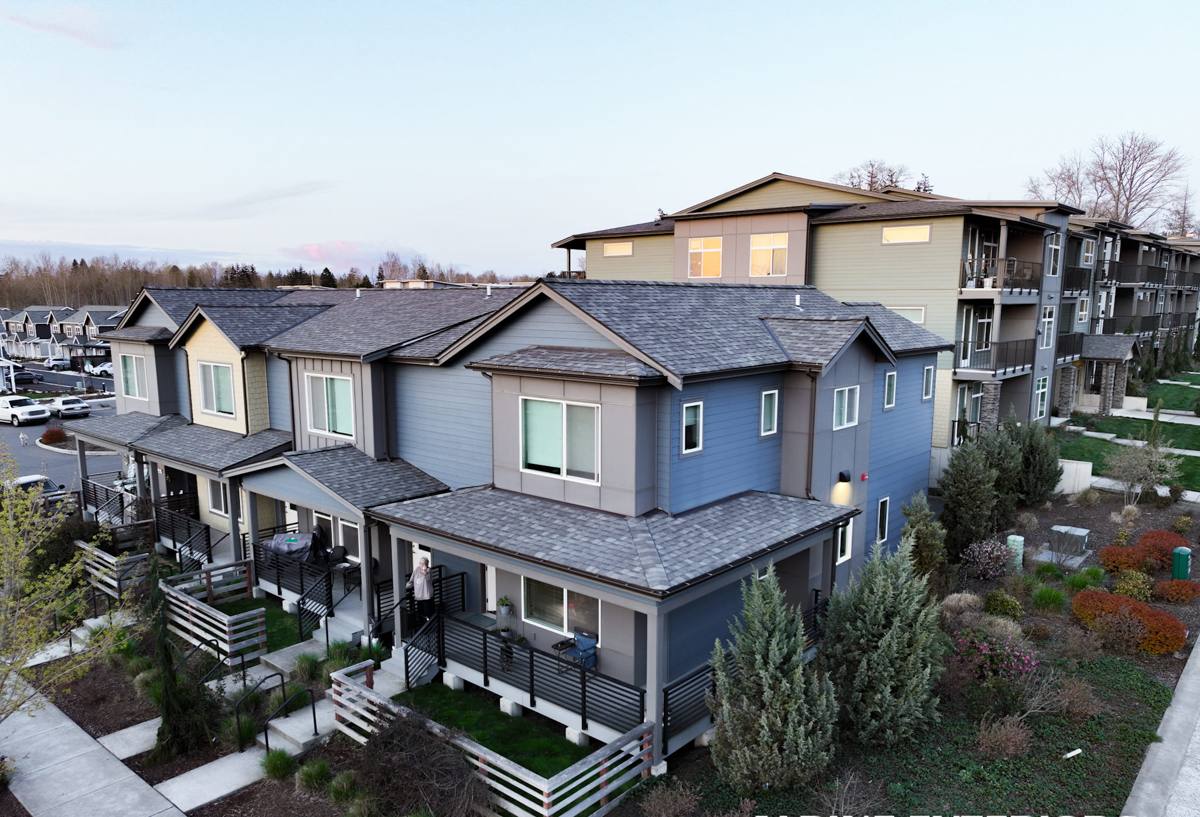
Board and batten is one of the oldest siding patterns in the Pacific Northwest, and it never really went out of style — it just went in and out of fashion for different reasons. The look is simple: wide vertical boards installed with narrow strips (battens) covering the seams between them. What's changed over the decades is the material behind that look. Old farmhouses around Whatcom County were sided in board and batten because it was a fast, cheap way to close up a wall with rough-sawn lumber. Today it's chosen because it photographs beautifully on a modern exterior — clean vertical lines, strong shadow lines from the battens, and a pattern that reads as both traditional and contemporary depending on the trim and color around it.
The problem is that the material behind that look matters enormously in this climate, and a lot of homeowners choose board and batten based on the picture without asking what's holding the pattern together twenty years from now.
Why This Pattern Is a Real Test for a Siding Material
Board and batten puts more seams on a wall than lap siding does, and every one of those seams is a place water can find its way behind the cladding if the installation isn't right. In Bellingham, that's not a hypothetical. Whatcom County gets sustained, wind-driven rain off the Sound for months at a time, salt air works into anything with exposed metal or untreated wood grain, and the shaded, damp stretches of the year hand moss and algae months to establish themselves on any surface that stays wet. A board and batten wall that isn't detailed for that environment doesn't fail gracefully — it fails at the seams, which is exactly where you don't want it to fail.
That's the whole reason we standardized on James Hardie fiber cement for this pattern instead of the wood, vinyl, or engineered-wood options that also come in vertical board and batten profiles. The material has to survive our climate, not just look good on installation day.
The Local Conditions That Matter Most
- Driving rain: wind off the water pushes moisture sideways into vertical seams, not just straight down.
- Salt air: accelerates corrosion on exposed fasteners and thin-gauge trim, which is why fastener choice and flashing detail matter as much as the panel itself.
- Long moss season: shaded north walls and tree-covered lots stay damp for weeks at a stretch, which is hard on any surface that absorbs moisture instead of shedding it.
- Temperature swings: repeated wet-dry and freeze-thaw cycles stress joints and caulk lines over time.
James Hardie's Board & Batten Systems
James Hardie builds vertical siding specifically for this application rather than treating it as an afterthought to their lap siding lines. The two main approaches homeowners see are:
HardiePanel Vertical Siding with Battens
Large fiber cement panels installed vertically, with separate wood-composite or fiber cement battens fastened over the panel seams. This is the classic board and batten look, built with a modern water-management system behind it — proper panel spacing, weather-resistant barrier, and flashing details that give water a way out if it does get behind the cladding.
HardieTrim Battens
The battens themselves are also a factory-engineered product, not job-site-ripped lumber. That matters because a batten is a piece of trim that sits directly in the path of water running down the wall — if it's not dimensionally stable and properly primed on all sides, it becomes the first thing to fail.
Climate-Engineered HZ10 Formulation
James Hardie makes region-specific formulations of its fiber cement, and the HZ10 product line is engineered for the wetter, more moderate climate zones that include Western Washington. It's the same idea as choosing the right paint for a marine environment — the base material is adjusted for the moisture exposure it's actually going to see, not a generic national spec.
How Board & Batten Compares to Other Vertical Siding Options
| Material | How It Handles Bellingham's Wet Climate | Long-Term Maintenance | Fire Performance |
|---|---|---|---|
| James Hardie fiber cement | Engineered for moisture exposure; dimensionally stable when wet | Low — factory ColorPlus finish resists fading, no repainting cycle | Non-combustible |
| Cedar board & batten | Absorbs and releases moisture with weather; prone to cupping and checking over seasons | High — refinishing every few years, more frequent in shaded/damp areas | Combustible |
| Primed spruce/pine | Softwood substrate swells at joints; primer is a starting point, not a finish | High — repaint cycle, seam caulking maintenance | Combustible |
| Vinyl board & batten | Doesn't rot, but seams and battens are often just cosmetic overlays, not true water-managed joints | Low, but can crack or fade; not repairable in sections easily | Combustible, can deform near heat |
| LP SmartSide vertical panels | Engineered wood — better than raw lumber, but still wood-based and sensitive to edge moisture intrusion | Moderate — edge sealing and caulking are ongoing maintenance items | Combustible |
None of these are "bad" products in the abstract — they're just built around different trade-offs. We stopped installing the wood-based and vinyl options because, on Whatcom County's shaded, wet lots, the maintenance burden and moisture risk showed up faster than homeowners expected, and fiber cement consistently held up better with less upkeep.
What Correct Installation Actually Involves
A board and batten job can look identical from the curb whether it's installed correctly or not — the difference shows up in five, ten, fifteen years. The details that matter are almost all invisible once the job is finished.
Water-Resistive Barrier and Rain Screen
Behind every panel needs to be a properly lapped weather-resistant barrier, and in a climate like ours, a rain screen gap (a drainage space between the barrier and the siding) gives any moisture that does get past the cladding a way to drain and dry instead of sitting against the wall sheathing.
Panel Spacing and Fastening
Fiber cement panels need a manufacturer-specified gap at every joint to allow for expansion, and fasteners need to land in the right locations with the right embedment — not too shallow, not overdriven. Battens are then fastened through the panel into framing, not just tacked to the panel face, so the whole assembly moves as one system.
Flashing at Every Transition
Windows, doors, roof lines, and the bottom of the wall are where board and batten installations most often fail when done wrong. Each of those transitions needs proper flashing and z-flashing details so water sheds outward instead of tracking behind the siding.
Fastener and Trim Material
Given the salt air along the Bellingham waterfront and out toward the county's coastal areas, corrosion-resistant fasteners aren't optional — they're the difference between staining and streaking at every batten line in ten years or a wall that still looks clean.
Where Board & Batten Installations Go Wrong
Most board and batten failures we get called to look at share the same root causes, and none of them are the fault of the siding material itself:
- No rain screen gap: panels installed tight against the barrier with nowhere for incidental moisture to drain or dry.
- Battens face-nailed only: looks fine on day one, but doesn't tie into framing and works loose over time.
- Missing or undersized flashing at window heads and the base of the wall, where the majority of water intrusion actually happens.
- Panels butted tight with no expansion gap, which telegraphs as cracking or buckling after a few seasonal cycles.
- Standard fasteners used in a salt-air environment, leading to rust streaks bleeding down the face of the siding.
Every one of these is a labor and detailing issue, not a product defect — which is exactly why the installer matters as much as the material you choose.
Color and Finish Options
James Hardie's ColorPlus finish is baked on at the factory under controlled conditions, rather than field-painted after installation. For board and batten specifically, that consistency matters more than it does on lap siding, because the vertical boards and horizontal shadow lines from the battens make any color mismatch or sheen difference much more visible. Factory finish also means the color goes on before the panel is ever exposed to job-site weather, so you're not relying on paint adhering to a surface that got rained on the week before.
Board and batten is often used as an accent pattern — a gable end, a porch surround, a single elevation — paired with HardiePlank lap siding on the rest of the house. That combination gives a home visual variety without turning the whole exterior into a maintenance patchwork of different materials aging at different rates.
Cost Factors to Understand Before You Budget
| Factor | Why It Moves the Price |
|---|---|
| Full-elevation vs. accent use | Board and batten used as a full-house pattern costs more in material and labor than using it as an accent on gables or a single wall |
| Wall complexity | More corners, window openings, and roof transitions mean more flashing detail work and cut panels |
| Existing siding removal | Tear-off and disposal of old cladding, plus any sheathing repair found underneath, adds to the scope |
| Rain screen system | Adding a proper drainage gap is additional labor but is the single detail most responsible for long-term performance in this climate |
| Color selection | Standard ColorPlus palette vs. premium or custom color tiers affects panel pricing |
We won't quote a number without seeing the house — every wall is different — but these are the variables that actually move a board and batten estimate up or down, and worth asking any contractor to walk through with you.
Maintenance Expectations in Whatcom County
Correctly installed James Hardie board and batten is genuinely low-maintenance, but "low" isn't "none." A yearly rinse-down helps keep moss and organic growth from getting a foothold, particularly on shaded north- and west-facing walls that stay damp longest through our fall and winter. Check caulk lines at window and door transitions periodically, since caulk is a maintenance item on any siding system regardless of the cladding material. Beyond that, the factory finish and non-combustible substrate mean you're not on a repainting or re-caulking-the-whole-wall cycle the way you would be with wood or engineered-wood board and batten.
What to Ask Before You Hire
- Will the wall assembly include a rain screen or drainage gap behind the panels?
- What flashing details are planned at window heads, the wall base, and roof transitions?
- Are battens fastened through to framing, or only face-nailed to the panel?
- What fastener material will be used, given our salt-air exposure?
- Is the installer James Hardie factory-trained, and can they explain their panel spacing approach?
- What does the workmanship warranty cover, separate from the manufacturer's material warranty?
If you're weighing board and batten for a Bellingham home and want a straight answer on what it would take on your specific walls, we're happy to come take a look and walk the details with you. The estimate is free, there's no pressure, and you'll leave the conversation knowing exactly what's involved before you decide anything.