 Bellingham Siding
 Columbia: A Bellingham Neighborhood Shaped by the Bay
Columbia sits close enough to Bellingham Bay that its weather patterns track the water more than they track the rest of Whatcom County. Homes here take on a steady diet of marine air, wind-driven rain, and the kind of persistent damp that settles into wood grain and never fully leaves during the wet months. The neighborhood has a mix of older homes with decades of exterior wear and newer builds that still need siding matched to the site conditions, not just the architectural style. Either way, what protects a house a few miles inland doesn't always hold up the same way this close to the shoreline.
We've worked on homes throughout Bellingham and Whatcom County long enough to know that a "one product fits every house" approach doesn't hold up near the bay. The siding, trim, and flashing details that work for Columbia homes need to account for salt-laden air, wind exposure, and shade patterns from mature trees that keep moisture sitting on exterior walls longer than homeowners expect.
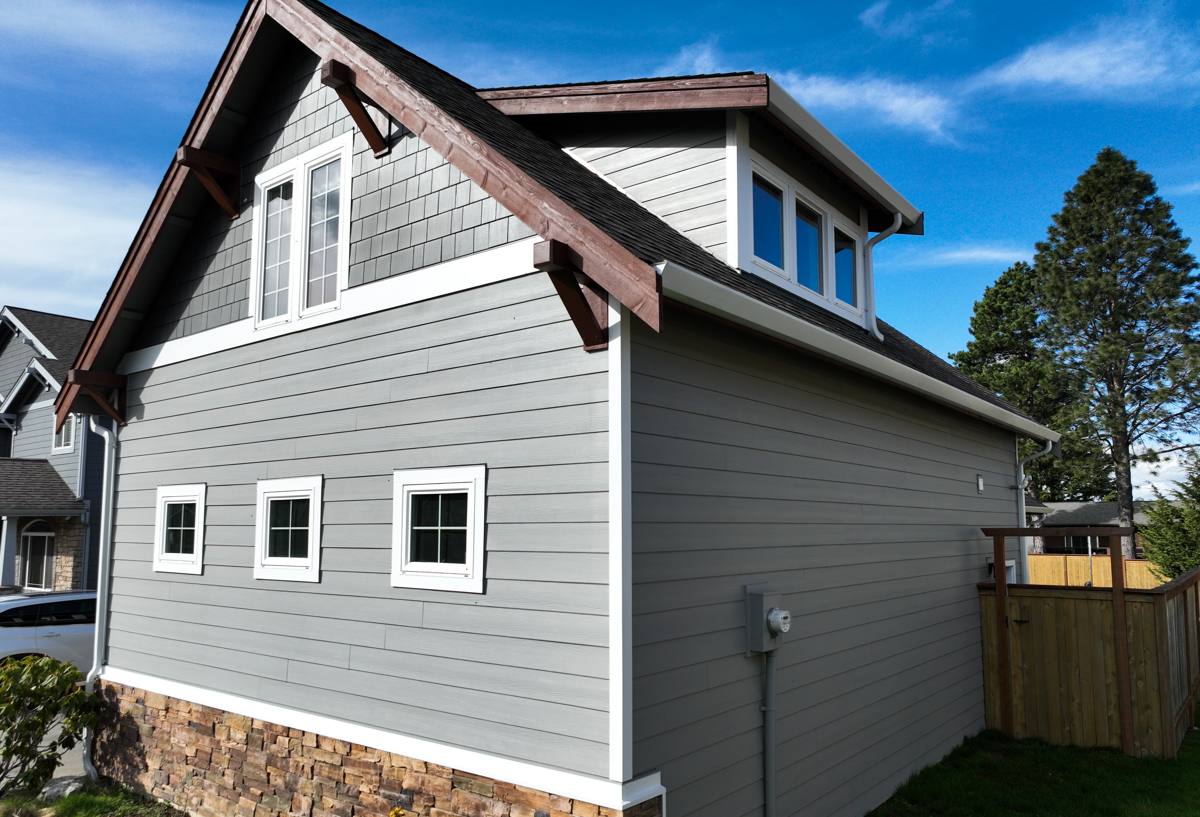
What Whatcom County Weather Does to Exterior Siding
Three conditions do most of the damage to siding in this part of Bellingham, and they compound each other over time.
Salt Air
Proximity to Bellingham Bay means airborne salt settles on exterior surfaces year-round. Salt is corrosive to metal fasteners and trim, and it accelerates the breakdown of finishes that aren't formulated to resist it. Paint film on wood or engineered wood siding tends to chalk and fail faster in a salt-air environment than the same product would inland.
Driving Rain
Bellingham doesn't get the heaviest rainfall totals in the state, but wind off the bay turns ordinary rain into driving rain that hits siding at an angle instead of falling straight down. That means water gets pushed into laps, seams, and butt joints that a vertical rainfall would never reach. Siding systems and flashing details that aren't built for that kind of wind-driven moisture start to show problems at the seams first.
The Long Moss Season
Whatcom County's mild, wet fall-through-spring stretch gives moss, algae, and mildew months to establish themselves on any surface that stays damp. North-facing walls and anything shaded by trees are especially prone to green and black staining. Beyond the cosmetic issue, sustained moisture against a wall assembly is what eventually leads to rot in wood-based products and trim.
None of these three things is dramatic on its own. It's the combination, repeated every year for decades, that separates siding that still looks good at year 20 from siding that needed replacing at year 10.
Why We Install Only James Hardie Fiber Cement
We made a decision as a company to install James Hardie fiber cement siding exclusively. We don't install vinyl, LP SmartSide, primed spruce, cedar, or other fiber cement brands like Cemplank or Allura. That's not a marketing position — it's a standard we hold because of what we've seen play out on homes in this climate over years of installs and repairs.
Fiber cement is non-combustible and dimensionally stable, meaning it doesn't expand and contract with moisture the way wood-based products do. That matters directly here: a product that swells when wet and shrinks when it dries eventually opens gaps at seams and fastener points, and those gaps are exactly where driving rain and salt air do the most damage. James Hardie's ColorPlus finish is baked on at the factory under controlled conditions, which gives it better long-term color retention and resistance to the chalking and fading that salt air accelerates on field-painted surfaces.
James Hardie also engineers regional product lines (HZ5 and HZ10) specifically for climate zones like the Pacific Northwest, with formulations designed around moisture exposure rather than a single generic mix used everywhere in the country. Combined with a strong transferable warranty, that gives homeowners in Columbia a product that's actually been built with a wet, marine-influenced climate in mind, not adapted to it after the fact.
We're upfront that other products have real advantages — vinyl is inexpensive and low-maintenance in mild climates, cedar has a look some homeowners specifically want, and engineered wood is lighter and easier to install quickly. But when we weigh those advantages against long-term performance in a bay-adjacent, high-moisture environment, fiber cement is what we're willing to put our name behind.
Matching the Right Hardie Product to Your Home
Not every Hardie product line fits every house. Part of our job is helping Columbia homeowners choose the right profile for their home's style, exposure, and budget.
| Product | Best Suited For | Notes for This Climate |
|---|---|---|
| HardiePlank lap siding | Most single-family homes, traditional and modern styles | Widely used option; performs well with proper lap and fastener spacing to shed wind-driven rain |
| HardiePanel vertical siding | Modern builds, accent walls, gable ends | Fewer horizontal seams means fewer entry points for driven rain on exposed elevations |
| HardieShingle siding | Craftsman and cottage-style homes | Detailed profile that needs careful flashing at the many small seams it creates |
| HardieTrim boards | Window/door surrounds, fascia, corners | Pairs with any of the above; keeps trim from being the weak point in the system |
Homes with heavy tree shade or a north-facing exposure toward the bay are the ones where we spend the most time on product selection and detailing, since those elevations hold moisture the longest through the moss season.
Our Process for Columbia Homeowners
Every project starts with a walk-around of the home to assess current siding condition, trim and flashing details, and any problem areas tied to shade, wind exposure, or drainage. From there:
- We identify and document any moisture damage or rot behind existing siding before it's covered up again.
- We repair or replace damaged sheathing and framing as needed — new siding over compromised structure just hides the problem.
- We install a proper water-resistive barrier and flashing details at every window, door, and penetration, since this is where driving rain actually gets in.
- We install James Hardie siding to manufacturer specifications, including correct fastener type, spacing, and clearances — installation quality is what determines whether the warranty holds up and whether the product performs the way it's designed to.
- We walk the finished job with the homeowner and go over care and maintenance specific to their home's exposure.
Roofing, Windows, and Decks: The Full Exterior Picture
Siding doesn't work in isolation. On a lot of Columbia homes, the reason siding failed in the first place traces back to a roofing or window issue that let water in above or beside the wall assembly. Because we handle roofing, windows, and decks in addition to siding, we can look at a home's exterior as one connected system rather than treating each component separately.
A few examples of how these interact in this climate:
- Roof flashing and gutter performance directly affect how much water runs down and pools against siding at the roofline.
- Window flashing details are one of the most common failure points behind siding — a new install is a good time to correct old, undersized flashing.
- Decks attached to the house need proper ledger flashing so deck-level moisture doesn't wick into the siding and framing behind it.
Coordinating these trades under one crew means fewer gaps between contractors and a lower chance that one trade's work undoes another's.
Why a Local Crew Matters Here
Installation quality is what actually determines how siding performs over 20-plus years, more than the product choice itself. A crew that installs fiber cement siding across a wide range of climates may not adjust their technique for what this specific stretch of Bellingham throws at a house — the salt exposure, the wind direction off the bay, the shade patterns that keep certain walls damp longer than others. A local crew that works this area regularly recognizes those patterns on sight and details the job accordingly, rather than applying a generic install method everywhere.
Local also means accountability. If a flashing detail needs a second look two years after installation, or a warranty question comes up, you're dealing with a company that's still working in the same neighborhoods, not tracking down a crew that moved on to another region.
Signs It's Time to Replace Your Siding
Homeowners in Columbia often live with early warning signs longer than they need to, either because the damage isn't obvious from the ground or because it's easy to assume a little moss or a few soft spots aren't urgent. Watch for:
- Soft, spongy sections when you press on siding, especially near the bottom courses or around windows
- Persistent moss, algae, or dark staining that returns shortly after cleaning
- Paint that's peeling, bubbling, or chalking heavily, particularly on bay-facing walls
- Visible gaps or warping at seams and butt joints
- A musty smell or unexplained moisture inside exterior walls
- Siding that's original to a home built more than 20-25 years ago
Any one of these on its own might just need monitoring. Several together, especially on a north- or bay-facing wall, usually means water has already gotten past the surface.
What Influences Your Project Cost
Every home is different, but a few factors consistently move the price of a siding project up or down.
| Factor | Why It Matters |
|---|---|
| Extent of hidden damage | Rot or sheathing damage found during tear-off adds repair scope before new siding goes on |
| Home size and complexity | More corners, gables, and trim details mean more labor and material |
| Product line and profile | Lap, panel, and shingle profiles carry different material and labor costs |
| Story height and access | Multi-story or difficult-access homes require more equipment and time |
| Trim and detail work | Full trim replacement adds cost but improves long-term moisture resistance |
We give homeowners a real number after seeing the home in person, not a rough guess over the phone — too much of the final cost depends on what's actually behind the existing siding.
If you're in Columbia and dealing with aging siding, moss that keeps coming back, or you're just planning ahead for a home near the bay, we're happy to take a look and walk you through what we find. Reach out for a free, no-pressure estimate using the form below.