 Bellingham Siding
 Siding in Barkley: What Bellingham's Climate Does to Your Home
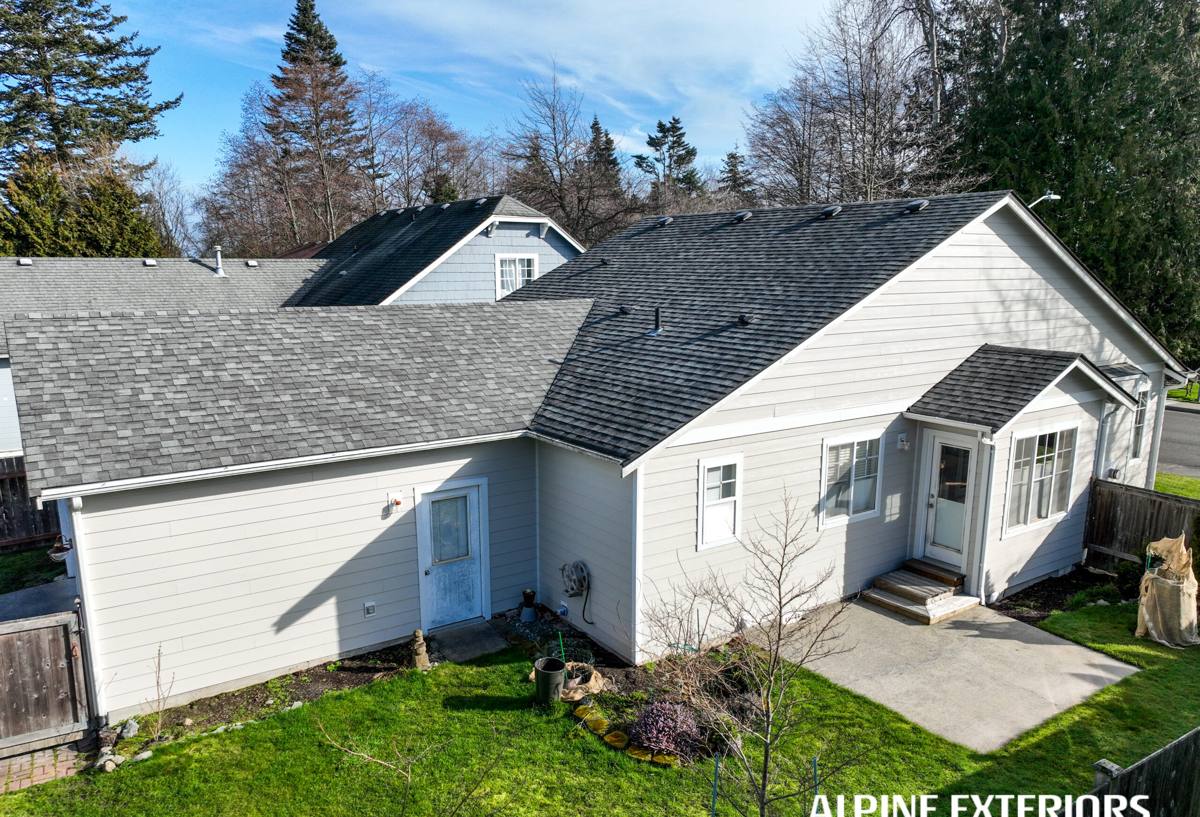
Barkley is one of Bellingham's newer, fast-growing neighborhoods, with a mix of newer-construction homes, townhomes, and commercial buildings tucked between I-5 and the older core of the city. Even though many of the homes here are relatively young compared to houses in the historic districts, "new" doesn't mean "immune." Whatcom County's marine climate goes to work on a house the day it's finished, and Barkley's exposure to Bellingham Bay's salt air, our long stretch of driving rain, and a moss season that can run eight or nine months a year all shape how exterior materials hold up over time.
This page is about what that means specifically for siding, roofing, windows, and decks on homes in and around Barkley, and why we've standardized on one siding product instead of offering the usual lineup of vinyl, LP SmartSide, or cedar.
Why Local Climate Matters More Than Most Homeowners Realize
Salt Air Off the Bay
Bellingham sits directly on Bellingham Bay, and salt-laden air moves inland with the prevailing winds, especially during winter storms. Salt air accelerates corrosion on fasteners, flashing, and any exposed metal trim, and it can speed up the breakdown of lower-grade paints and coatings on wood and composite products. Barkley isn't waterfront, but it's close enough to the bay that homes still see meaningful salt exposure compared to inland Washington towns.
Driving Rain and Wind-Driven Moisture
Whatcom County gets a lot of rain, but the bigger issue for siding isn't total rainfall — it's driving rain. Wind off the Salish Sea pushes moisture sideways into wall assemblies, not just straight down. That means seams, laps, butt joints, and anywhere two pieces of siding meet are under real pressure to shed water correctly, year after year. A product or installation that's marginal on moisture management in a drier climate can fail outright here.
Moss Season
Between the mild temperatures and near-constant moisture from fall through spring, moss and algae growth is a fact of life on north-facing walls, roofs, and shaded siding throughout Bellingham — Barkley included, especially on lots with mature trees or homes shaded by neighboring structures. Moss holds moisture against a surface far longer than open air would, which is exactly the condition that causes rot in wood-based products and breakdown in lower-quality composites.
What This Means for Siding Choices in Barkley
Every siding material handles salt air, driving rain, and moss differently. Some hold up fine for a decade or two and then start showing problems all at once — swelling, delamination, paint failure, soft spots at the bottom courses. Others are engineered specifically for wet coastal climates like ours from the start.
| Factor | What Barkley Homes Face | Why It Matters for Siding |
|---|---|---|
| Salt air | Bay-proximate corrosion on fasteners and trim | Requires corrosion-resistant fasteners and stable finishes |
| Driving rain | Wind-driven moisture at laps and joints | Demands correct flashing, gaps, and water-shedding detail work |
| Moss/algae season | 8-9 months of damp, shaded conditions | Punishes moisture-absorbent materials over time |
| Freeze-thaw swings | Occasional winter cold snaps after wet stretches | Trapped moisture in siding can crack or split under freeze |
Why We Install James Hardie Fiber Cement — and Nothing Else
We used to get asked to install vinyl, LP SmartSide, and other engineered wood products, and at one point we did. We stopped installing anything other than James Hardie fiber cement siding, and it wasn't a marketing decision — it was a decision based on watching how different products age on real homes in this climate over 10, 15, 20 years.
What We Won't Install, and Why
- Vinyl siding — It's inexpensive and low-maintenance, but it's a thin plastic product that expands and contracts with temperature swings, can warp or crack under impact, and doesn't hold paint (so your color options are locked in for the life of the product). In coastal wind, panels can also loosen over time.
- LP SmartSide and other engineered wood — These are wood-strand products with a resin binder, and they perform reasonably well when installation and caulking are perfect and stay perfect. The risk is that any breach — a missed caulk joint, a cracked panel edge, prolonged moss cover — lets moisture into the wood fiber, and once that starts, it doesn't reverse.
- Cedar and primed spruce — Real wood siding can look great, but it's the highest-maintenance option in a climate like ours: repainting or restaining on a recurring cycle, vulnerability to moss and rot in shaded areas, and a real risk of insect activity over time.
- Cemplank and Allura — Other fiber cement brands aren't inherently bad products, but we've standardized on one manufacturer, one factory finish system, and one warranty structure so we can stand behind our work without hedging between product lines.
What James Hardie Gets Right for This Climate
James Hardie fiber cement is a cement-and-cellulose composite, not wood and not plastic. It doesn't absorb moisture the way wood-based products do, it's non-combustible, and it holds a factory-applied ColorPlus finish that's baked on and warrantied against fading and peeling — which matters in a region where repainting siding every few years isn't something most homeowners want to sign up for. Hardie also makes climate-specific "HZ5" product engineered for regions with our exact combination of moisture and temperature swings, which is what we spec on Bellingham homes.
How Our Siding Process Works in Barkley
1. Assessment and Estimate
We walk the exterior, look at current siding condition (if there is any), check for moisture intrusion or moss buildup at vulnerable spots — bottom courses, window trim, north-facing walls — and give you a straightforward estimate. No pressure, no inflated "today only" pricing tactics.
2. Prep and Moisture Check
Before new siding goes up, we check the sheathing and framing underneath for existing moisture damage, especially on older sections of a home or areas that have been shaded and damp for years. Covering up a moisture problem instead of fixing it is one of the most common ways siding jobs fail early.
3. Installation to Manufacturer Spec
James Hardie's warranty depends on correct installation — proper fastener spacing and type, correct clearances from grade and roofing, proper caulking and flashing at joints and penetrations. We install to that spec, not to a shortcut version of it.
4. Final Walkthrough
We go over the finished work with you, answer questions about care, and make sure you know what a well-installed Hardie exterior should look like for the long haul.
Beyond Siding: Roofing, Windows, and Decks in Barkley
Siding doesn't work in isolation — it's one part of a home's exterior envelope, and the same climate stresses that affect siding affect roofing, windows, and decks.
- Roofing — Moss and algae growth on roofs is one of the most common calls we get in this area; a roof that traps moisture under moss ages faster than one that's kept clean and properly ventilated.
- Windows — Old or poorly sealed windows are a major point of driving-rain intrusion. When we're already on a home for siding work, window flashing and integration get checked as part of the job.
- Decks — Outdoor structures take the brunt of Whatcom County's wet season directly, with no wall cavity to buffer them. Proper material choice and drainage detailing matter as much on a deck as they do on siding.
Handling all four under one local crew means fewer contractors pointing fingers at each other's work when something at a transition point — a window-to-siding joint, a deck ledger board, a roof-to-wall flashing detail — needs attention.
Why a Local Crew Matters in a Neighborhood Like Barkley
Barkley has a mix of building ages and styles, and homes here sit at a specific point of exposure — close enough to the bay to catch salt air, but also inland enough to deal with the shaded, tree-influenced moss conditions common across Bellingham's residential neighborhoods. A crew that works across Whatcom County regularly knows which details actually matter here: how far siding needs to clear grade given our rain volume, which fastener types hold up against corrosion, where moss tends to establish first on a given roof orientation. That's not knowledge you get from a national install manual — it's knowledge you get from doing the work on Bellingham homes, season after season.
A Simple Pre-Estimate Checklist
If you're trying to figure out whether it's time to look seriously at your siding, walk your home's exterior and check for these:
- Soft or spongy spots when you press on siding, especially near the bottom courses
- Visible moss or algae buildup that hasn't been cleaned in a year or more
- Paint that's peeling, bubbling, or chalking rather than just fading
- Gaps, cracks, or separation at siding joints and corners
- Discoloration or staining that suggests water is tracking behind the siding
- Warping, buckling, or visibly uneven panel lines
None of these automatically mean full replacement is necessary, but they're worth having a professional look at before a small problem becomes a structural one.
Get a Free, No-Pressure Estimate
If you're in Barkley or anywhere else around Bellingham and want an honest read on your siding, roofing, windows, or deck, we're happy to take a look and walk you through what we see — no obligation, no pressure. Use the form below to request a free estimate.