 Bellingham Siding
 Why Cedar Gets a Second Look Here
Cedar siding has a real pull in Bellingham. It's a Pacific Northwest material, milled from a tree that grows in our own backyard, and it looks the part on a craftsman bungalow in the York neighborhood or a shingle-style home up on Alabama Hill. Western red cedar resists insects and rot better than most softwoods, it takes stain and paint well, and freshly installed it has a warmth that fiber cement, vinyl, and engineered wood all try to imitate. We understand the appeal. This page isn't an attack on cedar as a material — it's an honest look at what owning it actually involves once it's on the wall, in a climate like ours, so you can decide with your eyes open.
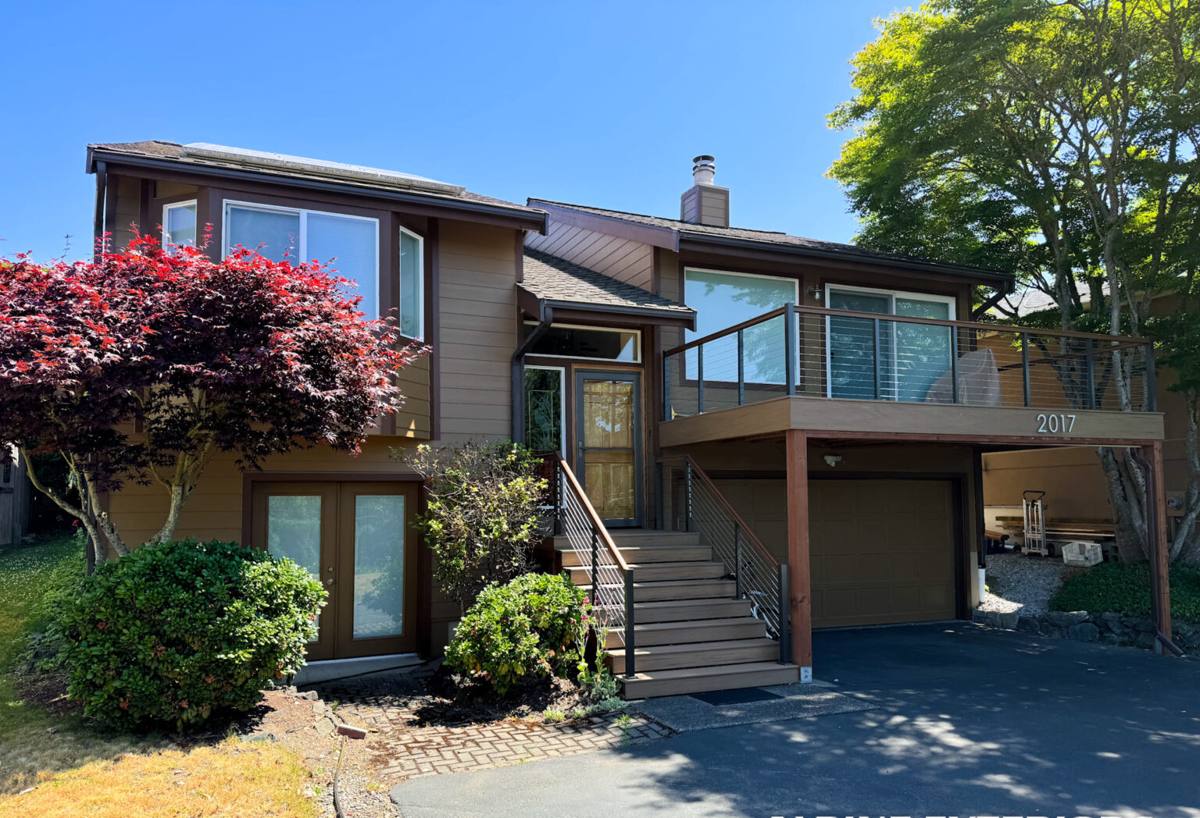
The Maintenance Cycle Nobody Puts in the Brochure
Cedar is a natural wood product, and natural wood products need active upkeep to keep performing. That's not a defect — it's the trade-off for the look. In Whatcom County, where the marine layer keeps humidity up for much of the year, that upkeep schedule tends to run tighter than what most homeowners expect going in.
Refinishing, Not Just Cleaning
Stained cedar typically needs a fresh coat every 3 to 5 years; painted cedar can stretch closer to 5 to 7 under ideal conditions. "Ideal conditions" is the catch — south and west elevations exposed to driving rain off the Sound, or shaded north walls that never fully dry out, will fall on the short end of that range. Skip a cycle and you're not just touching up color. You're often re-sanding, spot-priming exposed grain, and sometimes replacing boards that started absorbing water once the finish failed.
What a Realistic Ownership Year Looks Like
- Annual inspection of caulking, end grain, and any spots where boards meet trim, flashing, or the ground
- Washing to remove pollen, algae, and moss buildup before it stains or holds moisture against the wood
- Touch-up staining or painting on sun- and rain-exposed elevations as the finish shows wear
- Full refinish on a multi-year cycle, timed to your specific exposure rather than a generic calendar
- Prompt replacement of any board showing cupping, splitting, or soft spots — waiting invites rot to spread to neighbors
How Our Climate Works Against Wood Siding
Bellingham doesn't get hurricanes or hard freezes, but it gets something arguably tougher on wood siding: long stretches of damp, mild weather with limited hard drying in between. Whatcom County's driving rain comes in sideways off the Strait during fall and winter storms, hitting walls directly rather than falling straight down where an overhang would shed it. Wood siding needs to dry out between wettings to stay stable, and our stretch of gray months from October through April doesn't always give it the chance.
Moss and Algae Season
Ask anyone who's scrubbed a north-facing fence around here — moss doesn't need much encouragement in this county. Shaded elevations near mature evergreens, common on lots throughout Bellingham and out toward Ferndale and Lynden, stay damp long enough for moss and algae to take hold on cedar's textured grain. Left alone, that growth holds moisture directly against the wood and accelerates the finish breakdown underneath it, turning a cosmetic problem into a maintenance one.
Salt Air Near the Water
Homes closer to Bellingham Bay and the waterfront neighborhoods pick up airborne salt that accelerates fastener corrosion and finish degradation on any exterior material, wood included. It's a slower, quieter form of wear than rot, but it shows up as premature rusting around nail heads and faster fading on exposed elevations, which means more frequent refinishing for homes in that zone specifically.
Where Wood Actually Fails
Cedar's real vulnerability isn't the wood itself failing outright — it's what happens at the seams. Moisture gets in at end cuts that weren't sealed, at butt joints where boards meet, at nail penetrations, and anywhere the finish has worn thin enough to let water sit against bare grain. Once water is inside the board rather than just on the surface, cedar behaves like any wet wood: it swells, it can cup or twist as it dries unevenly, and if the cycle repeats often enough without intervention, rot sets in. In our climate, that wet-dry cycle happens often, which is exactly why inspection and prompt refinishing matter so much more here than in a drier region.
The Real Cost Picture Over Time
The sticker price comparison between cedar and other siding materials misses the bigger number: what you spend to keep it looking and performing right over 20 or 30 years of ownership. Here's the honest breakdown.
| Factor | Cedar Siding | James Hardie Fiber Cement |
|---|---|---|
| Finish maintenance | Refinish every 3-7 years depending on exposure | ColorPlus factory finish, no repainting on a fixed schedule |
| Moisture vulnerability | Prone to cupping, splitting, rot at seams and end cuts | Engineered for wet climates, resists moisture-driven damage |
| Moss/algae exposure | Textured grain holds growth on shaded, damp elevations | Smoother factory surface, easier to keep clean |
| Fire exposure | Combustible | Non-combustible core |
| Warranty structure | Typically material-only from the mill, if any | Long-term manufacturer warranty backing the installed product |
| Upfront material cost | Moderate to high | Moderate |
None of this means cedar is a bad material in the abstract. It means the total cost of ownership, measured in both dollars and attention, runs meaningfully higher than most homeowners budget for when they first fall for the look.
Where Cedar Still Makes Sense
To be fair to the material: cedar can be the right call on a small accent area, a gable feature, or a historic restoration where matching original material is the point, and where the homeowner genuinely wants to commit to the upkeep. If you love the grain, you're willing to refinish on schedule, and you're not putting it on a full, weather-exposed elevation facing our prevailing storms, cedar can hold up reasonably well with disciplined care. What we push back on is putting full cedar siding on a whole house here and assuming it'll behave like a low-maintenance product — it won't, and that gap between expectation and reality is where most cedar siding problems we get called about actually start.
Why We Standardized on James Hardie Instead
We made a decision a while back to stop installing wood siding, including cedar, on full home exteriors. It wasn't about cedar being a poor product — it's that after years of doing exterior work in this specific climate, we couldn't square recommending a material that demands a strict refinishing schedule to survive our wet season, when a non-combustible fiber cement product exists that's engineered for exactly this kind of weather and comes with a factory finish that doesn't need repainting on a clock. James Hardie's HZ5 products are formulated for climates like ours, the ColorPlus finish is baked on rather than field-applied, and the warranty backs the installed product rather than just raw material. For a full siding job that has to survive Whatcom County winters for decades, that's the standard we're willing to put our name on.
If You Already Have Cedar
Plenty of homes we look at still have cedar siding, and replacement isn't always the right first move. A few things worth knowing if you're maintaining what's already up:
- Check end grain and butt joints first — that's where water gets in before anywhere else
- Don't paint or stain over existing moss or algae; clean it off and let the wood dry fully first
- Soft, spongy boards mean rot has already started underneath — patching the finish won't fix it
- Shaded, north-facing walls need more frequent attention than sun-exposed elevations
- If more than a handful of boards are failing, it's often more cost-effective to re-side than to keep chasing repairs board by board
Making the Call for Your Home
If your cedar is holding up and you're committed to the maintenance, that's a legitimate choice and we're not here to talk you out of a material you've decided you want. But if you're tired of the refinishing cycle, seeing rot show up faster than it should, or just planning ahead before you commit to reinstalling cedar on a full exterior, it's worth understanding what a non-combustible, factory-finished alternative actually looks like on a home like yours before you decide. We're happy to walk your specific exposures — sun, shade, wind direction, distance from the water — and give you a straight read on what each material would actually mean for your maintenance schedule going forward. Reach out for a free, no-pressure estimate and we'll give you the honest version, whichever way you lean.