 Bellingham Siding
 Roof Replacement Built for Birchwood's Climate
Birchwood sits close enough to Bellingham Bay and the Puget Sound air mass that roofs here take a different kind of beating than roofs twenty miles inland. Salt-laden air corrodes exposed metal faster, wind-driven rain off the water finds every weak seam, and the tree cover that makes the neighborhood pleasant to live in also means shade, moisture, and moss have most of the year to work on a roof instead of just a few wet months. A roof replacement in this part of Whatcom County has to account for all three at once, not just swap old shingles for new ones.
We've worked enough roofs in this pocket of Bellingham to know which failure patterns show up here again and again: fastener corrosion on lower-grade flashing, moss lifting shingle tabs on north-facing slopes, and soffit or fascia rot where gutters overflowed during a hard rain event and nobody caught it in time. A correct replacement addresses the roof covering and the conditions that wore out the last one.
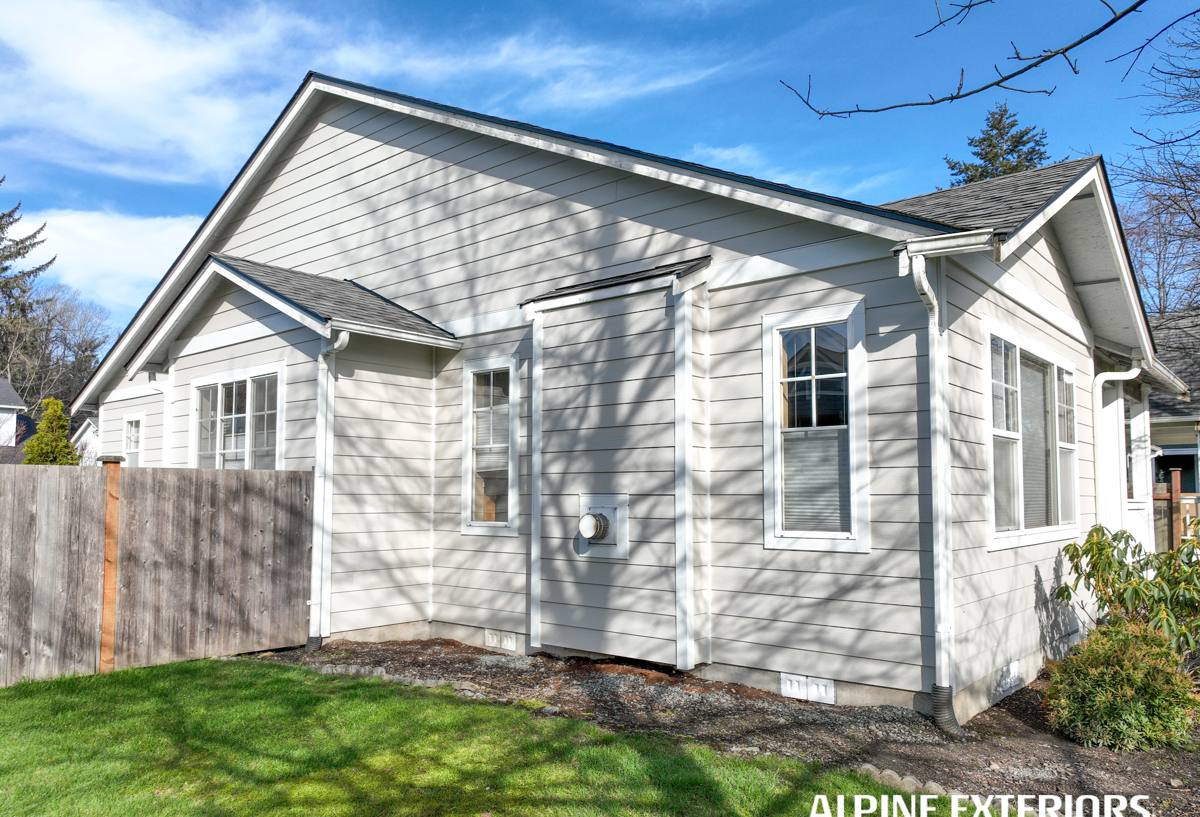
Why Birchwood Roofs Wear Differently Than Roofs Elsewhere in Whatcom County
Salt Air and Metal Components
Every roof has metal on it somewhere — flashing around chimneys and valleys, drip edge, vent caps, fasteners. Standard galvanized components hold up fine in drier inland climates, but closer to the water the salt content in the air accelerates corrosion at seams and cut edges. We spec corrosion-resistant flashing and fasteners on jobs in this area as a default, not an upgrade, because replacing a roof only to have the flashing fail in eight years defeats the purpose.
Driving Rain and Wind Exposure
Storms moving in off the Sound don't always come straight down. Wind-driven rain hits roof planes at an angle and gets pushed sideways under improperly lapped shingles, around under-sealed vent boots, and into any gap where flashing wasn't properly stepped or counter-flashed. This is less about the shingle brand and more about installation detail — how the underlayment is lapped, how valleys are woven or metal-lined, and how penetrations are sealed.
Moss, Shade, and Moisture Retention
Bellingham's tree canopy is part of what makes neighborhoods like Birchwood attractive, but shaded, north-facing roof slopes stay damp long after sun-exposed slopes have dried out. That extended dampness is exactly what moss and algae need to establish. Once moss takes hold, it doesn't just look bad — it lifts shingle edges, holds water against the roof deck, and works its way under tabs in a way that shortens the life of the roof covering well before its rated lifespan.
What a Correct Roof Replacement Includes
A roof replacement is more than tear-off and re-cover. Done right, it's a full system: deck, underlayment, flashing, ventilation, and covering all working together. Skipping any one of these is how a roof that looks fine in year one starts leaking in year five.
- Full tear-off to the deck — never install new roofing over old, which traps moisture and voids most manufacturer warranties
- Deck inspection and repair of any soft, delaminated, or water-damaged sheathing before anything new goes down
- Ice-and-water shield or equivalent self-adhered membrane at eaves, valleys, and penetrations, sized for our rain volumes rather than a bare-minimum code layer
- Synthetic underlayment across the full deck for a secondary water barrier
- Corrosion-resistant flashing at chimneys, walls, valleys, and all roof-to-wall transitions
- Balanced intake and exhaust ventilation so the attic can actually dry between wet spells
- New drip edge and properly integrated gutter apron so water sheds off the fascia instead of behind it
- Manufacturer-correct fastening pattern and nailing height for wind rating in this exposure
Choosing a Roof Covering for This Neighborhood
There's no single "best" roofing material for every Birchwood home — it depends on the roof's pitch, sun exposure, tree cover, and what the homeowner wants to maintain long-term. What matters most is matching the material's real-world behavior in a wet, mossy, salt-influenced climate to the specific roof in front of us.
| Material | How It Performs Here | Maintenance Reality |
|---|---|---|
| Architectural asphalt shingle | Solid all-around performer; algae-resistant granule options help on shaded slopes | Occasional moss removal on shaded planes; typical 25-30 year lifespan with good ventilation |
| Standing seam metal | Sheds moss and moisture well due to smooth, steep-shedding surface; needs marine-grade coatings near the water | Low maintenance once installed correctly; fastener and coating quality matter more here than inland |
| Cedar shake | Traditional look but holds moisture longer in shaded, damp conditions | Higher upkeep — regular treatment and moss control needed to avoid early rot |
| Synthetic/composite shingle | Resists moisture absorption better than wood; consistent performance across sun and shade | Low to moderate; still benefits from periodic moss/debris clearing |
We'll walk through the trade-offs for your specific roof rather than defaulting to one product — pitch, tree cover, and how long you plan to stay in the home all factor into the right call.
Ventilation: The Part Homeowners Don't See but Always Notice Later
An under-ventilated attic traps warm, moist air against the underside of the roof deck. In a climate as consistently damp as ours, that trapped moisture condenses, soaks into sheathing, and shortens the life of the roof from the inside — regardless of how good the shingles are on top. It also feeds mold and mildew in the attic space itself. When we replace a roof, we check intake (soffit vents) and exhaust (ridge or box vents) together, because one without the other doesn't work. A roof can fail early from poor ventilation even when every shingle was installed perfectly.
Our Replacement Process
1. On-Site Assessment
We walk the roof and attic, not just the ground-level view. That means checking deck condition, existing ventilation, flashing details, and any signs of past leaks or moss damage before we scope the job.
2. Written Scope and Estimate
You get a clear, itemized plan — tear-off, deck repair allowance, underlayment and flashing spec, material choice, and ventilation plan — so there's no ambiguity about what's included.
3. Tear-Off and Deck Repair
Old roofing comes off completely. Any deck damage found underneath gets repaired before new underlayment goes down, with photos and a straightforward conversation if repair scope changes from the original estimate.
4. Weatherproofing Layers
Ice-and-water membrane, synthetic underlayment, and flashing go in first — this is the layer that actually keeps water out long-term, and it's the layer that's invisible once the job is done.
5. Roof Covering Installation
Shingles, metal panels, or your chosen material go on to manufacturer spec, with attention to nailing pattern, exposure, and valley detail suited to wind-driven rain.
6. Final Walkthrough
We review the finished roof with you, confirm gutters and drip edge are integrated correctly, and clean up the site — magnetic sweep for stray fasteners included.
Signs a Birchwood Roof Needs Replacing, Not Just Repair
- Granule loss heavy enough to see bald patches on shingles, especially on south and west-facing slopes
- Persistent moss on north-facing slopes that comes back within a season of cleaning
- Curling, cupping, or cracked shingles across multiple roof planes rather than one isolated area
- Daylight visible through the attic roof deck, or damp insulation after a storm
- Repeated flashing leaks around chimneys or valleys despite prior patch repairs
- Roof age at or beyond 20-25 years for asphalt shingle in this climate
One or two of these on their own might mean a repair is enough. Several together — especially combined with attic moisture or repeated leak calls — usually means the roof system as a whole has reached the end of its useful life.
Why Local Experience Matters for This Job
A roof replacement crew that only works drier, inland climates tends to under-spec the water-shedding details that matter most here — lighter underlayment, minimal ice-and-water coverage, standard-grade flashing near the water. A crew that works Bellingham and Whatcom County roofs regularly builds in the margin those conditions require as a matter of habit, not upcharge. That includes reading which slopes on a given Birchwood roof will stay shaded and damp longest, and detailing those areas — ventilation, flashing, material choice — accordingly.
It also means knowing what permitting and inspection look like locally, and not treating every roof the same way regardless of its exposure to salt air, wind, or shade.
Get a Free, No-Pressure Estimate
If your Birchwood roof is showing granule loss, recurring moss, or signs of age, it's worth getting a straightforward, on-site look before you decide anything. We'll walk the roof, explain what we find, and give you a clear written estimate with no pressure to commit on the spot — just fill out the form below.