 Bellingham Siding
 South Hill's Exterior Challenges Are Different From the Rest of Bellingham
South Hill sits up on the hillside overlooking Bellingham Bay, and that elevation and exposure cut both ways. The views are real, but so is the weather that comes with them. Homes up here catch wind-driven rain off the water more directly than houses tucked into flatter, more sheltered parts of town, and the salt-laden air that blows in off the bay works on exterior materials year-round, not just during storms. Add in the mature tree canopy that shades much of the neighborhood's older streets, and you get a climate cocktail that's tough on siding, roofing, and trim: constant moisture, limited direct sun to dry things out, and a long moss and algae season that can run from fall through spring.
We've worked on enough homes in this part of Bellingham to know that "it's just Pacific Northwest weather" undersells what South Hill specifically deals with. A house two miles inland with more sun exposure and less wind can go years longer between exterior problems than a similar house on South Hill facing the water. That's not a knock on the neighborhood — it's just physics, and it's exactly why exterior material choice matters more here than in some other parts of Whatcom County.
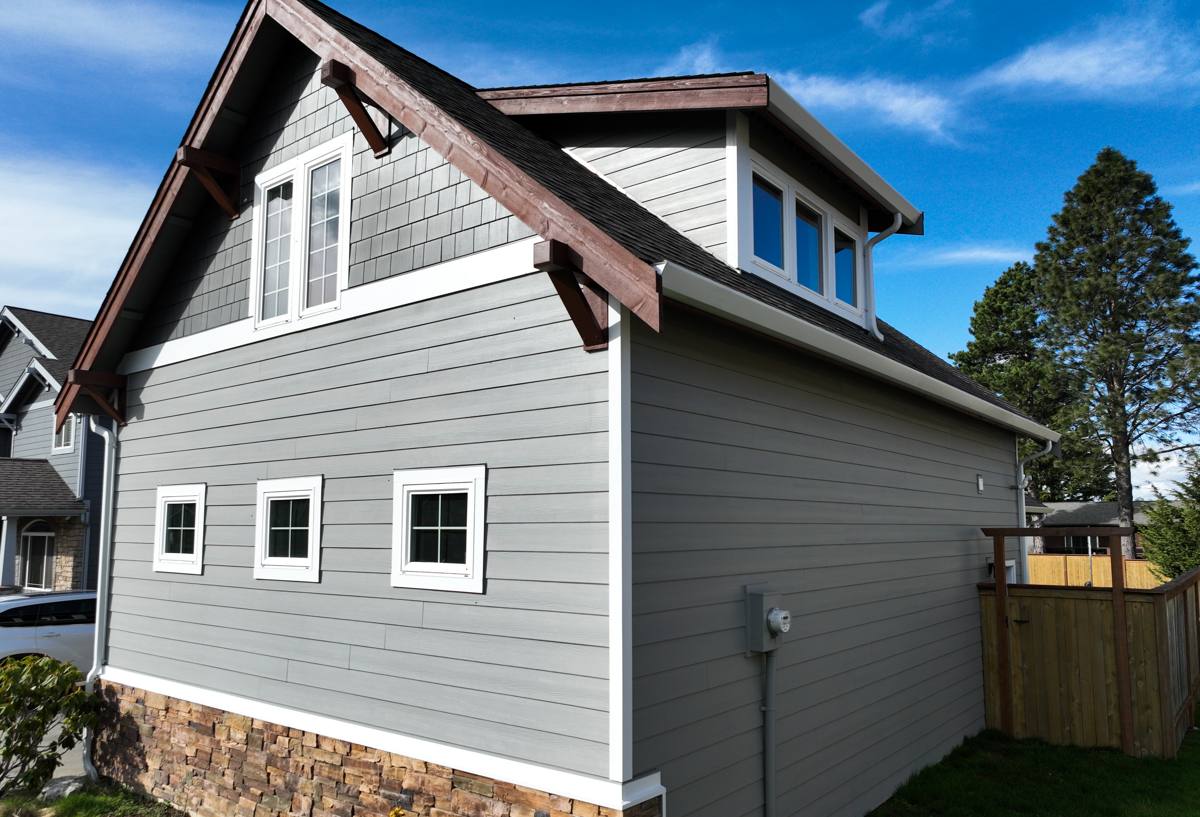
What We See on South Hill Homes
South Hill has a lot of established housing stock, including older homes with original wood siding or early replacement products that were never really engineered for this specific mix of salt air and shade. On a typical service call in this neighborhood, we're looking for:
- Moss and algae buildup on north- and west-facing walls that stay shaded most of the day
- Paint failure and soft or delaminating spots on wood or wood-composite siding, especially near ground level and under eaves with poor overhangs
- Trim and window casings that have absorbed moisture over multiple wet seasons
- Roof edges and valleys holding onto moss longer than they should, which pushes moisture back under shingles
- Deck boards and ledger connections showing rot where water collects and doesn't dry out
None of this is unusual for the area. It's the predictable result of driving rain, salt air, and limited drying time. The fix isn't more frequent repainting or patching — it's using materials and installation details that are built to handle those conditions in the first place.
Siding, Roofing, Windows, and Decks — One Crew, One Standard
We handle all four major exterior systems on a home: siding, roofing, windows, and decks. On South Hill in particular, that matters because these systems work together to keep water out. A siding job with poorly flashed window openings, or a deck ledger that isn't properly detailed against the house wrap, creates a moisture path that no amount of good material choice can fix on its own. When one crew is responsible for the whole exterior envelope, there's no finger-pointing between trades about whose flashing detail failed — we control the whole assembly and stand behind it.
For roofing, that means making sure valleys, edges, and penetrations are detailed to shed water fast rather than let it sit under moss and debris. For windows, it means correct flashing and sealant integration with whatever siding is going back up around them. For decks, it means ledger flashing and structural connections that account for the amount of rain this hillside actually sees, not a generic minimum.
Why We Only Install James Hardie Fiber Cement Siding
We made a decision a while back to stop installing several common siding products — vinyl, LP SmartSide, primed spruce and cedar, and other fiber cement brands like Cemplank and Allura — and to install James Hardie exclusively. That's not a marketing angle. It's a standard we hold because of what we've seen these products do, and not do, in exactly the kind of climate South Hill sits in.
Built for Wet, Not Just Rated for It
James Hardie makes climate-specific product lines, including an HZ5 formulation engineered for the wetter, freeze-prone regions of the Pacific Northwest. Fiber cement itself doesn't absorb and swell the way wood or wood-composite products can, which matters directly on a hillside neighborhood that stays damp and shaded for long stretches of the year. It also won't feed mold or fungal growth the way organic wood fibers can, which is relevant given how much moss and algae pressure South Hill homes deal with.
Factory Finish vs. Field Paint
Hardie's ColorPlus finish is baked on at the factory under controlled conditions, not brushed or sprayed on-site in Bellingham's damp air. That finish is formulated to resist fading and cracking longer than field-applied paint, which is a real advantage in a neighborhood where repainting means dealing with ladders, weather windows, and shaded walls that never fully dry between coats.
Non-Combustible
Fiber cement is non-combustible, which is a meaningful difference from wood-based siding products regardless of where you live in Whatcom County. It's one more reason we don't hedge on this material.
None of this means other products are junk — vinyl is cheap and low-maintenance in the right application, and cedar has real aesthetic appeal for the right buyer. But for the way South Hill homes actually get exposed to weather, we're not willing to put our name on a job using a product we don't think will hold up to our own standard. That's why Hardie is the only siding we install.
What the Process Looks Like
Every exterior job on South Hill starts with an honest look at what's actually happening on the house, not just what's visible from the street.
- Walk-through and assessment — we look at siding, trim, roof edges, window flashing, and any deck structures, noting moisture damage and its likely source
- Written estimate — scope, materials, and timeline laid out clearly, with siding, roofing, window, and deck work coordinated if more than one is needed
- Prep and protection — landscaping, walkways, and neighboring surfaces protected before demo starts, which matters on tighter hillside lots
- Installation to spec — including manufacturer-specified fastening, clearances, and flashing details, not shortcuts that pass a quick look but fail in five years
- Final walkthrough — so you know exactly what was done and what maintenance, if any, it needs going forward
Cost Factors on a South Hill Home
Every house is different, but a few things consistently move the price on siding and exterior work in this neighborhood:
| Factor | Why It Matters Here |
|---|---|
| Home age and existing siding | Older South Hill homes may need extra tear-off, sheathing repair, or moisture remediation before new siding goes on |
| Access and lot slope | Hillside lots can require more staging, scaffolding, or careful material handling than a flat lot |
| Trim and detail complexity | Older homes often have more trim, window casing, and architectural detail than newer builds, which adds labor |
| Scope of work | Bundling siding with roofing, window, or deck work can be more efficient than separate projects at separate times |
| Moisture damage found during tear-off | Hidden rot behind old siding is common on shaded, salt-exposed walls and needs to be addressed before new siding goes up |
Keeping a South Hill Exterior in Good Shape
Whatever siding, roofing, or deck materials are on your home now, a few habits go a long way in this specific climate:
- Keep gutters and downspouts clear so water isn't backing up against siding or fascia during heavy rain
- Trim back tree limbs and vegetation that keep walls shaded and slow to dry
- Have moss on roofs and shaded siding addressed before it holds moisture against the surface for months
- Check deck ledger areas and any wood-to-house connections annually for soft spots
- Address small paint or caulk failures on trim before water gets behind the surface, not after
Why Local Crew Knowledge Matters Here
South Hill's mix of hillside exposure, tree cover, and older housing stock isn't something you learn from a spec sheet. A crew that works across Bellingham and Whatcom County regularly knows which walls on a given block tend to hold moss longest, which older homes commonly have hidden moisture issues under original siding, and how to sequence work around this neighborhood's weather rather than fighting it. That local pattern recognition shows up in better flashing decisions, smarter scheduling around wet stretches, and fewer surprises once the old siding comes off.
If you're weighing a siding, roofing, window, or deck project on a South Hill home, we're happy to take a look and give you a straightforward, no-pressure estimate — including an honest read on what your home's exposure and history mean for the work ahead.