 Bellingham Siding
 Siding in York: Built for Bellingham Bay's Weather, Not Just the Job Site
York sits close enough to Bellingham Bay and the broader Whatcom County shoreline that its homes deal with a specific mix of weather most inland siding jobs never see: salt-tinged air, long stretches of driving rain off the water, and a moss season that can run most of the year in shaded, north-facing spots. Siding, trim, and fascia in this part of Bellingham don't just get wet — they stay wet, and they take on airborne salt that speeds up corrosion on fasteners, flashing, and anything metal. A crew that works in York regularly learns to plan for that instead of discovering it after the first callback.
This page is about how we approach exterior work — siding, roofing, windows, and decks — for homes in and around York, and why we've standardized on one siding product rather than offering a menu of options.
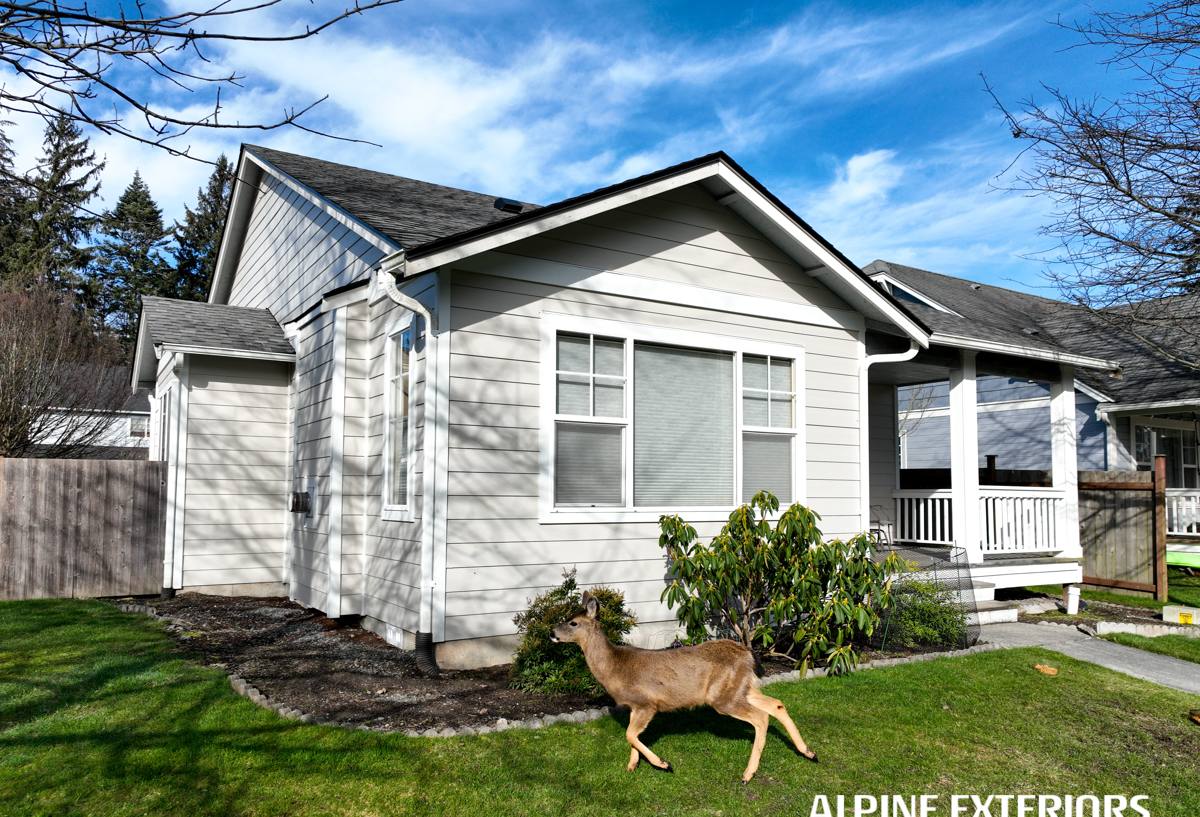
What York Homes Face Year-Round
Salt Air and Metal Corrosion
Proximity to the bay means a fine layer of salt settles on exterior surfaces over time, even on homes that aren't right on the water. Salt accelerates rust on exposed fasteners, cheap flashing, and lower-grade hardware. It also breaks down paint film faster than it would inland, which is one reason a factory-applied, baked-on finish holds up better here than a field-applied paint job that has to fight salt exposure from day one.
Driving Rain and Wind-Driven Moisture
Bellingham gets a lot of rain, but the more damaging pattern for siding is wind-driven rain — moisture pushed sideways into laps, seams, and butt joints rather than falling straight down where gravity and proper flashing can shed it easily. Homes in York that catch weather off the water see this more than homes tucked into more sheltered parts of the county. Siding material, lap spacing, and flashing details all matter more when rain doesn't just fall, it's driven into the wall.
A Long Moss and Mildew Season
Shaded north and east elevations, mature tree cover, and consistently damp conditions add up to a moss and mildew season that can stretch across most of the year in the wetter months. Some siding materials absorb moisture and give moss and mildew something to root into; others shed water and resist organic growth much better. This is one of the biggest practical differences between siding products once you get past appearance.
Why We Install Only James Hardie Fiber Cement
We don't install vinyl, LP SmartSide, Cemplank, Allura, primed spruce, or cedar. That's not a marketing position — it's a standard we hold to because of what we've seen these products do (and not do) in exactly the kind of coastal, wet Pacific Northwest climate York sits in. James Hardie fiber cement is the one product line we're willing to warranty and stand behind on every job.
Non-Combustible
Fiber cement doesn't burn. That's a meaningful difference from wood-based and some engineered wood siding products, and it matters to insurers and homeowners alike, independent of any wildfire-risk considerations specific to a given property.
Factory-Applied ColorPlus Finish
Hardie's ColorPlus finish is baked on in a controlled factory environment, not brushed or sprayed on-site. It resists fading and holds up to UV and salt exposure far better than field-applied paint, and touch-up product is formulated to match. In a salt-air environment like York's, a factory finish is doing real work that a standard paint job can't match over the same number of years.
Climate-Engineered HZ Product Lines
Hardie engineers its HZ (HardieZone) product formulations for different climate zones, accounting for moisture exposure and freeze-thaw behavior. Western Washington falls into a wetter HZ zone designation, and installing the version of the product engineered for that reality — rather than a generic formulation — is part of doing the job right, not an upsell.
Strong Transferable Warranty
Hardie backs its products with a lengthy, transferable warranty on the material itself, plus finish coverage on ColorPlus products. A transferable warranty also tends to matter to a future buyer if the home is ever sold, since it follows the house rather than the original owner.
What Correct Installation Actually Involves
Fiber cement siding is only as good as the installation behind it. Hardie publishes detailed installation specifications — fastener type and spacing, minimum clearances from grade and roof lines, proper flashing and weather-resistive barrier integration, and caulking requirements — and deviating from those specs is one of the most common ways a good product underperforms. In a market like York, where wind-driven rain is a real factor, getting laps, seams, and flashing details right isn't optional. A crew that cuts corners on clearance or fastening in a drier climate might get away with it for years; in York's weather, mistakes show up faster.
How We Approach a Siding Project in York
- Walk-through and assessment — we look at existing siding condition, moisture damage, trim, flashing, and any signs of the moss and mildew patterns common to shaded or north-facing walls in this area.
- Moisture and sheathing check — before new siding goes up, we confirm what's underneath is sound. Covering damaged sheathing or a compromised weather barrier just locks a problem behind new material.
- Weather barrier and flashing detail — proper house wrap, window and door flashing, and kick-out flashing at roof-to-wall intersections get particular attention given how much wind-driven rain this area sees.
- Installation to Hardie spec — correct fastener spacing, clearances, and lap details, using the HZ product line engineered for this climate.
- Cleanup and final walk-through — job site cleanup and a final review with the homeowner before we consider the job done.
Roofing, Windows, and Decks: The Rest of the Envelope
Siding doesn't work in isolation. A roof that's shedding water improperly, windows with failing flashing, or a deck ledger board that's trapping moisture against the house can all undermine even a perfect siding job. We handle roofing, window replacement, and deck construction and repair alongside siding, which matters in York specifically because the same salt air, rain, and moss conditions that affect siding also affect roofing materials, window seals, and deck framing. Addressing the whole exterior together — rather than treating siding as an isolated project — is usually the more durable and more cost-effective path for a home exposed to this kind of weather.
Why a Local Crew Matters Here
A crew that works Whatcom County regularly knows which elevations in a York-area home tend to hold moisture longest, how the local building department handles inspections and permitting, and what the real weather exposure looks like on a given lot versus a few miles inland. That local knowledge shows up in small decisions — where to add extra flashing, which product line to spec, how to sequence a job around Bellingham's rain patterns — that a crew unfamiliar with this specific coastal microclimate might not think to make.
Cost Factors for a York Siding Project
Every home is different, but the factors below are the main drivers of cost on a siding project in this area. We won't quote a number without seeing the house, but this gives a sense of what moves the estimate.
| Factor | Why It Matters |
|---|---|
| Tear-off vs. overlay | Removing old siding down to the sheathing allows a full moisture and structural check; overlay is sometimes possible but limits what can be inspected and corrected underneath. |
| Existing moisture or rot damage | Damaged sheathing or framing found during tear-off needs repair before new siding goes on, which adds time and material. |
| Home size and wall complexity | More corners, dormers, and trim details mean more cuts, more flashing points, and more labor hours. |
| Siding profile and accessories | Lap width, trim style, and soffit/fascia work all affect material cost and installation time. |
| Site access | Tight lots, slopes, or limited staging area (common on some York-area properties) can affect scaffolding and material handling needs. |
| Paired roofing, window, or deck work | Bundling siding with other exterior work often reduces total labor overlap compared to separate projects done at different times. |
Signs Your Siding Needs Attention
Homeowners in York can watch for a few practical warning signs between inspections:
- Soft or spongy spots when you press on siding near the bottom courses or around window trim
- Persistent moss, algae, or dark streaking that keeps coming back after cleaning
- Paint that's peeling, bubbling, or chalking faster than it should for its age
- Visible gaps, cracks, or warping at seams and butt joints
- Rust staining below fasteners or metal trim pieces
- Rooms that feel drafty or damp along exterior walls, which can point to moisture getting behind the siding
- Wood trim or fascia that's darkened, cupping, or soft to the touch
None of these automatically mean a full re-side is needed — sometimes it's a localized repair or a flashing fix. But catching these early, before they become structural, keeps repair costs down.
A Straightforward Process From Estimate to Finish
We keep the process simple: an in-person look at the house, a clear explanation of what we're seeing and why, a written scope and estimate, and a realistic timeline that accounts for Bellingham's weather rather than ignoring it. We don't pressure homeowners into upgrades they don't need, and we're straightforward about what a project will and won't include.
If you're in York and thinking about siding, roofing, windows, or a deck — or just want a second opinion on what your home's exterior needs — we're happy to take a look. The estimate is free, there's no pressure, and you'll get a straight answer about what your home actually needs.