 Bellingham Siding
 Living on the Water: What Puget-Area Homes Are Up Against
Homes in the Puget area, tucked along the edge of Bellingham Bay and the greater Whatcom County shoreline, deal with a specific combination of weather that most siding products were never designed to handle well. It isn't one big storm that causes trouble here — it's the slow, steady grind of moisture that never fully lets up. Salt-laden air off the Sound works its way into fasteners, trim joints, and any gap in a coating. Driving rain, pushed sideways by wind off the water, finds its way behind siding that isn't lapped and flashed correctly. And for a good chunk of the year, especially on the north and west sides of a house shaded by evergreens, surfaces simply don't dry out fast enough to stop moss and algae from taking hold.
None of this is dramatic. It's cumulative. A house that looks fine in year three can be hiding soft trim, delaminating siding, or a slow paint failure by year eight or nine if the wrong materials or installation shortcuts were involved. That's the lens we use on every exterior job in this area — siding, roofing, windows, or decks.
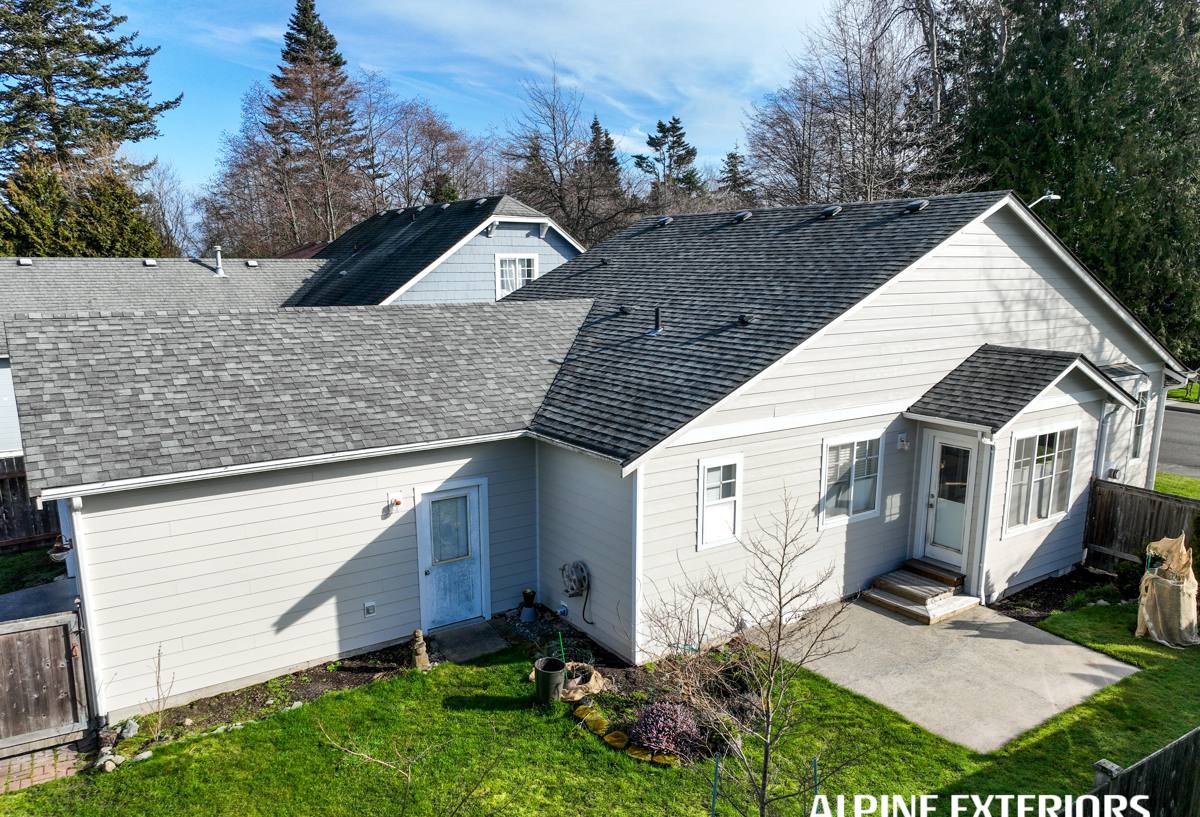
Why We Standardized on James Hardie Fiber Cement
We install James Hardie fiber cement siding exclusively. We don't install vinyl, LP SmartSide, Cemplank, Allura, primed spruce, or cedar. That's not a marketing position — it's a decision we made after weighing how each of those products actually performs over time in a wet, marine-influenced climate like Whatcom County's.
Vinyl is inexpensive and low-maintenance in the sense that it doesn't need paint, but it's a petroleum-based product that expands and contracts with temperature swings, can crack in impact, and its seams and J-channels give wind-driven rain a path inward if installation isn't precise. Engineered wood products like LP SmartSide use a wood strand core with a resin coating — a reasonable product in dry climates, but any breach in that coating (a nail pop, a cut edge left unsealed, a persistent damp spot from shade or sprinklers) opens the door to swelling and rot in a way that's hard to catch early. Primed spruce and cedar are natural wood — beautiful, but they need real upkeep: recoating, caulking, and vigilance against exactly the kind of sustained moisture this area produces. Cemplank and Allura are also fiber cement, and fiber cement as a category is the right call here; we simply standardized on Hardie's specific manufacturing and product engineering rather than splitting our crews and inventory across multiple fiber cement brands.
Fiber cement itself is non-combustible, doesn't attract insects, and doesn't rot the way wood-based products can. James Hardie backs its siding with a factory-applied ColorPlus finish, engineered and warranted to resist fading and chipping better than field-applied paint, and their HZ5 product line is specifically engineered for climates that see the kind of cold, wet, humid conditions we get here. It's also backed by a strong, transferable limited warranty — something worth real money if you ever sell the house.
What "Climate-Engineered" Actually Means
James Hardie makes different formulations of its siding for different climate zones — HZ5 for cold, wet, freeze-prone regions like ours, and HZ10 for hot, humid, coastal zones further south. It's not a marketing label; the cement formulation and moisture-resistance engineering are genuinely different between the two. Installing the version engineered for the wrong climate zone is one of the more common corners cut in the industry, and it's part of why the crew doing the install matters as much as the product itself.
What Correct Installation Looks Like Here
Fiber cement siding is only as good as the flashing, gapping, and fastening behind it. In a climate that gets sustained wind-driven rain, the details most homeowners never see are the ones that determine whether a siding job lasts fifteen years or fifty. That includes:
- Proper water-resistive barrier and correctly lapped house wrap behind every course
- Flashing over every window, door, and butt joint so water sheds outward instead of tracking inward
- Correct nailing pattern and fastener depth — over-driven nails crack the board and create entry points for moisture
- Manufacturer-specified gaps at trim, corners, and the ground to allow drainage and airflow
- Caulking only where Hardie's install specs call for it, not as a substitute for proper flashing
Skipping any one of these doesn't show up right away. It shows up in year six or seven as a stain, a soft spot, or a paint failure at a specific joint — and by then it's a repair, not a warranty claim.
Roofing, Windows, and Decks: The Rest of the Envelope
Siding doesn't work in isolation. On homes near Puget and around Bellingham Bay, we look at the whole exterior envelope together, because water that gets past a roof edge or a window flange usually ends up telling on itself through the siding — long after the actual source of the leak has been forgotten.
Roofing
A roofing system that's shedding water properly at valleys, penetrations, and edges is the first line of defense for everything below it. Roof-to-wall flashing details matter especially at additions and dormers, where two roof planes or a roof and wall meet.
Windows
Older window units and poorly flashed replacements are a common source of the hidden water damage we find when we open up a wall during a siding job. Correctly flashed, well-sealed windows protect both the interior and the siding around them.
Decks
Exposed to the same rain and moss-prone shade as siding, decks near the water take a beating from standing moisture between boards and ledger connections that were never properly flashed. Decking material and ledger flashing details matter just as much here as they do on a roof or wall.
Signs Your Exterior Is Already Losing the Battle
Because moisture damage in this climate is gradual, it's easy to miss until it's a bigger job. A few things worth walking around your house and checking for:
- Green or black staining, especially on north-facing or shaded walls
- Soft or spongy trim around windows, doors, or at the base of siding
- Paint that's peeling, bubbling, or chalking unevenly in specific spots rather than uniformly
- Gaps or separation at caulked joints, corners, or trim boards
- Persistent musty smell in a room along an exterior wall
- Visible warping or cupping in wood-based siding or trim
Any one of these on its own might be minor. Several together, especially on the wet side of the house, usually mean it's worth a closer look before the next winter's storms.
Cost Factors to Understand Before You Decide
Every house and every job is different, but the factors that actually move the price on a siding project are fairly consistent. Here's a general sense of what drives cost up or down — we'll give you real numbers for your specific house at the estimate.
| Factor | Why It Matters |
|---|---|
| Extent of hidden water damage | Rot or damaged sheathing found once old siding comes off adds repair scope before new siding can go on |
| House complexity | Multiple stories, dormers, and cut-up wall planes take more time to flash and fit correctly than a simple rectangular footprint |
| Trim and accent choices | Board-and-batten sections, shake-style accent panels, and custom trim profiles add labor over a plain lap-siding install |
| Full envelope scope | Bundling siding with roofing, window, or deck work in one project can reduce total disruption and sometimes overall cost versus separate projects |
| Access and site conditions | Steep lots, limited driveway access, and mature landscaping near the house can add setup time |
Living With Moss and Salt Air After the Job Is Done
James Hardie siding doesn't rot or feed moss the way wood-based products can, but nothing fully stops algae and moss from settling on a shaded, damp surface in this climate — it's a fact of life anywhere near the Sound with mature tree cover. The difference is that a properly installed fiber cement wall can be gently cleaned without the underlying material breaking down the way wood or engineered wood can when scrubbed or pressure washed. Keeping gutters clear, trimming back vegetation that keeps a wall shaded and damp, and rinsing off buildup once or twice a year go a long way toward keeping the ColorPlus finish looking the way it did on install day.
Why a Local Crew Matters
A crew that works Whatcom County year-round knows which walls on a typical Bellingham-area house take the worst of the weather, how the local building department handles inspections, and what actually fails first on homes exposed to this particular mix of rain, wind, and salt air. That's different knowledge than a crew that mostly works drier inland climates and treats every job the same way. It shows up in small decisions — where to add extra flashing, which product line to spec, how tight to run a fastener schedule — that don't show up on a quote but do show up in how the house holds up ten years later.
If you're weighing a siding, roofing, window, or deck project on your Puget-area home, we're happy to take a look and give you a straightforward, no-pressure estimate — just fill out the form below.