 Bellingham Siding
 Exterior Work Built for Sunnyland's Climate
Sunnyland is one of Bellingham's older established neighborhoods, sitting close enough to Bellingham Bay and Whatcom Creek's tree cover that homes here take a steady beating from moisture year-round. It's not dramatic weather — no hurricanes, no hailstorms — but it's relentless. Marine air off the bay carries salt and humidity into siding and trim. Driving rain off Puget Sound pushes water sideways into joints and seams that would stay dry in a calmer climate. And the long gray stretch from October through April, shaded further by mature tree canopy common in this part of Bellingham, gives moss, algae, and moisture an open runway on anything that can't shed water fast.
We've worked on homes throughout Whatcom County long enough to know that Sunnyland's mix of older post-war houses and newer infill construction each come with their own exterior weak points. Older homes often still carry original wood siding or early replacement products that were never engineered for this specific combination of salt air and sustained rain. Newer builds sometimes carry vinyl or engineered wood products that look fine for the first several years, then start showing the same problems we see everywhere else in this climate: swelling, staining, seam failure, and moss creeping in at every horizontal lap.
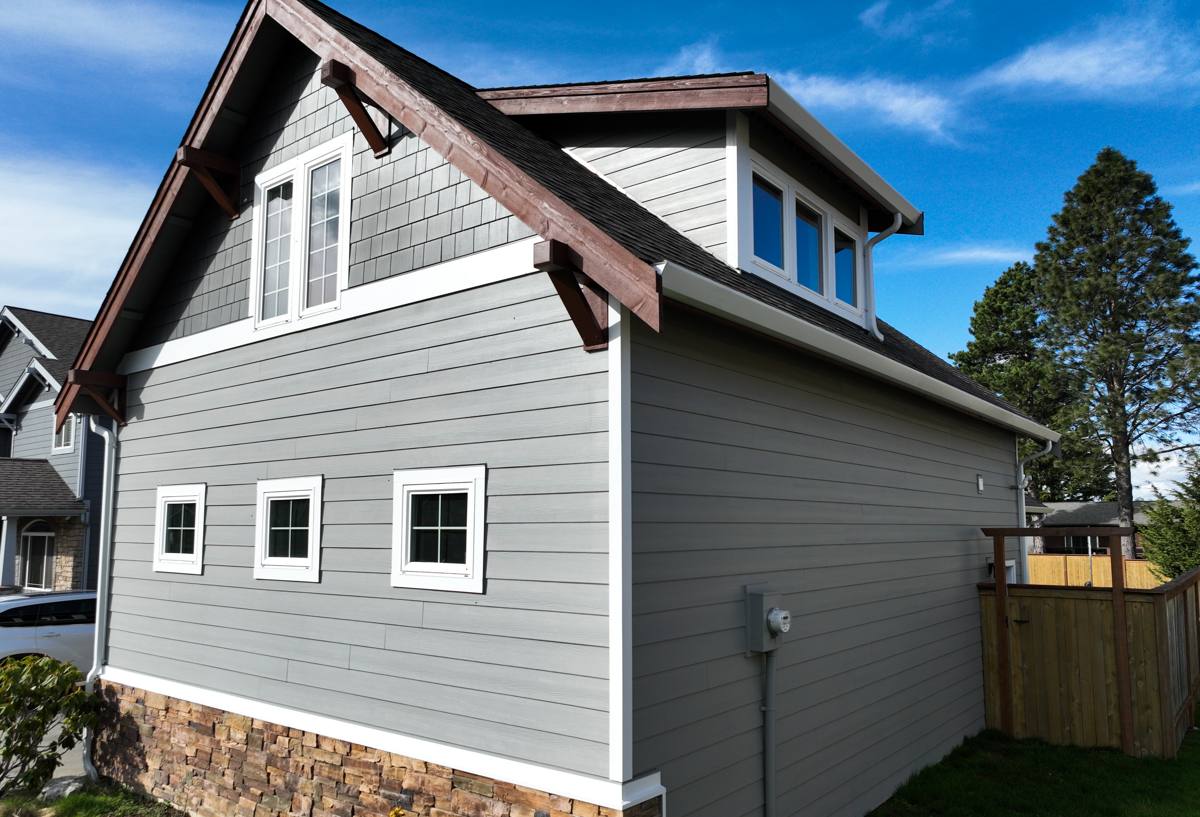
What We See on Sunnyland Homes
Every neighborhood has patterns, and Sunnyland's are consistent with the rest of Bellingham's older residential streets:
- Moss and algae staining on north-facing and shaded walls, especially under tree canopy or close to fences and hedges that block airflow
- Paint failure and wood rot on original wood siding and trim, particularly around window sills and butt joints
- Swollen or delaminating engineered wood siding where water has worked past the factory coating
- Vinyl siding that's warped, faded, or cracked from decades of temperature swings and UV, even in a relatively mild climate
- Corrosion and staining on fasteners and trim from the salt content in the air near the water
None of this means Sunnyland is a harsh place to own a home — it isn't. But it's exactly the kind of steady, moisture-heavy climate that separates exterior products that hold up for 30+ years from products that need attention every 5 to 10.
Why We Install Only James Hardie Fiber Cement Siding
We made a decision early on to stop installing anything other than James Hardie fiber cement siding, and Sunnyland's climate is a good example of why. Fiber cement is non-combustible, doesn't absorb water the way wood or wood-based composites do, and holds its factory-applied ColorPlus finish without the fading and chalking that vinyl and painted wood go through in this kind of marine, moisture-heavy air.
We get asked why we don't offer other options, so we're direct about it:
Vinyl Siding
Vinyl is inexpensive and low-maintenance in the sense that it doesn't need painting, but it's a thin plastic product that expands and contracts with temperature, can crack in cold snaps, fades in UV over time, and — critically for a wet climate like this one — traps moisture behind it if installed without the right drainage plane. It also melts under relatively low heat, which matters for insurance and fire-safety conversations. We won't install it because we don't think it holds up to the standard we want to put our name on.
LP SmartSide and Other Engineered Wood
Engineered wood siding uses treated wood strand products that perform reasonably well when installation is flawless and maintenance is kept up religiously — caulking, repainting, immediate repair of any breach in the coating. In a climate with this much sustained rain and humidity, any lapse in that maintenance lets moisture into the wood fiber core, and once that starts, it doesn't reverse. We've replaced too much of it to keep installing it.
Cemplank, Allura, and Other Fiber Cement Brands
These are legitimate fiber cement products and share Hardie's core material advantages over vinyl and wood. Our decision to standardize on James Hardie specifically comes down to their climate-engineered HZ product lines (built for exactly this Pacific Northwest combination of rain and humidity), the depth of their ColorPlus finish warranty, and the consistency we get installing one system across every job rather than mixing manufacturer specs, trim profiles, and warranty terms.
Primed Spruce and Cedar
Real wood siding, cedar especially, has a genuine appeal and a long history in this region. But it demands a maintenance schedule — periodic refinishing, immediate attention to any crack or gap — that most homeowners underestimate until the siding is already showing rot. In a climate where moss and moisture have this much time to work each year, that maintenance gap is where the damage happens.
Comparing the Options
| Material | Moisture Resistance | Maintenance | Typical Lifespan |
|---|---|---|---|
| Vinyl | Poor to fair (trapped moisture risk) | Low, but no real repair option | 15-25 years |
| Primed Spruce / Cedar | Poor without upkeep | High (repainting, sealing) | 10-20 years realistic |
| Engineered Wood (LP SmartSide) | Fair if coating stays intact | Moderate to high | 15-25 years |
| Fiber Cement (other brands) | Good | Low | 30-40+ years |
| James Hardie Fiber Cement | Excellent, climate-engineered HZ lines | Low | 30-50 years with proper install |
Roofing, Windows, and Decks Take the Same Beating
Siding isn't the only part of a Sunnyland home fighting the climate. Roofs here deal with the same moss growth and sustained saturation, and a roof that isn't ventilated and flashed correctly will feed moisture problems straight into the wall assembly below it. Windows in older homes are frequently the first place homeowners notice trouble — failed seals, fogging between panes, drafts around frames that have swelled or shrunk with the seasons. Decks, especially uncovered ones, take direct hits from driving rain and the same moss buildup that shows up on siding, and untreated or poorly sealed deck framing is one of the more common hidden rot problems we find during siding tear-offs.
We handle all four — siding, roofing, windows, and decks — because they're not separate systems on a house. Water that gets past a roof edge, a window flashing, or a deck ledger board ends up in the same wall cavity that siding is supposed to protect. A crew that only knows one trade will fix the piece they see and miss the piece that's actually failing.
Why a Local Crew Matters Here
Bellingham and Whatcom County have a specific set of exterior problems that a contractor from outside the region simply doesn't see as often: the moss cycle, the salt exposure near the bay, the number of homes with mature tree cover that keeps walls damp longer than open lots. A crew that works this area regularly knows to check for those patterns before they become expensive, and knows how James Hardie's HZ5 products and installation details need to be handled to actually perform in this specific climate — not a generic install spec written for a drier region.
Local also means accountability. If a flashing detail needs a second look two years after installation, or a question comes up about how a color is holding up through its first wet season, a Bellingham-based crew is a phone call away, not a project team that's moved on to another state.
What a Siding Project Looks Like
Every home is different, but a typical fiber cement siding replacement in a neighborhood like Sunnyland follows a consistent sequence:
- On-site inspection of existing siding, trim, and any visible moisture damage or rot
- Assessment of the water-resistive barrier and flashing details currently in place
- Removal of old siding and repair of any sheathing or framing damage found underneath
- Installation of a proper drainage plane and flashing before any Hardie board goes up
- Installation of James Hardie panels, planks, or shingles to manufacturer spec, including correct fastening and clearances
- Trim, caulking, and final inspection for gaps or exposed fastener heads
The step homeowners underestimate most is the second and third — what's happening behind the old siding. In a climate this wet, we routinely find sheathing damage that isn't visible from the outside until the old siding comes off, and fixing that properly is what actually determines whether new siding lasts 10 years or 40.
A Homeowner's Quick-Check List
Before calling anyone, it's worth walking your own exterior and looking for these signs:
- Dark green or black streaking, especially on shaded or north-facing walls
- Soft spots or visible swelling when you press on siding near the bottom courses
- Paint that's bubbling, peeling, or chalking heavily when touched
- Gaps at trim boards, window frames, or corner joints
- Any musty smell along interior walls that back up to exterior siding
Any one of these on its own isn't an emergency, but they're worth having a professional look at before the next wet season adds to the damage.
Getting Started
If you're in Sunnyland and dealing with siding that's showing its age — or you're just weighing options before an upcoming project — we're happy to come take a look. We'll give you a straight assessment of what we see, what it would take to do it right, and why we'd recommend James Hardie fiber cement for your home specifically. There's no pressure and no obligation — just an honest local estimate.