 Bellingham Siding
 Happy Valley's Exterior Challenge
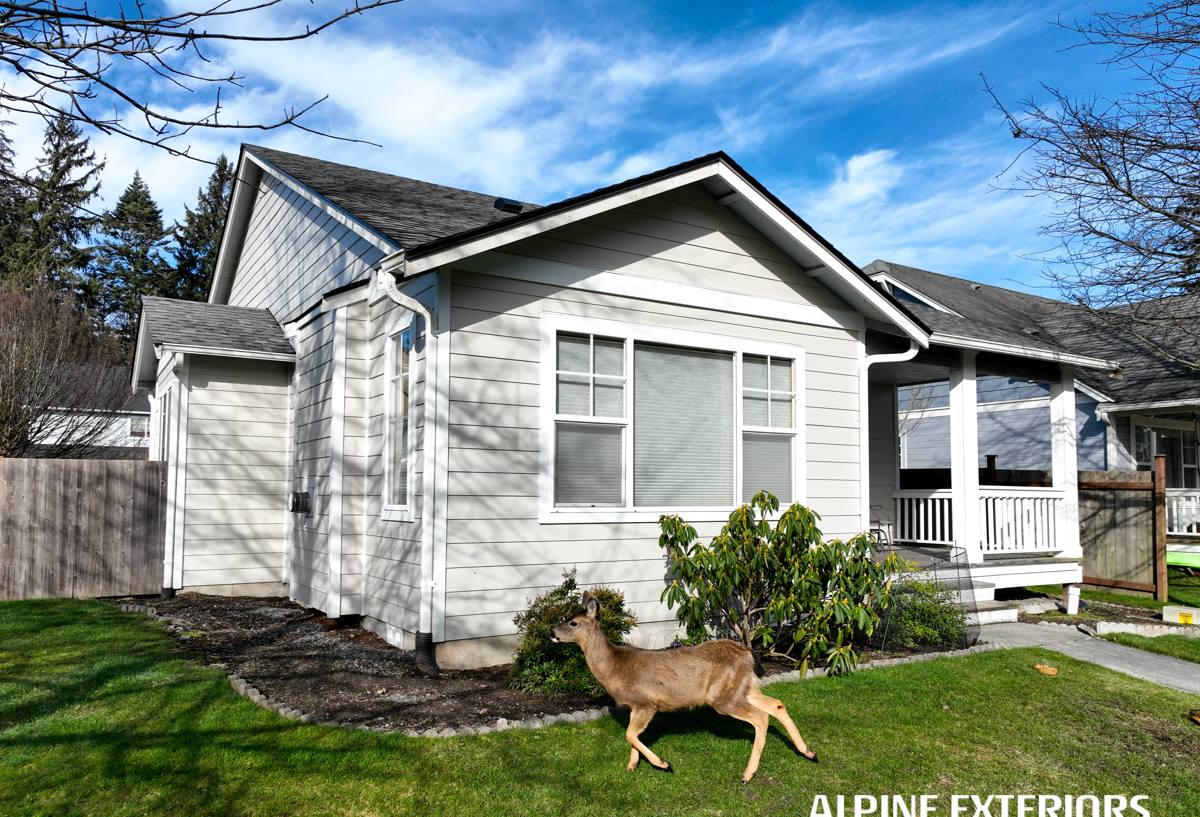
Happy Valley is one of Bellingham's older, established neighborhoods, and the housing stock reflects it — a mix of early-1900s bungalows, mid-century additions, and newer infill homes, many shaded by mature trees. That tree cover is part of what makes the neighborhood attractive, but it also means siding here rarely gets a full day of direct sun to dry out after a storm. Combined with Whatcom County's marine air and a rain season that can stretch from October well into spring, exterior surfaces in Happy Valley are under near-constant low-grade moisture pressure. It's not dramatic weather — it's persistent weather, and persistent weather is what actually wears out a home's exterior.
Homeowners in this neighborhood tend to notice the same handful of issues: moss creeping up north-facing walls, paint that needs refreshing more often than it should, and trim that stays damp longer than it seems like it should. None of that is a mystery once you understand what Bellingham's climate does to different siding materials over a couple of decades.
What Salt Air, Driving Rain, and Moss Actually Do to a House
Bellingham sits close enough to salt water that airborne salt is a real factor in exterior material selection, not just a coastal-town talking point. Salt-laden moisture accelerates corrosion in fasteners and metal trim, and it interacts with paint films in ways that inland products aren't always tested for. Add wind-driven rain — which doesn't fall straight down, it hits siding at an angle and works its way behind poorly lapped or poorly caulked joints — and you get a slow, cumulative moisture load that most siding materials weren't designed to shed indefinitely.
Then there's moss. Whatcom County's moss season is long, and shaded lots like many in Happy Valley never really get a break from it. Moss holds moisture directly against a wall surface, and moisture held against a wall surface is the single biggest driver of siding failure — swelling, delamination, paint peel, and eventually rot, depending on the material underneath.
Why This Matters More Here Than in Drier Climates
A siding product that performs fine in Eastern Washington or the Southwest can behave very differently after fifteen years of Bellingham winters. The products that hold up here are the ones engineered specifically for high-moisture, marine-influenced climates — not general-purpose products that happen to be sold in this region too.
Why We Install Only James Hardie Fiber Cement
We made a deliberate decision as a company to install only James Hardie fiber cement siding — not vinyl, not LP SmartSide, not Cemplank or Allura, not primed spruce or cedar. That's not a marketing position; it's a practical one, built around what actually holds up in this specific climate.
- Non-combustible core: Fiber cement doesn't contribute fuel to a fire the way wood-based products do — an increasingly relevant consideration in Washington given regional wildfire smoke and ember exposure concerns.
- Moisture behavior: Fiber cement doesn't swell, delaminate, or absorb water the way engineered wood products can when a joint fails or caulk ages out — which matters enormously given Bellingham's rain totals.
- Factory-applied ColorPlus finish: Hardie's color coat is baked on at the factory under controlled conditions, which holds up to UV and moisture far longer than field-applied paint, and resists the fading and chalking that job-site paint jobs are prone to.
- Climate-specific engineering: James Hardie makes different product formulations for different climate zones (HZ5 for the colder, wetter regions like ours) rather than a single one-size-fits-all product.
- Warranty structure: Hardie backs its siding with a long, transferable warranty that adds resale value — a real consideration in a neighborhood like Happy Valley where homes change hands and buyers ask questions about exterior condition.
We're not going to tell you every other product on the market is junk — vinyl, engineered wood, and other fiber cement brands all have legitimate use cases somewhere. But we've chosen to put our name behind one system that we've seen perform consistently in this exact climate, rather than juggling multiple products with different maintenance requirements and failure modes.
James Hardie vs. Alternatives, at a Glance
| Material | Moisture Behavior in Wet Climates | Maintenance | Typical Warranty |
|---|---|---|---|
| James Hardie fiber cement | Doesn't swell or rot; resists moss-related surface damage when properly maintained | Periodic cleaning; factory finish reduces repainting cycles | Long, transferable |
| Engineered wood (e.g. LP SmartSide) | Wood-based core can swell or degrade if moisture reaches the substrate | Requires diligent joint/caulk maintenance | Prorated, often shorter for coastal/high-moisture zones |
| Vinyl | Doesn't rot, but can warp, fade, and doesn't stop moisture from reaching sheathing behind it | Low, but color is not repaintable long-term | Varies widely by manufacturer |
| Cedar / primed spruce | Natural wood; needs consistent sealing to resist moisture and moss in this climate | High — regular refinishing required | Typically none from the material itself |
How We Approach a Siding Project in Happy Valley
Every house on a given street can face a different set of conditions depending on tree cover, sun exposure, and how the lot drains. Before we talk products or price, we look at the actual exposure of your house — which walls take the most wind-driven rain, where moss is already established, where trim or flashing has been patched before. That assessment shapes the installation details as much as the siding choice itself: proper rainscreen or drainage plane detailing, correct flashing at windows and doors, and lap and joint spacing that accounts for how much this region's siding actually gets rained on.
Fiber cement is a forgiving, long-lasting material, but only when it's installed to manufacturer specification. Gaps, caulking, and fastener choice matter more in a marine climate than in a dry one, because any shortcut becomes an entry point for moisture that has months, not days, to do damage before the next dry stretch.
Beyond Siding: Roofing, Windows, and Decks
Siding doesn't work in isolation — the roof, windows, and any exterior decking on a Happy Valley home all interact with the same rain and moss pressures. A roof with aging or moss-damaged shingles will shed water onto siding in ways it wasn't designed for. Old windows are a common source of the exact kind of hidden moisture intrusion that damages wall assemblies from behind. And decks, especially shaded ones, deal with the same standing-moisture and moss issues as siding, just horizontally instead of vertically.
Because we handle roofing, windows, and decks in addition to siding, we can look at a home's exterior as one connected system rather than tackling problems piecemeal — which matters when the underlying cause of a siding issue actually turns out to be a roof or window detail upstream of it.
Signs Your Siding May Need Attention
- Moss or dark green/black staining that keeps returning after cleaning, especially on north- or shade-facing walls
- Paint that's peeling, bubbling, or chalking noticeably faster than the rest of the house
- Soft spots, visible swelling, or a "spongy" feel when you press on siding near the bottom of walls or below windows
- Visible gaps at seams, corners, or trim where caulking has shrunk or pulled away
- Rising energy bills or drafts that suggest moisture or air infiltration behind the siding
- Siding that's original to a home built more than 20-25 years ago, especially if it's wood-based
What Factors Into Project Cost
Every home is different, but a few factors consistently drive cost on Happy Valley projects more than others:
| Factor | Why It Matters |
|---|---|
| Existing siding removal | Tear-off of old cedar, vinyl, or damaged material adds labor before new siding can go on |
| Moisture or rot damage found underneath | Hidden sheathing damage, common on older homes with a history of moisture intrusion, must be repaired before re-siding |
| Home size and wall complexity | Dormers, multiple gables, and cutouts around older-style trim add labor time |
| Trim and detail package | Matching or upgrading trim, corner boards, and fascia affects both material and labor cost |
| Access and lot conditions | Mature trees and tighter lots common in Happy Valley can affect staging and scaffolding needs |
We won't quote a project without seeing it in person — anything else is a guess. But these are the variables that tend to move the number most.
Why a Local Crew Matters
Bellingham's building conditions aren't generic Pacific Northwest conditions — they're specific to Whatcom County's mix of marine air, rainfall patterns, and the moss cycle that comes with heavily wooded neighborhoods like Happy Valley. A crew that works in this region day in and day out knows which details actually get tested by our weather, versus details that look fine on paper but fail here in year eight. That local knowledge shows up in small decisions — flashing choices, fastener spacing, where rainscreen gaps matter most — that don't show up on a spec sheet but matter enormously to how a siding job performs over 20-plus years in this specific climate.
If you're noticing moss, peeling paint, or aging siding on a Happy Valley home, we're happy to take a look and give you a straightforward, no-pressure estimate — no obligation, just an honest read on what your house actually needs.