 Bellingham Siding
 Why Roofs in Happy Valley Wear Out Faster Than the Label Promises
Every asphalt shingle bundle has a warranty number printed on it — 25 years, 30 years, sometimes "lifetime." Those numbers come from lab testing in controlled conditions, not from a roof sitting a few miles off Bellingham Bay. Happy Valley homes deal with a combination that most manufacturers never test for at once: salt-laden air drifting in off the water, wind-driven rain that gets pushed sideways under poorly sealed edges, and a wet, shaded moss season that can run most of the year in Whatcom County. None of these factors alone destroys a roof quickly. Together, over a decade or two, they shorten the real lifespan of a roofing system well below what the packaging suggests.
Salt air is corrosive to exposed metal — nails, flashing, vent stacks, and gutter hardware — long before it does anything visible to the shingles themselves. Driving rain finds its way into laps and seams that would stay dry in a calmer climate. And moss doesn't just look bad; it holds moisture against the roofing material and lifts shingle edges as it grows, which is exactly the kind of slow, structural damage that turns a simple maintenance issue into a full tear-off years ahead of schedule. A roof replacement done right for this specific pocket of Bellingham has to plan for all three from day one, not treat them as afterthoughts.
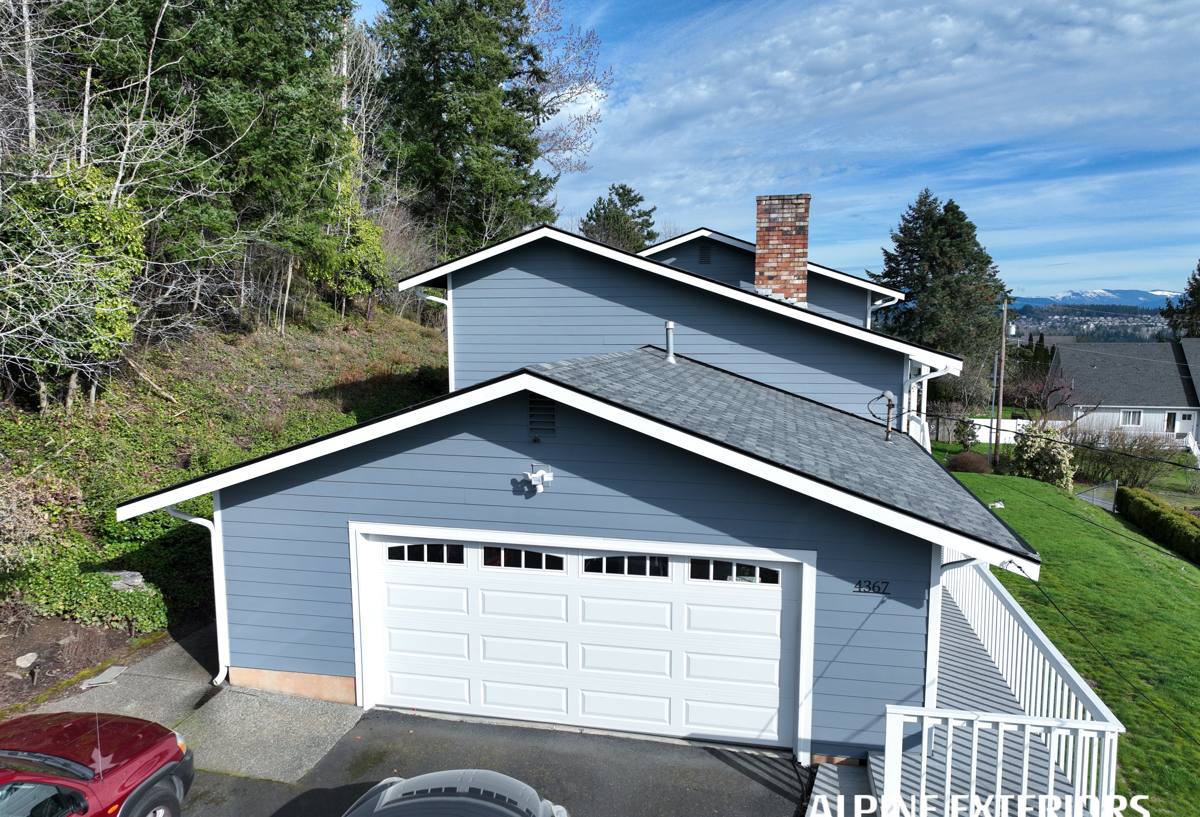
Signs It's Time for Replacement, Not Another Repair
Roof repair has its place, and a good contractor will tell you when a patch is the honest answer. But there's a point where patching stops making financial sense and starts covering up a bigger problem. Homeowners in this neighborhood should watch for:
- Granule loss heavy enough that you're finding grit in gutters and downspouts every time it rains
- Shingles that are curling, cupping, or cracking, especially on slopes that get the most weather exposure
- Soft or spongy spots on the roof deck, which usually means moisture has already reached the sheathing
- Persistent moss growth that comes back within a season or two of cleaning, even after treatment
- Daylight visible through the attic roof boards, or water staining on attic insulation and rafters
- Flashing around chimneys, skylights, or vent pipes that's rusted, lifted, or was never sealed correctly
- A roof that's approaching or past the age where its underlayment and flashing were rated to perform, even if the shingles still look okay from the ground
Any one of these on its own might still be repairable. Two or three together, especially on a roof already in its second or third decade, usually means the smarter long-term move is a full replacement rather than continuing to chase leaks one at a time.
What a Correct Roof Replacement Actually Involves
A roof replacement is not just swapping old shingles for new ones. The parts of the system nobody sees from the street — the deck, the underlayment, the flashing, and the ventilation — do most of the work of keeping water out over the life of the roof. Cutting corners here is the single biggest reason roofs in wet coastal climates fail early.
Tear-Off and Deck Inspection
We remove the old roofing down to the deck rather than layering new shingles over old ones. Layering hides problems and shortens the life of the new roof. With the deck exposed, we can check for soft spots, rot, and delamination and replace any damaged sheathing before anything new goes down. This is also the point where hidden moisture damage from years of small leaks tends to show up — better to find it now than to bury it under a new roof.
Underlayment, Flashing, and Ice-and-Water Protection
Given how much wind-driven rain this area sees, we use synthetic underlayment rather than older felt products, along with self-adhering ice-and-water membrane at vulnerable points — eaves, valleys, and around every roof penetration. New flashing goes in around chimneys, skylights, and vent pipes rather than reusing old flashing that's already been through years of salt exposure. This is the layer that actually stops water intrusion when wind pushes rain up under the shingle edge, which happens more often here than in drier inland climates.
Ventilation That Actually Works
Proper intake and exhaust ventilation keeps the attic close to outdoor temperature and lets moisture escape instead of condensing on the underside of the deck. In a consistently damp climate like Bellingham's, poor attic ventilation is one of the quiet causes of premature deck rot and mold — problems that show up years after the shingles were installed and get blamed on the roofing material instead of the airflow behind it.
Choosing a Roofing Material for This Climate
There's no single "best" roofing material — the right choice depends on budget, the home's structure, and how much long-term maintenance an owner wants to take on. Here's an honest comparison of the options we most often discuss with Happy Valley homeowners.
| Material | Moss & Algae Resistance | Performance in Wind-Driven Rain | Typical Maintenance |
|---|---|---|---|
| Standard architectural asphalt shingle | Moderate — benefits from periodic cleaning | Good when properly flashed and sealed | Occasional moss removal, gutter checks |
| Algae-resistant (AR) asphalt shingle | Better — copper-infused granules slow algae growth | Good when properly flashed and sealed | Lower moss/algae upkeep than standard shingle |
| Standing seam metal | Very good — few surfaces for moss to grip | Excellent with correctly detailed seams and flashing | Low; mainly gutter and fastener checks over time |
| Synthetic composite shingle | Good, varies by product | Good when installed per manufacturer spec | Moderate; follow manufacturer cleaning guidance |
We steer most Happy Valley homeowners toward algae-resistant shingles or metal roofing specifically because of the moss and salt-air factors described above — not because other products are bad, but because those two options ask less of the homeowner in ongoing maintenance in this particular climate. The trade-off is usually upfront cost: metal and higher-tier shingle products cost more than a basic asphalt shingle, and that's a decision every homeowner should make with real numbers in front of them, not a sales pitch.
Our Process, From Estimate to Cleanup
- On-site inspection. We walk the roof (or use a drone where access is limited) and check the attic from the inside, looking at deck condition, ventilation, and existing damage.
- Written estimate. You get a clear breakdown of material options, scope of work, and cost — no vague allowances buried in fine print.
- Permitting. We handle the permit process required for the job, so you're not left tracking down paperwork.
- Tear-off and deck repair. Old roofing comes off, the deck is inspected, and any damaged sheathing is replaced before moving forward.
- Underlayment, flashing, and ventilation install. This is the layer that determines how the roof performs in the next big windstorm, not just how it looks on day one.
- New roofing installation to manufacturer specification, which matters for both performance and keeping the material warranty valid.
- Final walkthrough and cleanup, including a magnetic sweep for nails and debris removal from the property.
Living With Moss and Algae After Replacement
No roofing material makes a home immune to moss in a climate this wet and shaded — the goal is to slow it down and make upkeep manageable, not eliminate the issue entirely. A few habits go a long way after a new roof is installed:
- Keep overhanging tree limbs trimmed back so roof surfaces get more sun and airflow
- Clean gutters and downspouts at least twice a year so water and debris don't pool against the roof edge
- Have moss physically removed rather than pressure-washed, which can damage granules and shorten shingle life
- Consider zinc or copper strips near the ridge, which release trace amounts of metal that inhibit moss growth over time
- Schedule a roof check after major windstorms to catch lifted shingles or damaged flashing early
What Drives the Cost of a Roof Replacement Here
Every home is different, and giving a number without seeing the roof would be a disservice — but the main variables that move the price up or down are consistent:
| Factor | Why It Matters |
|---|---|
| Roof size and pitch | More surface area and steeper pitches mean more material and labor time |
| Number of layers being removed | Tear-off of multiple old layers takes longer and adds disposal cost |
| Deck condition | Rotted or soft sheathing found during tear-off adds repair cost not visible during a roof-only inspection |
| Material choice | Standard asphalt, algae-resistant shingle, and metal roofing carry different material and installation costs |
| Roof complexity | Valleys, dormers, skylights, and multiple penetrations all add flashing and labor time |
| Access and site conditions | Tree cover, steep lots, or limited driveway access can affect setup and disposal logistics |
We walk through these factors during the estimate so you understand exactly what's driving the number, rather than getting a flat quote with no explanation behind it.
Why Hire a Crew That Already Works This Neighborhood
A roofing crew that mostly works drier, inland climates can still do competent work, but they're not always thinking about salt exposure on fasteners, the specific wind patterns that push rain sideways near the water, or how aggressive the moss season is going to be on a shaded, north-facing slope. A crew that already works Happy Valley and the surrounding Bellingham area has seen how roofs here actually fail over time — not just how they're supposed to perform on paper. That shows up in the details: which flashing gets upgraded, how ventilation is sized, and which material trade-offs are worth explaining honestly before you commit to a product. It also means straightforward familiarity with Whatcom County permitting and inspection requirements, so the paperwork side of the job doesn't become its own headache.
If your roof is showing its age or you just want an honest read on where it stands, we're happy to take a look. Fill out the form below to request a free, no-pressure estimate — we'll walk the roof, answer your questions straight, and give you a clear picture of your options before you decide anything.