 Bellingham Siding
 Siding in Lynden Has a Different Job to Do
Lynden sits inland from Bellingham Bay, but that doesn't spare it from the same weather pattern that soaks the rest of Whatcom County: long stretches of steady, driving rain from fall through spring, damp air that never fully dries out, and enough marine influence drifting up from the Salish Sea to carry salt into the wind. Add the shade from mature trees and hedgerows common on Lynden's residential lots, and you get a textbook environment for moss, algae, and slow moisture intrusion on the wrong siding material.
None of that is exotic. It's simply what siding on a Lynden home has to survive, year after year, without babysitting. The right product and the right installation handle it quietly. The wrong combination shows up as soft trim, streaked paint, swollen panel edges, and moss creeping up from the ground line within a few short seasons.
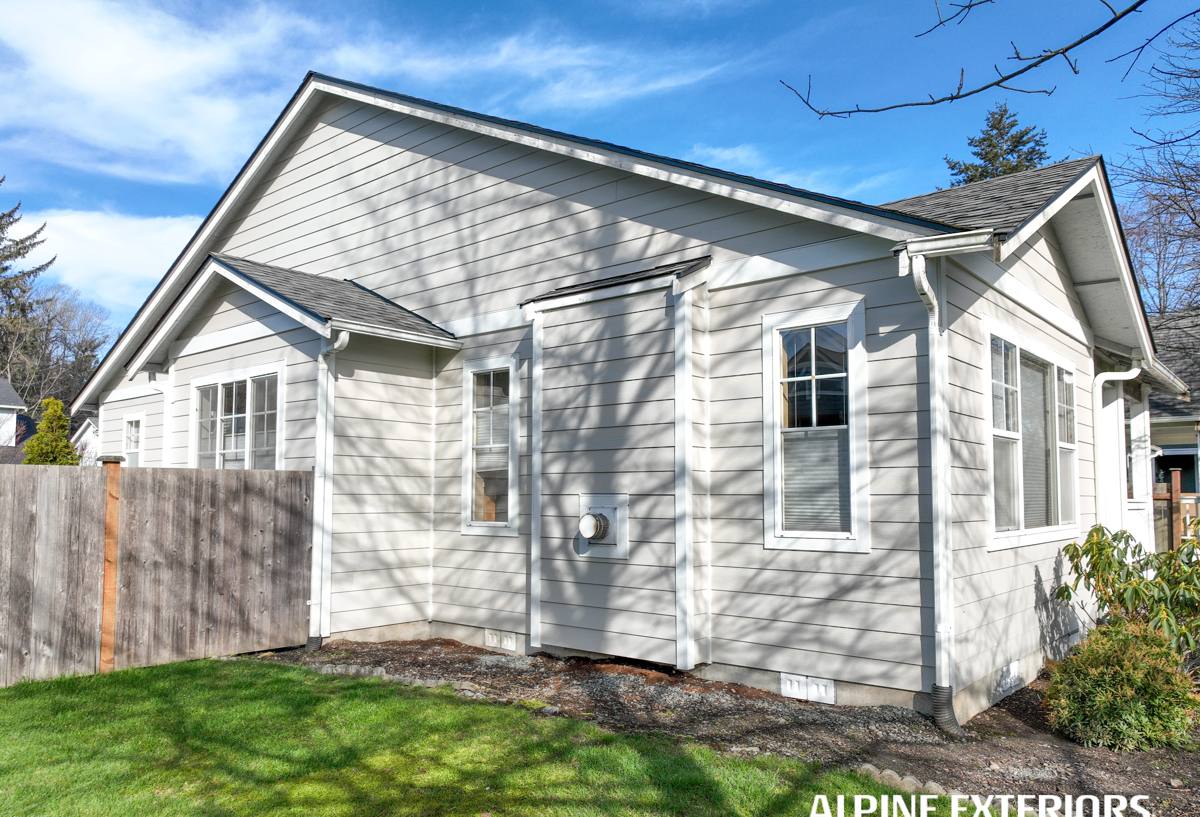
What Driving Rain and a Long Moss Season Actually Do
Wind-Driven Moisture
Rain in this part of Whatcom County rarely falls straight down. Wind pushes it sideways into wall assemblies, which means siding here needs to shed water at every horizontal seam, not just rely on gravity. Laps, joints, and butt seams that aren't detailed correctly become the entry point for moisture that then has nowhere to go behind the cladding.
Moss and Algae Growth
Lynden's tree cover and generally shaded lots keep siding damp longer after every rain event than it would stay in a more open, sunnier location. Organic siding materials — wood, wood-based composites, and some engineered products with wood fiber content — absorb that moisture and become a food source for moss and algae. Once established, moss holds water directly against the siding surface, which accelerates whatever damage is already underway.
Freeze-Thaw and Swelling Cycles
Whatcom County doesn't see extreme cold most winters, but it does see enough freeze-thaw cycling to matter. Any siding material that's already absorbed moisture and then freezes will expand, and repeated cycles of that kind of swelling loosen fasteners, open seams, and stress paint film over time.
Why We Install Only James Hardie Fiber Cement in Lynden
We don't install LP SmartSide, vinyl, Cemplank, Allura, primed spruce, or cedar. That's a deliberate standard, not a sourcing convenience, and it's rooted directly in the climate problems described above.
- Non-combustible core: James Hardie fiber cement is cement-based, not wood-based, so it doesn't feed moss, algae, or rot the way wood and wood-fiber products can.
- Engineered for wet marine climates: Hardie's HZ10 product line is specifically engineered for climates like ours — freeze-thaw cycling, prolonged damp exposure, and driving rain.
- Factory-applied ColorPlus finish: baked-on at the factory under controlled conditions, it holds color and resists the fading and streaking that field-applied paint on other sidings often shows within a few years in this climate.
- Dimensional stability: fiber cement doesn't swell and shrink with moisture the way wood-based products do, so seams and fastener lines stay tight over time instead of loosening and opening a path for water.
- Warranty structure: James Hardie backs its siding with a strong, transferable limited warranty, which matters to Lynden homeowners who plan to sell in the years ahead.
We're not claiming the products we don't install are worthless — vinyl, LP SmartSide, and the rest all have honest use cases elsewhere. But for the specific combination of rain, salt-tinged wind, and moss pressure that Lynden sees, we made a professional call to standardize on one product system we can install to spec and stand behind, rather than juggling several products with different maintenance realities.
What a Correct Installation Actually Involves
Siding is a system, not a single layer. A crew that shows up, nails boards to the wall, and caulks the gaps is doing a fraction of the job. Here's what we consider non-negotiable on every Lynden installation:
Water-Resistive Barrier and Flashing First
Before any siding goes up, the wall needs a continuous water-resistive barrier with properly lapped seams, and flashing integrated at every window, door, and penetration so that any water that does get behind the cladding has a clear path back out — never trapped against the sheathing.
Ground Clearance
James Hardie specifies a minimum clearance between the bottom of the siding and grade, decking, or roofing below. On Lynden lots with landscaping beds, sprinkler heads, or gravel borders close to the foundation, this clearance is easy to shortcut and important to get right — it's one of the most common sources of moisture damage and early moss growth we see on poorly installed siding.
Fastening to Spec
Hardie panels and lap siding have specific fastener type, spacing, and penetration requirements. Under- or over-driven nails, wrong fastener spacing, or fastening into unsuitable framing all shorten the life of an installation regardless of how good the product itself is.
Caulking and Sealant Placement
Sealant belongs at specific joints James Hardie's install guide calls out — not everywhere, and not as a substitute for correct flashing. Over-caulking can actually trap moisture in places it needs to escape.
Painted or Factory-Finished Cut Edges
Field cuts expose raw fiber cement edges. Those cut edges need to be sealed or touched up per manufacturer spec, particularly on a project in a climate as wet as ours, or they become a slow moisture entry point.
Our Process on a Lynden Project
| Stage | What Happens | Why It Matters Here |
|---|---|---|
| On-site assessment | We walk the exterior, check existing siding, sheathing condition, trim, and drainage paths | Catches hidden moisture or rot before it's covered by new siding |
| Written estimate | Line-item scope covering materials, prep, and labor | No surprises once work starts |
| Tear-off and prep | Remove old siding, inspect and repair sheathing, install WRB and flashing | This layer is what actually keeps Lynden's driving rain out |
| Hardie installation | Install to manufacturer spec — clearance, fastening, seams, sealant | Determines how the siding performs over 20-plus years, not just year one |
| Final walkthrough | Review the finished work with the homeowner | Confirms the job matches the estimate and your expectations |
Cost Factors on a Lynden Home
Every home is different, but the same variables tend to drive cost on Lynden projects specifically:
| Factor | Why It Affects Cost |
|---|---|
| Existing siding removal | Older wood or composite siding with moisture damage takes longer to remove and may require sheathing repair |
| Home size and wall complexity | More corners, gables, and trim details mean more cutting, fitting, and flashing work |
| Siding profile chosen | Lap siding, panel siding, and shingle-style Hardie products install differently and price differently |
| Trim and accessory work | Fascia, corner boards, and window trim are often replaced or refreshed alongside siding |
| Access and site conditions | Mature landscaping, fencing, or tight lot lines common on Lynden properties can add setup time |
We don't quote broad price ranges without seeing the home — too many of these variables change the number. What we can promise is a written, line-item estimate before any work starts, with no pressure to sign on the spot.
What to Ask Before You Hire a Siding Contractor in Lynden
- Are they licensed and insured to do exterior work in Washington State?
- Do they install to the manufacturer's written specifications, including clearance and fastening details?
- Will they put the scope of work, materials, and warranty terms in writing before starting?
- Do they inspect and repair sheathing and flashing, or just cover over what's already there?
- Have they worked in Whatcom County long enough to know how local moisture and moss conditions affect installation choices?
- Is the manufacturer's warranty transferable if you sell the home?
Why a Crew That Already Works Lynden Matters
Siding installation isn't just a product spec sheet — it's judgment calls made on-site: how much clearance to leave given a specific landscaping situation, where extra flashing attention is warranted because of a roofline or gutter placement, how a wall orientation will actually take wind-driven rain over the years. A crew that regularly works Whatcom County homes has already seen how local siding fails when it's installed wrong, and builds around those failure points as a matter of habit rather than guesswork.
That local familiarity also means straightforward logistics — scheduling, material delivery, and follow-up don't depend on a crew traveling in from outside the area for a single job.
Maintenance After Installation
One advantage of a correctly installed James Hardie system in a climate like Lynden's is how little upkeep it asks for compared to wood-based alternatives. A periodic rinse to clear pollen, dust, or early moss growth, a visual check of caulked joints every year or two, and prompt attention to any landscaping that starts crowding the siding's ground clearance are generally enough to keep the system performing as designed.
If you're planning a siding project in Lynden, we're glad to walk your home, look at what's there now, and give you a straightforward, written estimate — no pressure, no obligation.