 Bellingham Siding
 Roofing in Puget Isn't the Same Job as Roofing Inland
Puget sits close enough to the water and the weather patterns that come with it that a roof here ages differently than one twenty miles inland. Homes in this part of Whatcom County deal with a steady mix of salt-laden air, wind-driven rain that gets pushed sideways under standard flashing details, and a moss season that can stretch from late fall through spring. None of that is unique to any one street or subdivision — it's the baseline condition for anyone roofing in this corridor of northwest Washington. A roof replacement done right here has to be built for that reality from the decking up, not just re-shingled the way it might be done in a drier climate.
We've replaced roofs across this area long enough to know which failure patterns show up first and which parts of a standard installation need to be upgraded, not skipped, to hold up locally.
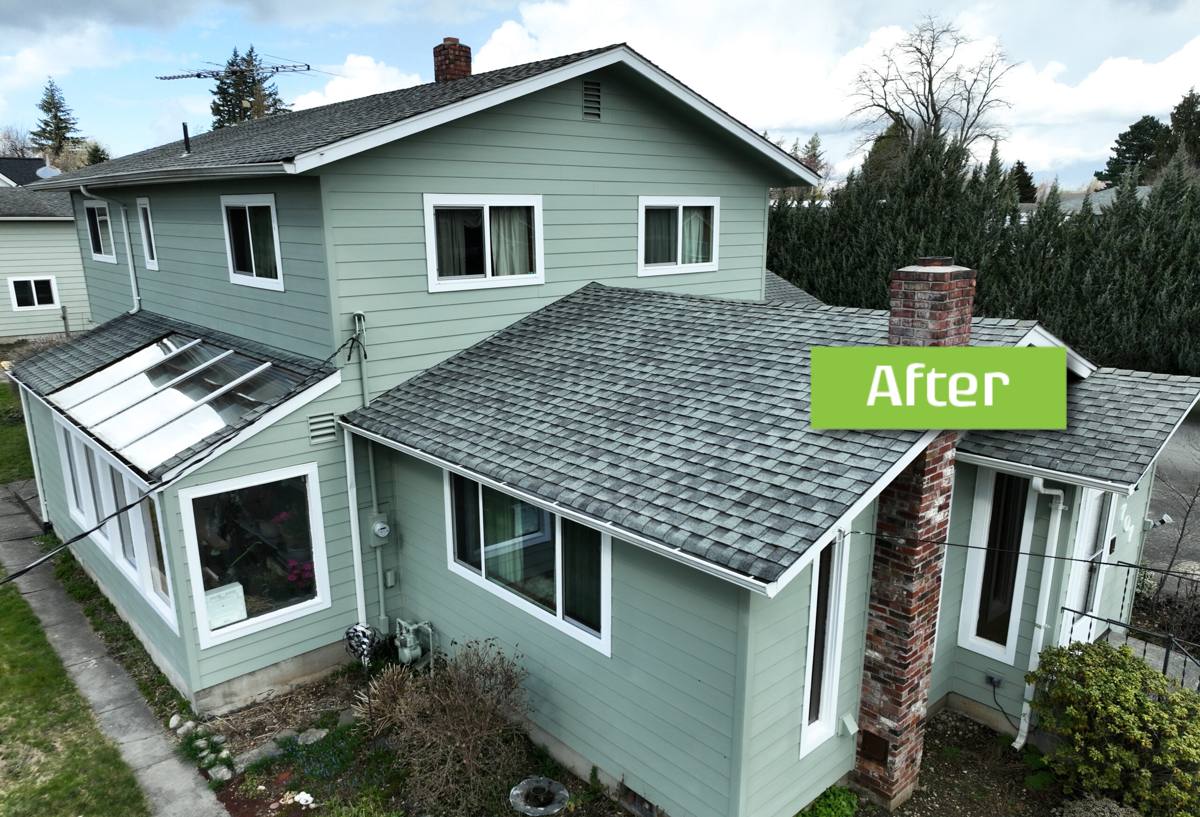
What Bellingham's Climate Actually Does to a Roof Over Time
Salt Air and Metal Fatigue
Salt-laden air accelerates corrosion on any exposed metal — flashing, fasteners, drip edge, vent stacks, and gutter hardware. Standard galvanized fasteners and thin flashing stock can start showing rust streaks and pinholing years before the shingles themselves are due for replacement. The fix isn't complicated, but it does mean specifying corrosion-resistant metal and fasteners rated for coastal exposure, rather than whatever is cheapest at the supply house.
Driving Rain and Wind-Driven Moisture
Rain that falls straight down is easy to shed. Rain that comes in sideways during a Puget Sound windstorm finds every shortcut in a roofing system — under-lapped shingles, undersized flashing, nail heads left exposed, and valleys that weren't properly woven or metal-lined. A roof that "looks fine" from the ground can still be letting water track sideways into the decking during a hard blow.
Moss, Shade, and Slow-Drying Surfaces
Long moss season is one of the defining maintenance problems for roofs in this region. Homes with tree cover, north-facing slopes, or low-pitch sections stay damp longer between storms, giving moss and algae time to establish. Moss doesn't just look bad — it holds moisture against the shingle surface, lifts tabs as it grows, and can work its way under the shingle edge, which shortens the life of the roofing material well below its rated lifespan.
Signs a Puget-Area Roof Needs Replacement, Not Just Repair
- Granule loss heavy enough that you can see bare, shiny patches on multiple slopes, not just one worn section
- Moss or algae established across large areas rather than a few isolated patches near shaded edges
- Curling, cupping, or cracking shingles, especially on south- and west-facing slopes that see the most sun and thermal cycling
- Rusted or failing flashing around chimneys, skylights, and valleys — a common early failure point in salt air
- Soft spots, sagging, or visible water staining in the attic or on interior ceilings after a hard rain
- A roof approaching or past its material's expected service life, especially if the original installation used minimal underlayment or flashing
If only one or two of these apply and they're localized, a repair may genuinely be the right call — we'll tell you that if it's true. Replacement makes sense when the damage is spread across the roof or when the underlying materials (decking, underlayment, flashing) are compromised in more than a spot or two.
Roofing Materials That Actually Hold Up Here
There's no single "best" roofing material for every home — pitch, budget, shade cover, and the look you want all factor in. But some material choices are a better fit for salt air and heavy moss pressure than others.
| Material | Moss Resistance | Salt Air Durability | Typical Lifespan Here |
|---|---|---|---|
| Standard 3-tab asphalt | Low without treatment | Fair — fasteners are the weak point | 15-20 years |
| Architectural (laminate) asphalt | Moderate; better with algae-resistant granules | Good with proper corrosion-resistant flashing | 25-30 years |
| Standing seam metal | High — sheds moss and debris well | Good with marine-grade coatings | 40-50+ years |
| Synthetic/composite shingle | Moderate to high depending on product | Good; low fastener exposure | 30-40 years |
We'll walk you through the honest trade-offs for your specific roof — pitch, shade, and budget all change which option makes the most sense. We install what's right for the house, not whatever carries the biggest margin.
What a Correct Roof Replacement Involves
Full Tear-Off and Deck Inspection
A proper replacement starts with removing the old roofing down to the deck, not layering over it. That's the only way to actually inspect the sheathing for rot, soft spots, or moisture damage — problems that are common under aging roofs in this climate and that get hidden, not fixed, by roofing over them.
Ice-and-Water or Synthetic Underlayment
Given how much wind-driven rain this area sees, we don't treat underlayment as an afterthought. Self-adhering membrane at eaves, valleys, and penetrations, paired with a quality synthetic underlayment across the field, gives the roof a real second line of defense if wind ever drives water past the shingle layer.
Corrosion-Resistant Flashing and Fasteners
Every piece of exposed metal — step flashing, valley metal, drip edge, and fasteners — gets specified for coastal-air durability, not standard-grade stock. This is one of the details that separates a roof that holds up for decades from one that starts showing rust streaks in five years.
Ventilation That Matches the Home
Proper intake and exhaust ventilation keeps the attic dry and temperature-balanced, which matters both for shingle life and for reducing the damp, dark conditions that moss and mold prefer. A lot of older roofs in this region were under-ventilated to begin with — replacement is the right time to correct that.
Moss Mitigation Built Into the Install
Where it fits the material and budget, we install zinc or copper strips near the ridge, which release trace metal ions with every rain to slow moss and algae regrowth. It's not a guarantee against moss forever, but it meaningfully extends the time between treatments on shaded or north-facing roofs.
Our Roof Replacement Process
- On-site assessment — we inspect the existing roof, decking condition (where visible), attic ventilation, and any problem areas you've noticed, like leaks or ice damming.
- Material and scope walkthrough — we go over material options, flashing and underlayment upgrades, and a clear, itemized estimate before any work starts.
- Tear-off and deck repair — old roofing comes off, the deck gets inspected, and any damaged sheathing is replaced before anything new goes down.
- Underlayment, flashing, and ventilation install — the components that actually determine how the roof performs in wind-driven rain go in first, correctly, not rushed.
- Roofing material installation — installed to manufacturer spec, with attention to nailing pattern, exposure, and valley treatment.
- Final walkthrough and cleanup — we inspect the finished roof with you, handle magnetic sweep for debris, and go over care and warranty details.
Cost Factors for a Puget-Area Roof Replacement
| Factor | Why It Matters Locally |
|---|---|
| Roof pitch and access | Steeper roofs and limited access add labor time and safety staging |
| Deck condition | Rot from long-term moisture exposure isn't always visible until tear-off |
| Material choice | Metal and synthetic options cost more up front but reduce maintenance and moss pressure |
| Flashing and underlayment upgrades | Coastal-grade materials cost more than minimum-code options but pay off in fewer failures |
| Ventilation corrections | Adding or upgrading intake/exhaust vents is easiest to do during a full replacement |
| Tree cover and moss history | Heavily shaded roofs may benefit from added moss-mitigation details |
We don't publish a flat price because these variables genuinely change the number from one house to the next — an honest estimate has to come from actually looking at your roof.
Why a Crew That Already Works This Area Matters
A roofing crew that works Puget and the surrounding Bellingham area regularly already knows which details matter here — where moss tends to establish first, which flashing specs actually hold up against salt air, and how local wind patterns tend to drive rain into valleys and penetrations. That's not something you get from a general contractor working a roof in this climate for the first time. It also means we're not disappearing after the invoice clears — we're local, and our name is attached to every roof we put on in this community.
Keeping a New Roof Performing Long-Term
- Schedule a moss and debris check before and after the wettest months of the year
- Keep gutters and downspouts clear so water isn't backing up under the eave line
- Trim back overhanging branches to reduce shade and debris buildup on the roof surface
- Have flashing and sealant points inspected every few years, especially around chimneys and skylights
- Address any small leak or staining promptly — small entry points get worse with each storm season, not better
If your roof in the Puget area is showing its age or you just want an honest read on whether repair or full replacement makes sense, we're glad to come take a look. Estimates are free, there's no pressure, and we'll tell you straight what your roof actually needs.