 Bellingham Siding
 South Hill Roofs Work Harder Than Most People Realize
South Hill sits up above the flats of Bellingham, which means these homes get more exposure to wind and weather than houses tucked into lower, more sheltered neighborhoods. Add in the tree cover common across the hill, the proximity to Bellingham Bay, and Whatcom County's long wet season, and you've got a roof that's dealing with salt-laden air, driving rain, and heavy shade for months at a time. A roof that would hold up fine in a drier inland climate can wear out early up here if it wasn't built for these specific conditions in the first place.
When a South Hill roof reaches the end of its life, replacing it isn't just about matching what was there before. It's about correcting whatever let the old roof fail early, then building the new one so it actually stands up to salt air, wind-driven rain, and moss for the long haul.
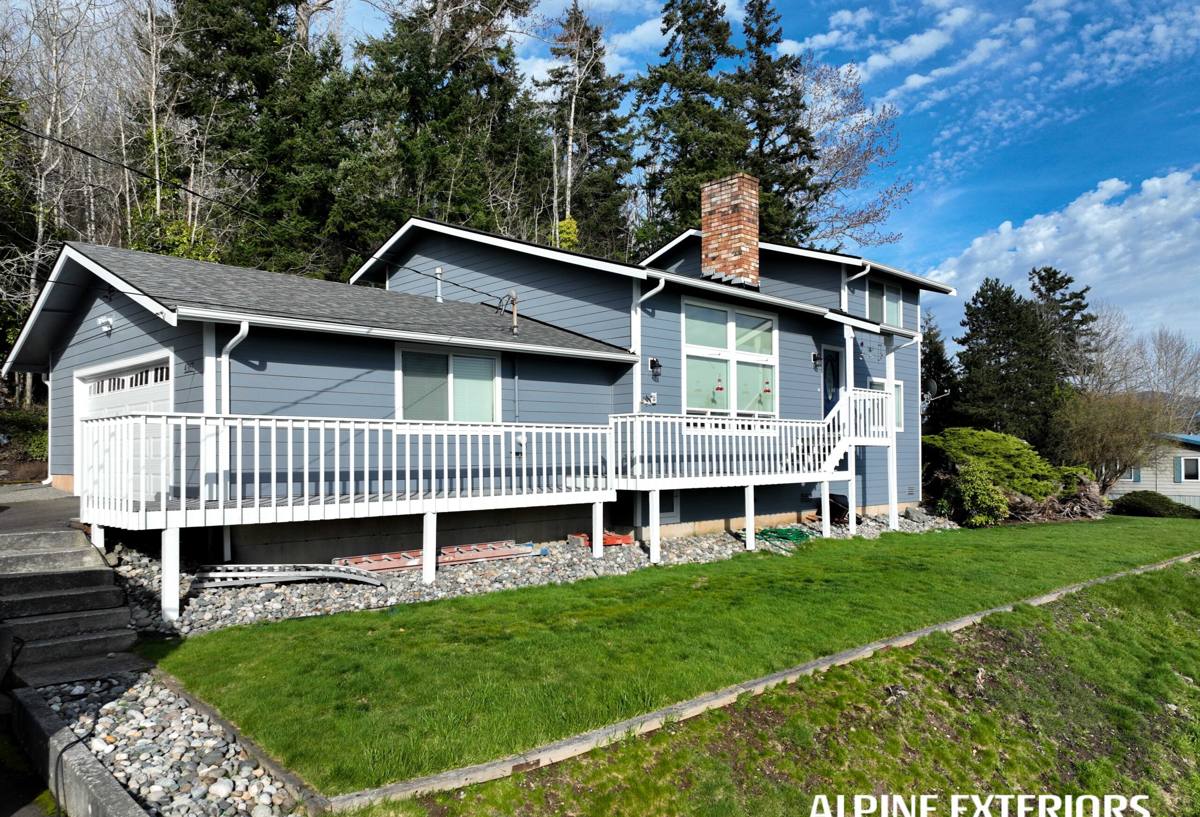
What Bellingham's Climate Actually Does to a Roof
Salt Air and Corrosion
Bellingham's proximity to the water means metal components on a roof — flashing, fasteners, vents, gutters — are exposed to a low but steady dose of salt in the air. Over years, uncoated or poorly finished metal corrodes faster than it would inland. This matters most at the details: nail heads, drip edge, valley flashing, and any exposed metal trim. On South Hill, where elevation can mean more direct wind exposure, that salt-laden air reaches surfaces that might stay drier and more protected in a low-lying, tree-sheltered lot.
Driving Rain and Wind-Driven Water
Whatcom County doesn't just get rain — it gets rain pushed sideways by wind off the water, especially at higher elevations like South Hill. Roofs here need underlayment and flashing details built for water that's trying to move uphill under shingles, not just water falling straight down. A roof installed to a minimum-code standard for a calmer inland climate can let water in around valleys, chimneys, and wall intersections during a hard blow, even if the shingles themselves look fine.
The Long Moss Season
Shade from mature trees, combined with months of damp weather, gives moss and algae a long runway to establish on a roof. Once moss gets a foothold, it holds moisture against the roofing material, lifts shingle edges, and works into fastener penetrations. On heavily treed South Hill lots, moss isn't a cosmetic issue — it's one of the main reasons roofs in this neighborhood fail years before their rated lifespan.
Signs a South Hill Roof Needs Full Replacement, Not Another Repair
Not every roof problem calls for a full tear-off. But there's a point where patching stops making sense and a new roof becomes the more honest recommendation. Signs worth taking seriously include:
- Granule loss heavy enough that you can see bare, shiny patches on the shingles
- Moss or algae covering large sections rather than a few isolated spots
- Soft or spongy spots when walking the roof, suggesting deck damage underneath
- Daylight visible through the roof deck from inside the attic
- Multiple layers of shingles already on the roof from past re-roofs
- Repeated leaks in different locations rather than one isolated failure point
- Shingles curling, cracking, or losing their seal in patches across the roof
- The roof is past 20-25 years old (for asphalt composition) with visible wear
If you're seeing two or three of these at once, it's usually a sign the roofing system as a whole is failing, not just one shingle or one flashing detail.
What a Correct New Roof Installation Involves
Tear-Off and Deck Inspection
A proper replacement starts with a full tear-off down to the deck, not an overlay. This lets us actually see what's underneath — rot, soft spots, or damage from years of trapped moisture that's common on shaded South Hill roofs. Any damaged decking gets replaced before anything new goes down. Skipping this step is how a new roof ends up failing over old, hidden problems within a few years.
Underlayment and Water Protection
Given how much wind-driven rain this area sees, underlayment choice matters more here than in drier climates. We use synthetic underlayment as a standard water-resistant layer across the whole roof, with self-adhering ice-and-water membrane at the vulnerable spots — eaves, valleys, around chimneys and skylights, and anywhere roof planes meet walls. These are the areas where wind-driven rain is most likely to get pushed backward under standard shingle coverage.
Ventilation
A roof that traps heat and moisture in the attic ages faster from the inside, and poor ventilation is a common contributor to moss and moisture problems on shaded lots. We check intake and exhaust ventilation as part of every replacement and correct it where the existing setup is inadequate, rather than just re-covering a roof that was never breathing properly to begin with.
Flashing and Metal Details
Given the corrosion risk from salt air, we pay particular attention to flashing material and installation quality — proper step flashing at walls, counter-flashing at chimneys, and durable valley metal, all installed so water sheds correctly rather than relying on sealant to do the work long-term. Sealant fails; correctly lapped flashing doesn't.
Choosing a Roofing Material for South Hill Conditions
There's no single "best" roofing material for every home — it depends on your budget, your roof's exposure, and how much maintenance you want to take on. Here's an honest comparison of the main options homeowners on South Hill choose between:
| Material | Moss/Algae Resistance | Wind/Rain Performance | Typical Lifespan | Maintenance Needs |
|---|---|---|---|---|
| Asphalt composition shingle (standard) | Moderate — benefits from algae-resistant granules | Good when properly installed and fastened | 20-30 years | Periodic moss removal, especially in shade |
| Asphalt composition shingle (algae-resistant, higher-grade) | Better — copper/zinc granules resist algae growth | Good, often rated for higher wind speeds | 25-30+ years | Lower, but not maintenance-free |
| Standing seam metal | Very good — sheds moss more easily due to smooth, sloped surface | Excellent in wind-driven rain | 40-60+ years | Low, occasional fastener/coating checks |
| Synthetic/composite shingle | Good, varies by product | Good to excellent depending on rating | 30-50 years | Low to moderate |
For most South Hill homes with significant tree cover, we lean toward algae-resistant asphalt shingles or metal roofing, specifically because both hold up better against the moss and shade conditions common in this neighborhood. The right call still depends on your home's roof pitch, your budget, and how much sun exposure your particular lot actually gets.
Our Installation Process
- On-site inspection and honest assessment of whether repair or full replacement makes sense
- Written estimate covering material options, scope of work, and timeline
- Scheduling around Bellingham's weather windows to avoid installing underlayment or shingles in active rain
- Full tear-off and deck inspection, with any damaged decking replaced and documented
- Installation of underlayment, ice-and-water membrane at vulnerable areas, and correct flashing details
- Ventilation check and correction where needed
- New roofing material installed to manufacturer specifications, not just "close enough"
- Final walkthrough and cleanup, including magnetic sweep for stray fasteners
Why a Crew That Already Works South Hill Matters
A roofing crew that regularly works South Hill knows what to expect before the tear-off even starts — which parts of a roof tend to show moss first, where wind-driven rain typically finds its way in on homes at this elevation, and how much tree cover on a given lot changes the ventilation and material decisions. That's the difference between a roof that's simply "installed" and one that's actually built for this specific hillside, this specific exposure, and Whatcom County's specific weather pattern.
It also matters for permitting and inspection. Bellingham has its own permitting process for roof replacement, and a local crew that pulls permits here regularly knows the requirements and doesn't add delay or guesswork to your project.
Maintaining a New Roof Through the Wet Season
A correctly installed roof still needs some basic upkeep to hit its full lifespan on South Hill:
- Clear gutters and downspouts before the fall rains start, so water isn't backing up under the roof edge
- Have moss and algae growth addressed early, before it lifts shingle edges or holds moisture against the roof
- Trim back overhanging branches where practical, to reduce shade and debris buildup
- Schedule a periodic visual inspection, particularly after major windstorms
- Address any small leak signs immediately rather than waiting — early water intrusion is far cheaper to fix than deck damage
A new roof built correctly for South Hill's conditions, combined with this kind of basic maintenance, is what actually gets you the full lifespan out of the material you paid for.
If your South Hill roof is showing its age, or you just want an honest opinion on whether it's a repair or a replacement situation, we're happy to take a look. Fill out the form below for a free, no-pressure estimate.