 Bellingham Siding
 Why Sunnyland Roofs Wear Differently Than Roofs Inland
Sunnyland sits close enough to Bellingham Bay that salt-laden air is a daily fact of life on this roof, not an occasional visitor. Add the driving, wind-pushed rain that comes off the water in fall and winter, plus a moss season that can run eight months or more in a shaded, moisture-heavy yard, and you've got three separate forces working against whatever is on top of the house. Asphalt shingles absorb that punishment slowly and unevenly. A well-built metal roof shrugs most of it off — but only if the metal, the fasteners, and the underlayment underneath are matched to this specific environment rather than a generic install spec.
We work Sunnyland roofs regularly, and the failures we get called out for almost never trace back to the metal panel itself. They trace back to the wrong fastener alloy, a flashing detail that wasn't sealed for wind-driven rain, or ventilation that was never adjusted for a lot that stays damp and shaded most of the year. That's the gap a locally-tuned installation closes.
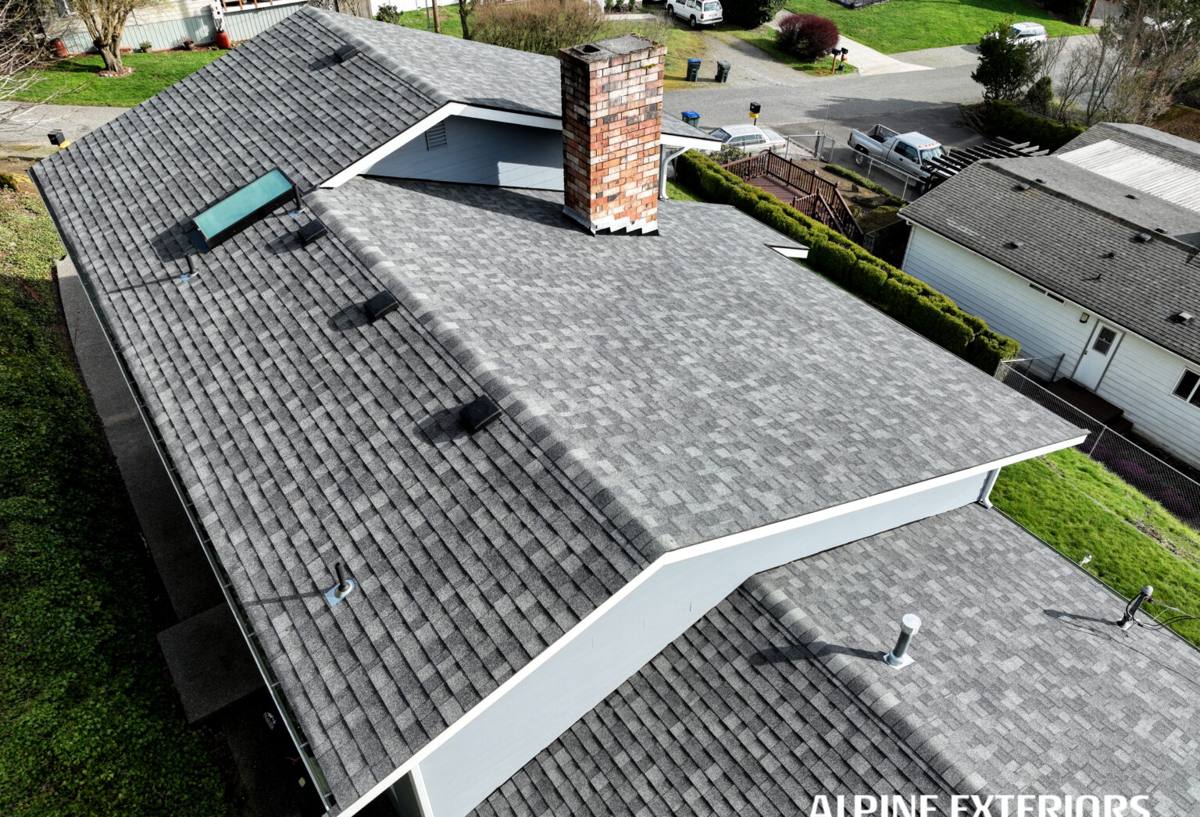
What a Correct Metal Roof Has to Handle Here
Before we talk panel styles or price, it helps to be clear about what the roof is actually up against in this part of Whatcom County:
- Salt exposure: airborne salt accelerates corrosion on unprotected steel and on mismatched fasteners, even a few miles inland from the water.
- Wind-driven rain: Pacific storms push rain sideways, which means laps, seams, and flashing have to be mechanically sound, not just caulked.
- Extended moss season: shaded roof planes and north-facing slopes stay damp long after the rain stops, which is exactly what moss and algae need to establish.
- Freeze-thaw swings: Bellingham gets enough cold snaps to matter, and trapped moisture behind poor flashing can freeze and work joints loose over a few winters.
None of these are exotic problems, but each one has a specific, known fix. A roof that ignores any one of them will look fine for a season or two and then start showing streaking, staining, or leaks at the details — not usually in the middle of a panel.
Panel and Fastening Choices That Make Sense for This Climate
Not every metal roofing system is built the same way, and the differences matter more here than in a dry inland climate. The table below covers the two systems we install most often on Sunnyland homes.
| System | How It's Fastened | Best Fit For | Trade-Off |
|---|---|---|---|
| Standing seam | Concealed clips, no exposed fasteners through the panel face | Full roof replacements, homes with steady moss/moisture exposure | Higher material and labor cost up front |
| Exposed-fastener panel | Screws driven through the panel face with a sealing washer | Outbuildings, budget-conscious full replacements, simpler roof lines | Washers age and need periodic inspection or replacement |
Standing seam has no exposed penetrations for wind-driven rain to work into over time, which is a real advantage on an exposed or bay-facing slope. Exposed-fastener panels are a legitimate, cost-effective choice on simpler roof shapes, but they carry a maintenance item that standing seam doesn't: those sealing washers are a wear part, and we tell every customer that up front rather than let it come up as a surprise five years in.
On fasteners themselves, we use corrosion-resistant fastener alloys rated for coastal exposure on every job in this area, not the standard hardware some suppliers default to. It costs a little more per fastener and it's the difference between clean seams at year fifteen and rust streaks at year five.
Underlayment, Flashing, and Moss Prevention
What's Underneath Matters as Much as What's on Top
A metal panel is only as good as what's beneath it. We install a synthetic, high-temp underlayment rated for the added heat metal roofing can generate in direct sun, with self-adhering membrane at eaves, valleys, and any low-slope transition where wind-driven rain is most likely to find a way in. Cutting corners here is invisible on install day and expensive five years later.
Flashing Details
Chimneys, skylights, dormers, and wall-to-roof transitions are where the overwhelming majority of metal roof leaks actually start. We fabricate and set flashing to shed water in the direction it actually travels during a sideways Whatcom County storm, not just straight down, and we back-caulk and seal every penetration rather than relying on surface sealant alone.
Moss and Algae Control
Metal roofing already resists moss far better than shingles because there's no porous surface for spores to root into, but shaded valleys and north-facing sections still collect debris and stay damp. Zinc or copper strip installed near the ridge on moss-prone sections releases trace metal ions with every rain, which discourages regrowth without chemical treatments. We recommend it on any Sunnyland roof with significant tree cover.
Our Installation Process
- On-site assessment: we walk the roof, check the deck condition, note shaded and moss-prone sections, and measure for the actual panel run.
- System selection: we walk through standing seam versus exposed-fastener honestly, based on your roof's shape, budget, and exposure — not a one-size answer.
- Tear-off and deck check: old roofing comes off, and we inspect the deck for soft spots or moisture damage before anything new goes down.
- Underlayment and flashing: synthetic underlayment, self-adhering membrane at vulnerable points, and custom-fabricated flashing at every penetration.
- Panel installation: panels are set, seamed or fastened per the chosen system, with attention to consistent reveal lines and proper overlap for wind-driven rain.
- Ventilation check: we confirm intake and exhaust airflow is adequate for a roof that stays damp longer than most, adjusting ridge or soffit venting if needed.
- Final walkthrough: we go over the finished roof with you, point out anything worth knowing for future maintenance, and answer questions before we leave.
Cost Factors Worth Understanding Up Front
We won't quote a number without seeing the roof, but the factors that actually move the price on a Sunnyland metal roof are consistent enough to lay out honestly:
| Factor | Why It Matters |
|---|---|
| Panel system (standing seam vs exposed-fastener) | Standing seam typically costs more due to labor and clip hardware |
| Roof complexity (valleys, dormers, penetrations) | More flashing detail work means more labor hours, regardless of panel type |
| Deck condition | Rot or soft decking found at tear-off adds repair cost before installation can continue |
| Existing layers to remove | Multiple layers of old roofing add tear-off time and disposal cost |
| Ventilation upgrades | Adjusting intake/exhaust venting for a shaded, moisture-heavy lot is a smaller add-on but worth budgeting for |
Metal roofing costs more up front than asphalt shingles almost everywhere it's installed. The trade we're making with that upfront cost is a roof that isn't fighting salt air and moss with a porous surface — over the roof's life, that's usually where the value shows up, not in the first year.
Signs Your Sunnyland Roof Needs Attention
Whether you currently have metal or are still on shingles, these are worth a look before they become bigger problems:
- Green or black streaking concentrated on shaded or north-facing roof planes
- Granule buildup in gutters (a shingle roof sign that replacement timing is approaching)
- Rust staining at fastener heads or flashing edges
- Soft or spongy feel anywhere on the roof deck when walked
- Water stains on interior ceilings after a wind-driven rain event
- Visible gaps or lifted edges at flashing around chimneys or vents
Any one of these is worth a call before the next storm season, not after.
Why a Crew That Already Works Sunnyland Matters
Roofing crews who mostly work drier, inland areas sometimes install a technically correct roof that still isn't matched to what Bellingham Bay throws at it. A crew that regularly works Sunnyland and the surrounding Whatcom County neighborhoods already knows which roof orientations hold moss longest, which fastener grade actually holds up against salt air over a decade, and how local wind patterns push rain into flashing details that a generic install spec doesn't account for. That's not a marketing point — it's the difference between a roof that needs attention in year four and one that doesn't need real attention until year twenty-five or beyond.
We stand behind our work with manufacturer-backed material warranties and our own workmanship guarantee, and we're straightforward about maintenance items like fastener washers or moss strip so nothing shows up as a surprise later.
Ready to Talk About Your Roof?
If you're weighing metal roofing for a Sunnyland home, we're happy to walk the roof, talk through standing seam versus exposed-fastener honestly, and give you a clear picture of what your specific roof needs. Reach out for a free, no-pressure estimate using the form below.