 Bellingham Siding
 Roof Repair Built for York's Wet, Salty Climate
Homes in the York neighborhood sit close enough to Bellingham Bay and the surrounding evergreen canopy that roofs here take a different kind of beating than roofs inland. Salt-laden air moves in off the water, driving rain comes in sideways during fall and winter storms, and shade from mature trees keeps roof surfaces damp long after the rain stops. That combination is exactly what shortens the life of fasteners, flashing, and shingles if a roof isn't maintained and repaired with the local conditions in mind.
Roof repair in this part of Whatcom County isn't just about patching a leak and moving on. It's about understanding why the leak started in the first place, whether that's moss holding moisture against the shingles, corroded flashing at a valley or chimney, or wind-driven rain finding its way under a lifted shingle tab. We work on York-area roofs regularly, and the patterns repeat often enough that we can usually diagnose the root cause on the first visit.
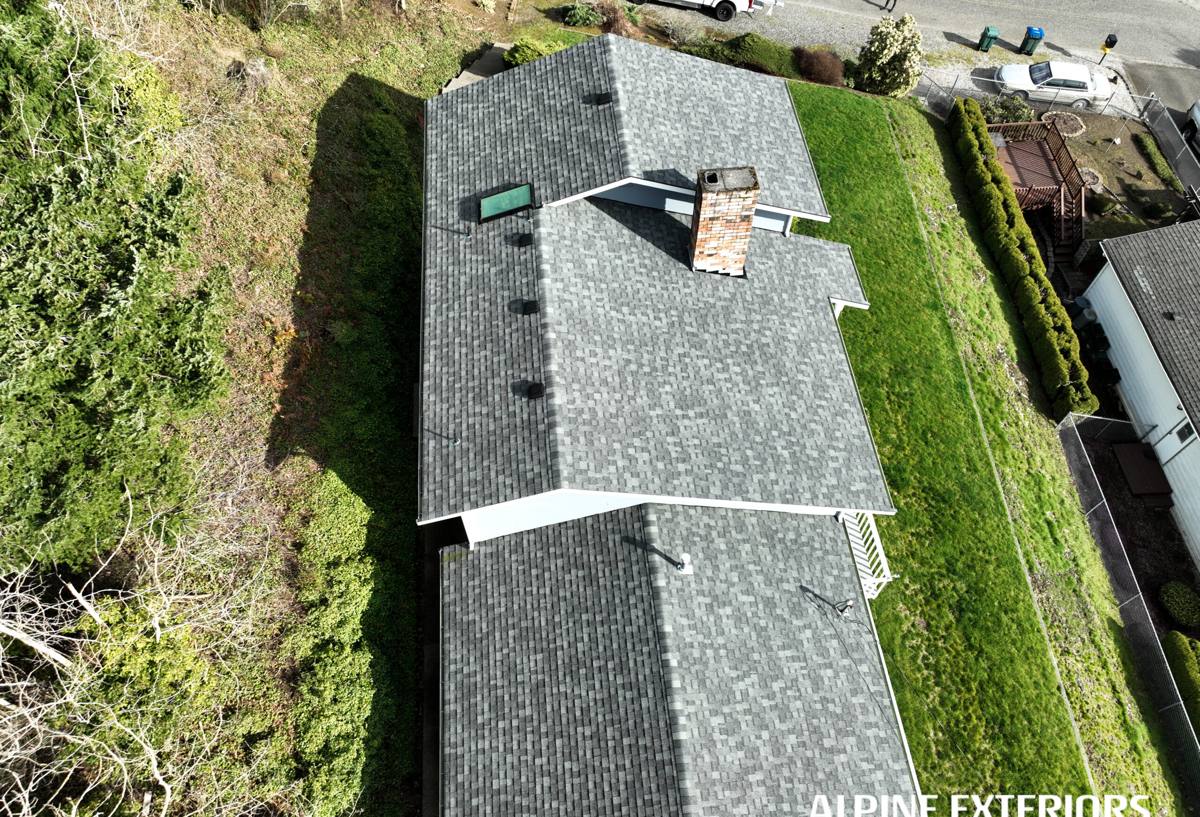
Why York Roofs Wear Differently Than Roofs Elsewhere in Bellingham
Salt Air and Metal Fasteners
Proximity to the bay means airborne salt settles on roof surfaces and works into metal components over time. Nails, flashing, and gutter hardware corrode faster here than they would ten or fifteen miles inland. Once a fastener starts to rust, it loses its grip, and a shingle or piece of flashing that used to sit tight starts to move in the wind. That movement is how small leaks start.
Moss and Prolonged Dampness
Whatcom County's long, mild, wet winters are ideal for moss growth, and shaded lots near mature trees are especially prone to it. Moss doesn't just look bad — it holds water against the roofing material for days or weeks at a time, which accelerates granule loss on asphalt shingles and can rot the wood underneath cedar shakes. Left unchecked, moss works its way under shingle edges and lifts them, creating a direct path for water.
Driving Rain and Wind
Storms coming off the water often bring rain in at an angle rather than straight down. That kind of wind-driven rain finds gaps that a straight-down rain never would — lifted shingle tabs, aging pipe boots, and flashing laps that have opened up even slightly. Roofs that would hold up fine in a calmer climate can develop leaks here simply because of how the rain arrives.
What a Correct Roof Repair Actually Involves
A lot of roof "repairs" amount to smearing sealant over a visible gap and calling it done. That approach might buy a homeowner a season, but it rarely addresses why water got in, and sealant alone breaks down fast under UV and freeze-thaw cycling. A repair done right starts with finding the actual entry point, which is sometimes several feet away from where the stain shows up on a ceiling inside.
Our Repair Process
- Inspection from the roof, not just the ground. We walk the roof surface to check flashing, boots, valleys, and shingle condition directly, rather than guessing from a driveway view.
- Tracing the leak path. Water often travels along rafters or sheathing before it shows up as a stain, so we trace back to the true entry point instead of patching where the damage appears indoors.
- Moss and debris removal. Where moss or organic buildup is contributing to the problem, we clear it using methods that don't strip granules or damage the shingle surface.
- Flashing and fastener assessment. Given how fast salt air corrodes metal here, we check flashing at chimneys, valleys, and roof-to-wall transitions and replace corroded pieces rather than resealing over them.
- Matching materials. Repairs use shingles or components that match the existing roof as closely as possible so the fix doesn't stand out or create a new weak seam.
- Verification. We confirm the repaired area sheds water correctly before we consider the job finished, not just that it looks patched.
Common Roof Repair Issues We See in York
Moss-Related Shingle Lift and Granule Loss
This is the most frequent call we get from shaded, tree-lined properties in and around York. Moss mats hold moisture against the shingle, the shingle edge curls or lifts, and rain gets underneath. The fix usually involves careful moss removal, replacement of any shingles that have lost too many granules or cracked, and a plan to keep moss from returning.
Corroded or Failing Flashing
Flashing around chimneys, skylights, and roof valleys is a common failure point in salt-exposed areas. Once flashing starts to corrode or pull away from the surface it's sealing, water finds its way in even during moderate rain. Replacing flashing correctly — not just re-caulking it — is usually the longer-term fix.
Wind-Lifted or Damaged Shingle Tabs
Driving rain and coastal wind gusts can lift shingle tabs enough to break the seal strip underneath, even without visible storm damage. Once that seal is broken, the shingle doesn't re-adhere on its own, and it becomes a repeat entry point every time it rains hard.
Aging Pipe Boots and Vent Seals
Rubber pipe boots dry out and crack faster under UV exposure and temperature swings than most homeowners expect. A cracked boot around a plumbing vent is a small, inexpensive fix if caught early, but it's also easy to miss during a casual roof glance from the ground.
Repair or Replace? How We Help You Decide
Not every roof problem calls for a full replacement, and not every leak should be treated as a one-off patch. Part of an honest repair visit is telling you plainly which category your roof falls into.
| Factor | Repair Usually Makes Sense | Replacement Should Be Considered |
|---|---|---|
| Age of roof | Under roughly 15-18 years for asphalt shingle | Approaching or past manufacturer's expected lifespan |
| Extent of damage | Isolated to one area — a valley, flashing point, or section of tabs | Multiple areas failing, or granule loss widespread across the roof |
| Moss history | First occurrence or recently maintained | Long-term moss damage affecting the decking underneath |
| Underlying decking | Solid, no soft spots | Soft, spongy, or visibly rotted sheathing |
| Frequency of leaks | First reported leak in that area | Recurring leaks in the same or new spots each season |
We'll tell you honestly if a repair is a short-term fix on a roof that's better off replaced soon — that's a disservice we won't do to a homeowner just to sell a smaller job now and a bigger one later.
Why It Matters to Hire a Crew That Already Works in York
A roof repair crew that regularly works this part of Bellingham already knows what to check first. They've seen how quickly moss returns on shaded lots near the water, which flashing details tend to corrode fastest, and how wind-driven rain behaves on roofs facing the bay versus roofs tucked back from it. That local pattern recognition speeds up diagnosis and reduces the chance of a repair that misses the real cause.
It also matters for materials and timing. Knowing which shingle products and sealants hold up under this area's salt exposure and moisture load — and understanding that repair windows are tighter in a region with a long wet season — affects how a job gets scheduled and what materials get specified. A crew unfamiliar with Whatcom County conditions may not think to ask these questions at all.
Maintaining a Roof Between Repairs
A few habits go a long way toward reducing how often repair is needed in a climate like this:
- Have moss growth addressed before it spreads across a full slope, not after.
- Keep gutters clear so water isn't backing up under the roof edge during heavy rain.
- Trim back tree limbs that keep sections of the roof shaded and damp longer than the rest.
- Get an annual or biennial roof check, especially after a hard windstorm, even if there's no visible leak yet.
- Address small issues — a lifted tab, a cracked boot — as soon as they're noticed rather than waiting for a leak to show up indoors.
What to Expect When You Call Us
We'll ask about the specific symptoms you're seeing — where the stain or drip is, how long it's been happening, whether it's worse during wind-driven storms — and get a look at the roof itself before recommending anything. If it's a straightforward repair, we'll walk you through what we found, what we recommend, and roughly what it involves before any work starts. If we think replacement is the more honest long-term answer, we'll explain why rather than defaulting to the smaller job.
If you're dealing with a leak, visible moss buildup, or just want a roof checked before the next stretch of fall storms rolls in off the bay, we're happy to take a look. Reach out for a free, no-pressure estimate using the form below — there's no obligation, just a straight answer about what your roof actually needs.