 Bellingham Siding
 Deck Replacement in Barkley: Why This Climate Wears Decks Out Faster
A deck in Barkley takes a different kind of beating than a deck in a drier part of the country, and it's not subtle once you know what to look for. Whatcom County's combination of salt-tinged air, driving rain that gets pushed sideways by wind, and a moss season that runs long into the year doesn't just make decks look weathered — it works on the structure underneath the boards, too. Fasteners corrode faster in salt air. Rain that comes in at an angle finds its way under boards and around ledger connections that would stay dry in a calmer climate. And anything shaded or low to the ground stays damp long enough for moss and mildew to take hold and start breaking down wood fiber from the surface in.
Most decks in Barkley don't fail all at once. They fail one connection, one board, one footing at a time, until a homeowner is looking at a structure that's been quietly losing integrity for years even though it might still look fine from a distance. Deck replacement, done right for this specific area, means building for that reality from the start rather than assuming a deck built for a milder climate will hold up here just as long.
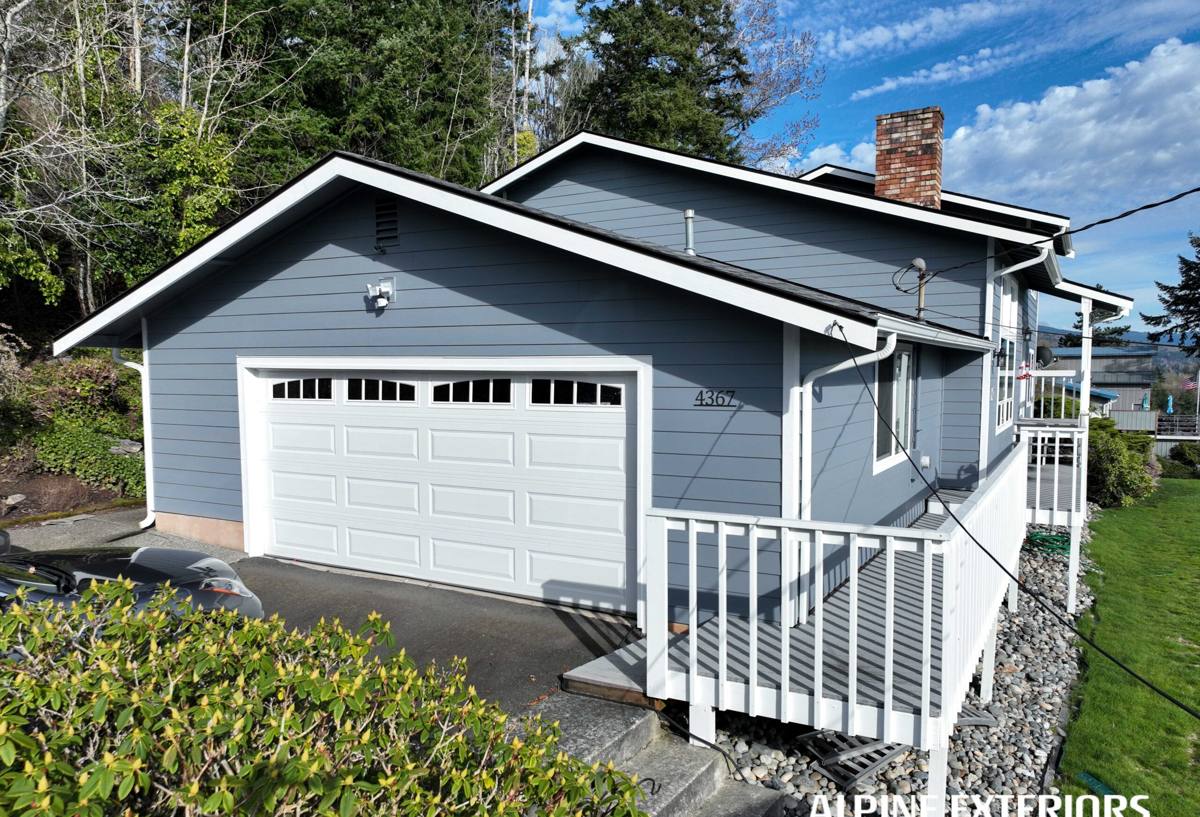
Signs a Barkley Deck Needs Replacing, Not Just Repairing
Repair makes sense when the problem is isolated. Replacement makes sense when the damage has reached the structure itself, or when enough of the deck is compromised that patching it just delays the same problem in a different spot. Here's what we look for when deciding which side of that line a deck is on:
- Soft, spongy, or springy decking boards, especially near the edges or where boards meet
- Rust streaking or crumbling around fasteners, joist hangers, or the ledger connection to the house
- Visible gaps, cupping, or splitting in the decking that's spread across most of the surface rather than a board or two
- Wobble or movement in the railing posts, stairs, or the deck frame itself when you walk or lean on it
- Persistent moss or dark staining on the deck surface or the framing underneath that keeps coming back after cleaning
- A ledger board or rim joist that shows rot, especially where it meets the house — this is a structural safety issue, not a cosmetic one
- A deck that's more than 15-20 years old and was never rebuilt to current attachment and flashing standards
If it's one or two of these on an otherwise sound deck, repair is often the honest recommendation. If it's several, or if the framing itself is compromised, replacement is usually the more cost-effective path — patching a failing structure tends to cost more over time than starting clean.
What a Correct Deck Replacement Actually Involves
A deck replacement that's actually built for this climate goes well beyond swapping old boards for new ones. The parts nobody sees when the project is finished are usually the parts that determine whether it lasts.
The Ledger Connection and Flashing
Where a deck attaches to the house is the single most common failure point we see, and it's almost always a flashing problem, not a decking problem. Wind-driven rain gets pushed against the house wall and, if the ledger board isn't properly flashed and sealed against the siding, that water tracks behind the ledger and into the rim joist and wall framing below. In a lower-rain climate that might take decades to cause real damage. Here, we've seen it happen much faster. Correct ledger flashing — with the right lap sequence, proper fasteners, and a gap that lets water drain rather than pool — is non-negotiable on every replacement we do.
Footings and Framing
Footings need to be set below frost depth and sized for the actual load the deck will carry, not just what was there before. If we're replacing a deck, we check the existing footings rather than assuming they're adequate — a lot of older decks in this area were built with undersized or shallow footings that have since shifted or settled. Joists, beams, and posts get sized to current code, and every structural connection uses hardware rated for exterior, coastal-air exposure, not standard interior-grade fasteners that will corrode within a few seasons.
Decking Material and Fasteners
The boards you walk on matter, but the fasteners holding the whole thing together matter just as much. Stainless steel or coated exterior-rated fasteners cost more upfront than standard hardware, but in a salt-air environment the difference in corrosion resistance is the difference between hardware that lasts the life of the deck and hardware that needs to be replaced within a decade.
Choosing a Decking Material for This Climate
There's no single right answer here — it depends on budget, maintenance tolerance, and how the deck will be used. What we do is make sure homeowners understand the real trade-offs for a wet, moss-prone climate before they decide, rather than picking based on price or appearance alone.
| Material | How It Handles This Climate | Maintenance |
|---|---|---|
| Composite decking | Doesn't absorb water or feed rot; resists moss better than wood but can still need cleaning in shaded areas | Low — occasional washing, no staining or sealing |
| Cedar | Naturally rot-resistant but still wood — will gray, check, and take on moss if not maintained | Moderate to high — regular cleaning and periodic sealing or staining |
| Pressure-treated lumber | Budget-friendly and structurally solid but most prone to splitting, warping, and moss growth over time in sustained damp conditions | High — regular sealing needed to hold up long-term |
We install all three depending on what a homeowner wants, but we're upfront that in a climate like Barkley's, the lower-maintenance materials tend to pay for themselves over the life of the deck. That's a trade-off for the homeowner to weigh, not a rule we impose.
Our Deck Replacement Process
Every project follows the same sequence, in roughly this order:
- On-site assessment: We inspect the existing deck, ledger connection, footings, and framing to determine what's actually salvageable versus what needs to come out
- Design and material selection: We walk through layout, railing style, stairs, and decking material options based on the home and how the space gets used
- Permitting: We handle the permit application through the appropriate local jurisdiction before any demolition starts
- Demolition: Full removal of the old deck, including checking the ledger area and framing for hidden rot or water damage once it's exposed
- Framing and footings: New or repaired footings, framing, and a properly flashed ledger connection built to current code
- Decking, railing, and stairs: Installation of the chosen decking material, railing system, and stairs
- Final walkthrough: A final inspection with the homeowner before we consider the job done
Permits and Local Considerations in Barkley
Most deck replacements that involve structural changes — new footings, a rebuilt ledger connection, or any change to the deck's size or height — require a permit through the local building jurisdiction. This isn't a formality to skip past. Permitted work gets inspected at the framing stage, which catches problems like an undersized footing or a poorly flashed ledger before it's buried under decking boards. We handle that process as part of the job rather than leaving it to the homeowner to sort out, and we build to the guardrail height, stair, and structural requirements that apply regardless of whether a homeowner would have noticed the difference.
Cost Factors for a Barkley Deck Replacement
Every deck is different, so we don't quote a number without seeing the site, but these are the main factors that move the price:
| Factor | Why It Matters |
|---|---|
| Deck size and layout | Larger footprints and multi-level designs mean more material, more footings, and more labor |
| Decking material | Composite typically costs more upfront than pressure-treated wood, less over the deck's lifespan |
| Condition of the ledger and framing | Hidden rot discovered during demolition can add scope once the old deck is opened up |
| Height and stair complexity | Elevated decks need more substantial framing, footings, and stair structures than ground-level ones |
| Railing style | Cable, glass, and custom railing systems cost more than standard baluster railing |
| Permit requirements | Structural changes typically require permitting and inspection, which factors into project timeline and cost |
Why a Crew That Already Works Barkley Matters
Building a deck that holds up here isn't about following a generic set of best practices — it's about knowing which details actually matter for this specific combination of salt air, wind-driven rain, and moss. A crew that works Barkley regularly already knows which ledger flashing details tend to fail on this side of the county, which fastener grades hold up and which don't, and what the local permitting process actually requires before a shovel goes in the ground. That's the kind of knowledge that comes from doing the work here repeatedly, not from a one-size-fits-all approach brought in from a different climate.
We're not the only exterior crew that can build a deck. But we build every one of them with this climate specifically in mind, from the footings up, because that's what determines whether a deck is still solid in fifteen years or needs to be torn out and rebuilt in half that time.
Get a Free Estimate
If your deck in Barkley is showing signs of wear, or you're just not sure whether repair or replacement makes more sense, we're happy to take a look and give you a straight answer. Reach out for a free, no-pressure estimate — we'll walk the deck with you, explain what we see, and lay out the options in plain terms before you decide anything.