 Bellingham Siding
 Windows in York: What Bellingham's Climate Actually Demands
Homes in the York area deal with the same weather that shapes every window decision in Bellingham: long stretches of driving rain off the Sound, salt-laden air drifting in from the bay, and a moss season that can run from October well into spring. None of that is dramatic on its own, but stacked together year after year, it's exactly the combination that finds every weak point in a window installation — a missed flashing detail, a gap in the sealant, a sill that was never pitched to drain. A window installed correctly for a drier climate can still fail here simply because Whatcom County asks more of the water management details.
Salt air is the part homeowners underestimate most. It accelerates corrosion on hardware, fasteners, and lesser-grade window components, and it can degrade certain sealants faster than a manufacturer's generic warranty language accounts for. Add in the region's persistent damp and shaded, moss-prone conditions around foundations and north-facing walls, and you have an environment where any small installation shortcut shows up as a real problem within a few wet seasons, not decades.
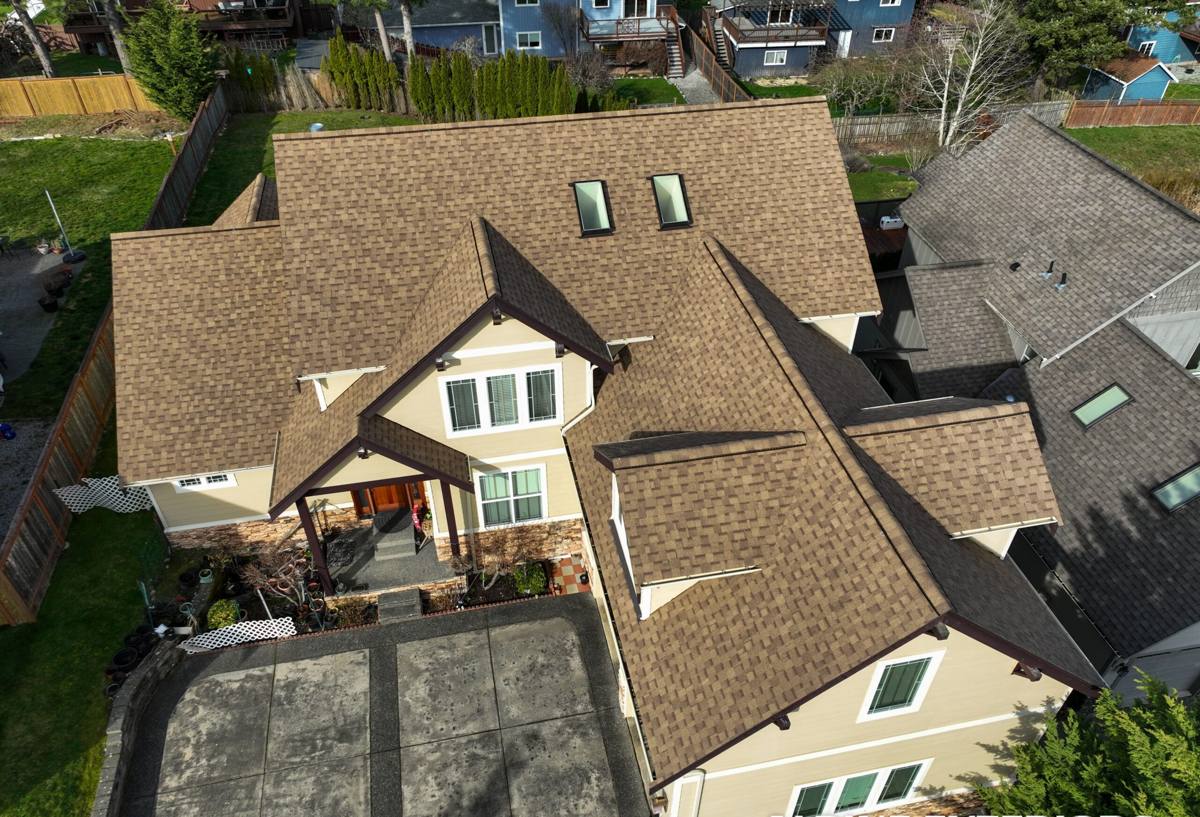
Signs a York Home's Windows Are Losing the Battle
Most window failures don't announce themselves with a leak on day one. They show up gradually, and by the time they're obvious, there's usually already some hidden moisture damage behind the trim. Homeowners in York should watch for:
- Fogging or a milky haze between the panes of a double-pane window — a sign the seal has failed and the gas fill is gone
- Noticeable drafts near the frame even when the window is fully latched
- Soft, discolored, or spongy wood at the sill or lower corners of the frame
- Moss, algae, or black staining building up on the frame, sill, or track faster than on the rest of the siding
- Windows that stick, won't stay open, or are harder to lock than they used to be
- A noticeable jump in heating costs without any other explanation
Any one of these can be minor. Two or three together, especially on the sides of the house that catch the most weather, usually mean the installation — not just the window unit itself — is due for a real look.
What a Correct Window Installation Actually Involves
The window product matters, but in this climate the installation details decide whether it performs for twenty years or ten. There are three things we treat as non-negotiable on every job in York.
Flashing and Water Management
Water has to be directed out of the wall assembly, not just kept out at the surface. That means a properly sloped sill pan, flashing tape integrated with the building's weather-resistive barrier in the correct shingle-lap order, and attention to the corners, where most leaks actually originate. Skipping or rushing this step is one of the most common causes of hidden rot behind window trim in older Pacific Northwest homes.
Insulation and Air Sealing
The gap between the window frame and the rough opening needs to be filled with a low-expansion foam or a backer rod and sealant — never packed with standard high-expansion foam, which can bow the frame and cause the window to bind or fail to seal properly. Air sealing here also matters for condensation control; a poorly sealed gap is a common source of the interior condensation and eventual mold growth homeowners notice on cold, wet mornings.
Fit, Reveal, and Squareness
A window that isn't shimmed level, plumb, and square will never operate or seal the way it's supposed to, no matter how good the unit is. We check reveal measurements on all four sides before fastening, and again before final sealant, because a frame that racks even slightly out of square puts uneven stress on the seals and hardware from day one.
Choosing the Right Window Material for a York Home
There's no single "best" window material — the right choice depends on the home's exposure, the homeowner's maintenance appetite, and budget. Here's how the common options compare for this climate specifically:
| Material | Moisture & Salt-Air Resistance | Maintenance | Relative Cost | Typical Lifespan |
|---|---|---|---|---|
| Vinyl | Good — won't rot or corrode | Low; occasional cleaning | Lower | 20–30 years |
| Fiberglass | Very good; dimensionally stable through temperature swings | Low | Mid-range to higher | 30–40+ years |
| Aluminum | Fair; needs a quality thermal break to avoid condensation | Low, but hardware can corrode near salt air over time | Mid-range | 20–30 years |
| Wood / Wood-clad | Requires diligent upkeep to resist rot and moss staining | High; periodic refinishing needed | Higher | Varies widely with maintenance |
For most York homes, we steer clients toward vinyl or fiberglass because they hold up against the area's damp, salt-tinged air with the least ongoing upkeep. Wood-clad windows can still be the right call for a specific architectural look, but we're upfront that they demand a real maintenance commitment in this climate, not just an occasional wipe-down. That's an honest trade-off, not a knock on any manufacturer — every material has a maintenance profile, and ours is about matching it to how the homeowner actually wants to spend their weekends.
Replacement Windows vs. Full-Frame Installation
There are two general approaches to swapping out a window, and picking the wrong one for the situation is a common source of long-term problems.
Insert (pocket) replacement fits a new window into the existing frame, leaving the original exterior trim and flashing in place. It's faster and less invasive, and it's a reasonable option when the existing frame and flashing are confirmed to be sound and dry.
Full-frame replacement removes the window down to the rough opening, including the old frame, so the flashing and sill pan can be rebuilt from scratch. It costs more in labor and time, but it's the only real option when there's any sign of past water intrusion, wood rot, or a frame that's already out of square.
We don't default to the cheaper option just because it's cheaper. On a number of older York-area homes, what looks like a simple insert job turns out to need full-frame work once the old trim comes off and reveals moisture damage that was hidden for years. We'll tell you honestly which situation you're in before we quote the job, not after we've already started.
Permits and Code Basics for Window Replacement in York
Window replacement in Bellingham, like most jurisdictions in Washington, typically requires a permit, especially for full-frame installations where the rough opening changes or structural framing is exposed. If you're replacing a window in a bedroom, code generally requires the new window to meet egress sizing so the room keeps a compliant emergency exit — worth confirming before a unit is ordered, not after. Energy code minimums for U-factor and solar heat gain also apply to replacement windows, which is one more reason a generic off-the-shelf unit isn't always the right fit for every opening.
We handle the permit process as part of the job rather than leaving it to the homeowner, and we make sure the units going in meet current code for the room they're serving. It's a small piece of the project, but skipping it can create real headaches later — particularly if you ever sell the home and a buyer's inspector flags unpermitted work.
How Our Process Works
1. On-Site Assessment and Measurement
We look at each window individually — exposure, existing condition, signs of past water intrusion — because a west-facing window catching the worst of the weather often needs a different approach than a sheltered one on the same house. Measurements are taken for an exact fit, not a generic size.
2. Removal and Opening Prep
Old units come out carefully to protect interior and exterior finishes. If we find rot, damaged sheathing, or old flashing that's failed, we address it before anything new goes in — installing a new window over a compromised opening just locks the problem behind new trim.
3. Installation and Sealing
The window is set, shimmed square and level, mechanically fastened per the manufacturer's specification, and sealed with the flashing and sealant approach described above. This is the step where experience with the region's climate shows — it's not just following a generic instruction sheet.
4. Final Check and Cleanup
We test operation, check the reveal and seal on all sides, and walk the job site clean before we call it done. Any trim or paint touch-up needed to finish the look is part of the job, not an add-on surprise.
Why a Crew That Already Works in York Matters
Window installation isn't exotic work, but local familiarity still counts for something real. A crew that regularly works in and around York knows the general housing stock and construction eras common to the area, has already dealt with the region's typical old-flashing and moss-related issues, and understands how Bellingham's marine exposure affects material choices differently than it would twenty miles inland. That local pattern-recognition means fewer surprises mid-job and a more accurate estimate up front. It also means that if a warranty question or a sealant issue comes up down the road, you're calling a crew that's a short drive away and already knows your house, not chasing down a company that installed once and moved on.
Keeping New Windows Performing Through Whatcom County's Wet Seasons
A correct installation does most of the work, but a little seasonal attention extends the life of any window in this climate. Homeowners in York should:
- Clear moss, leaves, and debris from sills and tracks before the fall rains set in
- Check that weep holes on vinyl and fiberglass windows stay unblocked so water can drain properly
- Rinse salt residue and grime off frames periodically, especially on sides facing open exposure
- Inspect exterior caulking and sealant lines once a year and have any cracking addressed early
- Operate windows through their full range a few times a season so hardware doesn't seize up from disuse
- Watch for condensation between panes as an early signal of seal failure, not just a cosmetic nuisance
None of this is complicated, but skipping it is how a well-installed window still ends up with an avoidable problem five or ten years in.
If your windows in York are drafty, fogged, sticking, or just showing their age, we're happy to take a straightforward look and give you an honest read on what's actually needed — repair, insert replacement, or full-frame. Use the form below to request a free, no-pressure estimate.