 Bellingham Siding
 Why Barkley Homes Need Windows Built for This Climate
Barkley sits close enough to Bellingham Bay and the Nooksack lowlands that its housing stock takes a steady beating from moisture, even in a neighborhood that reads as calm and established on a sunny day. Whatcom County's marine climate means wind-driven rain that finds its way sideways into window frames, salt-tinged air that accelerates corrosion on hardware and fasteners, and a moss season that runs longer here than in drier parts of the state. Windows are one of the first places that damage shows up, because every seam, sash, and sealant joint is an entry point if it wasn't detailed correctly the first time.
Older single-pane and early dual-pane windows common in Barkley's mix of established homes weren't built with today's glazing technology or moisture-management standards. The result, over enough winters, is fogged glass, soft trim, drafts you can feel standing near the wall, and heating bills that creep up every year the windows go unaddressed.
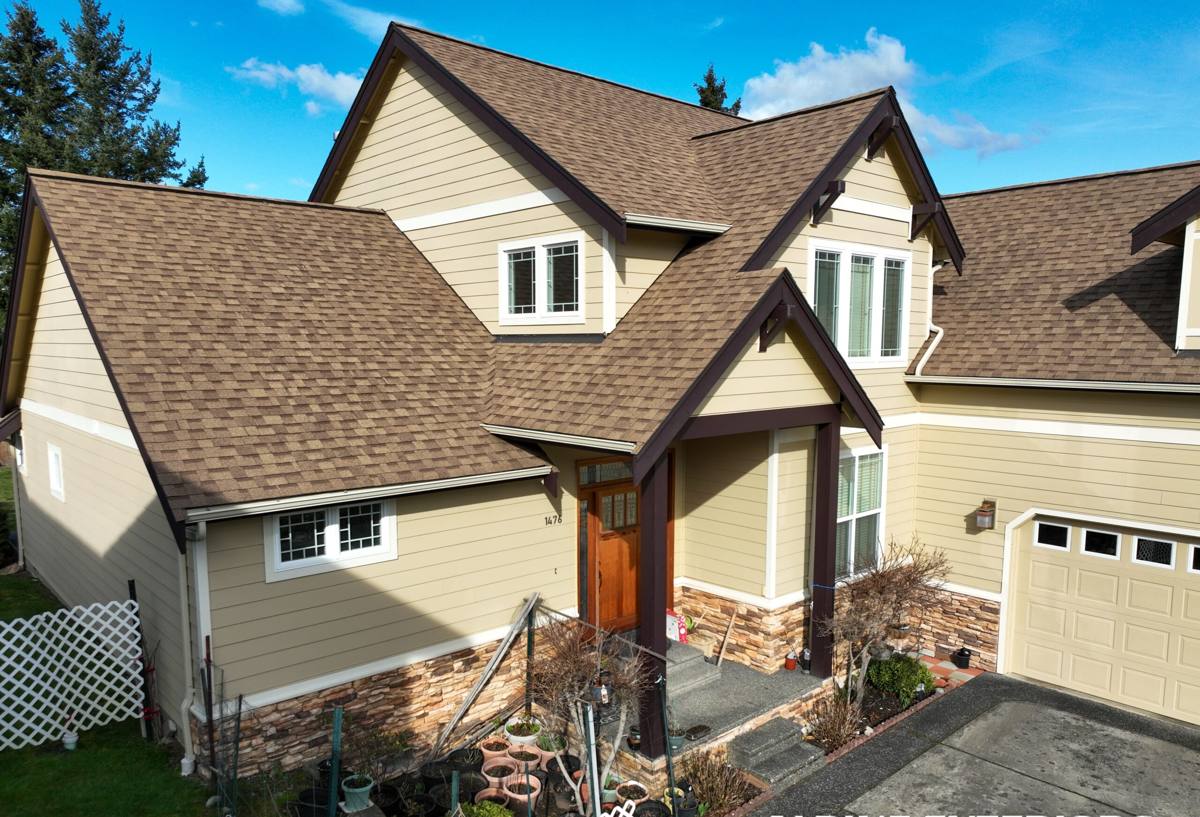
What "Energy-Efficient" Actually Means for a Whatcom County Home
The term gets used loosely in the window industry, so it's worth being specific about what actually matters for a house in this part of the state.
U-Factor
U-factor measures how much heat a window lets escape. Lower is better. In a climate like Bellingham's, where the heating season is long but not extreme, a well-chosen U-factor keeps indoor temperatures steady without over-spending on glass rated for climates far colder than ours.
Solar Heat Gain Coefficient
This measures how much solar heat passes through the glass. Bellingham doesn't get the intense summer sun that drives this number for homes east of the Cascades, so it's a secondary consideration here compared to U-factor and air sealing — but orientation still matters, especially on west-facing walls that catch late-day sun part of the year.
Air Infiltration
This is often the most overlooked number and, in our experience, the one that matters most locally. A window can carry a good energy rating on paper and still leak air badly if the frame, weatherstripping, and installation aren't tight. Given how much wind-driven rain and air pressure Barkley homes deal with, air infiltration performance is where a lot of the real-world comfort difference comes from.
Signs Your Barkley Home's Windows Are Costing You Money
Most homeowners don't replace windows because of one dramatic failure — it's a slow accumulation of small signs. Worth checking for before deciding whether replacement or repair makes more sense:
- Condensation or fog trapped between panes of double-glazed windows (a sign the seal has failed)
- Visible gaps or soft, spongy trim around the frame when pressed
- Drafts felt near the window even with it fully closed and locked
- Difficulty opening, closing, or locking — often a sign the frame has shifted or swollen
- Moss or dark streaking on the sill or exterior casing that keeps coming back after cleaning
- Noticeably higher heating bills compared to similar-sized homes nearby
- Paint or finish failing faster on window trim than on the rest of the siding
Any one of these on its own isn't necessarily urgent. Several together, especially moisture-related signs, usually mean the window's ability to shed water and seal air has already been compromised.
Window Types and Materials That Hold Up Here
Material choice matters more in a marine climate than in drier regions, because whatever you install is going to face repeated wet-dry cycling and salt-influenced air for its entire service life.
| Material | Moisture & Salt Air Performance | Maintenance | Typical Fit for Barkley |
|---|---|---|---|
| Vinyl | Good — won't rot or corrode, seams are the main watch point | Low | Strong value option for most homes |
| Fiberglass | Excellent — very stable in wet/dry and hot/cold cycling | Low | Good for higher-exposure walls or long-term ownership |
| Wood-clad | Good on the exterior cladding, but the wood core is vulnerable if the seal ever fails | Moderate to high | Best for homeowners prioritizing a traditional interior look and willing to stay on top of upkeep |
| Aluminum | Poor thermal performance and prone to condensation without thermal breaks | Moderate | Generally not our first recommendation for residential energy retrofits here |
We steer most Barkley homeowners toward vinyl or fiberglass frames for standard replacements — not because other materials are bad products, but because they demand more maintenance discipline to perform well long-term in a climate that doesn't give windows much of a dry season to recover in. Where a homeowner wants a wood interior for appearance reasons, wood-clad is a reasonable choice as long as everyone understands the maintenance commitment going in.
What a Correct Installation Involves
The window unit itself is only part of the performance equation. We see more comfort and moisture problems traced back to installation shortcuts than to the windows themselves.
Flashing and Moisture Management
Every window opening needs to be flashed so that any water that does get past the exterior finish is directed back out, not into the wall cavity. This means proper sill pan flashing, correctly lapped house wrap, and sealant placed so water drains rather than pools. Skipping or rushing this step is invisible on install day and expensive five years later.
Sealing and Insulation
The gap between the window frame and the rough opening needs to be insulated and air-sealed without over-packing it, which can bow the frame and affect operation. Getting this detail right is a big part of why two identical windows, installed by two different crews, can perform very differently on a windy, rainy Whatcom County night.
Fit and Squaring
A window that isn't set plumb, level, and square will bind, won't seal tightly against its weatherstripping, and will wear out its hardware faster. This is a basic craftsmanship step, but it's one that's easy to shortcut under time pressure.
Cost Factors for Window Replacement in Barkley
Pricing varies by project, but the main factors that move the number are consistent from house to house:
| Factor | How It Affects Cost |
|---|---|
| Number of windows | Bulk projects typically bring a lower per-window cost than one-off replacements |
| Frame material | Vinyl is generally the most budget-friendly; fiberglass and wood-clad cost more upfront |
| Window size and style | Larger units, custom shapes, and operable styles like casements cost more than standard sliders or double-hungs |
| Condition of the existing opening | Hidden rot or water damage found once old windows come out adds repair cost |
| Trim and finish work | Matching existing interior trim or exterior detailing adds labor time |
| Access and site conditions | Second-story or hard-to-reach windows take more time and equipment |
We give straightforward, itemized estimates so homeowners can see exactly where their money is going, rather than a single lump number that hides what's driving the cost.
Our Process, From Estimate to Final Walkthrough
We keep the process predictable, because window replacement affects the whole house, not just one room:
- On-site assessment of existing windows, framing condition, and any moisture or ventilation issues specific to the home
- A written estimate that breaks out material, labor, and any anticipated repair work
- Scheduling that accounts for Whatcom County's weather windows, so installation happens during conditions that let us properly seal and finish each opening
- Removal of old units with attention to what's found underneath — flagging any rot or damage before closing the wall back up
- Installation with correct flashing, insulation, and air sealing at every opening
- Final walkthrough to confirm every window operates smoothly and the finish work meets our standard
Why Local Installation Experience Matters in Barkley
A crew that installs windows regularly in Bellingham neighborhoods like Barkley has already seen how the local climate treats different products and details over time — which sealants hold up, which frame materials handle the moss and moisture cycle well, and where water tends to find its way in on this kind of housing stock. That's a different kind of knowledge than what comes from a general contractor's supplier catalog. It shows up in the small decisions made on-site: how deep to set the flashing, how to handle an opening with signs of prior water intrusion, and how to sequence work around a wet forecast instead of fighting it.
If your Barkley home's windows are drafty, fogged, hard to operate, or just older than their expected service life, we're happy to take a look and walk you through honest options — no pressure, no upsell. Request a free estimate below and we'll assess your windows and give you straight answers about what your home actually needs.