 Bellingham Siding
 Why Barkley Roofs Wear Differently Than Roofs Inland
Homes in the Barkley neighborhood deal with a specific combination of stress that a roof fifty miles inland never sees. Bellingham sits close enough to salt water that airborne salt reaches roofing metal, fasteners, and flashing, slowly working on anything not built to resist corrosion. Layer on the driving rain that comes through Whatcom County in fall and winter storms — often blown sideways by wind off the water — and you get water testing every seam, lap, and penetration on a roof, not just sitting still and running off. Then there's moss season, which in this part of Washington isn't really a season at all. It's most of the year.
None of this means Barkley roofs fail faster than others by default. It means small problems here don't stay small as long. A lifted shingle tab, a gap in flashing, or a clogged valley that would take years to matter in a dry climate can turn into a leak in one bad winter here. Roof repair in this area is less about waiting for obvious damage and more about catching the small stuff before a wet season finds it for you.
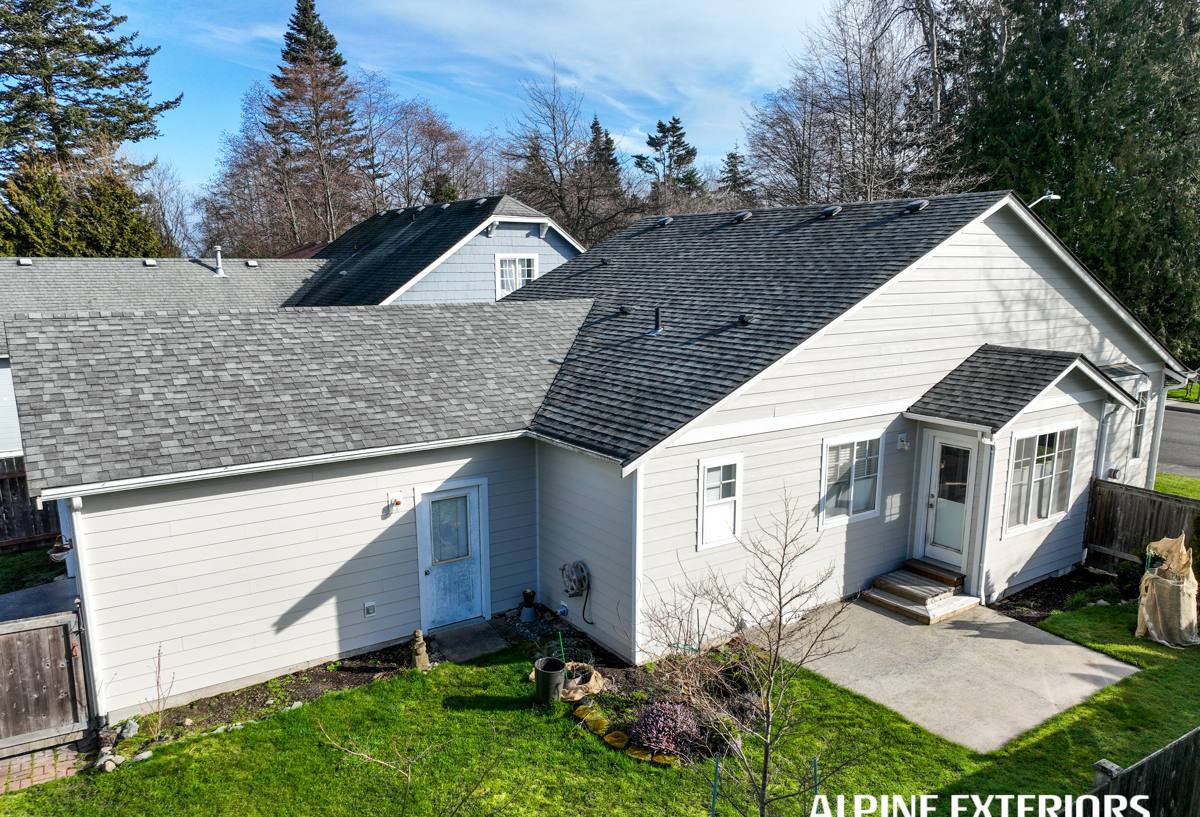
Moss, Algae, and the Slow Damage No One Notices
Moss Does More Than Look Bad
Moss holds moisture directly against roofing material. On asphalt shingles, that constant damp contact accelerates granule loss and softens the mat underneath over years. On wood or composite products, it can trap enough water to encourage rot at the point of contact. Moss also grows aggressively at butt joints and under shingle tabs, which is exactly where it can lift material just enough to let wind-driven rain find a path underneath.
Algae Streaking Is a Different Problem
The dark streaking many homeowners notice on north-facing slopes is usually algae, not moss, and it's mostly cosmetic — it doesn't undermine the roof the way moss growth can. We mention the difference because it changes the fix: algae streaking is often a cleaning and prevention conversation, while active moss growth on a roof with any age on it is a repair inspection conversation. Treating both the same way wastes money on the wrong service.
Common Roof Repair Calls We Get in Barkley
Most repair calls in this neighborhood fall into a handful of categories. Knowing which one you're dealing with helps set expectations before we even get on the roof.
| What You're Seeing | Likely Cause | Why It Matters |
|---|---|---|
| Ceiling stain that grows after storms | Failed flashing at a wall, chimney, or vent penetration | Flashing leaks are often mistaken for shingle failure and get patched in the wrong spot |
| Granules collecting in gutters | Normal aging, accelerated by moss and constant moisture | Signals the shingle field is thinning, which changes how much longer repair alone will hold |
| Lifted or curling shingle tabs | Wind exposure combined with moss lifting the seal strip | Creates an entry point for wind-driven rain even without visible cracking |
| Soft or spongy spot underfoot | Sustained moisture reaching the roof deck | Usually means deck repair, not just a surface patch |
| Green growth concentrated in valleys | Slow drainage and debris buildup holding moisture | Valleys carry the most water on the roof — damage here spreads fast |
What a Proper Roof Repair Actually Involves
A correct repair starts before anyone touches a shingle. It starts with figuring out why the damage happened, not just where it's showing up. Water often travels along the underlayment or decking before it appears as a stain inside the house, so the visible leak point and the actual failure point can be several feet apart. Chasing the stain instead of the cause is how the same leak comes back a year later.
A repair we stand behind typically includes:
- Tracing the leak path from the interior sign of damage back to the actual failure point on the roof, not assuming they're the same spot
- Checking the roof deck underneath for soft spots or rot before closing anything back up
- Replacing damaged underlayment, not just the shingles sitting on top of it
- Matching shingle color and profile as closely as the current product line allows, so the repair doesn't stand out
- Re-flashing penetrations and walls with new material rather than resealing old, cracked flashing with caulk
- Clearing valleys and debris paths so water has somewhere to go once the repair is done
Skipping any of these steps is how a repair becomes a temporary fix instead of a real one. It's also the difference between a patch that needs redoing next winter and one that holds.
Our Roof Repair Process
- Inspection. We get on the roof, not just in the attic, and look at flashing, valleys, penetrations, and the general condition of the shingle field — not just the spot you called about.
- Straight assessment. We tell you what's actually wrong, what caused it, and whether repair makes sense or if you're better served knowing your options for the road ahead. No pressure either direction.
- Written scope and price. You know exactly what's being repaired and what it costs before we schedule the work — no surprise add-ons once we're up there.
- The repair itself. Deck repair where needed, new underlayment, matched shingles or roofing material, and flashing done correctly the first time.
- Cleanup and check. We clear the site, walk you through what was done, and make sure drainage paths are clear before we leave.
Repair or Replace? How We Help You Decide
Not every roof problem in Barkley needs a full replacement, and not every leak is best solved with another patch. The honest answer usually comes down to the roof's age, how much of it is affected, and what's underneath the surface damage.
| Factor | Repair Usually Makes Sense | Replacement Worth Discussing |
|---|---|---|
| Roof age | Well within its expected service life | Nearing or past the manufacturer's expected lifespan |
| Extent of damage | Localized — one slope, one penetration, one valley | Showing up in multiple areas or spreading over time |
| Deck condition | Solid, dry decking beneath the damaged area | Soft, rotted, or repeatedly wet decking in more than one spot |
| Shingle condition elsewhere | Rest of the roof still has good granule coverage and flexibility | Granule loss, brittleness, or curling showing across the roof, not just the repair area |
| History | First repair call in years | Repeat leaks or repairs in the same general area |
We'll tell you honestly which side of that table your roof falls on. A repair that's genuinely enough will always cost less than a replacement you didn't need, and we'd rather earn the next call than push work that isn't warranted.
Materials and Methods We Use
For most Barkley homes, repair work involves matching to the existing asphalt shingle roof, since that's what the majority of the neighborhood is roofed with. We use underlayment and flashing rated for the amount of sustained moisture this climate delivers, not the minimum a dry-climate installation would call for. On homes with metal roofing or other materials, repair follows the same standard: match the existing system correctly rather than mixing incompatible materials just to close a gap faster.
We're selective about which underlayment and flashing products we use on repairs specifically because of what this climate does to roofs. A product that performs fine in a drier region can be the wrong call here if it's more sensitive to sustained moisture or harder to seal correctly around penetrations. That's a judgment call based on installation experience in this exact weather, not a knock on any manufacturer.
Why a Bellingham-Based Crew Matters for Barkley Homeowners
A roofer who works across a wide radius, and one who works Whatcom County roofs regularly, will size up the same leak differently. A crew that's used to this region knows how fast moss regrows here, how driving rain behaves against different roof pitches and wall intersections common in local construction, and how tight the dry-weather window can get between fall and spring. That affects scheduling, sequencing, and how repairs are detailed — a flashing job that would be fine in a milder climate needs to be tighter here.
It also means a faster, more accurate assessment. We're not guessing at how salt air and long wet seasons affect roofing in this area — it's what we see on repair calls throughout Bellingham and the surrounding neighborhoods on a regular basis. That local pattern recognition is part of what you're paying for when you hire a crew that already works this ground, not just a general contractor passing through.
Between-Repair Roof Maintenance Checklist
A few habits between service calls go a long way toward keeping small issues small in this climate:
- Clear gutters and valleys of debris at least twice a year, more often under overhanging trees
- Look for granule buildup in gutters and downspouts after heavy storms
- Check attic spaces periodically for damp insulation, staining, or musty smell, especially after a hard rain
- Have visible moss growth addressed before it spreads across a full slope, not after
- Get flashing around chimneys, skylights, and vent pipes checked every few years, since these fail before the shingle field usually does
- After any major windstorm, do a visual check from the ground for lifted or missing shingles
None of these replace a professional inspection, but they buy you time to catch problems between visits instead of finding out about them from a ceiling stain.
If you're dealing with a leak, storm damage, or just want an honest read on where your roof stands, we're happy to take a look. The estimate is free, there's no pressure to sign anything, and you'll get a straight answer about whether repair is the right call for your Barkley home.