 Bellingham Siding
 Birch Bay's Weather Is Hard on a Roof
Birch Bay sits right on the water, and that location cuts both ways. The views are part of why people love it here, but the same salt air, wind, and near-constant winter moisture that make the setting beautiful also put real stress on a roof year after year. A roof that would last two or three decades a few miles inland can wear out faster in Birch Bay if it wasn't built with this specific environment in mind.
Homeowners here usually don't call us because they woke up curious about roofing. They call because a shingle blew off in a windstorm, a ceiling stain showed up after a wet week, or moss has taken over the north-facing slope again. This page is about asphalt shingle roofing done specifically for Birch Bay conditions, not a generic roofing overview, but what actually matters for a home sitting this close to the Salish Sea.
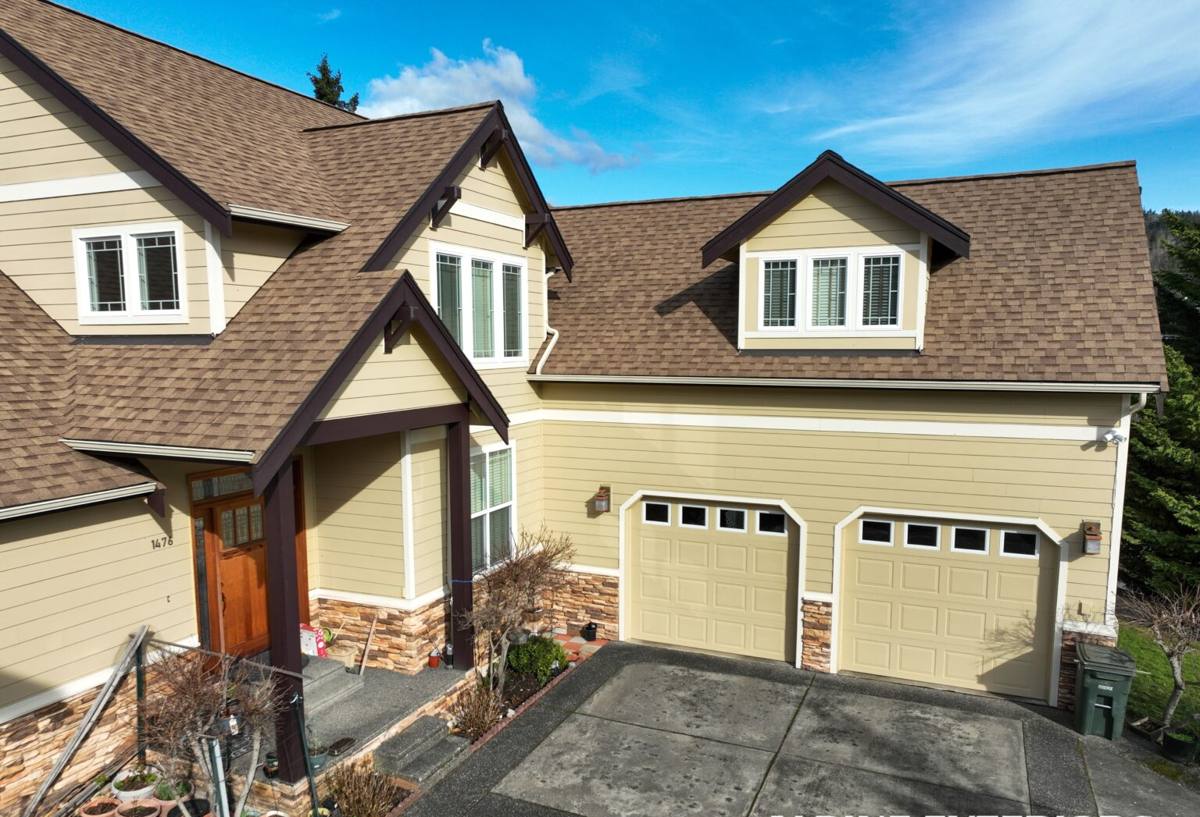
What Salt Air, Wind, and Driving Rain Do to a Shingle Roof
Asphalt shingles are a solid, proven roofing material for this part of Whatcom County, but only when the installation accounts for the coastal exposure. A few things are working against a roof in Birch Bay that a roofer working mostly in drier inland neighborhoods may not weigh as heavily:
Salt-Laden Air
Airborne salt off the bay accelerates corrosion on any exposed metal: nails, flashing, vents, and fasteners. Standard electro-galvanized fasteners can start showing rust streaks and losing holding strength well before a coastal roof is due for replacement. This is one of the most overlooked details in a budget reroof, and it's usually invisible until the metal has already started failing.
Wind-Driven Rain
Rain that comes in sideways off the water behaves differently than rain falling straight down. It can work its way up under shingle tabs, around vent boots, and along flashing edges that would be perfectly fine in a calmer inland setting. A roof here needs stronger sealing at every penetration and a shingle rated for higher wind exposure, not just whatever is cheapest on the truck that week.
A Long, Wet Moss Season
Western Whatcom County's mild, damp winters and shaded, north-facing slopes are close to ideal growing conditions for moss and algae. Once moss gets a foothold under shingle tabs, it holds moisture against the roof deck and slowly lifts shingles from underneath, long before the shingles themselves would otherwise wear out.
Choosing an Asphalt Shingle System Built for This Location
"Asphalt shingle" covers a wide range of products, and the right choice for a Birch Bay home is usually not the builder-grade option that gets installed on inland tract homes. We factor in wind rating, algae resistance, and how the shingle is sealed to the deck, not just color and price.
| Shingle Tier | Typical Wind Rating | Algae Resistance | Best Fit for Birch Bay |
|---|---|---|---|
| Standard 3-tab | Lower wind rating, lighter fastener holding area | Usually none unless specified | Not our recommendation for exposed, waterfront lots |
| Architectural / dimensional | Higher wind rating, larger nailing zone | Available with algae-resistant granules | Standard recommendation for most Birch Bay homes |
| High-wind / coastal-rated architectural | Highest wind rating, enhanced sealant strip | Algae-resistant granules standard | Best fit for open, exposed, or waterfront-facing roofs |
We'll walk you through the real difference between these tiers on your specific roof. The upgrade from standard to a coastal-rated architectural shingle is often a smaller price gap than people expect, especially once you factor in how much longer it should hold up under wind and salt exposure.
What a Correct Installation Actually Involves
A shingle roof is only as good as everything underneath it. Most roofs that fail early in Birch Bay didn't fail because the shingles were bad, they failed because a step underneath got rushed or skipped. Here's what we consider non-negotiable on a coastal reroof:
- Full tear-off to the deck on most jobs, so we can actually see the condition of the sheathing instead of guessing what's under old layers.
- Deck repair for any soft, delaminated, or water-stained plywood before a single new shingle goes down.
- Ice-and-water shield at eaves, valleys, and around every penetration, the areas most exposed to wind-driven rain and ice damming.
- Synthetic underlayment across the full deck as a second line of defense under the shingles.
- Corrosion-resistant fasteners and flashing suited to salt air exposure, not the cheapest standard-grade hardware.
- Proper nailing pattern matched to the shingle manufacturer's high-wind installation instructions, not the minimum spec.
- New flashing at chimneys, skylights, and wall intersections rather than reusing old, corroded flashing to save time.
- Balanced attic ventilation so moisture and heat don't get trapped against the underside of the new roof.
Skipping any one of these is how a homeowner ends up with a roof that looks fine from the driveway but is already failing underneath within a few winters.
Ventilation: The Part of the Roof You Can't See
A shingle roof and an attic work as one system. In Whatcom County's damp climate, an attic that can't breathe properly traps moisture, which then condenses on the underside of the roof deck and shingles from the inside. Over time, that trapped moisture rots sheathing, degrades insulation, and can void a shingle manufacturer's warranty, all while the roof looks perfectly normal from outside.
Before we quote a reroof, we look at the existing intake and exhaust ventilation: soffit vents, ridge vents, gable vents, and any bathroom or kitchen exhaust that may be dumping moist air into the attic instead of outside. On many older Birch Bay homes, ventilation was undersized or unbalanced when the house was built, and it's worth correcting during a reroof rather than leaving it for the next owner to discover as a mold problem.
Dealing With Moss and Algae the Right Way
Moss and algae control starts during installation, not after. Algae-resistant shingles use copper-infused granules that slowly release trace amounts of copper, which discourages the black streaking and algae growth common on shaded, damp roof slopes. That's a meaningful upgrade for a lot of homes in this area, particularly on north-facing roofs shaded by trees.
Beyond the shingle itself, a few physical details reduce moss pressure over the life of the roof:
- Keeping overhanging branches trimmed back so shaded areas of the roof get more sun and airflow.
- Making sure gutters and valleys are clear so water isn't sitting against shingle edges.
- Zinc or copper strips near the ridge on roofs with heavy moss history, which allow rain to carry trace metal down the roof slope.
- Routine gentle cleaning rather than pressure washing, which can strip granules and shorten shingle life.
We'll be upfront that no shingle roof in this climate is completely moss-proof forever. The goal is to slow it down significantly and make upkeep manageable, not to promise a maintenance-free roof that doesn't exist in a marine climate like this one.
Our Process From First Call to Final Cleanup
We keep the process straightforward because a reroof is disruptive enough without added confusion:
- On-site inspection. We walk the roof (weather permitting) and the attic, checking deck condition, ventilation, flashing, and any trouble spots you've noticed from inside the house.
- Written estimate. You get a clear scope of work and price: what tier of shingle, what underlayment, what gets replaced versus reused, and why.
- Material staging and protection. Landscaping, driveways, and siding get protected before tear-off starts.
- Tear-off and deck inspection. We remove the old roofing down to the deck and address any soft or damaged sheathing before moving forward.
- Underlayment, flashing, and shingle installation. Installed to manufacturer high-wind specs, with extra attention at valleys, penetrations, and edges.
- Ventilation check. Intake and exhaust ventilation confirmed or corrected as part of the job.
- Full cleanup and magnetic nail sweep. Your property gets cleared of debris and stray fasteners before we consider the job finished.
- Final walkthrough. We go over the finished roof with you and answer any questions before wrapping up.
What Affects the Cost of a Birch Bay Reroof
Every roof is different, so we won't put a fake number on this page, but these are the real factors that move the price up or down, and it's worth understanding them before you compare quotes:
| Cost Factor | Why It Matters Here |
|---|---|
| Roof size and pitch | Steeper roofs take longer to work safely and require more fall-protection setup |
| Number of layers being removed | Tear-off of multiple old layers takes more labor and disposal cost than a single layer |
| Deck condition | Rotted or soft sheathing found during tear-off needs to be replaced before shingles go down |
| Shingle tier chosen | Standard architectural versus coastal high-wind, algae-resistant product |
| Number of penetrations | Chimneys, skylights, and multiple vents each need individual flashing work |
| Ventilation corrections | Adding or upgrading soffit, ridge, or gable vents adds labor but pays off long-term |
| Access and site conditions | Waterfront lots, steep driveways, or limited staging space can affect setup time |
A quote that skips most of these line items and just gives you a flat number isn't necessarily a bad deal, but it's worth asking what's actually included before you sign anything.
Signs Your Birch Bay Roof May Be Due for Replacement
- Shingles that are curling, cupping, or losing granules faster on one side of the roof than another.
- Bald or shiny patches where granules have worn away, especially on south- or west-facing slopes.
- Moss that keeps returning to the same areas no matter how often it's cleaned.
- Rusty streaking around nails, vents, or flashing.
- Daylight visible through the roof deck from inside the attic.
- Soft or spongy spots when walking the roof, or sagging visible from the ground.
- Water stains on ceilings or in the attic after wind-driven storms in particular.
Not every item on this list means you need a full replacement today, sometimes targeted repair is the right call. Part of an honest inspection is telling you which situation you're actually in.
Why a Crew That Already Works Birch Bay Matters
Roofing crews who mostly work drier, inland neighborhoods don't always think in terms of salt-air corrosion, wind-driven rain at flashing edges, or moss pressure on shaded slopes, because they don't need to, most of the time. Working across Bellingham and Whatcom County's coastal communities regularly means those details aren't an afterthought; they're part of how the job gets planned and priced from the start.
It also means straightforward things like scheduling around this area's weather windows, knowing which fastener and flashing upgrades are worth the extra cost here versus elsewhere in the county, and being available if a question comes up after the job is done. A roof installed correctly the first time, with the right materials for this specific environment, costs less over its lifetime than one that has to be patched or partially redone a few years in.
Simple Maintenance That Extends a Shingle Roof's Life Here
A well-installed roof still benefits from basic, occasional upkeep, especially in a climate that stays damp for much of the year:
- Clear gutters and valleys of leaves and debris at least once or twice a year.
- Trim back tree branches that shade roof slopes and drop debris.
- Have moss gently removed before it spreads under shingle tabs, not after.
- Check attic ventilation isn't blocked by insulation or storage.
- After major windstorms, do a visual check (from the ground, or ask us) for lifted or missing shingles.
None of this is complicated, but a little consistency goes a long way toward getting the full lifespan out of a roof that's already built to handle this environment.
If your roof is showing its age, or you just want an honest read on where it stands, we're glad to come take a look. The estimate is free, there's no pressure to move forward, and you'll get a clear explanation of what we find and why. Fill out the form below to get started.