 Bellingham Siding
 Why Birch Bay Homes Ask About Window Replacement Sooner Than Most
Birch Bay sits right on the water, and that changes what a window has to survive. Homes a few miles inland in Bellingham deal with plenty of rain, but Birch Bay adds salt air on top of it — a steady, low-grade corrosive that works on window hardware, aluminum cladding, and exposed fasteners year-round. Combine that with wind-driven rain coming straight off the bay and a moss season that runs long into spring, and you get windows that age faster here than the manufacturer's brochure assumes.
We're not saying every window in Birch Bay is failing. Plenty of homes have units that are doing fine. But when we get called out for foggy double-pane glass, sticky sashes, or a draft that wasn't there two winters ago, the pattern is consistent: it's almost always a waterfront or near-waterfront property, and the failure points are almost always the same — seals, weep systems, and hardware that salt air has worked on longer than it should have.
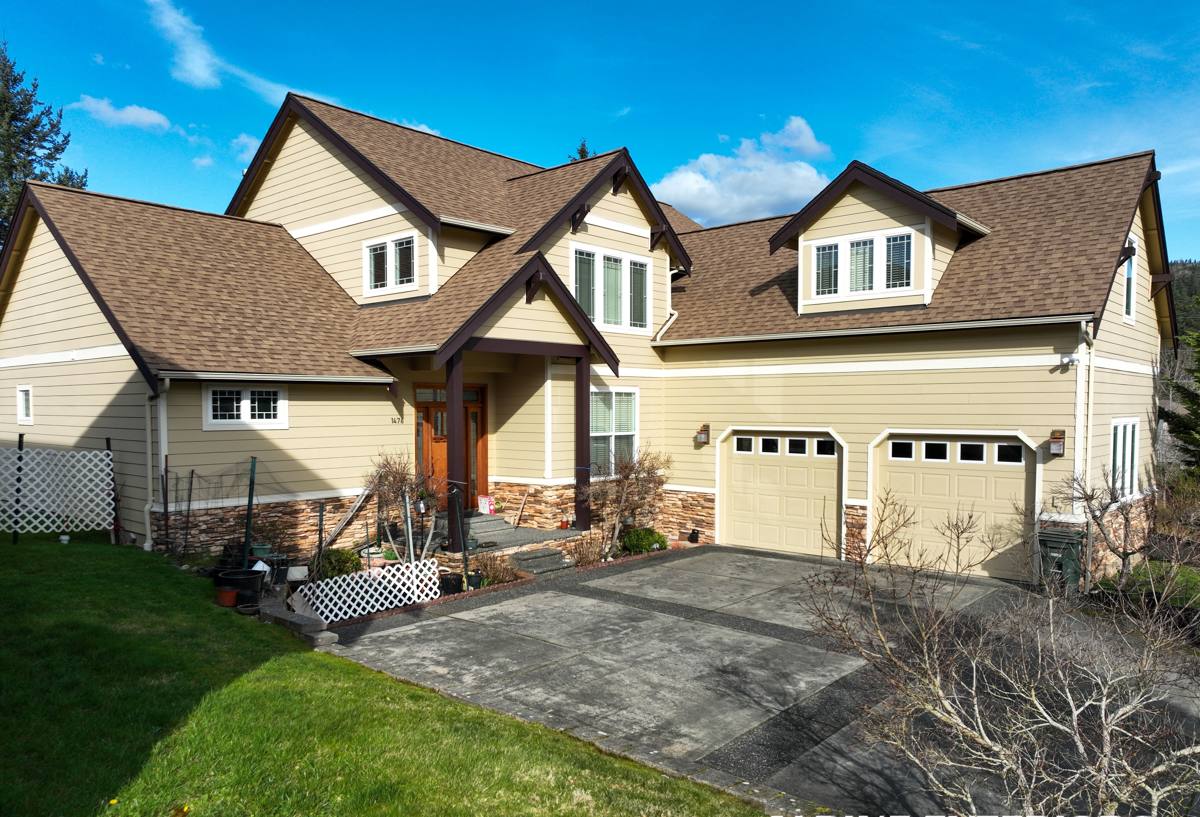
What "Energy-Efficient" Actually Means for This Location
Energy efficiency gets marketed as a single number — a U-factor or an ENERGY STAR sticker — but for a Birch Bay home, the number only matters if the window is also built and installed to handle the local exposure. A window that's efficient on paper but leaks air at the sash or lets moisture behind the trim within a few years isn't actually saving anyone money; it's just failing quietly instead of obviously.
The Factors That Matter Most Here
- Low-E glass with the right coating package — cuts summer heat gain and winter heat loss, which matters on west- and south-facing rooms that catch direct bay light.
- Corrosion-resistant hardware — locks, hinges, and balance systems that won't seize or pit from salt-laden air over a normal service life.
- A tight, correctly flashed installation — the window itself can be excellent and still underperform if it's not sealed and flashed to shed wind-driven rain.
- Frame material suited to constant moisture exposure — some materials handle sustained damp coastal conditions better than others; we'll walk you through the honest trade-offs for your specific elevation and sun exposure.
- Working weep holes and drainage paths — often overlooked, but this is what keeps water from sitting in the sill track and finding its way into the wall.
How Salt Air, Driving Rain, and Moss Season Show Up in Real Window Problems
Each of Whatcom County's coastal stressors tends to cause a specific, recognizable kind of damage. Knowing which one you're looking at helps set expectations for the repair or replacement conversation.
Salt Air
Salt is hygroscopic — it pulls moisture out of the air and holds it against whatever surface it lands on. On windows, that means it accelerates corrosion on hardware, fasteners, and any exposed metal trim faster than the same window would age a few miles inland. Locks that stick, balance springs that lose tension, and cranks on casement windows that get harder to turn are the classic tells.
Driving Rain
Bay-facing exposures take rain sideways, not straight down. That means the flashing detail and the seal between the window frame and the rough opening matter more here than they would on a sheltered inland lot. A window that's perfectly good on a calm day can still let water in during a wind-driven storm if the installation wasn't detailed for that load.
Moss Season
Whatcom County's long wet season keeps moss and algae established on north-facing and shaded surfaces for months at a time. On windows, that shows up less as damage to the glass itself and more as trapped moisture around sills, tracks, and adjacent trim — organic growth holds water against wood and painted surfaces longer, which is where rot and paint failure start.
Signs a Birch Bay Home Needs a Closer Look
| What You Notice | Likely Cause | Urgency |
|---|---|---|
| Fogging or haze between panes | Failed seal in the insulated glass unit | Moderate — efficiency loss now, glass replacement eventually |
| Window feels drafty near the frame | Failed or degraded perimeter seal/caulk | Moderate to high depending on wall exposure |
| Hardware sticky, stiff, or won't latch fully | Corrosion or frame movement | Moderate — security concern too |
| Soft or discolored trim/sill near the window | Moisture intrusion behind the flashing | High — can point to hidden wall damage |
| Visible moss or dark staining on sills/tracks | Trapped moisture from prolonged wet exposure | Low to moderate — address before it spreads |
| Noticeably colder near the window in winter | Poor glass performance or air leakage | Moderate — comfort and energy cost |
What a Correct Installation Looks Like
The window unit itself is maybe half the job. The other half is what happens at the rough opening, and that's where corners get cut on rushed jobs. For a coastal property like Birch Bay, we treat the installation detail as seriously as the product choice.
- Remove the old unit and inspect the opening. This is where we find out if there's hidden rot, prior water damage, or a flashing detail that failed. We won't install a new window over a compromised opening — we address what's underneath first.
- Confirm the opening is square, sound, and properly sized. Gaps get shimmed correctly, not just caulked over.
- Install house wrap and flashing in the correct shingle-lap order so water is directed out and down, never behind the siding.
- Set the window level, plumb, and square, with fasteners placed per manufacturer spec so the frame isn't stressed or bowed.
- Seal the perimeter with the right sealant for coastal exposure — interior and exterior air sealing, not just a bead of caulk on the outside.
- Insulate the gap between frame and rough opening without overpacking it, which can bow the frame and affect operation.
- Confirm smooth operation and full hardware engagement before we call the job done.
Repair vs. Replace: An Honest Read
Not every window with a problem needs full replacement, and we'll tell you that directly if it's true. Here's roughly how we think about it.
- Consider repair when: the frame and sill are sound, the glass unit itself is clear, and the issue is isolated to hardware, weatherstripping, or a caulk failure.
- Consider replacement when: the glass has fogged (a failed seal can't be fixed, only the glass unit or window replaced), there's rot in the frame or surrounding structure, or the window is old enough that its overall efficiency is well behind what's available now.
- Consider a phased approach when: budget is a factor — prioritizing bay-facing and west-facing windows first, since those take the brunt of the driving rain and solar exposure, then moving to less-exposed elevations later.
Why It Matters That We Already Work in Birch Bay
A crew that mostly works drier, inland jobs can still install a window correctly on a calm day. The difference shows up over time — in whether the flashing detail was built for sideways rain, whether the hardware spec accounts for salt exposure, and whether the crew recognized a moisture problem hiding behind old trim instead of just covering it up. Working coastal Whatcom County properties regularly means we're not guessing at what holds up here — we've seen what fails and why, and we build around it from the start.
We also know that a Birch Bay property might only be a weekend home for some owners, which changes how we schedule and communicate — we're used to coordinating around owners who aren't on-site full time.
What to Expect When You Call Us
- A walkthrough of your current windows, elevation by elevation, noting which ones are taking the most exposure.
- An honest assessment of repair vs. replacement for each window, not a blanket recommendation.
- A written estimate that breaks out product and installation, so you can see where the cost is going.
- A realistic timeline that accounts for Whatcom County weather windows — we won't schedule exterior work into a forecast that works against a good seal.
- Cleanup and a final walkthrough confirming every window operates and latches correctly before we consider the job finished.
Get a Straight Answer on Your Windows
If you're not sure whether your Birch Bay home needs a window repair, a partial replacement, or a full upgrade, we're glad to take a look and tell you what we actually see — not just what's easiest to sell. Reach out for a free, no-pressure estimate using the form below, and we'll walk you through what makes sense for your home's exposure and budget.