 Bellingham Siding
 Birchwood's Siding Has a Harder Job Than Most People Realize
Birchwood is a quiet, established part of Bellingham, with a mix of older post-war homes and newer infill sitting under mature trees and within a few miles of Bellingham Bay. That combination — tree cover, marine proximity, and Whatcom County's wet winters — puts real stress on exterior cladding. Salt-laden air off the bay accelerates corrosion on fasteners and trim. Driving rain, often pushed sideways by wind off the water, finds every gap in poorly flashed siding. And shade from mature conifers keeps north- and west-facing walls damp long after a storm has passed, which is exactly the environment moss and algae need to take hold.
None of this is unique to Birchwood, but it's more pronounced here than in drier inland parts of Whatcom County. A siding product and installation method that works fine in a dry climate can fail here in a fraction of the time. That's the lens we bring to every Birchwood project: not just "what does this house need to look good," but "what does this house need to survive twenty winters of this specific climate."
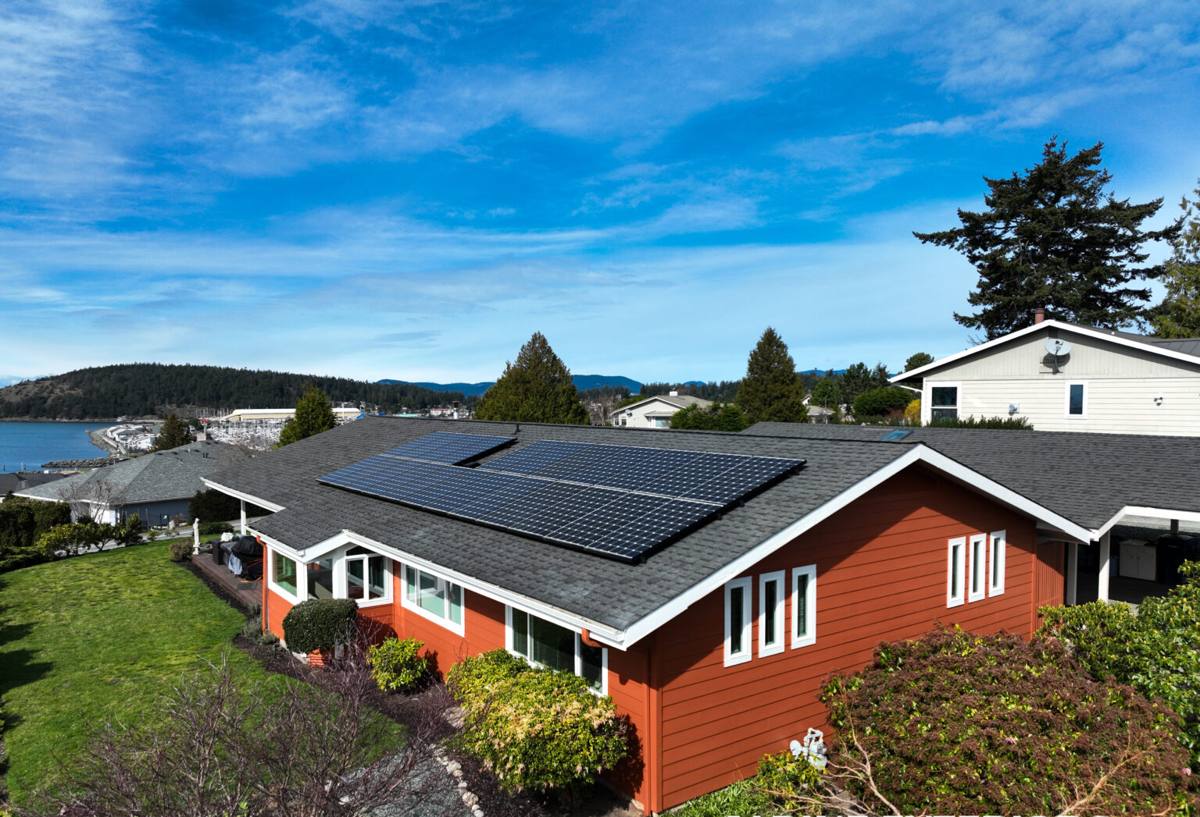
What This Climate Does to the Wrong Siding Choice
Over years of working on homes in this part of Bellingham, we see the same failure patterns repeat on the wrong products or bad installs:
- Moisture wicking at seams and butt joints on wood-based or poorly sealed panel products, leading to swelling and soft spots.
- Moss and algae staining on shaded walls and anything close to overhanging trees, which is more of a maintenance nuisance on some materials than others.
- Fastener corrosion and staining where standard fasteners were used instead of corrosion-resistant hardware suited for coastal air.
- Paint and coating failure from repeated wet-dry cycling, especially on field-painted products where the finish wasn't designed for this level of moisture exposure.
- Caulk failure at trim and window returns, which is often the first crack in an otherwise sound siding job and the fastest route to hidden water damage.
These aren't hypothetical concerns — they're the reason we standardized on one product system rather than offering everything a homeowner might ask for.
Why We Install James Hardie and Nothing Else
We only install James Hardie fiber cement siding. We don't install vinyl, LP SmartSide, Cemplank, Allura, primed spruce, or cedar. That's not a marketing position — it's a professional standard we've settled on after weighing how each of those products actually performs in a marine, high-rainfall climate over the long haul.
Fiber cement is non-combustible, which matters for insurance and wildfire-adjacent building codes, and it doesn't swell, rot, or feed insects the way wood-based products can when moisture gets behind them. James Hardie in particular engineers its products by climate zone — its HZ5 formulation is built for regions with significant moisture and freeze-thaw cycling, which describes Whatcom County reasonably well. The factory-applied ColorPlus finish is baked on under controlled conditions and backed by its own finish warranty, which avoids the field-paint failure points we see on other products. James Hardie also backs its siding with a strong, transferable limited warranty, which matters to homeowners planning to sell within the warranty period.
We're not claiming other products are junk. Vinyl is inexpensive and low-maintenance in mild climates but can warp or crack under UV and impact, and it reads as vinyl. LP SmartSide is a legitimate engineered wood product but is still wood-based, meaning moisture management at seams and cut edges is less forgiving than fiber cement. Cedar is beautiful but demands ongoing maintenance and refinishing that most homeowners underestimate, especially in a climate this wet. We simply decided we'd rather install one product exceptionally well than install five products adequately.
James Hardie Product Lines We Use
| Product | Best Use | Why It Fits Birchwood |
|---|---|---|
| HardiePlank lap siding | Primary wall cladding, most homes | Traditional lap look, wide color and texture options, engineered for wet climates |
| HardiePanel vertical siding | Accent walls, gables, modern facades | Clean lines for contemporary updates, pairs well with board-and-batten detailing |
| HardieShingle siding | Accent gables, cottage-style homes | Shingle look without the maintenance burden of real cedar shakes |
| HardieTrim boards | Corners, window and door surrounds, fascia | Matches siding durability so trim doesn't become the weak point |
What a Correct James Hardie Installation Actually Involves
James Hardie siding performs well over the long term only when it's installed to spec — and in a wet climate, small installation shortcuts show up as real problems within a few years. A correct install on a Birchwood home includes:
- Proper weather-resistant barrier installed and lapped correctly behind the siding, with all penetrations sealed.
- Rain-screen or drainage gap where the wall assembly calls for it, so incidental moisture can drain and dry rather than sit against the siding.
- Correct fastener type, spacing, and embedment depth per James Hardie's published installation instructions — not "close enough" spacing.
- Proper clearance between siding and grade, roofing, decks, and other transitions so water doesn't wick into the bottom edge of the boards.
- Factory-mitered or properly caulked joints at butt seams and trim returns, using sealants rated for exterior exposure.
- Correct flashing at every window, door, and penetration — the single most common source of hidden water damage on any siding job, regardless of material.
- Corrosion-resistant fasteners and hardware throughout, given the salt air this close to Bellingham Bay.
Skipping any one of these doesn't usually show up on inspection day. It shows up two or three winters later, as a stain, a soft spot, or a warranty claim that gets denied because the install didn't follow manufacturer specification. That's a large part of why installer quality matters as much as the product itself.
How Our Process Works, Start to Finish
- Free on-site estimate. We walk the exterior, look at your current siding condition, trim, flashing, and any moisture or moss issues, and talk through product and color options.
- Written scope and pricing. You get a clear breakdown of what's included — tear-off, house wrap, flashing, trim, siding, and cleanup — with no vague allowances.
- Prep and tear-off. Old siding comes off, sheathing is inspected for hidden rot or moisture damage, and any repairs are addressed before new material goes on.
- Weather barrier and flashing. This is the step that determines how the wall performs for the next 30 years, and we don't rush it.
- Hardie installation. Panels or planks go on per James Hardie's fastening schedule, with trim and accessories matched to the product line.
- Caulking, touch-up, and final inspection. We walk the finished job with you before calling it complete.
- Cleanup and haul-away. Job site debris and old siding materials are removed — you're not left managing disposal.
Living With James Hardie Siding in a Wet, Mossy Climate
One advantage of fiber cement over wood-based alternatives is how little upkeep it demands, but "low-maintenance" doesn't mean "no-maintenance" in a climate with a long moss season. A few habits keep Hardie siding looking good on shaded Birchwood lots:
- Rinse siding with a garden hose once or twice a year, focusing on north-facing and tree-shaded walls where moss and algae are most likely to appear.
- Keep gutters clear so overflow doesn't run down the siding face and keep it perpetually damp.
- Trim back branches and shrubs that hold moisture against the wall or block airflow and sun exposure.
- Avoid pressure washing at close range or high pressure, which can force water behind panels or damage the factory finish; a soft wash is safer.
- Recaulk trim joints if you notice cracking or gaps, since caulk failure is usually the first thing to go, well before the siding itself.
What Drives the Cost of a Birchwood James Hardie Project
Every home is different, but the same handful of factors move the price up or down on most Birchwood jobs:
| Factor | Why It Matters |
|---|---|
| Home size and wall complexity | More corners, gables, and dormers mean more cutting, trim, and labor time |
| Current siding condition | Hidden rot or moisture damage found during tear-off adds sheathing repair work |
| Product line and profile | Lap width, texture, and mix of panel/shingle accents affect material cost |
| Trim and detail work | Custom trim, window surrounds, and accent details add labor beyond flat wall area |
| Access and site conditions | Tree cover, slope, and tight lot lines can affect staging and scaffolding needs |
We don't quote broad ranges without seeing the house, because the difference between a straightforward rectangular home and one with multiple gables and a lot of trim can be significant. What we can promise is a written, itemized estimate with no surprise change orders for things we could have caught during the initial walk-through.
Why Hiring a Crew That Already Works Birchwood Matters
Siding is only as good as the crew installing it, and local experience shows up in ways homeowners don't always think to ask about. A crew that already works in Bellingham and Whatcom County knows the wind-driven rain patterns off the bay, understands which walls on a given lot orientation are going to fight moss year-round, and has already worked through the City of Bellingham's permitting and inspection process for exterior work. That familiarity translates into fewer surprises, faster scheduling, and a job that's built for the actual conditions your home faces rather than a generic installation approach.
It also means accountability. A contractor who lives and works in this community has a reputation to maintain here, not just a job to finish and leave. That matters when you're trusting someone with the single largest exterior investment most homeowners make in a house.
Ready to Talk About Your Birchwood Home?
If your current siding is showing moss staining, soft spots, failing paint, or you're simply planning ahead for a re-side, we're happy to take a look and walk you through what James Hardie siding would involve for your specific home. The estimate is free, there's no pressure, and you'll get a straight answer about what your house actually needs. Use the form below to get started.