 Bellingham Siding
 Energy-Efficient Windows in Sudden Valley: A Different Kind of Whatcom County Setting
Sudden Valley sits on the south shore of Lake Whatcom, a heavily wooded residential community with its own private road network and homeowners association, built up through second-growth forest on hilly terrain around the lake. That setting is different from a home closer to downtown Bellingham or out on open Bellingham Bay waterfront, and it changes what "energy-efficient windows" actually needs to mean here. Homes in Sudden Valley don't take direct salt spray the way a bayfront property does, but they deal with something just as hard on window performance: deep shade from mature conifers, humidity carried off the lake, and long stretches where a wall or window never fully dries between storms. Add in Whatcom County's normal driving rain and a moss and mildew season that runs most of the year, and you've got a climate that stresses windows from both the weatherproofing side and the energy-performance side at once.
We handle siding, roofing, decks, and windows throughout Sudden Valley and the rest of Whatcom County, and window replacement is one of the more consequential projects a homeowner here can take on — both for what it does to heating costs through the long damp season and for how much it affects comfort in rooms that sit under heavy shade or face the lake directly.
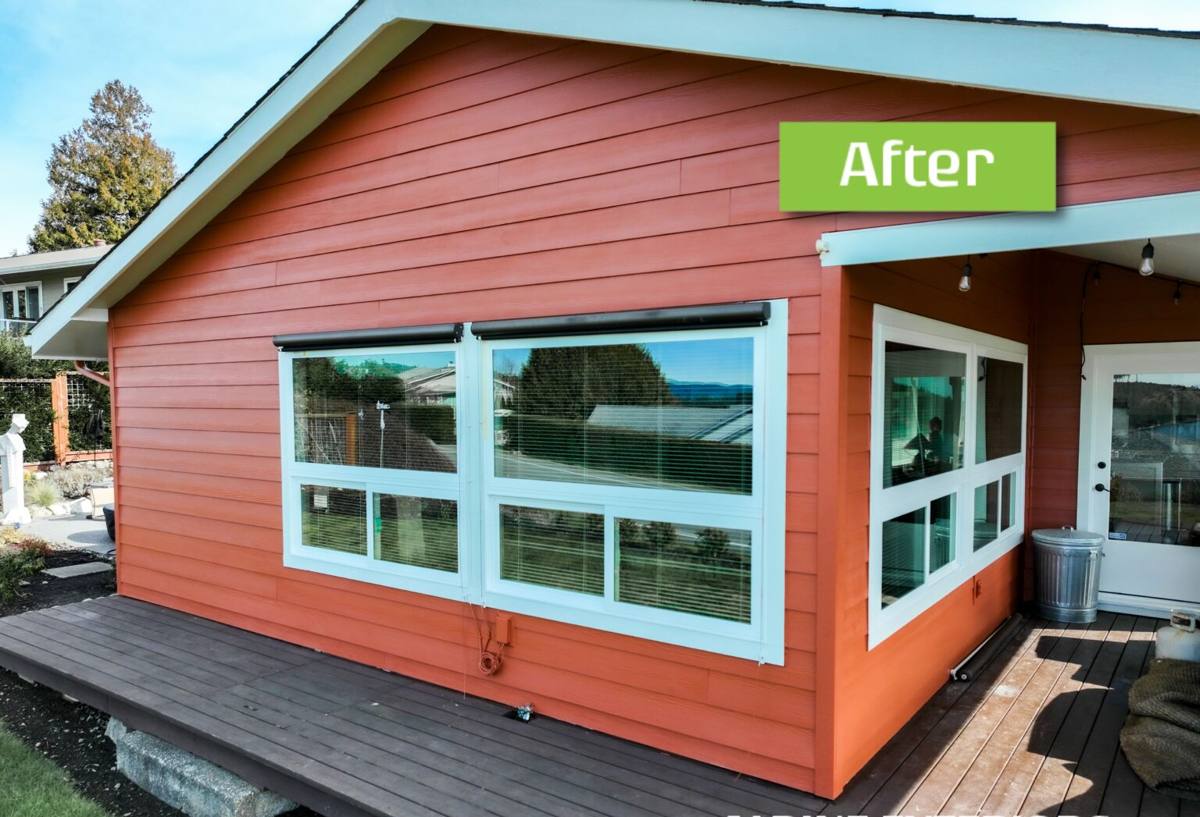
What Sudden Valley's Setting Does to Window Performance
Heavy Tree Cover and Persistent Shade
Most Sudden Valley lots sit under significant tree canopy, and a lot of homes have at least one wall face that gets very little direct sun for most of the year. That matters for windows in a way it's easy to overlook: sun exposure is part of how a window assembly dries out and how interior glass surfaces avoid holding condensation. A shaded window stays cooler and damper longer after every rain, which puts more stress on seals, weatherstripping, and any wood trim around the frame than the same window would see on an open, sun-exposed lot.
Lake-Effect Humidity
Lake Whatcom adds moisture to the air on top of the region's normal rainfall, and homes closer to the water tend to notice that extra dampness even on days when it isn't actively raining. For windows, sustained ambient humidity is part of what drives condensation on interior glass and, in older or poorly sealed units, moisture finding its way into the space between panes. It also means window sills, tracks, and hardware stay damp longer than they would in a drier inland setting, which shortens the life of anything not built to handle it.
Driving Rain and Marine Air Reaching Inland
Even set back from Bellingham Bay, Sudden Valley still sits inside the same marine-influenced weather system that brings Whatcom County its wind-driven rain and mild, wet winters. Storms push rain sideways into wall assemblies rather than letting gravity do the work, and on a hilly site like this one, different walls of the same house can face very different wind and rain exposure depending on elevation and orientation relative to the lake and surrounding ridgelines. Flashing and installation details need to account for that variability rather than assuming every window on a house sees the same conditions.
Temperature Swings and Interior Condensation
Whatcom County's cold, damp winters create a real temperature gap between heated interiors and wet exteriors, and that gap is where condensation problems start. Older single-pane windows, or double-pane units with a failed seal, show this constantly — fogging, water pooling on interior sills, or a persistent cold draft near the glass even with the window fully closed. In a shaded, humid setting like Sudden Valley, that condensation pressure tends to run higher than it would on a drier, sun-exposed property, which is part of why glazing choice matters as much here as frame quality does.
Signs Your Windows Are Losing You Money
Most homeowners notice comfort problems — drafts, cold rooms, a window that's hard to open — well before they connect them to a heating bill. Both are usually pointing at the same underlying issue.
- Rooms near certain windows feel noticeably colder than the rest of the house in winter
- Visible fog or moisture trapped between the panes of a double-pane window
- A steady draft near the frame even when the window is fully closed and locked
- Condensation forming on the inside of the glass regularly through fall and winter
- Heating costs that feel high relative to the size of the house and don't track with obvious usage changes
- Wood trim or sills near a window that feel soft, look discolored, or show visible rot
What "Energy-Efficient" Actually Means for a Window
The term gets used loosely, so it's worth being specific. Three numbers do most of the work in determining how a window actually performs, and none of them are about brand name.
| Spec | What It Measures | Why It Matters in Sudden Valley |
|---|---|---|
| U-factor | How much heat the window lets escape — lower is better | Directly affects heating cost through a long, cold, damp season |
| SHGC (Solar Heat Gain Coefficient) | How much solar heat passes through the glass | Less critical on heavily shaded lots, more relevant on lake-facing or open walls |
| Low-E coating | A microscopically thin coating that reflects heat while letting light through | Reduces heat loss and cuts down on interior condensation on cold, humid days |
Gas fill between panes — typically argon — adds another layer of insulating performance by slowing heat transfer through the airspace. Double-pane windows with a quality low-E coating and argon fill cover most homes here reasonably well. Triple-pane goes a step further, adding another layer of glass and airspace, which helps most on walls with heavy sun exposure or rooms where comfort has been a persistent complaint — it isn't automatically necessary for every window in a shaded Sudden Valley home, and we'll say so rather than upselling it by default.
Frame Material Matters as Much as the Glass
A high-performance glazing package installed in a frame that isn't built for sustained moisture exposure will underperform over time, so frame material is part of the energy-efficiency conversation, not a separate decision.
- Vinyl: Resists rot and doesn't need repainting, and performs well in a mild, wet climate. Quality varies significantly between manufacturers — frame thickness and weld quality at the corners affect both durability and how well the unit holds its seal over time.
- Fiberglass: More dimensionally stable across temperature swings than vinyl, which helps seals hold up over years of freeze-thaw and humidity cycling. Costs more up front but tends to hold its performance longer.
- Wood and wood-clad: We're careful about recommending uncladded wood frames in a setting this shaded and humid. Wood that stays damp for extended periods — which is exactly what happens on a heavily treed lot — is more maintenance-intensive and more prone to swelling, sticking, or rot at the sill than vinyl or fiberglass, regardless of how well it's finished initially.
Installation and Flashing: Where Energy Performance Actually Gets Won or Lost
A window's U-factor and glazing spec describe how it performs on paper, in a lab, sealed into a test frame. What a homeowner actually experiences depends just as much on how the unit is installed. A gap around the rough opening that isn't properly insulated and air-sealed creates a direct draft path no glazing package can compensate for. Flashing that doesn't lap correctly with the surrounding wall lets water into the wall assembly, which eventually degrades the insulation and framing around the window regardless of how good the window itself is. We treat air sealing and flashing as standard on every window we install, not an upgrade — it's the difference between a window that performs the way its spec sheet says it should and one that leaks air and water despite a good rating.
Why This Matters More on Hilly, Wooded Lots
On a Sudden Valley property, different elevations of the same house can face very different wind, rain, and shade conditions depending on slope and tree cover. A flashing detail that works fine on a sheltered, downhill wall may not hold up on an exposed, uphill-facing wall of the same house. We assess each elevation individually rather than assuming uniform exposure, which is a habit that comes from working this specific kind of terrain regularly rather than treating every wall on every house the same way.
Replacement vs. Repair: How We Make the Call
Not every underperforming window needs full replacement. A unit with a failed seal but a sound frame and functional hardware is often a reasonable repair candidate. A window with rotted framing, chronic condensation from a compromised frame, or hardware that's been failing for years usually isn't — at that point, repeated patching costs more over time than doing it right once.
| Condition | Repair Usually Makes Sense | Replacement Usually Makes Sense |
|---|---|---|
| Fogged glass, sound frame and hardware | Yes — reglaze or seal replacement | Only if the frame is also compromised |
| Stiff, broken, or corroded hardware | Yes — hardware replacement | Not usually on its own |
| Soft or rotted frame or sill | Rarely a lasting fix | Yes |
| Persistent draft despite sealing attempts | Sometimes, if flashing is the actual cause | Yes, if the unit or frame is the source |
| Single-pane or older double-pane with failed seal | Short-term fix at best | Yes, for real energy and comfort gains |
Our Process for a Sudden Valley Window Project
We start with an on-site look at the windows in question, checking frame and seal condition, hardware function, and how the current flashing ties into the siding around each opening — walking each elevation of the house individually given how much exposure can vary from wall to wall on a hilly, treed lot. From there, we give a straightforward read on which windows are reasonable repair candidates and which make more sense to replace, along with a written scope before any work begins. Air sealing and flashing detail are standard practice on every window we install, not something added as an upcharge. Because we also do siding and roofing, whoever handles the window flashing understands how it needs to integrate with the surrounding wall assembly rather than treating the window as an isolated component.
A Checklist Before Hiring for Window Work in Sudden Valley
- Ask specifically how they handle air sealing and flashing integration, not just what window brand they sell
- Confirm current Washington contractor licensing and active liability insurance
- Ask whether they assess each elevation of the house individually given exposure differences on hilly, wooded lots
- Get a written scope that separates the manufacturer's product warranty from the contractor's installation warranty
- Ask about realistic lead times, since window units are typically built to order rather than pulled from stock
Why a Local Crew Matters for Window Work Here
Sudden Valley's combination of heavy tree cover, lake humidity, and hilly terrain isn't the same environment a contractor sees on a typical inland Whatcom County job, and it's different again from a straight waterfront property on Bellingham Bay. A crew that already works this community regularly understands how shade and lake moisture affect drying time, how exposure varies wall to wall on a sloped lot, and why a window spec that looks fine on paper still needs installation detail matched to the site. Those are the decisions that determine whether an energy-efficient window actually delivers the comfort and cost savings it's rated for, or just looks good on a spec sheet.
If your windows are drafty, foggy, or just not keeping up with a heating bill that feels too high for the house, we're happy to take a look and give an honest read on repair versus replacement. Reach out below for a free, no-pressure estimate.