 Bellingham Siding
 Fiber Cement Siding in Blaine: Matching the Material to the Coast
Blaine sits at the northern tip of Whatcom County, right on Semiahmoo Bay and Drayton Harbor, which puts most homes in town closer to salt air, wind-driven rain, and shaded, damp ground than houses set further inland. When it's time to re-side a Blaine home, the material choice matters more here than it would in a drier, more sheltered part of the county. This page is specifically about fiber cement siding for Blaine homes — what the material is, why it holds up in this climate, what a correct installation involves, and what it takes to keep it looking right for decades.
We install James Hardie fiber cement siding exclusively. That's a professional standard built from watching how different siding materials actually perform on coastal Whatcom County homes over years of service calls and tear-offs, not a preference we picked out of a catalog.
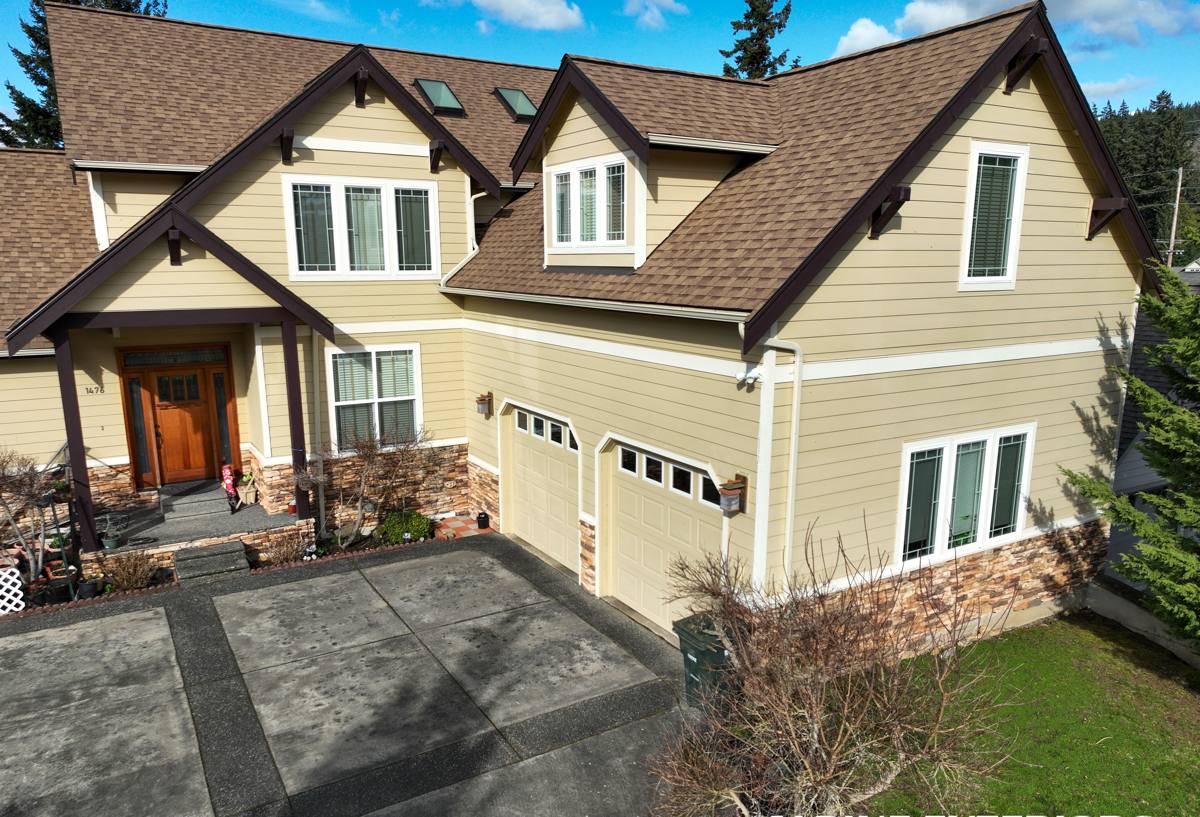
What Blaine's Coastal Climate Demands From a Siding Material
Salt Air Off Semiahmoo Bay and Drayton Harbor
Homes close to the water in Blaine take a steadier dose of salt-laden air than towns set further inland. Salt is hard on exposed metal fasteners and trim, and it wears down lower-grade paints and coatings faster than a dry inland climate ever would. A siding material's core composition and its finish both matter more here, because a marginal product shows its weaknesses sooner this close to the water.
Wind-Driven Rain
Storms coming off the water don't just fall straight down — wind pushes rain sideways into wall surfaces, joints, and trim transitions. That sideways load puts more stress on a siding system's seams and fastening pattern than the same rainfall total would in a calm climate, and it's exactly the condition that finds any gap a rushed installation leaves behind.
A Long Moss and Mildew Season
Mild temperatures and near-constant moisture give moss and mildew a growing season that can run most of the year on shaded or north-facing walls in Blaine. Surfaces that hold moisture longest are the first to show growth, and any siding material with surface porosity becomes an easier foothold for it over time.
What Fiber Cement Siding Actually Is
Fiber cement is a composite of portland cement, sand, and cellulose fiber, formed into planks or panels and cured under controlled conditions. That composition is what gives it the properties that matter most in a place like Blaine: it doesn't rot, it doesn't attract wood-boring insects, it resists swelling and warping from repeated wetting, and it's non-combustible. It's a fundamentally different material from vinyl (a petroleum-based plastic) or engineered and solid wood products, and that difference in composition is the main reason it behaves differently in a wet, salt-exposed climate.
Not every fiber cement board is engineered the same way, though. Formulation, curing process, and factory finish all vary between manufacturers, and those differences show up in how the material performs over ten or twenty years of coastal weather, not in the first year or two when almost any siding still looks new.
Why We Install James Hardie Specifically
We used to offer a broader range of siding products, including other fiber cement brands. We narrowed to James Hardie after seeing, repeatedly, which materials held up on coastal and high-moisture Whatcom County homes and which ones needed earlier attention. A few reasons this product line is what we put on Blaine houses:
- Climate-engineered HZ5 formulation: Hardie engineers its HZ5 product line specifically for regions with sustained moisture and freeze-thaw cycling, which describes coastal Whatcom County accurately.
- Factory-applied ColorPlus finish: The color is baked on in a controlled factory process rather than brushed on in the field, so it holds up longer against fading, chalking, and the moisture load a Blaine wall sees over a year.
- Non-combustible core: Fiber cement doesn't feed a fire the way wood-based products can, which matters for both safety and insurance considerations.
- Dimensional stability: The board doesn't swell, cup, or warp the way engineered wood siding can after repeated wetting and drying cycles.
- A strong transferable warranty: Provided the installation follows Hardie's spec, the warranty backing is among the stronger structures in the siding industry.
We don't install LP SmartSide, vinyl, Cemplank, Allura, primed spruce, or cedar. Each has a place in the market and homeowners who are satisfied with them, and none of them are bad materials outright. But we've made a professional call to stand fully behind one system rather than offer a cheaper alternative that quietly shifts long-term maintenance risk onto the homeowner — a call that matters more in a town where salt air and driving rain are near-constant conditions than it would somewhere drier.
How Fiber Cement Compares for a Blaine Home
| Material | Moisture Behavior | Moss & Mildew Resistance | Salt Air Durability | Ongoing Maintenance |
|---|---|---|---|---|
| James Hardie fiber cement | Doesn't swell, rot, or absorb water into its structure | Dense surface resists growth; factory finish sheds moisture well | Cement core is inert to salt; fasteners and trim need corrosion-resistant hardware | Occasional rinsing and caulk checks; repainting cycle is far longer than field-painted wood |
| Vinyl | Doesn't absorb water but can warp or distort with heat and impact | Smooth surface resists growth but seams and laps can trap moisture and debris | Plastic doesn't corrode, but color can fade and become brittle over time | Low, but limited repair options once a panel is damaged or discolored |
| Engineered wood (LP-style) | Vulnerable to swelling and edge damage if moisture reaches the wood fiber core | More susceptible to growth if a coating is compromised | Fasteners and exposed edges are the weak points near salt air | Field-applied finishes need more frequent inspection and touch-up |
| Cedar / primed spruce | Absorbs and releases moisture naturally; performance depends heavily on finish upkeep | Natural wood is a food source for mildew without consistent maintenance | Requires diligent finish maintenance to resist salt-driven weathering | Highest ongoing maintenance of the group; refinishing is a recurring cost |
This table reflects general material behavior, not a claim that every product in a category will fail — plenty of homeowners maintain wood or vinyl siding successfully. It's simply the reasoning behind why fiber cement, and specifically an HZ5-engineered, factory-finished product, is what we recommend and install for a coastal Whatcom County climate like Blaine's.
What Correct Fiber Cement Installation Involves in Blaine
Fiber cement only performs the way it's designed to when it's installed to spec, and in a coastal town the installation details carry more weight than they would in a milder climate. A few of the basics we won't skip on a Blaine job:
- Rain screen gap: A small drainage cavity behind the siding lets any moisture that gets past the exterior surface drain and evaporate instead of sitting against the wall sheathing.
- Corrosion-resistant fasteners, spaced to spec: Hardie specifies fastener type and placement for a reason — incorrect spacing or the wrong fastener is one of the more common causes of early failure we find on tear-offs, and it matters more where salt air accelerates corrosion.
- Properly lapped house wrap and flashing: Every seam, window, and penetration needs to shed water downward and outward, especially on walls that catch wind-driven rain directly.
- Sealed butt joints and trim transitions: Open or poorly sealed joints are where moisture finds its way behind the siding first, and they're the detail most likely to get rushed on a low-bid job.
- Correct board profile and exposure for the wall: Lap width, panel orientation, and trim detailing all affect how well a wall sheds water, not just how it looks.
None of this is exotic. It's Hardie's own published installation spec, followed consistently rather than shortcut on the parts that are hardest to see once the siding is up.
A Quick Checklist for Homeowners Comparing Bids
- Does the bid specify a rain screen or drainage gap, or just direct-to-sheathing installation?
- What fastener type and spacing is called out in the written scope?
- Is flashing at windows and roof-to-wall transitions included, or treated as an add-on?
- Is the crew Hardie-trained, and can they explain their approach to butt joints and trim in plain language?
- Does the estimate come from an in-person walk of the house, or a phone quote with no site visit?
Cost Factors for Fiber Cement Siding in Blaine
| Factor | Why It Affects Cost | Coastal Climate Consideration |
|---|---|---|
| Home size and wall complexity | More square footage and more corners, gables, and trim detail mean more labor | N/A |
| Tear-off vs. overlay | Removing old siding costs more than siding over an existing surface, where allowed | Tear-off often reveals moisture damage behind older siding near the water, adding repair scope |
| Board profile and trim style | Lap siding, panel systems, and shingle-style profiles carry different material and labor costs | Profile choice affects how well a wall sheds wind-driven rain |
| Finish (ColorPlus vs. field-painted) | Factory-applied finish costs more up front than primed board painted on site | Factory finish holds up better against salt air and moisture over time, reducing repaint frequency |
| Fastener and flashing hardware | Corrosion-resistant fasteners and quality flashing add material cost | Non-negotiable this close to the water — cheaper hardware fails faster |
These are general cost drivers, not a quote. Every Blaine home sits at a slightly different distance from the water, under different tree cover, and behind a different age and condition of existing siding, so we walk the property before putting a real number on the work. Two houses on the same block can need very different scopes once old siding actually comes off.
Maintenance: What Owning Fiber Cement Siding in Blaine Looks Like
Fiber cement is a low-maintenance material compared to wood, but "low-maintenance" isn't the same as "no maintenance," especially in a climate this wet. A realistic yearly routine keeps a Blaine home's siding performing the way it's supposed to:
- Rinse the siding periodically, particularly on walls closest to the water, to clear salt residue and organic buildup before it takes hold
- Check caulking at trim joints and penetrations once a year, since caulk fails well before the siding itself does
- Watch shaded, north-facing walls for early moss or mildew growth and address it before it spreads
- Look for any staining or soft spots near ground level, which can point to a drainage or flashing issue rather than a siding failure
- Keep gutters and downspouts clear so water isn't sheeting down a wall it wasn't designed to handle
Because ColorPlus finish is factory-applied and baked on rather than field-painted, the repaint cycle is far longer than what wood or field-finished siding needs in this climate — one of the practical reasons the finish matters as much as the board itself.
Why a Crew That Already Works Blaine Matters
A crew that installs siding across Whatcom County regularly sees how salt air, driving rain, and a long moss season actually play out on real houses over a full year, not just how a product performs on a spec sheet. That experience shows up in small decisions on install day — where extra flashing attention pays off, which walls stay wet longest, which fastener and trim details are worth the extra time — so a homeowner isn't dealing with a callback after the next storm off the water. Blaine's exposed, coastal position isn't identical to more sheltered towns further inland in the county, and a crew that's worked here before builds accordingly instead of applying a one-size-fits-all approach.
Get a Free, No-Pressure Estimate
If your Blaine home needs new siding, or you're comparing fiber cement against other materials before deciding, we're glad to take a look and give you a straightforward, honest assessment of what your house actually needs. Reach out using the form below to schedule a free estimate — no pressure, no upsell script.