 Bellingham Siding
 Why Sudden Valley's Setting Is Tougher on Siding Than Most of Bellingham
Sudden Valley sits in one of the more heavily wooded, lake-adjacent settings in Whatcom County, and that setting changes what siding has to deal with day to day. Tall fir and cedar canopy keeps a lot of exterior walls in shade for large parts of the year, which means siding here dries out slower after every rain than it would on an open lot. Add Lake Whatcom's own humidity, the region's driving rain events, and the salt-laden marine air that pushes inland across Whatcom County off the Puget Sound, and you get a moisture load that most siding products simply weren't built to shrug off for decades.
That combination is exactly why moss and algae staining shows up faster on north- and east-facing walls in Sudden Valley than it does on a sun-exposed lot closer to town. It's also why we don't treat every Bellingham-area job the same way — a home tucked into the trees on Lake Whatcom needs different flashing, drainage, and clearance decisions than a house on an open street a few miles away.
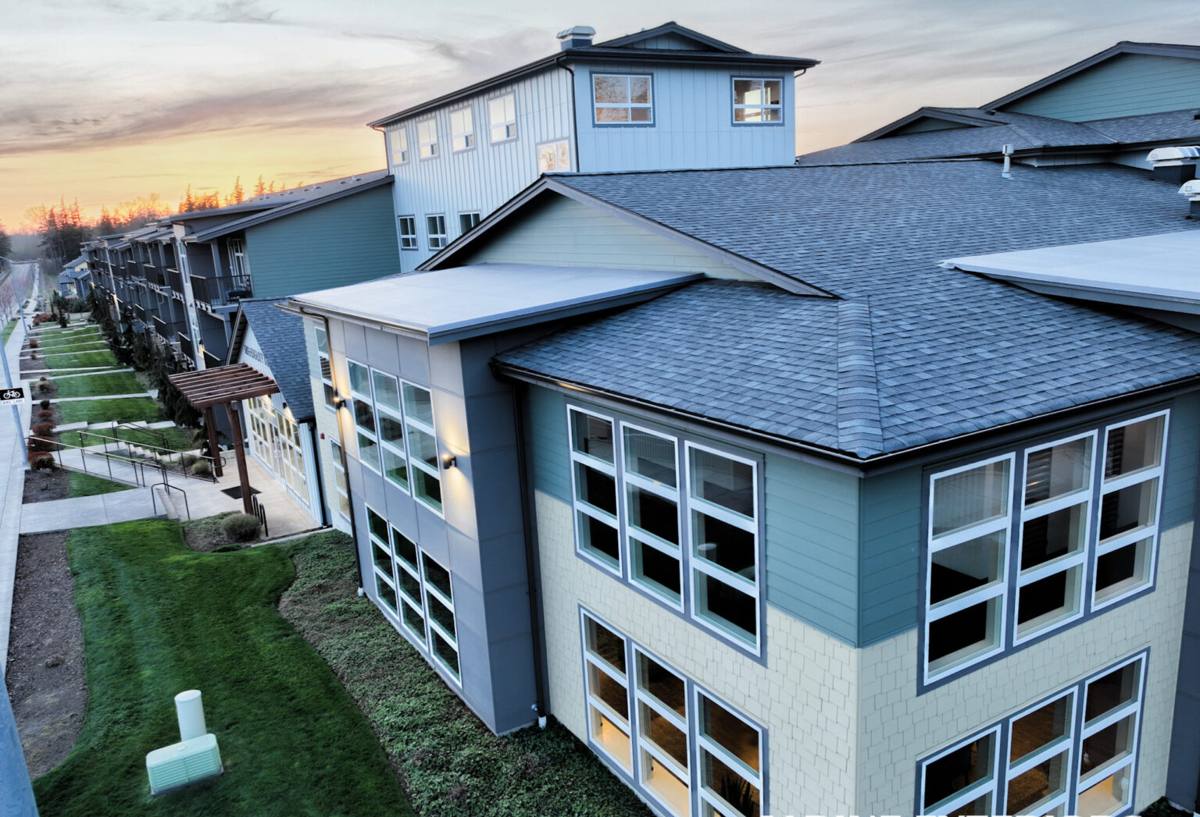
What James Hardie Brings to a Shaded, Wet Lot
We install James Hardie fiber cement siding exclusively, and on a lot like the ones common in Sudden Valley, the reasons are practical rather than theoretical. Hardie's siding is engineered from cement, sand, and cellulose fiber — it doesn't absorb and swell with moisture the way wood-based products can, and it doesn't warp or delaminate under sustained shade and dampness the way some engineered wood products do over time.
The HZ5 Climate Engineering
Hardie manufactures its products in different formulations for different climate zones, and homes in this region qualify for the HZ5 line, engineered specifically for areas with heavy moisture exposure and freeze-thaw cycling. That's a meaningful distinction from a generic siding product sold the same way in Arizona and western Washington — the HZ5 formulation is built for exactly the wet, shaded, humid conditions Sudden Valley delivers most of the year.
Non-Combustible in a Wooded Setting
Sudden Valley's tree cover is part of what makes it a desirable place to live, but it also means homes sit closer to fuel than a house on a cleared urban lot. Fiber cement siding is non-combustible, which matters more here than it would in a treeless subdivision. It's not a substitute for defensible space or roof maintenance, but it removes the siding itself as a point of vulnerability.
What a Correct Installation Actually Involves
James Hardie siding performs the way it's rated to perform only when it's installed to the manufacturer's specification — and on a shaded, moisture-heavy lot, the margin for sloppy installation is smaller than it looks. A correct job includes:
- Proper water-resistive barrier and flashing at every window, door, and penetration, lapped correctly so water sheds outward, not behind the cladding
- Correct fastener type, spacing, and depth — over-driven or under-driven nails are one of the most common causes of early siding failure
- Minimum ground and roofline clearance so panels aren't wicking moisture from soil, mulch, or roof splash-back
- Proper panel gaps and factory-cut caulking at joints, sized for the product's expansion and contraction
- Rain screen or drainage gap detailing where the wall assembly calls for it, so any moisture that does get behind the cladding has somewhere to go
Skip any one of these and you can end up with a house sided in the right material but installed in a way that undermines the warranty and shortens its real-world life — which defeats the entire point of choosing Hardie in the first place.
Where We Watch Most Closely on Sudden Valley Homes
Every neighborhood has its own failure patterns, and after working homes throughout the Bellingham area, we know what to look for on a lake-adjacent, tree-shaded lot specifically.
Shaded Wall Sections
North-facing and heavily tree-shaded walls dry slowest after rain. These sections get extra attention on flashing detail and drainage, since they carry the most sustained moisture exposure over a given year.
Low Clearance Near Landscaping
Mature landscaping and ground cover are common on established Sudden Valley lots, and it's easy for soil, bark mulch, or plantings to creep up against the bottom of a wall over the years. We check and correct clearance during installation rather than letting the original grade dictate it.
Roof and Gutter Interaction
Steep, tree-covered roofs shed both rain and debris. Where roof runoff or gutter overflow hits siding directly, that section takes far more water than the rest of the wall, and it's usually where staining and early wear show up first.
Siding Options Compared for a Lot Like This
We only install James Hardie, but homeowners deserve to understand why, especially on a demanding lot. Here's how the common options stack up on the factors that matter most in Sudden Valley's conditions.
| Factor | Vinyl | LP SmartSide / Engineered Wood | James Hardie Fiber Cement |
|---|---|---|---|
| Moisture & moss resistance | Doesn't absorb water but traps moisture behind it if installed poorly | Wood-based core is vulnerable to sustained moisture exposure | Cement-based, doesn't swell or rot from dampness |
| Performance in shade | Neutral, but seams and caulking degrade faster in constant damp | Higher risk of edge swelling where shade delays drying | Engineered (HZ5) for high-moisture, low-drying conditions |
| Fire exposure | Combustible, can melt or ignite | Combustible | Non-combustible |
| Factory finish | Color molded in, fades over time, no repaint option without prep work | Usually field- or factory-primed, needs repainting on a cycle | ColorPlus baked-on finish, warrantied against fading and peeling |
| Typical maintenance | Occasional washing | Repainting and edge sealing on a recurring cycle | Periodic washing; no repainting needed with ColorPlus finish |
None of these products are without merit, and each has a place. Our decision to install only James Hardie comes down to how the material performs specifically on homes that deal with sustained shade, moisture, and the freeze-thaw swings that come with a Whatcom County winter.
Our Process, Start to Finish
We keep the process the same on every Sudden Valley job because consistency is what prevents callbacks.
- Site walk and assessment — we look at shade exposure, drainage patterns, existing damage, and any HOA design considerations before quoting anything
- Written estimate — scope, product line, color, and timeline laid out plainly, no pressure to sign on the spot
- Tear-off and inspection — old siding comes off and we inspect the sheathing underneath for rot or hidden moisture damage before anything new goes up
- Weather barrier and flashing — corrected or replaced as needed, this is the layer that actually keeps water out long-term
- Hardie installation — installed to manufacturer spec, with clearance, fastening, and joint detailing done correctly the first time
- Final walkthrough — we go over the finished work with you before calling the job done
Caring for Hardie Siding on a Shaded Lot
James Hardie siding is low-maintenance compared to painted wood or engineered wood alternatives, but "low-maintenance" isn't "no-maintenance," especially in a setting like this one.
- Rinse shaded and north-facing walls with a garden hose once or twice a year to slow moss and algae buildup — avoid high-pressure washing, which can force water behind panels or damage the ColorPlus finish
- Keep gutters clear so roof runoff isn't concentrating water onto specific sections of wall
- Trim back vegetation and tree limbs that keep a wall in constant shade or dripping condensation directly onto siding
- Check caulking at trim and joints every year or two and have any cracked or missing sealant redone promptly
- Walk the base of exterior walls periodically to confirm soil, mulch, or landscaping hasn't crept up over the recommended clearance
Why a Crew That Already Works Sudden Valley Matters
Sudden Valley is a private, gated community, and many homes here fall under homeowners' association design guidelines that can affect exterior color choices and project logistics. A crew that's worked in the neighborhood before knows to build that review time into the schedule rather than surprising you with it midway through a job. There's also the practical side — gate access, narrow lake-side driveways, and material staging on wooded lots all take a bit more planning than a straightforward in-town job, and it helps to work with a crew that's already solved those logistics rather than figuring it out for the first time on your project.
If your current siding is showing moss streaking, soft spots, or peeling paint, or if it's simply due for replacement, we'd be glad to take a look and give you a straightforward, no-pressure estimate for James Hardie siding built for Sudden Valley's specific conditions. Use the form below to get started.