 Bellingham Siding
 Board & Batten Siding in Happy Valley: Built for a Wet, Salty Climate
Happy Valley sits close enough to Bellingham Bay and the surrounding wetlands that its homes take on a specific combination of weather stress: salt-laden air rolling in off the water, long stretches of driving rain through fall and winter, and a moss season that can run eight or nine months out of the year on shaded, north-facing walls. Board and batten siding is a strong architectural fit for the neighborhood's mix of craftsman, farmhouse, and modern homes, but the vertical board-and-strip pattern only performs well when the materials underneath it and the installation details are matched to what this climate actually does to a wall.
This page is about that one job, done right, for this one area: what Happy Valley homes need from board and batten siding, what correct installation looks like, and why the details matter more here than they would in a drier part of the state.
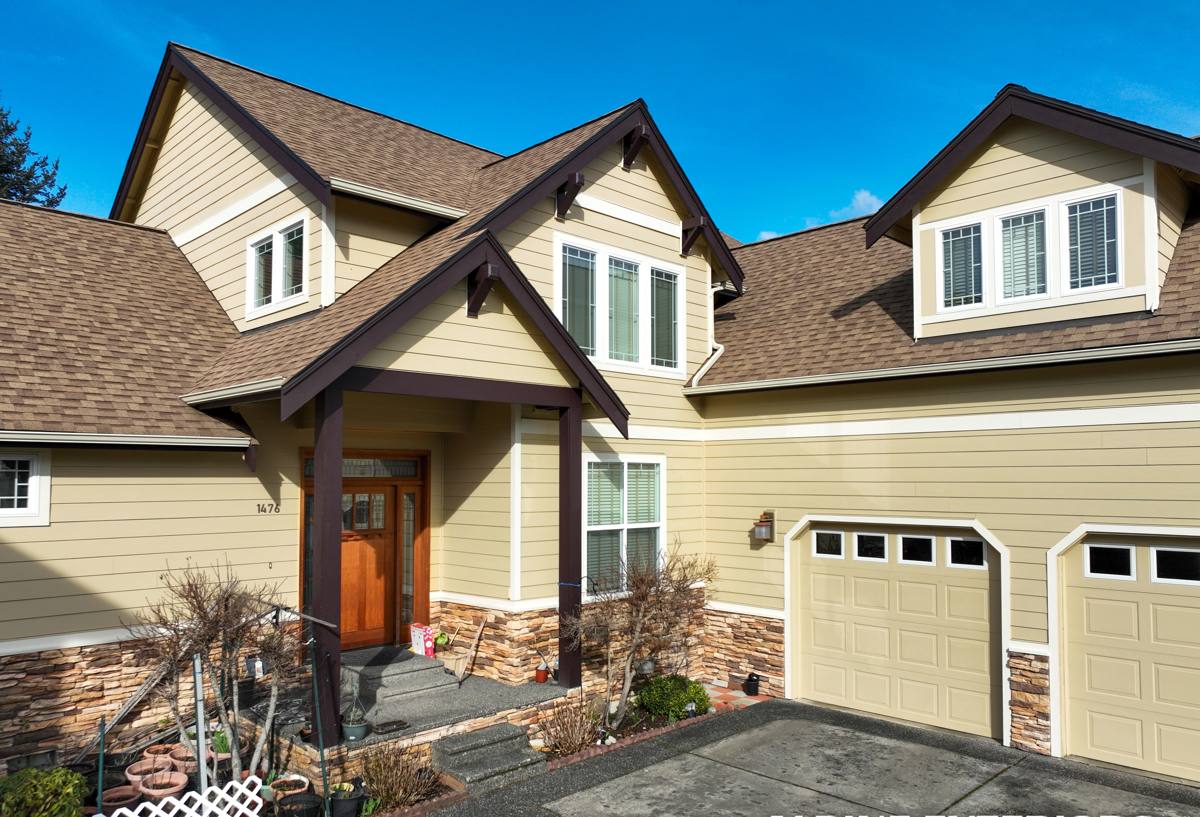
What Whatcom County Weather Does to Vertical Siding
Board and batten siding has more vertical seams and more exposed batten edges than lap siding, which makes water management the central engineering problem. In Bellingham and the rest of Whatcom County, three conditions do most of the damage over time:
- Salt air from the bay accelerates corrosion on any fastener, flashing, or trim that isn't rated for coastal exposure, and it can degrade paint film faster than it would inland.
- Driving rain off Pacific storm systems doesn't just fall straight down — wind pushes water sideways and up under battens, trim, and butt joints if those details aren't flashed and sealed correctly.
- Extended moss and algae season keeps shaded walls, north exposures, and areas under trees damp for much of the year, which is exactly the environment organic siding materials struggle with and fiber cement handles well.
None of this means board and batten is a bad choice for Happy Valley. It means the product and the installation both need to be chosen for this climate, not for a catalog photo.
Why We Install James Hardie Board & Batten, Not Wood or Composite Alternatives
Board and batten is traditionally a wood siding pattern, and it's still sold in cedar, primed spruce, and various composite and vinyl versions. We don't install any of those. On Happy Valley homes specifically, the reasons come down to what constant moisture and salt exposure do to those materials over years, not months:
- Wood battens and panels absorb moisture at end grain and cut edges, which is precisely where board and batten has the most exposed edges of any siding style — every batten has two long edges and two ends.
- Composite and vinyl board and batten profiles can look convincing, but they're more sensitive to installation error around water intrusion and don't hold factory color the same way in years of UV and salt exposure.
- James Hardie fiber cement is non-combustible, doesn't rot, and its ColorPlus factory finish is baked on and warrantied against fading and peeling — which matters on a pattern with this much exposed trim and edge detail.
We install James Hardie's board and batten systems — typically HardiePanel vertical siding with matching battens, or the Artisan Board & Batten collection where a more refined, tighter-reveal look is wanted. Both are engineered fiber cement, built to the HZ5 climate specification used in the Pacific Northwest, which accounts for this region's moisture exposure specifically.
What "HZ5" Actually Means for This Region
James Hardie manufactures siding in different formulations for different climate zones. HZ5 products are engineered for areas with significant moisture and freeze-thaw cycling — which describes Whatcom County's winters well. Using the right zone product isn't a marketing detail; it affects how the panel absorbs and releases moisture over its lifespan.
What a Correct Board & Batten Installation Involves
Board and batten looks simple from the street — vertical panels with strips covering the seams — but the assembly behind that look does most of the real work. A correct installation on a Happy Valley home includes:
| Step | Why It Matters Here |
|---|---|
| Weather-resistive barrier (WRB) installed continuously, lapped correctly | Stops wind-driven rain that gets past the siding from reaching the sheathing |
| Rainscreen gap (furring strips) behind the panels | Lets any moisture that does get in drain and dry instead of sitting against the wall — critical in a long wet season |
| Flashing at every horizontal panel joint, window, door, and roofline intersection | Vertical siding has more seams than lap siding; every one needs a water path, not just caulk |
| Corrosion-resistant fasteners, sized and spaced to Hardie's published specs | Salt air corrodes cheap or undersized fasteners faster, leading to streaking and loose battens |
| Proper batten spacing over panel seams, following manufacturer fastening patterns | Incorrect spacing traps water or creates uneven expansion gaps that show over time |
| Factory-finished ColorPlus edges sealed at all field cuts | Cut edges are the most vulnerable point on any fiber cement product; sealing them protects against the wettest months |
Skipping or rushing any one of these doesn't usually show up in month one. It shows up two or three wet seasons in, as staining, soft spots at the bottom of battens, or paint failure at seams — which is why installation quality matters as much as the product choice itself.
Common Mistakes We See on Board & Batten Jobs in This Area
Because board and batten is less forgiving of shortcuts than standard lap siding, the mistakes tend to show up clearly once a home has been through a few Whatcom County winters:
- Battens face-nailed directly through both layers without a rainscreen gap, leaving no way for trapped moisture to dry out.
- Housewrap installed but not properly lapped or taped at seams, which defeats the point of the barrier during driving rain.
- Caulk used as the primary defense at horizontal joints instead of proper flashing — caulk fails; flashing sheds water by design.
- Field-cut panel edges left unsealed, which is where moisture intrusion most often starts on fiber cement siding.
- Standard fasteners used instead of corrosion-resistant ones, leading to rust streaking down the face of light-colored ColorPlus finishes within a few years near the bay.
Most of these are invisible on install day. They're also the difference between siding that looks the same in fifteen years and siding that needs early repair.
Our Process for Happy Valley Board & Batten Projects
Every board and batten job we take on in this neighborhood follows the same sequence, adjusted for the specific house:
- On-site assessment — we look at wall orientation, tree cover, roof drainage, and existing moisture damage before recommending anything, since a heavily shaded north wall needs different attention than a south-facing one.
- Removal and substrate check — old siding comes off and the sheathing underneath gets inspected for rot or water damage before anything new goes up, not after.
- Weather barrier and rainscreen installation — the WRB and furring strips go in first, since this layer is what actually protects the wall long-term.
- Flashing at every penetration — windows, doors, hose bibs, vents, and rooflines all get proper flashing before panels are hung.
- Panel and batten installation — following James Hardie's fastening and spacing specifications exactly, using corrosion-resistant fasteners suited to coastal exposure.
- Final seal and cleanup — all field cuts sealed, site cleaned, and a walkthrough with the homeowner before we consider the job finished.
Living With Board & Batten Siding in a Salt-Air, Moss-Prone Climate
James Hardie board and batten is low-maintenance compared to wood, but "low-maintenance" isn't "no-maintenance" in this climate. A short annual routine keeps it performing the way it's designed to:
- Rinse the siding once or twice a year, especially shaded and north-facing walls where moss and algae take hold first.
- Keep gutters clear so overflow doesn't run directly down wall sections — this is a common cause of localized staining and premature dirt buildup.
- Trim back vegetation and tree cover that keeps specific wall sections damp longer than the rest of the house.
- Inspect caulking at trim and penetration points annually and have any gaps addressed before the wet season sets in.
- Watch for rust streaking near fasteners, which can signal it's time to have a spot checked rather than waiting.
What Board & Batten Siding Costs in the Happy Valley Area
Board and batten typically costs somewhat more than standard lap siding, mainly due to the extra batten material and labor for precise, even spacing. Exact numbers depend on the home, but the main cost drivers are consistent from project to project:
| Cost Factor | How It Affects the Project |
|---|---|
| Wall square footage and home height | More surface area and multi-story access both add labor time |
| Existing siding removal and substrate repair | Rot or water damage found during removal adds scope before new siding can go up |
| Battens per square foot (spacing choice) | Tighter batten spacing uses more material and more fastening labor than wider spacing |
| Trim and architectural detail | Homes with more window and roofline detail need more flashing and cut work |
| ColorPlus finish selection | Factory-applied color is included in material cost and eliminates a future painting cycle |
We provide itemized, honest estimates rather than broad per-square-foot guesses, because the difference between a straightforward wall and a wall with several windows, dormers, and trim details is real money either way — better to know it up front.
Why a Crew That Already Works Happy Valley Matters
Board and batten's performance in this climate comes down to details that don't show up in a brochure: how much rain a specific wall orientation takes in a typical winter, how long moss lingers on shaded sections near the wetlands, and how corrosion-resistant fasteners need to be this close to the bay. A crew that installs siding across Bellingham and Whatcom County regularly has already seen how these details play out over multiple wet seasons on homes just like the ones in this neighborhood — not just on install day, but years later when callbacks reveal what actually held up. That experience shows up in the flashing details, fastener choices, and rainscreen execution that separate board and batten siding that still looks sharp in fifteen years from siding that needed early repair.
If you're weighing board and batten siding for a Happy Valley home, we're happy to walk the property, talk through what your specific walls and exposure need, and put together a free, no-pressure estimate using the form below.