 Bellingham Siding
 Windows Built for Columbia's Weather, Not Just Its View
Columbia sits close enough to Bellingham Bay that salt-laden air is a daily fact of life, and far enough into the Pacific Northwest rain belt that "driving rain" isn't a figure of speech — it's a design load. Older wood and aluminum windows in this neighborhood take a beating from both directions: metal hardware pits and corrodes faster near the water, while wind-driven rain finds every gap in aging caulk and worn weatherstripping. A window replacement here isn't just a cosmetic upgrade. It's a chance to fix the specific ways this climate attacks a house.
We install custom windows for Columbia homes with that reality in mind — sizing and detailing each opening for the actual structure in front of us, not a stock template. Custom doesn't mean exotic. It means the window fits the rough opening correctly, the flashing ties into the existing wall assembly the way it should, and the materials are chosen for what Whatcom County weather actually does to a house over twenty years.
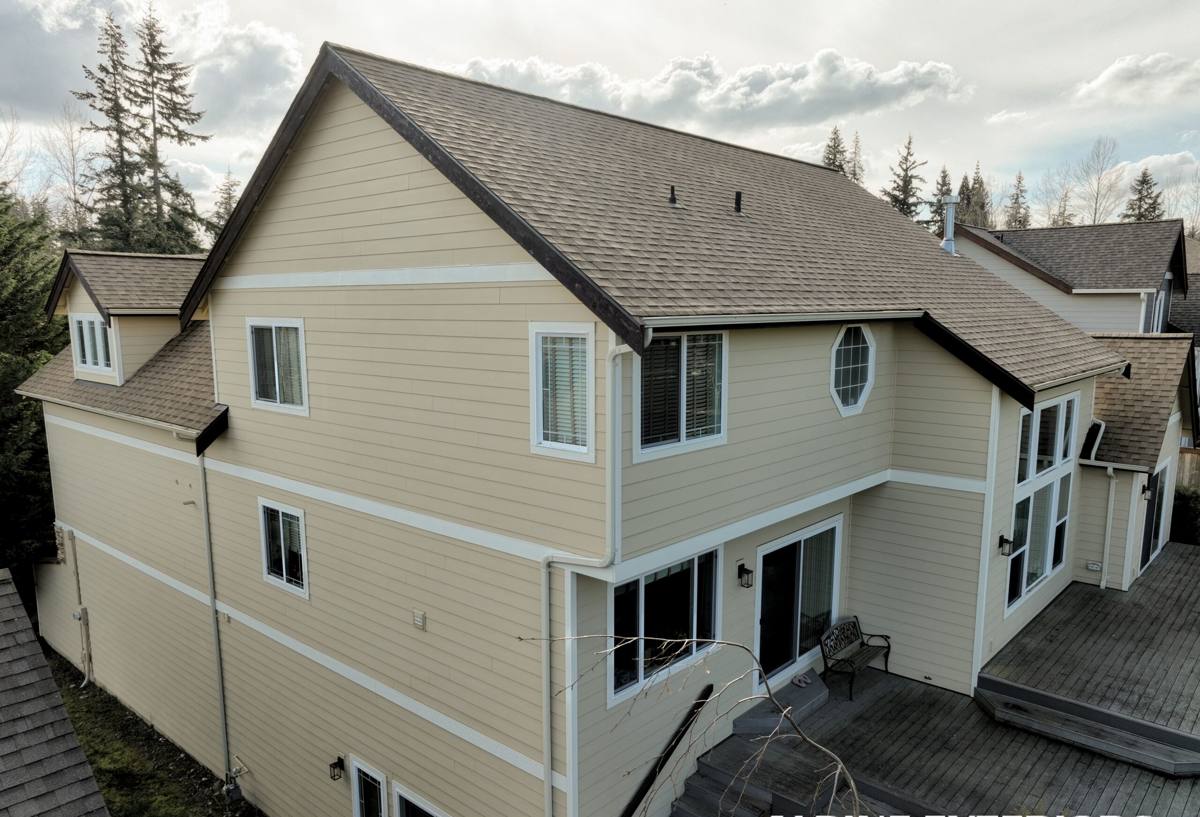
What Bellingham's Coastal Climate Does to Windows
Salt Air and Hardware Corrosion
Salt air accelerates corrosion on anything metal — window locks, hinges, screen frames, and especially older aluminum sashes. Once corrosion starts on a lock mechanism or roller track, windows stop sealing tightly even when the glass and frame still look fine. That's often the first real sign a window's service life is ending, well before the frame itself fails.
Driving Rain and Water Intrusion
Storms off the Sound don't just fall straight down; they push rain sideways into vertical wall surfaces, including window frames. If the flashing behind the trim isn't lapped correctly, or the sealant around the frame has cracked with age, water gets behind the window rather than running off it. That's how you end up with soft framing, stained interior sills, or bubbling paint below a window that "looks" dry on the outside.
Moss, Moisture, and Wood Rot
Bellingham's long moss season means anything that stays damp for extended stretches — a shaded sill, a horizontal trim board, a window that doesn't get afternoon sun — is at higher risk for moss growth and the moisture retention that comes with it. On older wood-frame windows, that sustained dampness is a direct path to rot at the sill and bottom corners, which is usually where we find the worst damage during a tear-out.
What a Correct Window Job Actually Involves
A lot of window problems trace back not to the window itself but to how it was installed. The window is only as good as the opening it sits in. A correct installation includes:
- Removing old units carefully and inspecting the rough opening and sill for hidden rot or moisture damage before anything new goes in
- Repairing or rebuilding any compromised framing, sheathing, or sill material found during removal
- Installing proper flashing (sill pan flashing plus side and head flashing) that directs water out and away from the wall assembly, lapped correctly with the house wrap
- Setting the window level, plumb, and square, then shimming and fastening according to the manufacturer's specifications — not "close enough"
- Sealing with the correct sealant at the correct joints, leaving the designed drainage path clear rather than sealing it shut
- Insulating the gap between the frame and rough opening without overpacking, which can bow the frame and cause operational issues
- Finishing interior and exterior trim so the whole assembly sheds water rather than trapping it
Skip or rush any of those steps and you can end up with a brand-new window that fails the same way the old one did, just faster, because the underlying water management wasn't fixed.
Choosing the Right Frame Material for This Neighborhood
Material choice matters more in a coastal, high-moisture climate than it does further inland. Here's how the common options compare for Columbia's conditions:
| Material | Salt air / corrosion resistance | Moisture behavior | Maintenance |
|---|---|---|---|
| Vinyl | Very good — won't corrode or oxidize | Doesn't absorb water; drains well if installed correctly | Low — occasional cleaning |
| Fiberglass | Excellent — highly stable in coastal air | Very stable dimensionally in wet-dry cycles | Low |
| Wood / wood-clad | Fair — cladding protects, but any breach exposes wood | Vulnerable to rot if the seal or cladding fails | Higher — periodic finish and seal checks |
| Aluminum | Poor to fair without upgraded coatings | Conducts cold and can condensate; prone to pitting near salt air | Moderate — hardware needs monitoring |
We don't push one material for every job. A well-detailed wood-clad window can perform fine on a protected, sun-exposed elevation; that same window on a north-facing wall that stays damp most of the year is a much higher risk. Part of a proper assessment is looking at each elevation of the house individually, not just picking one product for the whole project.
Our Process for a Columbia Window Project
1. On-Site Assessment
We walk the exterior and interior, check each window opening for signs of past water intrusion, test operation and seals, and note which elevations take the most weather exposure. This is also when we look for the moss and moisture patterns specific to your lot — tree cover, shade, and drainage all affect which windows are working hardest.
2. Scope and Material Selection
We go over what we found, which units genuinely need replacement versus repair, and which frame materials make sense for each exposure. You get a clear, honest scope — we're not going to sell you seven new windows if three are still sound.
3. Careful Removal and Opening Repair
Old units come out without damaging surrounding siding or trim any more than necessary. Any rot, soft sheathing, or failed flashing we find gets addressed before a new window goes in — this step gets skipped by crews in a hurry, and it's the step that determines whether the new window lasts.
4. Installation to Manufacturer Spec
New flashing, correct fastening, correct sealant, correct insulation. We follow the manufacturer's installation instructions because that's what keeps the warranty valid and the window performing as designed.
5. Trim, Finish, and Walkthrough
Interior and exterior trim get finished to match your home, we test every unit for smooth operation and a tight seal, and we walk the job with you before we call it done.
Signs Your Columbia Home's Windows Need Attention
You don't need to wait for a window to fail outright. Watch for these signs, especially heading into another wet season:
- Visible corrosion or stiff, hard-to-operate locks and cranks
- Drafts you can feel around the frame on windy days
- Condensation between panes (a sign the seal on a double- or triple-pane unit has failed)
- Soft or discolored trim and sill wood, especially on shaded or north-facing walls
- Moss or persistent green staining on sills or exterior trim
- Paint bubbling or peeling on interior walls below a window
- Rising energy bills without another clear explanation
What Affects the Cost of a Window Project
Every home is different, but the same handful of factors drive most of the price variation we see on Columbia projects:
| Factor | Why it matters |
|---|---|
| Frame material | Vinyl, fiberglass, and wood-clad carry different material costs and labor requirements |
| Number and size of openings | More or larger windows mean more material, flashing, and labor time |
| Condition of the existing opening | Rot or framing repair found during removal adds time and material |
| Glass package | Double vs. triple pane, low-E coatings, and gas fills affect both cost and performance |
| Trim and exterior detailing | Matching existing trim profiles or upgrading exterior finish adds scope |
| Access and site conditions | Second-story or hard-to-reach windows take more time and equipment |
We'll always give you a real number for your specific house rather than a rough per-window estimate that ignores your actual conditions.
Why Hire a Crew That Already Works in Columbia
A crew that's worked this neighborhood knows which elevations tend to take the worst driving rain, where moss buildup is a recurring issue, and how salt air shows up in hardware failures before it shows up anywhere else. That local pattern recognition matters — it's the difference between a general installation and one that's actually built for what this specific stretch of Bellingham and Whatcom County throws at a house year after year. We're not guessing at how the coastal climate behaves here; we're accounting for it in every flashing detail and material choice.
It also means straightforward communication and follow-through. When we say a window will perform a certain way on a shaded, north-facing wall versus a sun-exposed one, that's based on what we've actually seen on homes like yours, not a generic sales pitch.
Maintaining New Windows in a Wet Climate
Even the best-installed window benefits from basic upkeep in this climate:
- Clear moss and debris from sills and tracks a couple of times a year, especially after fall leaf-drop
- Check exterior caulk lines annually for cracking, and reseal small gaps before they grow
- Keep gutters and downspouts clear so water isn't sheeting down over window heads
- Operate locks and hardware periodically so corrosion doesn't set in unnoticed
- Watch for any new interior staining below a window, which can signal a developing leak
None of this is heavy maintenance — it's the kind of seasonal check that catches small issues before they turn into framing repairs.
If your Columbia home's windows are drafty, corroded, fogging between panes, or just due for an honest look, we're happy to walk the exterior with you and tell you what we actually see — no pressure, no upsell. Use the form below to request a free estimate.