 Bellingham Siding
 Roof Repair Built for Columbia's Weather
The Columbia neighborhood sits close enough to Bellingham Bay that salt-laden air is a daily fact of life, and far enough into the Pacific Northwest rain belt that roofs here rarely get a real break between wet seasons. That combination is hard on roofing in ways that inland, drier climates never have to deal with. Salt air accelerates corrosion on exposed metal fasteners and flashing. Driving rain off the bay finds every weak seam and pushes water sideways under shingles that would stay dry in a straight-down rain. And Whatcom County's long, damp shoulder seasons give moss and moisture months at a time to work into a roof system before a homeowner ever sees a stain on the ceiling.
We repair roofs on Columbia homes because we understand this specific combination of stressors, not because roof repair is a generic service we happen to offer. A repair that holds up in Bellingham needs to account for salt exposure, wind-driven rain, and moss in the same visit — treating any one of them in isolation just means you're back to the same spot next winter.
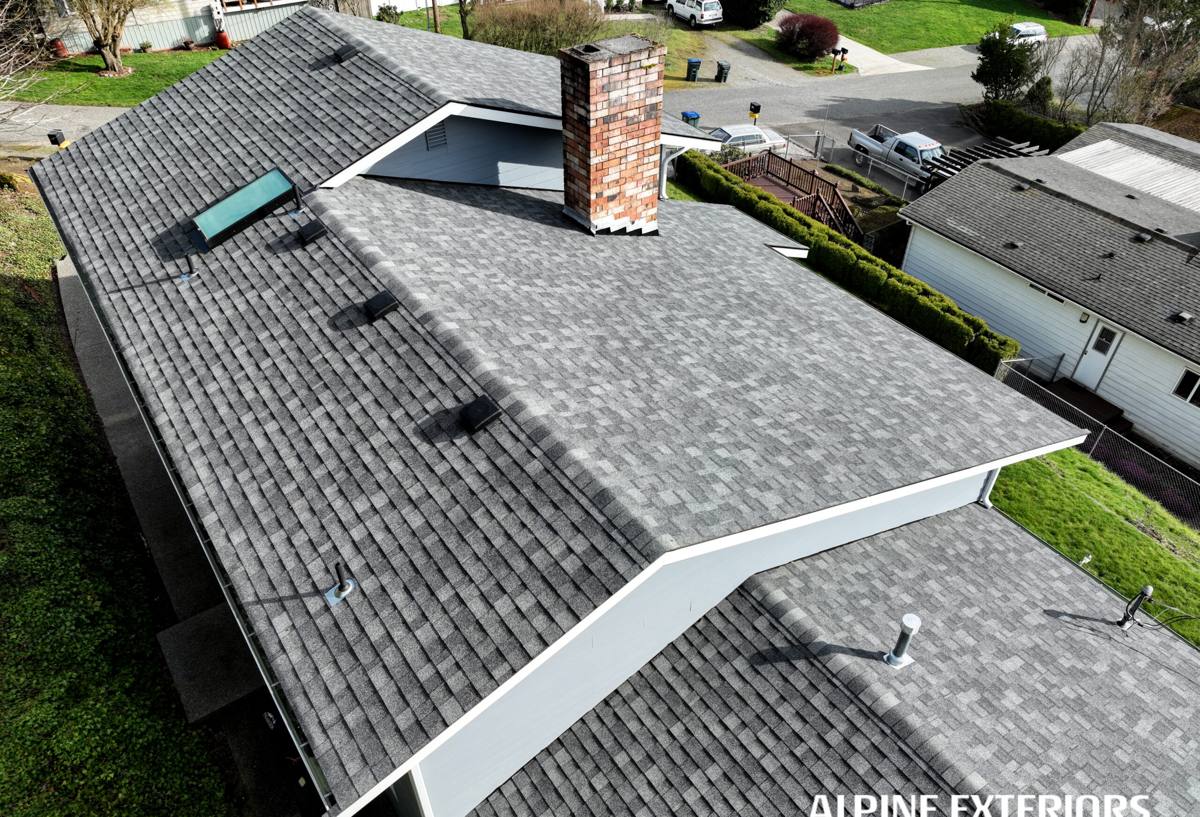
What Bellingham's Climate Does to a Roof Over Time
Salt Air and Corrosion
Homes in Columbia are close enough to the water that airborne salt settles on roofing metal — flashing, nail heads, vent stacks, gutter hardware — and slowly breaks down protective coatings. Once corrosion starts on a fastener or a flashing edge, it doesn't stop on its own. Small rust spots become leak points, and leak points become water damage to the decking underneath.
Driving Rain and Wind-Driven Water
Rain that comes in at an angle off the bay behaves differently than a straight downpour. It gets pushed up and under shingle edges, into valleys, and around chimney and skylight flashing that would otherwise shed water just fine. This is why so many "mystery leaks" in this area trace back to flashing details rather than the shingles themselves.
Moss and the Long Wet Season
Whatcom County's roofing season is short and its moss season is long. Moss holds moisture directly against roofing material for months, works its way under shingle tabs as it grows, and lifts edges just enough to let water in. On north-facing slopes and shaded sections — common on lots with mature trees, which much of Columbia has — moss can take hold within a year or two of a roof being cleaned.
Common Roof Repair Needs We See in This Area
- Lifted or cracked shingles along ridgelines and edges exposed to wind off the bay
- Corroded or failing flashing around chimneys, skylights, and roof-to-wall transitions
- Moss growth that has lifted shingle tabs and trapped moisture underneath
- Clogged or damaged gutters contributing to water backing up under roof edges
- Soft or discolored decking discovered after a slow leak has been running longer than expected
- Nail pops and fastener corrosion from long-term salt air exposure
- Valley leaks where two roof planes meet and heavy rain concentrates
What a Correct Repair Actually Involves
A roof repair that's done right starts with figuring out where water is actually getting in, which is not always the same spot where the stain shows up inside. Water can travel along the underside of the decking or down a rafter before it becomes visible, so a repair that only patches the ceiling-side symptom without tracing the real entry point tends to come back.
Our General Process
- Inspection. We walk the roof and check flashing, shingles, valleys, penetrations, and gutter lines — not just the area near the reported leak.
- Diagnosis. We trace the water path when possible, checking decking condition where accessible, so the repair addresses the source and not just the symptom.
- Scope and explanation. We tell you what we found, what needs to be done, and why — in plain terms, before any work starts.
- Repair. Depending on the issue, this may mean replacing damaged shingles, resealing or replacing flashing, addressing moss and any shingle lift it caused, or repairing damaged decking.
- Cleanup and check. We clear debris, confirm the repair area is watertight, and let you know if there's anything else on the roof worth keeping an eye on.
Repair vs. Replacement: How We Help You Decide
Not every roof problem in Columbia needs a full replacement, and not every leak can be permanently solved with a patch. The honest answer depends on the roof's age, how widespread the damage is, and how much of the underlying decking has been affected by long-term moisture.
| Factor | Leans Toward Repair | Leans Toward Replacement |
|---|---|---|
| Age of roof | Under 12-15 years, good general condition | Near or past expected material lifespan |
| Extent of damage | Localized — one flashing point, one section | Spread across multiple slopes or recurring in several spots |
| Decking condition | Solid, no soft spots found | Soft, delaminated, or rotted decking present |
| Moss history | First occurrence, caught early | Repeated moss damage over several seasons |
| Granule loss / shingle wear | Isolated to the repair area | Widespread thinning or curling across the roof |
We'll always tell you honestly which side of that table your roof falls on. If a repair is the right call, we won't push a replacement — and if the underlying decking or shingle field is too far gone for a patch to be a fair use of your money, we'll say that too.
Flashing: The Detail That Matters Most Here
Given how much of Columbia's roof trouble traces back to wind-driven rain and salt exposure, flashing deserves its own explanation. Flashing is the metal (or occasionally other material) installed at roof transitions — chimneys, skylights, sidewalls, valleys — where a plain shingle overlap isn't enough to keep water out. It's a small percentage of a roof's total area but responsible for a disproportionate share of leaks when it's been installed poorly or has corroded over time.
When we repair flashing, we're checking that it's properly layered with the roofing material (not just caulked over it), that fasteners are in good condition, and that the metal itself hasn't corroded to the point of losing its seal. In a salt-air environment, flashing that looked fine five years ago can be a different story today, which is why we check it directly rather than assuming it's sound because it's not visibly leaking yet.
Moss Treatment as Part of a Repair
Where moss has contributed to the damage, removing it is only half the job. Moss growth typically means water has been sitting against the roofing material for an extended period, so we check the shingles underneath for granule loss and lifted tabs, not just clear the moss and move on. Once the area is clean and repaired, keeping moss from coming back — through periodic maintenance rather than one-time removal — is usually the better long-term investment than repeating a moss-driven repair every couple of years.
Why a Crew That Works Columbia Regularly Makes a Difference
Roof repair isn't a one-size-fits-all trade. A crew that regularly works this part of Bellingham has a working sense of which roof styles and orientations in the area tend to catch moss first, how salt air shows up on flashing and fasteners, and where wind-driven rain off the bay tends to find its way in. That's not a substitute for a careful inspection of your specific roof — every home is different — but it does mean fewer surprises and a faster, more accurate diagnosis than a crew seeing Whatcom County conditions for the first time.
It also means we're not disappearing after the invoice. If a repair doesn't hold the way it should, or a related issue shows up nearby, you're calling a crew that already knows your roof and your neighborhood, not starting over with someone new.
A Quick Homeowner Checklist
Before calling for a repair, a quick visual check from the ground (never get on a wet or steep roof yourself) can help you describe the problem accurately:
- Are there visible dark or green patches of moss, especially on north-facing slopes?
- Do you see curled, cracked, or missing shingles from the ground or a nearby vantage point?
- Is there a ceiling stain, and does it appear or worsen during or right after heavy rain?
- Are gutters overflowing or visibly clogged with debris?
- Is there any rust staining visible around chimney or vent flashing?
- Has the roof gone more than 2-3 years without being cleaned or inspected?
If you can check off more than one or two of these, it's worth having someone look at the roof before the next heavy rain, rather than waiting for a leak to show up inside.
Get an Honest Look at Your Roof
If you're dealing with a leak, moss buildup, or damaged flashing on a Columbia-area home, we're happy to come take a look and give you a straightforward assessment — repair or replacement, whichever is actually the right call for your roof. Fill out the form below for a free, no-pressure estimate.