 Bellingham Siding
 Siding Built for Columbia's Weather, Not Just Its Curb Appeal
Columbia sits close enough to Bellingham Bay that salt-laden air reaches exterior walls on a regular basis, and it gets the same driving rain and long, damp moss season that defines exterior work across Whatcom County. Siding here isn't just a finish — it's the first line of defense against moisture that has months, not days, to find a weak seam, a nail hole, or a poorly lapped joint. A siding installation done right in this neighborhood has to account for salt exposure, wind-driven rain, and the near-constant humidity that lets algae and moss establish themselves on anything that stays damp too long.
That's the lens we use on every Columbia project: not "does this look good going up," but "will this still be doing its job in fifteen years of Pacific Northwest weather." The material, the installation details, and the ongoing maintenance all have to work together, or the siding fails early regardless of how it looked on install day.
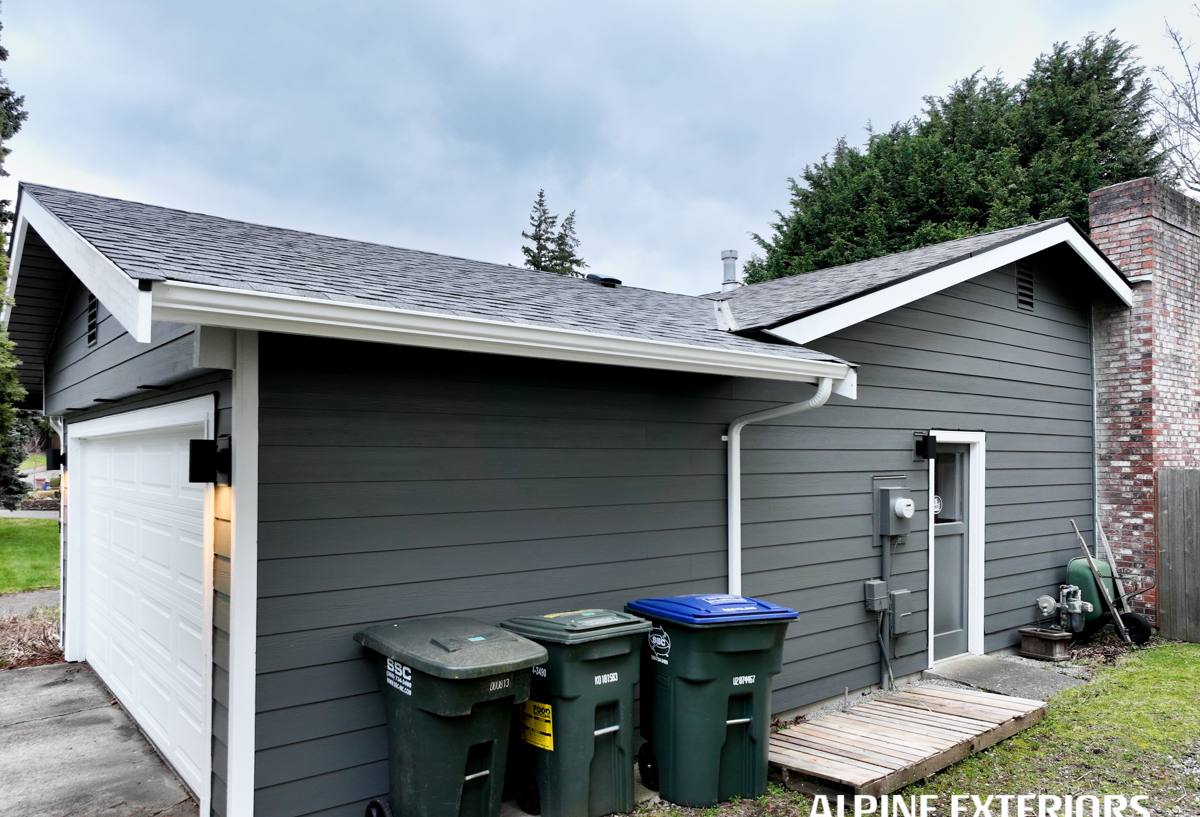
What Columbia Homes Actually Need From Their Siding
Moisture Management First
Bellingham's rain isn't just frequent — it's often wind-driven, which pushes water sideways into laps, seams, and trim joints that would stay dry in a calmer climate. Siding installed without a proper drainage plane and correctly lapped courses will trap that water against the sheathing, and once moisture gets behind the cladding, it can sit there for weeks before anyone notices a problem.
Resistance to Salt Air
Proximity to the bay means airborne salt settles on exterior surfaces and can accelerate corrosion of fasteners and degradation of lesser materials over time. Siding, trim, and fastener choices in Columbia should all be selected with that exposure in mind rather than treated the same as a project twenty miles inland.
Standing Up to Moss and Algae Season
Whatcom County's moss season runs long — shaded north-facing walls, areas under tree cover, and anything that stays damp for extended stretches are prone to green and black staining if the material and finish don't resist it. This is as much about the factory finish holding up under repeated pressure washing as it is about the substrate underneath.
Why We Install Only James Hardie Fiber Cement Here
We've standardized on James Hardie for every project we take on, including in Columbia, because it's the one product line that consistently holds up to this specific mix of conditions without the maintenance headaches we've seen with the alternatives.
- Non-combustible core: fiber cement doesn't feed a fire the way wood-based products can, which matters for insurance conversations and long-term peace of mind.
- Engineered for wet climates: Hardie's HZ5 product line is specifically formulated for regions with prolonged moisture exposure, which describes Whatcom County for a good part of the year.
- ColorPlus factory finish: a baked-on finish applied under controlled conditions resists fading and holds color more consistently than field-applied paint, and it stands up better to the moss and mildew that thrive in shaded, damp spots.
- Dimensional stability: fiber cement expands and contracts far less than wood or wood-composite products as humidity swings, which means fewer open joints for water to exploit over time.
- Transferable warranty: a strong manufacturer warranty that can pass to a new owner adds real value if a Columbia home sells within the coverage period.
We're not going to pretend Hardie is the cheapest option up front — it isn't. But we've made a professional decision not to install vinyl, LP SmartSide, primed wood, or comparable fiber cement alternatives because, in this climate, we don't think they hold up as well over the life of the product without a heavier maintenance burden than most homeowners want to sign up for.
What a Correct Installation Actually Involves
The material is only half the equation. A huge share of siding failures we get called to look at were installed with the right board and the wrong technique. For Columbia's exposure, correct installation means:
- A functioning drainage plane — a weather-resistant barrier and, where called for, a rain screen gap that lets any moisture that does get behind the siding drain and dry rather than sit against the sheathing.
- Correct fastening — Hardie specifies fastener type, placement, and penetration depth precisely; getting this wrong is one of the most common causes of early failure and voided warranty coverage.
- Proper flashing at every penetration — windows, doors, hose bibs, vents, and any other wall penetration need flashing detailed to shed water outward, not funnel it inward.
- Correct lap and joint treatment — horizontal laps and butt joints have to be sized and sealed per manufacturer spec so wind-driven rain can't be pushed uphill into a seam.
- Ventilated, code-compliant clearances — maintaining the right gap at grade, roof lines, and decks keeps the bottom edge of the siding from wicking up moisture from the ground or trapping it under a deck ledger.
Skipping any one of these doesn't usually cause an immediate problem — it causes a five- or ten-year problem, which is often worse because it's hidden behind the wall until the damage is already done.
Our Process for a Columbia Siding Installation
We run the same disciplined process on every home, adjusted for what we find once the old siding comes off.
1. On-Site Assessment
We walk the exterior, note problem areas (shaded walls, downspout discharge points, low-clearance sections), and talk through what the existing siding tells us about how water has been behaving on that specific house.
2. Tear-Off and Sheathing Inspection
Once the old material is off, we inspect the sheathing and framing for rot or prior moisture damage. Given how much rain this region sees, this step is not optional — installing new siding over compromised sheathing just repeats the problem underneath a new surface.
3. Weather Barrier and Drainage Detailing
We install or repair the weather-resistant barrier, add rain screen material where the wall assembly calls for it, and detail flashing at every window, door, and penetration before a single piece of siding goes up.
4. Hardie Installation to Manufacturer Spec
Fastening, lap spacing, joint treatment, and clearances are all installed to James Hardie's published specifications — not "close enough" — because that's what keeps the warranty valid and the wall dry.
5. Trim, Caulking, and Final Detail Work
Trim boards, corner details, and caulking are finished with the same attention, since these are the spots most exposed to wind-driven rain.
6. Walkthrough and Cleanup
We walk the finished job with the homeowner, and the site is cleared of debris and old material before we consider the project done.
Comparing Siding Options for Columbia's Climate
| Factor | James Hardie Fiber Cement | Vinyl | Wood / LP SmartSide |
|---|---|---|---|
| Moisture tolerance | Engineered for wet climates (HZ5 line) | Doesn't absorb water but can warp/buckle under heat or impact | Vulnerable to swelling and rot if seams open |
| Moss/algae resistance | Factory finish holds up to repeated cleaning | Finish can chalk and stain over time | Prone to staining, especially on shaded walls |
| Salt air durability | Non-metallic core, stable finish | Can become brittle with UV and salt exposure | Coatings need more frequent maintenance |
| Fire resistance | Non-combustible | Combustible, can melt/deform | Combustible |
| Typical lifespan (installed to spec) | 30+ years | 20-30 years | Varies widely with maintenance |
This isn't a knock on every product on that list in every application — it's a summary of why, for this specific climate and our own standards, we install one of them.
A Practical Checklist for Columbia Homeowners
- Check north- and shade-facing walls each fall for early moss or algae growth before it spreads.
- Keep gutters and downspouts clear so water doesn't sheet down against the siding face.
- Look for any caulking cracks or gaps at trim and window flashing after winter storms.
- Maintain clearance between soil, decking, or mulch beds and the bottom edge of the siding.
- Ask any contractor bidding your siding job whether they follow manufacturer fastening and flashing specs — not just "install the product."
- Confirm in writing what warranty coverage applies, and whether it's transferable if you sell.
Why a Crew That Already Works Columbia Matters
A contractor who already works this neighborhood knows what to expect before the tear-off starts: how exposed a given wall orientation is likely to be, how the existing housing stock in the area was typically built and sided, and what permitting and inspection process to expect from the City of Bellingham. That familiarity translates into fewer surprises mid-project and a bid that reflects the real conditions of the home rather than a generic estimate.
It also means the crew has already seen how siding fails in this specific climate — which corners, which orientations, which details get missed most often — and builds the installation to avoid those exact failure points rather than following a one-size-fits-all checklist.
If you're weighing a siding project for a home in Columbia, we're happy to walk the exterior with you, point out what we see, and put together a straightforward estimate — no pressure, no generic sales pitch, just an honest look at what your home needs.