 Bellingham Siding
 Roof Replacement for Cordata Homes
Cordata sits in north Bellingham, close enough to Bellingham Bay and the Salish Sea that the marine climate shapes everything about how a roof ages here. Homeowners in this part of Whatcom County deal with a specific combination of stressors: salt-tinged air moving in off the water, long stretches of driving rain from fall through spring, and a moss season that can run nearly year-round on shaded, north-facing slopes. A roof that's a great fit for a dry inland climate can underperform here if it isn't installed with that reality in mind. This page covers what a correct roof replacement looks like for a Cordata home, what to expect from our process, and why local experience matters more than most homeowners realize.
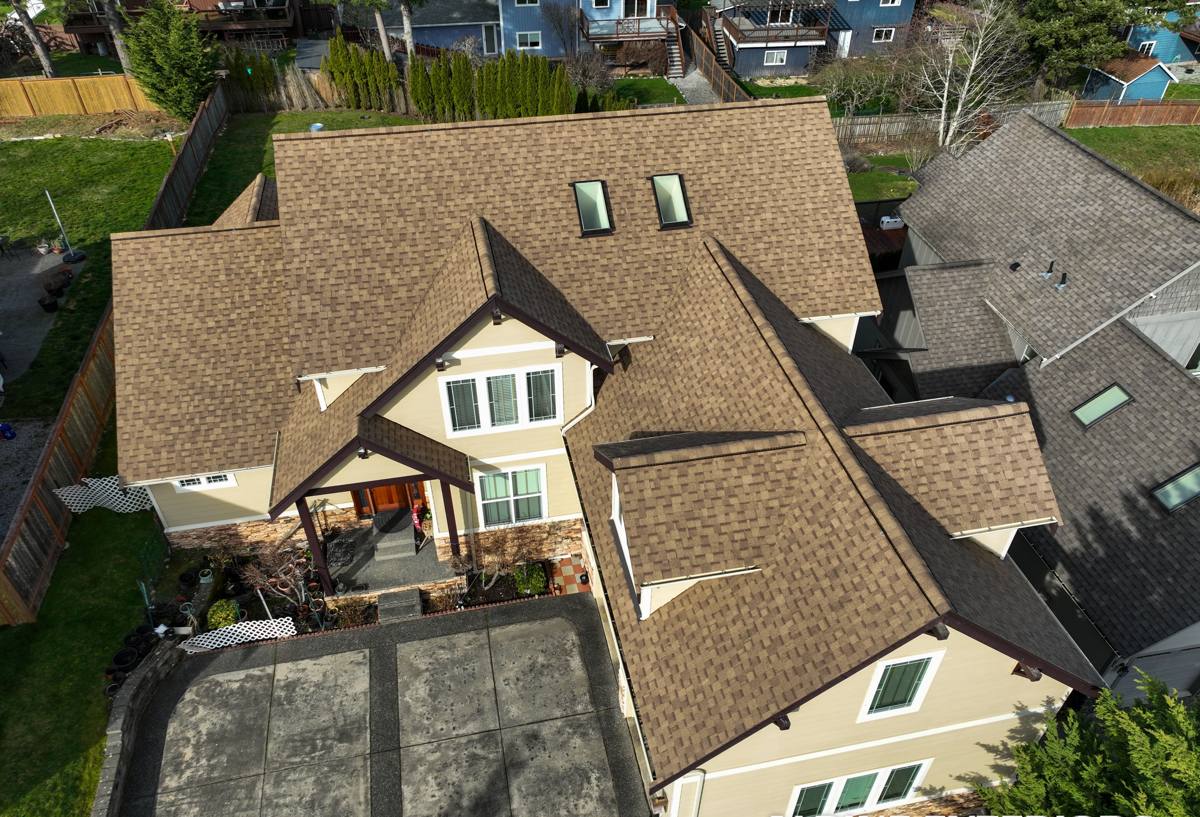
Why Bellingham's Climate Is Hard on Roofs
Three things drive most of the roof failures we see in this area, and none of them are about the shingle brand.
Constant Moisture
Whatcom County gets a lot of rain, but it's the duration, not just the volume, that causes problems. Roofs here spend more days wet than dry for much of the year. Any weak point — a nail popped slightly proud, a cracked pipe boot, a flashing seam that was never sealed correctly — has months of standing opportunity to let water in before a homeowner notices a stain on the ceiling.
Moss and Organic Growth
Moss doesn't just sit on top of a roof looking unsightly. It holds moisture against the shingle surface, works its way under tabs and shingle edges, and lifts material over time, which shortens the life of an otherwise sound roof by years. Shaded roofs under conifers, and north-facing slopes that never get direct sun, are the most affected.
Salt Air and Wind-Driven Rain
Proximity to the water means metal components — flashing, fasteners, vents — are exposed to salt-laden air that accelerates corrosion on lower-grade materials. Combined with wind-driven rain during winter storms, this is also why flashing detail and fastener quality matter more here than in drier parts of the state.
What a Correct Roof Replacement Actually Involves
A roof replacement is more than stripping old shingles and nailing down new ones. Done right, it's a sequence of steps where each one protects the next.
Tear-Off and Deck Inspection
We remove the existing roofing down to the deck rather than layering over old material. This is the only way to actually see the plywood or plank sheathing underneath, check for soft spots or rot around vents and valleys, and replace any damaged sections before new roofing goes down. Skipping this step is how a roof looks fine for two years and then fails from the inside out.
Underlayment and Ice-and-Water Barrier
A synthetic underlayment goes down across the full deck as the primary water-resistant layer beneath the shingles. In vulnerable areas — eaves, valleys, around chimneys and skylights — we add a self-adhering ice-and-water membrane. In a climate with this much sustained rain, this layer is often what actually keeps water out during a bad storm, not the shingle itself.
Flashing at Every Penetration
Chimneys, vent stacks, skylights, and wall-to-roof transitions are where most leaks start. Correct flashing means new metal formed and sealed at each of these points, not old flashing reused or caulk used as a substitute for proper metal work.
Ventilation
A roof system needs balanced intake and exhaust ventilation to let moisture escape from the attic space. Poor ventilation traps humidity, which encourages mold, shortens shingle life from underneath, and can void a manufacturer's warranty outright. We check existing ventilation on every replacement and correct it when it's inadequate.
Roofing Materials: What Holds Up Here
There's no single "best" roofing material — the right choice depends on the home's roof pitch, sun exposure, budget, and how much long-term maintenance the homeowner wants to take on. Here's how the common options compare for a Cordata property.
| Material | Typical Lifespan | Moss/Moisture Behavior | Maintenance |
|---|---|---|---|
| Architectural asphalt shingle | 25–30 years | Good with proper ventilation; algae-resistant granules available | Low — periodic moss treatment on shaded roofs |
| Standing seam metal | 40–50+ years | Sheds water and moss extremely well; steep pitches shed almost entirely | Very low |
| Cedar shake | 20–30 years with upkeep | Attractive but absorbs and holds moisture; needs active moss/moisture management | High — regular treatment required |
| Synthetic composite shingle | 40–50 years | Doesn't absorb water; resists moss better than wood | Low |
For most Cordata homes, we recommend a quality architectural asphalt shingle with algae-resistant granules as the practical, cost-effective standard, and steer clients toward metal or synthetic composite when the roof has heavy shade, a steep pitch that suits standing seam, or when the homeowner wants to minimize maintenance over decades rather than years. We're generally cautious about traditional cedar shake in this climate — it can look great, but the ongoing moisture management it requires is a real, honest trade-off, not a knock on the material itself.
Dealing with Moss for the Long Term
Replacing a roof is also a chance to reduce the moss problem going forward, not just start the clock over on the same conditions.
- Zinc or copper strips installed near the ridge release trace metal ions with every rain, which inhibits moss growth on the slopes below.
- Trimming back overhanging branches reduces shade and debris buildup, both of which feed moss.
- Proper attic ventilation keeps the roof deck temperature more consistent, which makes the surface less hospitable to growth.
- Keeping gutters clear prevents standing water at the eaves, which is often where moss and rot start together.
None of these eliminate moss entirely in a climate this wet, but together they meaningfully extend the interval between treatments and slow the rate of shingle degradation.
Our Process for Cordata Homeowners
We keep the process straightforward and communicate clearly at each stage, because a roof replacement is a significant investment and homeowners deserve to know what's happening and why.
- Inspection and assessment — We walk the roof, check the attic from the inside, and document the actual condition of the deck, flashing, and ventilation rather than guessing from the ground.
- Honest estimate — You get a written scope and price based on what we actually found, with material options explained in plain terms.
- Material selection — We help you weigh upfront cost against long-term maintenance based on your roof's specific exposure and shade.
- Scheduling around the weather — Whatcom County's rain windows matter for roofing. We plan tear-off and installation to minimize the time your deck is exposed.
- Permitting — We handle the permit process through the applicable local jurisdiction so you don't have to navigate it yourself.
- Installation and daily cleanup — Work proceeds in a controlled sequence with the site cleaned up at the end of each day, including magnetic sweeps for stray fasteners.
- Final walkthrough — We review the completed roof with you before considering the job done.
Signs Your Roof Needs Replacement, Not Another Repair
Not every issue means a full replacement, but these signs usually mean patching is a short-term fix at best:
- Shingles that are cupping, curling, or losing granules across large areas rather than in one isolated spot
- Daylight visible through the roof deck from inside the attic
- Soft or spongy spots when walking the roof
- Recurring leaks in different locations after repairs
- Heavy, persistent moss coverage that's lifted shingle edges rather than just sitting on the surface
- A roof approaching or past the expected lifespan of its material, especially if the original installation quality is unknown
Why a Crew That Already Works Cordata Matters
A roof replacement done by a crew unfamiliar with the area is still a roof — but a local crew brings a few practical advantages. We know the typical roof ages and construction styles common to homes in this part of Bellingham, which speeds up accurate diagnosis. We're familiar with the local permitting process and inspection expectations, so there are fewer surprises mid-project. And because we're already working in the neighborhood, we can respond faster if something needs a follow-up look after a storm, rather than a homeowner waiting on a crew that has to travel in from out of the area.
What Affects the Cost of a Roof Replacement
Every roof is different, so we don't quote sight-unseen prices, but the main cost drivers are consistent from job to job:
| Factor | Why It Matters |
|---|---|
| Roof size and pitch | More surface area and steeper slopes both increase labor and material needs |
| Number of penetrations | Chimneys, skylights, and vents each require careful flashing work |
| Deck condition | Rotted sheathing found during tear-off adds material and labor to replace it properly |
| Material choice | Asphalt shingle, metal, and composite carry different upfront costs and lifespans |
| Access and layout | Steep sites or limited staging space can add time to the job |
If you're weighing a roof replacement for a home in Cordata or elsewhere in Bellingham, we're glad to take a look and give you a straightforward, no-pressure estimate — use the form below to get started.