 Bellingham Siding
 Storm Damage Roofing in Cordata: Built for a Wet, Windy Corner of Whatcom County
Cordata sits in north Bellingham, close enough to Bellingham Bay and the Strait of Georgia that roofs here deal with a combination most inland homes never see: salt-laden air, driving rain that comes in sideways during winter windstorms, and a shade-and-moisture pattern that keeps moss actively growing for most of the year. None of that is dramatic on its own. It's the accumulation that causes problems — a roof that loses a few shingles in a windstorm, then sits with exposed underlayment through a week of rain before anyone notices, ends up with far more damage than the original storm caused.
This page covers what storm damage roof repair actually involves for a Cordata home, how we approach it, and what to look for so small damage doesn't turn into a bigger repair bill.
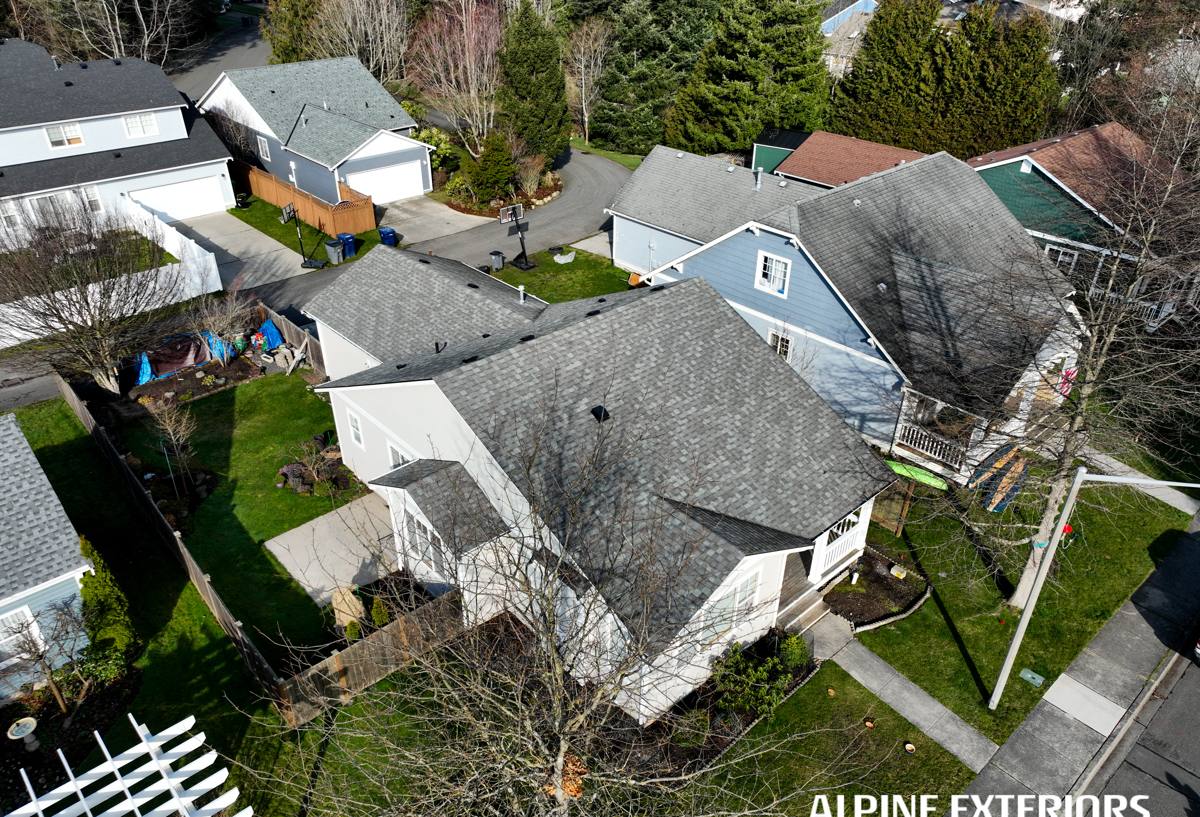
What Counts as Storm Damage (and What Doesn't)
"Storm damage" gets used loosely, but for repair purposes it's worth being precise, especially if insurance is involved. Storm damage is sudden and event-driven: wind lifting or tearing shingles, a branch or debris strike, hail bruising or puncturing roofing material, or wind-driven rain forcing water past flashing that was otherwise intact. It has a clear before-and-after tied to a specific weather event.
What isn't storm damage is gradual deterioration that a storm simply exposed — moss that's been lifting shingle edges for two winters, flashing that corroded slowly from salt exposure, or a roof that was already past its service life and finally gave way under wind load. That distinction matters because it affects both the repair approach and, if you're filing a claim, whether an insurer will treat it as a covered event or pre-existing wear. We'll tell you honestly which category your roof falls into rather than stretching the story to fit a claim.
Common Storm Damage We See on Cordata Roofs
- Shingles lifted, cracked, or torn off entirely along ridge lines and roof edges, where wind uplift is strongest
- Flashing pulled loose around chimneys, skylights, and roof-to-wall transitions
- Granule loss and bruising from wind-driven debris or hail
- Punctures or gouges from fallen branches
- Water intrusion at valleys and penetrations where wind-driven rain overwhelms marginal sealing
- Gutter and downspout damage that redirects water back under roof edges instead of away from the house
Signs a Cordata Homeowner Shouldn't Ignore
Storm damage isn't always obvious from the ground, and Bellingham's rain doesn't wait for you to get around to checking. After any significant wind event, it's worth a quick look for the following:
- Shingle pieces or granules collecting in gutters or on the ground near the foundation
- Visible gaps, curling, or missing shingles when viewed from the street or a neighbor's upstairs window
- New water stains on ceilings or upper interior walls, especially near chimneys or skylights
- A musty smell in an attic or upper closet that wasn't there before
- Daylight visible through the roof deck from inside the attic
- Sagging or soft spots when the roof is viewed at a low angle
If you see any of these, the priority is stopping active water intrusion, not necessarily a full replacement decision. A tarp or temporary patch on a damaged section can buy time for a proper assessment without letting the interior take on more damage.
How We Handle a Storm Damage Repair
1. Assessment First, Not a Sales Pitch
We start with a full roof inspection, not just the area you're worried about. Wind damage is often worse on the leeward side or at ridge caps than where it's visible from the ground, so we check the whole roof, the flashing details, and the attic if accessible. You get a straight answer on what's storm-related, what's pre-existing wear, and what can wait.
2. Stop the Water
If there's active or likely intrusion, our first move is temporary protection — tarping exposed decking or securing loose material — so the interior of the house isn't taking on damage while repairs get scheduled or an insurance claim gets processed.
3. Match the Repair to the Damage
Isolated damage — a section of missing shingles, a flashing failure, a localized puncture — gets repaired in kind, matching existing materials where possible so the repair doesn't stand out or create a new weak point. We don't push a full re-roof when a targeted repair will hold up; we also won't patch around a roof that's genuinely at the end of its service life and call it done.
4. Document Everything
Photos before and after, and a written scope of the repair, so you have a record for your own files or for an insurance adjuster. This matters more than people expect — a documented repair history is useful if you sell the house or file a future claim.
Repair or Replace: What Actually Factors In
Not every storm-damaged roof needs full replacement, and not every repairable-looking roof is worth repairing. The honest answer depends on a few things:
| Factor | Leans Toward Repair | Leans Toward Replacement |
|---|---|---|
| Extent of damage | Isolated to one section or slope | Widespread across multiple slopes |
| Roof age | Under roughly 12-15 years, still within expected service life | Near or past typical lifespan for the material |
| Underlying condition | Deck and underlayment sound elsewhere | Moss, rot, or prior water damage found during inspection |
| Material availability | Matching shingles/materials still obtainable | Discontinued product, patch would visibly mismatch |
| Insurance scope | Adjuster approves repair-level scope | Adjuster's scope already calls for full replacement |
We'll walk you through where your roof falls on this before recommending anything. A repair that's honestly the right call is a better outcome for you than an upsell — and it's also the kind of job that gets us called back the next time something comes up.
Moss, Salt Air, and Why Cordata Roofs Age the Way They Do
Whatcom County's marine climate means Cordata roofs rarely get a long dry stretch to fully shed moisture between rain events, especially on north-facing slopes and shaded sections near trees. That's what drives the moss growth that's a fact of life for most roofs in this part of Bellingham. Moss itself doesn't just sit on top of shingles — its root structure lifts shingle edges and holds moisture against the roofing material, which is exactly the kind of gradual damage that makes a roof more vulnerable when a windstorm does hit. A roof with moss-lifted shingle edges has far less wind resistance than a clean one.
Salt air off the bay is the other slow factor. It accelerates corrosion on exposed metal — flashing, fasteners, gutter hardware — faster than you'd see further inland. Corroded fasteners and flashing are a common reason a repair that should have been simple turns into a bigger scope once we're actually up on the roof.
Neither of these is something a homeowner needs to solve alone. Routine moss treatment and a periodic flashing check go a long way toward keeping storm damage limited to what the storm actually caused, instead of compounding damage that was already building.
Working With Your Insurance Claim
Most storm damage repairs in this area involve homeowner's insurance at some point, even for smaller jobs. We're not a public adjuster and won't claim to be, but we can:
- Provide a written, itemized estimate that matches the scope an adjuster will expect to see
- Meet an adjuster on-site to point out damage that's easy to miss from the ground
- Give you photo documentation of the damage before any repair work begins
- Explain, in plain terms, what's likely to be covered as storm damage versus what falls under maintenance or wear
We'd rather tell you upfront that something looks like a maintenance issue than have a claim get denied and leave you covering the cost with no warning.
Why Hire a Crew That Already Works in Cordata
Storm damage repair rewards familiarity with local conditions. A crew that regularly works North Bellingham roofs already knows what wind-driven rain does at valleys and low-slope transitions here, how fast moss reestablishes on shaded slopes in this climate, and what flashing details tend to fail first under salt-air exposure. That's the difference between a repair that's cosmetically fine and one that actually holds up through the next winter storm season.
There's also a practical side: local response time matters when water is actively getting into a house. A contractor working across a wide region can't always get a tarp on your roof the same day a storm passes through. Being local means we can.
A Quick Post-Storm Checklist
After any significant windstorm, here's a reasonable walk-through before deciding whether to call anyone:
- Check gutters and the ground near the house for shingle fragments or heavy granule buildup
- Look at the roofline from the street or a neighbor's upper window for missing or lifted shingles
- Check the attic (if accessible) for new light gaps, damp insulation, or staining
- Note any new ceiling stains, especially near chimneys, skylights, or roof valleys
- Photograph anything unusual with a timestamp, in case it's needed for an insurance claim later
- If you see active leaking or exposed decking, get it covered temporarily before the next rain, even if that just means a call to get a tarp up
If nothing on the list stands out, that's a good sign — but after a strong windstorm, a professional check of the roof edges and flashing is still worth it, since some damage isn't visible from the ground.
Get a Straight Look at Your Roof
If a recent storm has you wondering about your roof, or you just want a baseline check before the next round of Whatcom County weather rolls through, we're happy to come take a look. The estimate is free, there's no pressure to move forward, and if the roof is sound, we'll tell you that too. Use the form below to get in touch and we'll set up a time to come out to your Cordata home.