 Bellingham Siding
 Building Decks in Edgemoor's Wooded, Bluff-Side Terrain
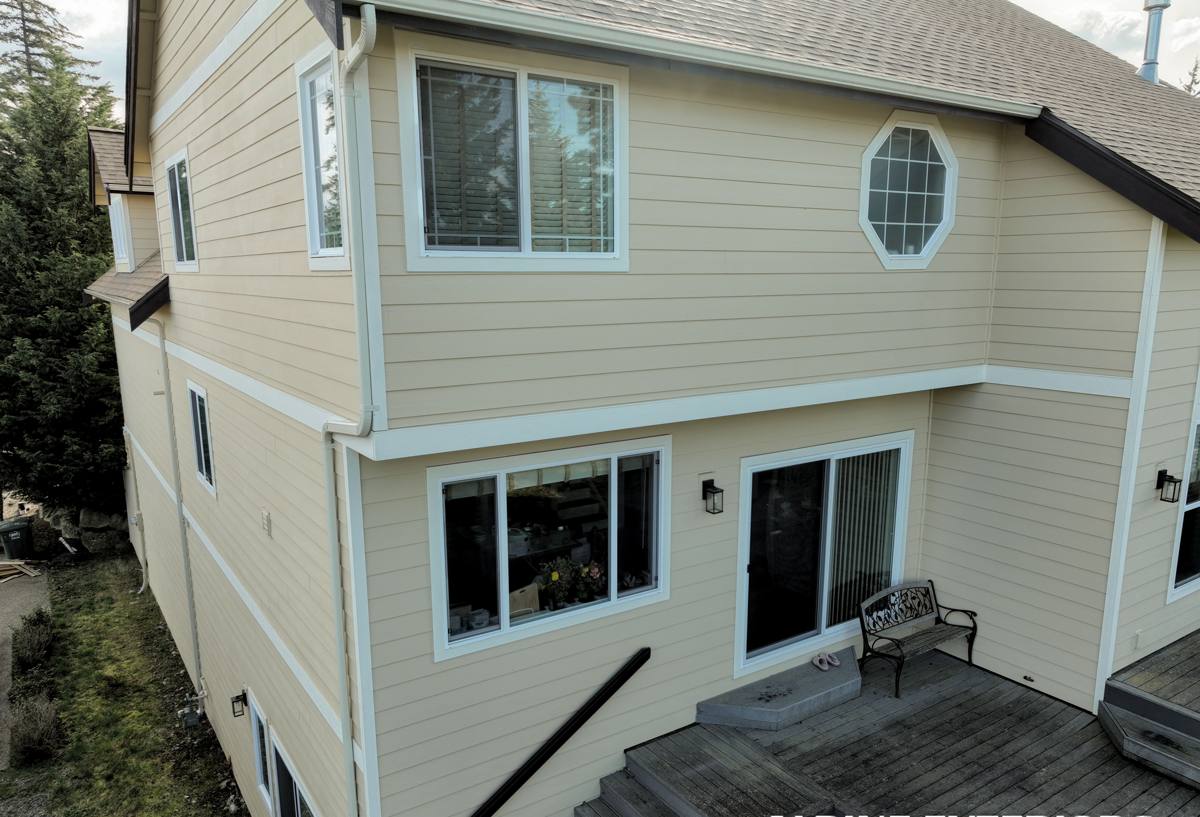
Edgemoor is one of the more distinctive neighborhoods we work in around Bellingham. Lots here tend to be larger and more wooded than what you'll find in flatter parts of Whatcom County, many of them sloping down toward Bellingham Bay under a heavy canopy of fir, cedar, and maple. That combination — mature trees, sloped ground, and closeness to open salt water — changes almost everything about how a deck should be designed, built, and maintained compared to a standard backyard project inland.
A deck that would hold up fine in a sunny, open yard in Whatcom County can start showing problems within a few seasons on an Edgemoor lot: moss taking hold in shaded corners, hardware corroding faster than expected, or a structure that was never really engineered for the slope it sits on. None of that is inevitable. It just means the design and material choices have to account for the site instead of following a generic template.
What Salt Air Off Bellingham Bay Does to a Deck
Properties closer to the water pick up salt-laden air, and that air is hard on anything metal. Standard zinc-coated fasteners and connectors that would last for decades in a dry inland yard can start rusting and staining decking boards within a few years near the bay. It's not dramatic — it's a slow, steady process that shows up as rust streaks around screw heads, weakened joist hangers, and corroded railing brackets long before the wood itself is ready to be replaced.
Our standard for anything within reach of that salt air is stainless steel or heavy marine-grade coated fasteners and hardware, not the cheapest code-minimum option. It costs a little more up front. It also means you're not pulling up decking in eight years to deal with hardware that failed long before the structure needed to.
Metal Railings and Fixtures
The same logic applies to any metal railing systems, post caps, or light fixtures on the deck. Powder-coated aluminum generally holds up far better near the water than raw or lightly finished steel, and we account for that when a client is choosing a railing style.
Moss, Shade, and the Long Wet Season
Bellingham's climate already runs wet and gray for a good chunk of the year. Under Edgemoor's tree cover, that effect is amplified — direct sun that would normally dry a deck surface out between rains often just doesn't reach large sections of these lots. The result is boards that stay damp longer, which is exactly what moss and algae need to take hold.
A deck built without that in mind ends up slick, green-tinged, and slippery for a large part of the year. A few design and construction choices make a real difference:
- Proper gapping between deck boards so water and debris drain through instead of pooling on the surface
- Adequate clearance and airflow underneath the deck, not framing tucked tight to grade
- Decking materials chosen with moisture and mold resistance in mind, not just appearance
- Keeping overhanging branches trimmed back where it's practical, so more light and air reach the deck surface
- A realistic cleaning schedule, since even the best-built deck in a shaded Edgemoor yard will need periodic moss and algae removal
None of this eliminates moss entirely on a heavily shaded lot — that's just the reality of building under a mature tree canopy this close to the water. But it's the difference between an occasional light cleaning and a deck that's genuinely dangerous to walk on by the second wet season.
Sloped Lots and Structural Considerations
Edgemoor's terrain means a meaningful share of deck projects here aren't simple ground-level platforms. They're stepped down a hillside, built out over a drop, or designed to make an awkward slope usable. That changes the structural approach.
Footings on a Slope
Footings on sloped or uneven ground need to be sized and placed based on actual soil conditions and depth, not just guessed at. On a wooded lot, root systems and drainage patterns also factor into where footings can go. This is not a place to shortcut with surface-mounted deck blocks on a structure that's going to see real elevation change or slope loading — it needs to be engineered for the site.
Height, Guardrails, and Multi-Level Decks
Elevated decks bring guardrail height and baluster spacing requirements into play, along with stair and landing details if the deck steps down the slope in stages. These aren't optional refinements — they're safety requirements, and they matter more on a bluff lot where a fall has real consequences. We design elevated and multi-level decks around those requirements from the start rather than treating them as an afterthought.
Choosing the Right Decking Material for an Edgemoor Lot
There's no single "best" decking material — the right choice depends on how much sun the deck actually gets, how much maintenance a homeowner wants to take on, and budget. Here's how the common options compare for a shaded, damp-prone lot like most of what we see in Edgemoor:
| Material | Moisture & Moss Resistance | Maintenance | Typical Lifespan |
|---|---|---|---|
| Pressure-treated lumber | Fair — absorbs moisture, needs sealing | Annual cleaning and periodic re-sealing/staining | 15–20 years with upkeep |
| Western red cedar | Good natural resistance, but greys and needs care in shade | Regular cleaning, occasional oiling or staining | 15–25 years with upkeep |
| Capped composite (e.g., Trex, TimberTech-type products) | Very good — doesn't absorb water like wood | Periodic washing to remove surface moss/algae; no staining | 25–30+ years |
| PVC decking | Excellent — fully synthetic, no wood fiber to hold moisture | Occasional washing | 30+ years |
On heavily shaded Edgemoor lots, we steer a lot of homeowners toward capped composite or PVC simply because they don't feed moss and algae the way untreated wood fiber does. That's not a knock on wood decking — a well-built cedar deck has real appeal, and plenty of clients prefer the look and the lower material cost. It's a maintenance-burden conversation, and we lay out the honest trade-offs for your specific yard rather than pushing one product line.
Permits and Code in the City of Bellingham
Most new decks attached to a house, and many freestanding decks over a certain height, require a permit through the City of Bellingham, along with inspections at key stages — footings, framing, and final. Ledger board attachment and flashing are a common point of failure on older or DIY decks, since an improperly flashed ledger lets water into the house's rim joist and framing, which is a much bigger and more expensive problem than anything happening on the deck surface itself.
We handle the permit process and inspections as part of the build. It adds a step, but it also means the finished deck is documented, code-compliant, and won't create a headache when you go to sell the house.
Our Deck-Building Process
Site Evaluation and Design
We start by actually walking the lot — looking at slope, sun exposure, tree cover, drainage, and how the deck will connect to the house. On a wooded Edgemoor property, this step matters more than usual, since the right footing layout and material choice depend heavily on the specific conditions of that yard.
Framing and Structural Work
Footings, ledger attachment, and framing get built to handle the site's actual slope and load requirements, with corrosion-resistant hardware throughout given the proximity to the bay. This is the stage where inspections happen, and it's the stage that determines whether the deck is still solid in twenty years.
Decking, Railings, and Finish Work
Once framing is approved, we install decking with proper spacing for drainage and airflow, then railings, stairs, and any finish work — staining or sealing if wood decking was chosen. We walk the finished deck with you before calling the job done.
Maintenance Checklist for an Edgemoor Deck
Whatever material you choose, a little regular upkeep goes a long way on a shaded, wet-climate lot like this:
- Sweep leaves and debris off the deck regularly, especially in fall — trapped organic matter feeds moss and holds moisture against the boards
- Wash the surface at least once a year to remove moss and algae before it builds up and gets slick
- Check fastener heads and metal hardware periodically for early signs of rust or corrosion
- Inspect the ledger board area where the deck meets the house for any signs of water intrusion
- Re-seal or re-stain wood decking on the schedule recommended for the product — don't wait until it's visibly worn
- Keep gutters and downspouts near the deck clear so runoff isn't draining directly onto or under it
Why a Crew That Already Works Edgemoor Matters
A lot of deck problems we get called out to fix started with a design that made sense somewhere else — a flat, sunny lot in another part of Whatcom County, or a generic plan that didn't account for slope, tree cover, or salt air. Building decks regularly in Edgemoor means we already know to spec corrosion-resistant hardware without being asked, to plan footings for sloped and wooded ground, and to choose materials that can handle a long moss season instead of fighting it every year.
If you're planning a new deck or replacing one that's struggling with moss, rot, or corroded hardware, we're happy to take a look and talk through honest options for your specific lot. Reach out for a free, no-pressure estimate using the form below.