 Bellingham Siding
 Why Fairhaven Roofs Take More Punishment Than You'd Think
Fairhaven sits close to Bellingham Bay, and that proximity to open water changes what a roof has to survive. Salt-laden air moves in off the water and settles on every exposed surface, accelerating corrosion on fasteners, flashing, and any metal component that isn't rated for a marine environment. Combine that with Whatcom County's driving rain — wind-blown rain that doesn't just fall straight down but pushes sideways under shingle edges and around penetrations — and you get a roof that's working harder than one twenty miles inland.
Then there's the moss. Bellingham's long wet season, mild temperatures, and shaded lots (Fairhaven has plenty of mature trees) create ideal conditions for moss and algae to take hold on north-facing slopes and anywhere debris collects. Left alone, moss doesn't just look bad — it lifts shingle edges, holds moisture against the roof deck, and shortens the life of even a well-installed roof. A roof built or installed without these local conditions in mind will show problems years before it should.
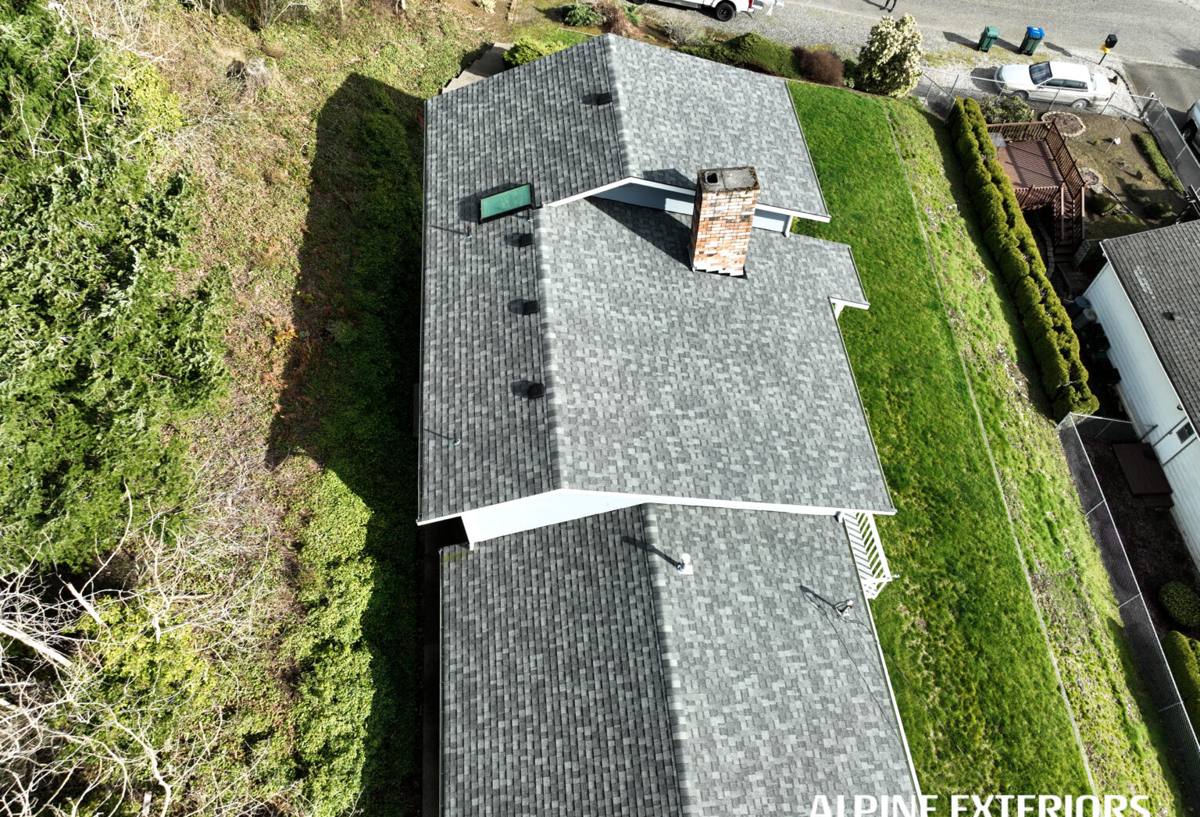
Signs Your Fairhaven Home Needs a New Roof, Not Another Repair
Most homeowners call us after a leak, but by the time water is visible inside the house, the roof has usually been failing for a while. Knowing the difference between "needs a patch" and "needs replacement" saves money in the long run.
Age and Material Fatigue
Standard asphalt shingle roofs in this climate typically show real wear starting in the 15-20 year range, sometimes sooner on slopes that get heavy moss or constant shade. Granule loss, curling shingle edges, and brittle material that cracks when walked on are all signs the roofing has reached the end of its useful life rather than needing a spot repair.
Repeated or Spreading Leaks
One leak around a single vent pipe is usually a repair. Leaks that show up in multiple rooms, or that come back after being patched, usually mean the underlayment and deck have been absorbing moisture for a long time and the roofing system as a whole is compromised.
Sagging or Soft Decking
Any visible sag in the roofline, or soft/spongy spots felt underfoot during inspection, points to deck damage from long-term moisture intrusion. This is not a shingle problem — it's a structural one, and it's a clear signal that a full tear-off and inspection is the right call rather than another layer of patchwork.
Roofing Materials That Hold Up Near Bellingham Bay
Not every roofing material performs the same way in a coastal, mossy, high-rainfall climate. We steer Fairhaven homeowners toward materials and hardware rated for marine and wet-climate exposure, and we're upfront about the trade-offs of each option.
| Material | How It Handles Local Conditions | Typical Lifespan Here | Maintenance Burden |
|---|---|---|---|
| Architectural (laminate) asphalt shingle | Good wind and rain resistance when installed with proper underlayment and flashing; widely available in algae-resistant formulations | 20-30 years | Moderate — periodic moss treatment recommended |
| 3-tab asphalt shingle | Lower wind rating and thinner profile; more prone to edge lift in driving rain and shorter service life in wet, shaded areas | 15-20 years | Higher — more frequent moss and edge issues |
| Standing seam metal | Sheds moss and moisture well on steeper pitches; needs marine-grade fasteners and coatings near the water to resist salt corrosion | 40-50+ years | Low, if hardware is correctly specified |
| Composite / synthetic shake | Resists moisture absorption better than wood shake, holds color well, good for homes wanting a traditional look without wood's upkeep | 30-40 years | Low to moderate |
We don't install cedar shake on Fairhaven homes as a standard recommendation. Real wood shake looks great new, but in a climate with this much sustained moisture and moss pressure, it requires a level of ongoing treatment and inspection that most homeowners underestimate — it's a maintenance-intensive product here, not a "install and forget" one, and we say that plainly before anyone signs a contract.
What a Correct New Roof Installation Actually Involves
A new roof is more than shingles nailed to a deck. In a climate like this, the parts you can't see matter as much as the parts you can.
Tear-Off and Deck Inspection
We remove the old roofing down to bare decking rather than installing over an existing layer. That lets us actually see the sheathing, identify any soft or water-damaged sections, and replace only what needs replacing before anything new goes down. Skipping this step is how hidden rot gets sealed under a brand-new roof.
Underlayment and Ice/Water Protection
Given how much wind-driven rain this area sees, we don't treat underlayment as an afterthought. Self-adhered ice-and-water membrane goes in valleys, around penetrations, and along eaves — the areas where wind-blown rain is most likely to find a way under the shingles — with a synthetic underlayment across the rest of the deck.
Flashing and Penetration Detail
Chimneys, skylights, vent pipes, and roof-to-wall transitions are where most leaks actually start, not in the open field of shingles. We use corrosion-resistant flashing sized and formed for each specific detail rather than relying on caulk or universal boots to make up the difference.
Ventilation
A roof deck that can't breathe traps moisture from inside the home, which leads to premature sheathing rot from underneath — a problem that has nothing to do with the shingles themselves. We check intake and exhaust ventilation as part of every installation and correct it when it's inadequate, which is common on older Bellingham homes that were never properly vented to begin with.
Our Installation Process, Step by Step
- On-site inspection and honest assessment of whether the roof needs full replacement or targeted repair
- Written estimate outlining material options, scope of work, and timeline before any work begins
- Protection of landscaping, siding, and gutters before tear-off starts
- Full tear-off to bare decking, with photos of any deck damage found and discussed before repair
- Deck repair or replacement as needed, followed by underlayment and ice/water membrane installation
- Flashing, vent, and penetration detailing
- Roofing material installation to manufacturer specification
- Ventilation check and correction if intake/exhaust airflow is inadequate
- Full site cleanup, including magnetic sweep for stray fasteners
- Final walkthrough and warranty documentation
Moss, Algae, and the Long Wet Season
Preventing moss is easier and cheaper than removing it once it's established. During installation, we can install zinc or copper strips near the ridge — rain washing over these metals releases ions that inhibit moss and algae growth down the slope — which is a low-maintenance option for shaded or north-facing roofs that are especially prone to buildup. We also make sure roofs are installed with proper drainage and no debris-catching dead spots where standing moisture collects.
For existing moss on a roof that isn't yet due for replacement, we recommend gentle removal methods and treatment rather than pressure washing, which can strip granules and shorten shingle life. But once a roof is old enough that moss is combining with granule loss and edge lift, treatment is a stopgap, not a fix — that's the point where replacement makes more financial sense than continuing to maintain a failing roof.
Permits, Timing, and Working Around Bellingham Weather
Roof replacement in Bellingham and Whatcom County typically requires a permit, and we handle that process as part of the job rather than leaving it to the homeowner. We also plan installations around weather windows — asphalt shingle adhesion and underlayment installation both depend on dry conditions, so we track forecasts closely and sequence tear-off to avoid leaving a deck exposed overnight when rain is likely. This kind of scheduling discipline matters more here than in drier climates, where a surprise afternoon shower isn't a real risk to an open roof deck.
Choosing a Roofing Crew That Actually Works Fairhaven
A crew that works this neighborhood regularly already knows which details matter here — the salt exposure near the water, the shaded lots that hold moisture longer, the older housing stock with ventilation that was never brought up to modern standards. That local familiarity shows up in fewer callbacks and a roof that actually performs the way it's supposed to.
- Ask for proof of state contractor licensing and current liability insurance
- Ask specifically how they handle flashing and penetration detailing, not just shingle brand
- Ask whether they install to full manufacturer specification, which affects your material warranty
- Ask how they sequence work around rain to protect an open deck
- Get the scope of work and material specifications in writing before any deposit is paid
- Ask how deck damage, if found during tear-off, will be priced and approved before repair begins
Warranty and Long-Term Care
A new roof involves two separate warranties: the manufacturer's warranty on the material itself, and the installer's warranty on workmanship. Both matter, and they're not the same thing — a manufacturer warranty typically won't cover a leak caused by incorrect flashing or ventilation, which is why installation quality is as important as the shingle brand you choose. We explain both warranties in plain terms before work starts, and we provide documentation at completion so you have it on file.
After installation, a roof in this climate benefits from an occasional visual check — clearing debris from valleys, watching for moss establishing on shaded slopes, and keeping gutters clear so water isn't backing up under the eave line. None of this is intensive work, but skipping it entirely is how a well-installed roof still ends up with preventable problems a decade in.
If you're weighing repair versus replacement, or just want a straight answer on where your current roof stands, we're happy to take a look. Reach out for a free, no-pressure estimate using the form below.