 Bellingham Siding
 Roof Repair Built for Ferndale's Weather, Not a Generic Checklist
Ferndale sits close to the water in Whatcom County, which means roofs here deal with a specific combination of stresses: salt-tinged marine air, long stretches of driving rain off the Salish Sea, and a moss season that can run most of the year in shaded, north-facing sections. A roof repair that works fine in a dry inland climate can fail here within a season if it doesn't account for how water, wind, and organic growth actually behave on a Whatcom County roof. We repair roofs in Ferndale the way the local climate demands: correct flashing details, materials that match what's already on the roof, and workmanship that holds up through a wet Pacific Northwest winter, not just until the next dry spell.
This page is specifically about roof repair in Ferndale — not a full tear-off and replacement. Most roofs don't need to be replaced; they need the right section fixed correctly, with attention to why the damage happened in the first place so it doesn't come back.
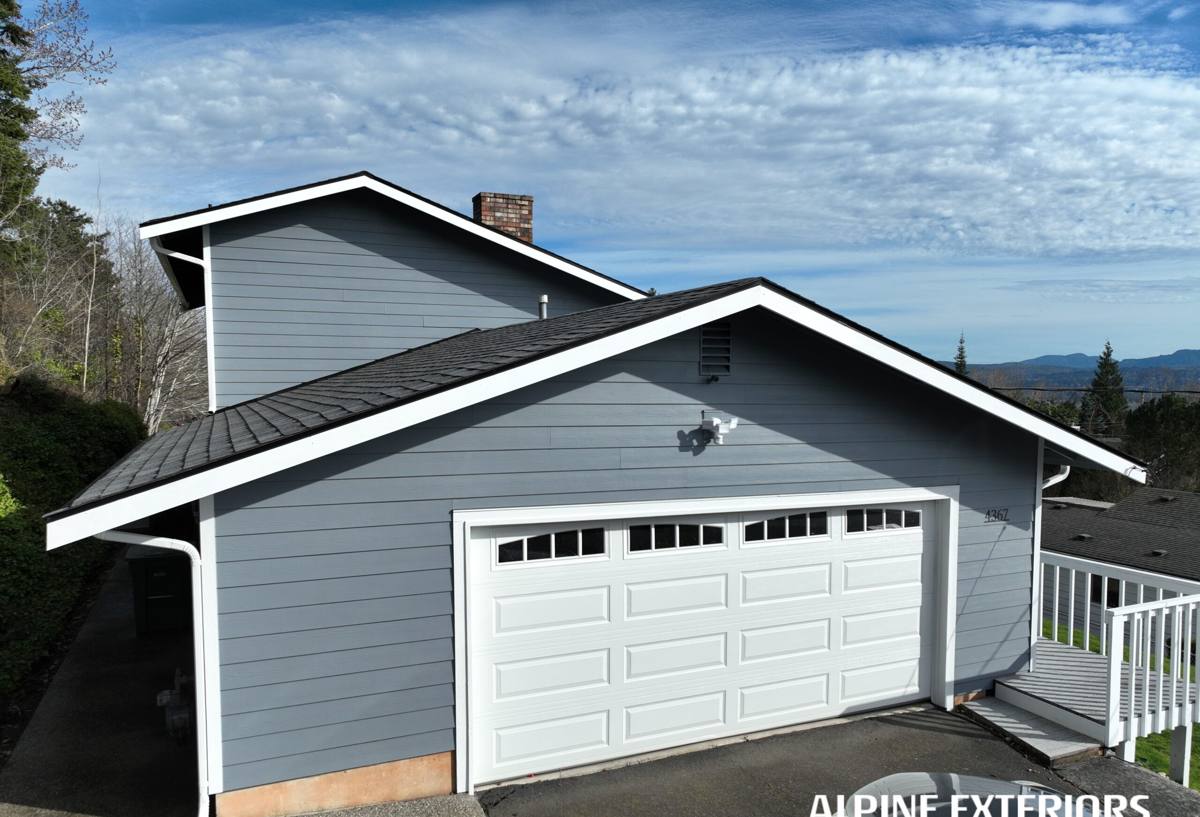
Why Ferndale Roofs Take a Different Kind of Beating
Salt Air and Metal Fatigue
Homes closer to Bellingham Bay and the Strait of Georgia deal with a fine mist of salt-laden air that accelerates corrosion on exposed metal — flashing, nail heads, gutter hardware, and fasteners. Over years, this shows up as rust streaks below flashing joints, pitted nail heads that no longer seal, and metal that's thinner and more brittle than it looks from the ground. A repair that reuses corroded fasteners or unsealed metal is a repair that fails again in a year or two.
Driving Rain and Wind-Driven Water
Whatcom County storms rarely arrive as simple straight-down rain. Wind pushes water sideways and uphill under shingle tabs, around chimney flashing, and into any gap that a fair-weather repair might have missed. This is why so many "repaired" roof leaks come back during the next windstorm — the patch stopped water falling straight down but never accounted for water being driven sideways or forced upward under the shingle edge.
A Long, Active Moss Season
Shaded roof slopes, tree cover, and consistent moisture give moss and algae a long growing window here. Moss isn't just cosmetic — it holds moisture directly against the roofing material, works itself under shingle tabs and shakes as it grows, and can lift edges enough to let wind-driven rain in. Roofs with north-facing slopes or heavy tree cover need repair work that specifically accounts for moss regrowth, not just a one-time cleaning.
Signs a Ferndale Roof Needs Repair, Not Replacement
Most homeowners call us because of a leak, a stain on a ceiling, or a section of roof that visibly looks wrong. Here's what we typically find, and what it usually means:
- Ceiling stains that show up after windstorms specifically — usually wind-driven rain finding a gap in flashing or shingle seal, not a failed roof overall.
- Granules collecting in gutters — normal in small amounts as asphalt shingles age, but heavy granule loss in one area often points to a localized problem worth repairing before it spreads.
- Curling or lifted shingle tabs on one slope — often the shaded, moss-prone side of the roof, where moisture sits longest.
- Dark streaking or green-black growth — algae and moss taking hold, which needs treatment plus a look at whether it's already lifted anything underneath.
- Soft or sagging decking felt underfoot in the attic — a sign water has been getting through longer than the visible symptoms suggest, and the repair needs to include the decking, not just the surface.
- Rust streaks below flashing at chimneys, skylights, or valleys — a strong sign the flashing metal itself is failing and needs replacement, not just resealing.
The honest answer is that most of these are legitimate repairs, not roof-replacement situations, as long as the decking underneath is still sound and the damage hasn't spread across multiple slopes.
What a Correct Roof Repair Actually Involves
A roof repair that's done right is more than swapping out a few shingles. Every repair we do starts with figuring out the actual water path, because patching the visible symptom without tracing the source is the single most common reason repairs fail.
Diagnosis Before Anything Gets Touched
We trace the leak from the interior stain or attic evidence back up to its actual entry point, which is very often several feet away from where the water shows up inside. Water travels along rafters and decking before it drips, so an accurate diagnosis is the difference between a repair that lasts and one that gets patched again next winter.
Flashing Comes First
Because of the driving rain and salt air here, flashing failure is behind a large share of the repairs we do — at valleys, chimneys, skylights, and wall-to-roof transitions. We replace corroded or improperly lapped flashing rather than caulking over it, since caulk is a short-term seal, not a repair.
Matching Materials, Not Just Patching
Shingles fade with UV exposure, and shake and metal roofing weather in ways that make a mismatched patch obvious and, more importantly, functionally different from the surrounding material. We source materials that match as closely as possible in type, profile, and where feasible, color, so the repair performs the same as the roof around it and doesn't stand out as an obvious patch.
Decking and Underlayment Get Checked
If shingles are removed for a repair, we check the decking and underlayment underneath. Soft or delaminated decking gets replaced before new roofing goes back down — covering damaged decking with new shingles just hides a problem that will resurface.
Ventilation Isn't Ignored
Poor attic ventilation traps moisture that accelerates decking rot and encourages moss and mildew from the underside. When a repair area shows signs of trapped moisture, we address ventilation as part of the fix, not as a separate upsell.
Roofing Materials Around Ferndale and How Repairs Differ by Type
Ferndale homes carry a mix of roofing materials, and each one has different repair considerations given the local climate.
| Material | Common Local Issue | Repair Consideration |
|---|---|---|
| Asphalt composition shingle | Granule loss, curling, moss lift | Widely available match, straightforward tab and flashing replacement |
| Cedar shake/shingle | Moss retention, splitting, moisture absorption | Requires matching weathered tone, careful moss removal without splitting wood |
| Metal roofing | Fastener corrosion, seam and flashing wear from salt air | Fastener and sealant replacement, seam inspection for coating breakdown |
| Flat or low-slope membrane | Ponding water, seam separation | Seam resealing or patching, checking drainage slope |
We don't push homeowners toward a different material during a repair conversation. If your roof is cedar shake or metal, we repair it as cedar shake or metal — matching the existing system is almost always the right call for both appearance and how the roof performs as a whole.
Our Roof Repair Process in Ferndale
- Inspection and diagnosis. We get on the roof (weather permitting) and in the attic to trace the actual water path, not just look at the visible symptom.
- Honest scope and estimate. You get a clear explanation of what's actually wrong, what needs to be repaired, and what can reasonably wait.
- Material matching. We source shingles, shake, or metal components that match your existing roof as closely as possible.
- The repair itself. Flashing, decking, underlayment, and surface material are addressed in that order — surface repairs without fixing what's underneath don't hold up here.
- Moss and debris treatment. If moss or organic growth contributed to the damage, we treat it as part of the job so the repair isn't undone by the same growth pattern within a year.
- Cleanup and walkthrough. We clear debris and walk you through what was done and what to watch for going forward.
Moss, Moisture, and Preventing Repeat Repairs
A repair that ignores moss is a repair that's likely to need redoing. In Whatcom County's climate, moss doesn't just grow back — it can regrow fast enough to undo a cosmetic-only fix within a single wet season. When we repair a section affected by moss, we treat the surrounding area too, not just the damaged spot, and we'll flag other parts of the roof that are heading the same direction so you can decide whether to address them now or monitor them.
A few maintenance habits make a real difference between repairs here:
- Keep gutters clear so water isn't backing up under the roof edge during heavy rain.
- Trim back branches that shade roof slopes and keep them damp longer than they should be.
- Address moss early, while it's still surface growth, rather than after it's lifted shingle tabs.
- Have flashing checked every few years, especially around chimneys and skylights, since it fails quietly until it doesn't.
Repair vs. Replacement: How to Think About Cost
Homeowners often want to know at what point a repair stops making sense and a replacement becomes the smarter investment. There's no single number, but these factors matter:
| Factor | Favors Repair | Favors Replacement |
|---|---|---|
| Roof age | Under roughly two-thirds of expected material lifespan | Near or past expected lifespan for that material |
| Damage extent | Localized to one section or slope | Spread across multiple slopes or recurring in several spots |
| Decking condition | Solid, dry decking under the damaged area | Widespread soft or rotted decking |
| Material availability | Matching material still obtainable | Discontinued material with no reasonable match |
| Repair history | First or infrequent repair | Same area repeatedly repaired in past few years |
Costs for roof repairs vary widely depending on the scope — a small flashing fix is a different job than replacing decking after a long-term leak. We'll always give you a straightforward estimate based on what we actually find, not a generic number.
Why Hiring a Crew That Already Works Ferndale Matters
Roofing crews who mainly work drier climates or different regions don't always build in the margin that Whatcom County weather demands — flashing laps sized for straight-down rain instead of wind-driven rain, or moss treatment skipped because it's not a routine concern where they usually work. A crew that repairs roofs around Ferndale and greater Bellingham regularly sees how local weather actually finds its way into a roof over time, and builds repairs that account for it from the start. That local pattern recognition is often the difference between a repair that lasts and one you're calling about again next winter.
What to Ask Before Hiring a Roof Repair Contractor
- Will you trace the actual leak source, or just patch where the stain shows up inside?
- Will the flashing be replaced if it's corroded, or just resealed?
- Can you match my existing roofing material, and how close will that match be?
- Will you check the decking underneath before closing the repair back up?
- Do you carry appropriate insurance for work on my roof, and can you provide proof?
- What's your plan if moss or algae contributed to the damage?
Get a Straightforward Roof Repair Estimate
If you've got a leak, a stained ceiling, missing shingles, or a section of roof that just doesn't look right, we're happy to take a look and tell you honestly what's going on and what it'll take to fix it correctly. Use the form below to request a free, no-pressure estimate for your Ferndale home.