 Bellingham Siding
 Why Puget's Weather Works Against Ordinary Siding
The Puget area of Bellingham sits close enough to the water that homes here deal with a combination most inland Whatcom County properties don't: salt-tinged marine air, sideways rain that gets pushed by wind straight into wall assemblies, and a moss and algae season that can run most of the year. Any one of those on its own is manageable. Together, they punish siding that isn't built or installed to handle all three at once.
Salt Air and Metal Fastener Corrosion
Homes closer to Bellingham Bay pick up airborne salt that settles on exterior surfaces and hardware. Over years, that accelerates corrosion on fasteners, flashing, and trim that weren't specified for a coastal-influenced environment. The siding panel itself might be fine while the nails and metal details holding it together quietly fail underneath.
Driving Rain and Wall Assemblies
Bellingham gets a lot of rain, but the more damaging factor is the wind-driven kind — rain that hits siding at an angle and gets forced behind laps, around trim, and into seams instead of running straight down and off. A siding system depends on more than the face material to keep water out; it depends on how the drainage plane, flashing, and joints behind it are built.
The Long Moss Season
Shaded lots, tree cover, and consistent moisture give moss and algae a long runway in this part of Washington. On roofs it's an obvious problem; on siding it shows up as green-black staining in shaded corners, north-facing walls, and anywhere water sits instead of draining. Some siding materials hold that staining in a porous surface. Others shed it more easily and clean up without stripping the finish.
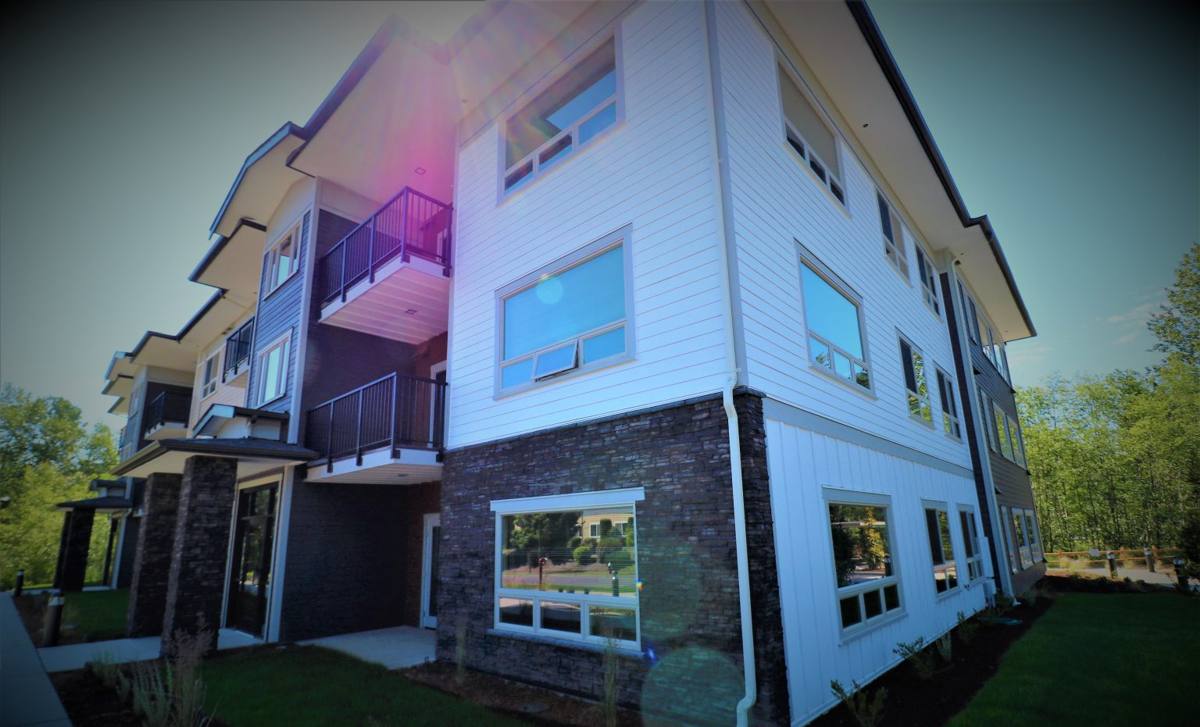
Why We Standardized on James Hardie for This Climate
We install James Hardie fiber cement exclusively — not vinyl, not engineered wood, not primed cedar or spruce, not other fiber cement brands. That's a deliberate standard, not a sales preference. In a climate like Puget's, the trade-offs on the alternatives (moisture absorption at cut edges, seam-dependent water management, field-applied paint that fails faster in salt air and shade) show up as real maintenance and repair costs within a decade or two. Hardie's fiber cement core doesn't feed moss or rot the way wood-based products can, it's non-combustible, and it holds up to repeated wet-dry cycling better than materials that expand and contract with moisture.
James Hardie also engineers different product formulations for different U.S. climate zones instead of shipping one national product. Homes in wetter regions like Western Washington get a version of the product line built around the rainfall and humidity patterns we actually experience here, rather than a generic climate-agnostic panel. Combined with the factory-applied ColorPlus finish — baked on before the boards ever reach the jobsite — that's the combination we trust for a Puget install.
What a Correct Hardie Install Looks Like in Puget
The siding material is only part of the job. Most of the failures we get called out to inspect on other contractors' work trace back to installation shortcuts, not the product itself. In a salt-air, high-rain area, a few details matter more than they would somewhere drier and inland.
Fasteners and Hardware
We use corrosion-resistant fasteners and flashing hardware suited to a marine-influenced environment, not whatever is cheapest by the box. Fastener corrosion is one of the more common hidden failure points on homes closer to the water, and it's invisible until siding starts working loose.
Drainage Plane and Rainscreen Details
Behind the siding, there needs to be a clear path for any water that does get past the face material to drain and dry out instead of sitting against the sheathing. That means correct water-resistive barrier installation, proper lapping, and — where the wall assembly calls for it — a drainage gap that lets air move behind the panels. This is the part of the job nobody sees once it's finished, and it's the part that determines whether a wall stays dry for decades or develops rot behind perfectly good-looking siding.
Flashing and Joints
Every window, door, and butt joint is a place water can get pushed in by wind-driven rain. Flashing has to be layered correctly — upper pieces over lower ones, everything lapped the right direction — and joints need to be treated as part of the water management system, not just a visual seam.
Caulking and Sealant
Used correctly, sealant backs up the flashing and drainage details rather than being the only thing standing between the wall and the weather. Used as a substitute for proper flashing, it's the first thing to fail once UV and moisture cycling take their toll — which happens faster here than in drier climates.
Moss, Algae, and Long-Term Maintenance
No siding is permanently immune to moss and algae in a climate this wet, especially on shaded north walls and under tree cover common around Puget properties. What matters is how easy it is to clean and how well the finish holds up to that cleaning. Hardie's factory-applied finish is more resistant to the kind of staining and mildew growth that shows up on field-painted or bare wood siding, and it tolerates routine gentle washing without the finish breaking down the way repeated painting eventually does. Keeping gutters clear, trimming back vegetation that shades and dampens walls, and rinsing siding when staining starts are the main maintenance habits that keep a Hardie exterior looking right through the wet months.
Our Install Process for Puget Homes
- Walkthrough and assessment — we look at existing siding, trim, flashing, and any signs of moisture damage before quoting anything.
- Tear-off and sheathing check — old siding comes off and we inspect the sheathing underneath for rot or damage before it gets covered back up.
- Water-resistive barrier and drainage details — house wrap, flashing, and drainage gap installed to spec, not shortcut.
- Hardie panel or lap installation — fastened, spaced, and joined according to James Hardie's installation requirements.
- Trim, caulking, and touch-up finish — corners, window and door trim, and any factory-finish touch-up completed.
- Final walkthrough — we go over the finished exterior with the homeowner before calling the job done.
What Drives Cost on a Puget Hardie Project
Every home is different, but the same handful of factors move the price up or down on most Hardie installs in this area.
| Cost Factor | Why It Matters |
|---|---|
| Existing wall condition | Rot or moisture damage found during tear-off adds sheathing repair before new siding can go on |
| Home height and access | Multi-story walls and tight side yards near neighboring lots slow down installation |
| Panel vs. lap siding profile | Different Hardie profiles have different labor and material requirements |
| Trim and architectural detail | Corners, window casings, and dormers all add cutting and fitting time |
| Color selection | Factory ColorPlus finishes vs. field-painted Hardie affect both cost and long-term maintenance |
Why a Crew That Already Works This Area Matters
A siding crew that regularly works in and around Bellingham knows what Whatcom County's weather actually does to a wall assembly over time, not just what a spec sheet says it should do. That shows up in small decisions — how much drainage gap to build in, which side of a house needs extra attention to flashing, when it's smart to schedule a tear-off around the wetter months. It also means familiarity with local permitting expectations and a realistic sense of how long a job takes given the rain windows we actually get here, instead of a install schedule built for a drier climate.
Questions to Ask Before You Hire
- Do they install James Hardie exclusively, or is it one of several products they'll sell you?
- Will they show you the drainage plane and flashing details, not just the finished siding color?
- What fastener and hardware spec are they using, and is it rated for a coastal-influenced climate?
- Do they inspect and repair sheathing before covering it, or just install over what's there?
- Can they explain how their process changes for a shaded, moss-prone wall versus a sun-exposed one?
If you're in the Puget area and dealing with siding that's showing its age, staining faster than it should, or you're just planning ahead of a repaint or repair cycle, we're happy to take a look and walk you through what a correct Hardie install would involve on your specific home. The estimate is free, and there's no pressure attached to it.