 Bellingham Siding
 Lynden's Climate Is Hard on Windows — Here's Why
Lynden sits inland from Bellingham Bay, out in Whatcom County's farm country near the Canadian border, but it doesn't escape the weather that defines this corner of the state. Long stretches of driving rain, low winter sun, high humidity off the surrounding fields and waterways, and a moss season that can run from fall through spring all put steady pressure on a home's windows. The marine air that moves in from the Strait of Georgia and Bellingham Bay carries some salt-laden moisture across the county too — milder here than right on the coast, but combined with the rain and humidity, it still speeds up corrosion on hardware, fasteners, and metal components over the years.
None of that is dramatic on its own. What it does is work slowly — a little moisture behind a poorly flashed frame, a little UV and temperature cycling on old vinyl, a little algae buildup in a track that never quite dries out. Years later, that's a window that fogs between the panes, sticks when you try to open it, or lets a draft in every winter. Custom window work in Lynden isn't about chasing a trend — it's about putting in windows and installation details that are actually built for this climate, not just windows that fit the hole in the wall.
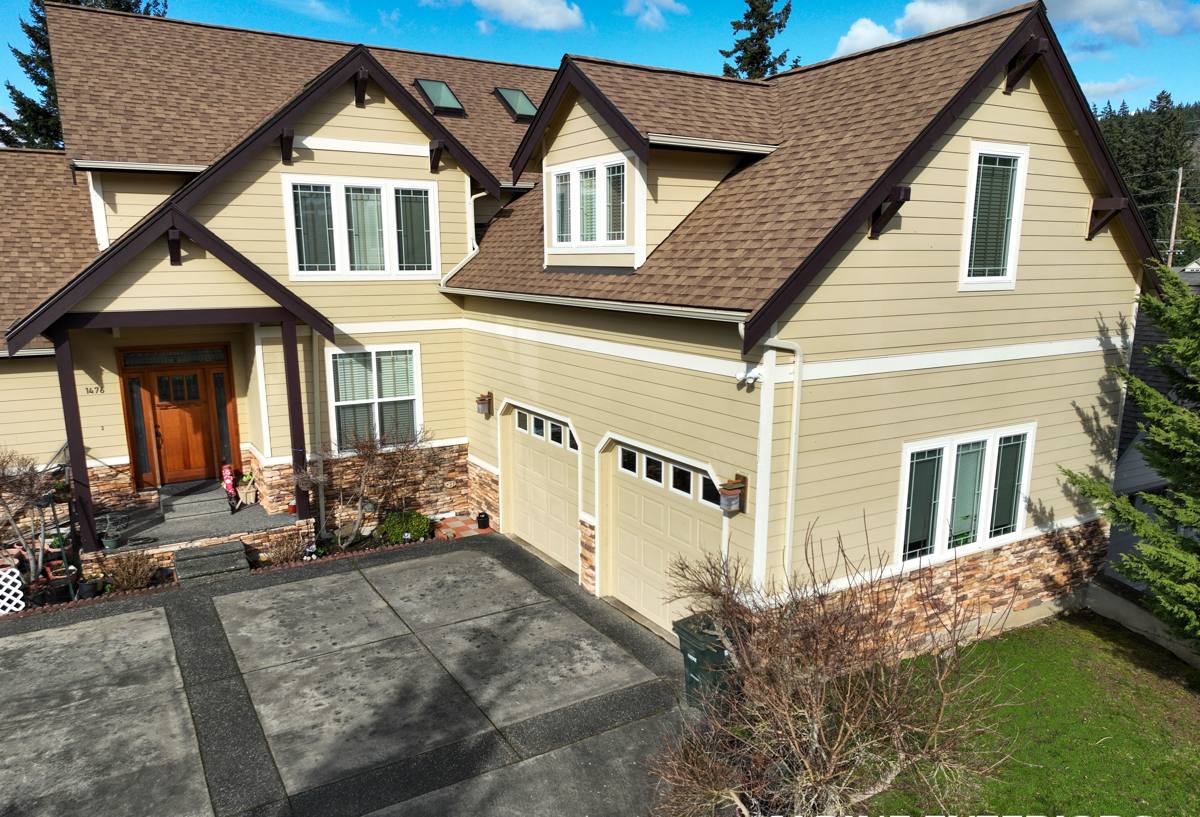
What "Custom Windows" Actually Means
"Custom" doesn't have to mean an unusual shape or a high-end look. In practical terms, it means the window is built to the exact opening in your home rather than pulled off a shelf in a standard size and shimmed or trimmed to fit. That matters more than most homeowners expect.
Custom Sizes vs. Standard Replacement Sizes
Many Lynden homes — especially older farmhouses, remodeled outbuildings, and houses that have been added onto over the decades — have window openings that don't match today's standard manufactured sizes. Forcing a stock-size window into a non-standard opening usually means extra trim, filler panels, or gaps that get packed with insulation and hidden behind casing. It can look fine on day one. It's also one of the more common reasons a "new" window still leaks air or lets moisture in a few years later, because the fix wasn't really a window — it was a workaround.
A true custom window is manufactured to your opening's actual dimensions, so the installation can be sealed and flashed as a single, continuous system instead of patched together. It costs more up front than a stock size in a standard opening, but for irregular or older openings, it's usually the difference between a window that performs and one that becomes a recurring problem.
Signs Your Windows Are Past Their Useful Life
Not every window needs to be replaced, and we'll tell you honestly if repair, re-caulking, or hardware service is the better call. But there are signs worth taking seriously before they turn into bigger repairs elsewhere in the wall assembly:
- Fog, haze, or moisture trapped between the panes of a double-pane window — the seal has failed and the insulating gas is gone
- Windows that are difficult to open, close, or lock, especially after sitting through a wet stretch
- Visible gaps, soft or discolored trim, or paint that keeps failing around the frame
- A draft you can feel with your hand near the frame on a windy day
- Moss, algae, or standing water in the sill or track that never fully dries out
- Condensation forming on the inside of the glass regularly, even when it isn't visibly damp outside
- Rooms near the window that are noticeably colder or harder to heat than the rest of the house
Any one of these on its own might be minor. Two or three together, especially on windows more than 15–20 years old, usually means it's worth having someone look at the whole opening, not just the glass.
What a Correct Window Installation Involves
The window itself is only part of the job. Most window failures we're called out to fix in Lynden and the surrounding area trace back to how the opening was sealed and flashed, not a defect in the window itself.
Flashing and Water Management
Every window opening needs a way to shed water that gets behind the siding, and it needs to do that whether the window is brand new or twenty years old. That means flashing tape or pan flashing at the sill, a weather-resistant barrier that's integrated correctly with the house wrap above and below the opening, and head flashing that directs water out and away rather than letting it pool. In a climate with as much sustained, wind-driven rain as Whatcom County gets, skipping or rushing this step is where most long-term leaks start — usually invisibly, inside the wall, long before there's a stain on the interior drywall.
Insulation and Air Sealing
The gap between the window frame and the rough opening needs to be filled with a material that stays flexible and doesn't compress or settle over time — typically a low-expansion foam or backer rod and sealant, not stuffed fiberglass batting alone. Done right, this stops both drafts and the kind of moisture-laden air infiltration that leads to condensation and, eventually, wood rot inside the wall cavity.
Interior and Exterior Sealing
Caulking and trim work on both sides of the window aren't cosmetic afterthoughts — they're part of the water and air seal. We use sealants rated for the temperature swings and sustained moisture this area sees, and we make sure weep holes stay clear so any water that does get into the frame track has somewhere to go.
Choosing the Right Frame Material for Lynden Homes
There's no single "best" window material — the right choice depends on your home's age, your budget, and how much upkeep you want to take on. Here's how the common options generally compare for a climate like ours:
| Material | Moisture Performance | Maintenance | Typical Fit |
|---|---|---|---|
| Vinyl | Good — won't rot, handles moisture well | Low — occasional cleaning | Most budgets, good all-around choice |
| Fiberglass | Excellent — very stable in temperature swings | Low | Higher upfront cost, long service life |
| Wood | Requires diligent upkeep to prevent rot | High — regular painting/sealing | Historic or period-specific homes |
| Wood-clad (wood interior, metal/vinyl exterior) | Good — exterior shell protects the wood | Moderate | Homeowners who want a wood interior look with less exterior upkeep |
For most Lynden homes, vinyl or fiberglass make the most sense given the rain and humidity this area sees year-round. We still install wood and wood-clad windows where they're the right fit for the home — we just make sure you understand the maintenance commitment going in, rather than finding out about it five years later. We'll walk you through the honest trade-offs for your specific house rather than pushing one product line.
Our Process, Start to Finish
- On-site assessment — we look at your existing windows and openings, check for signs of moisture or rot in the surrounding framing, and talk through what you're trying to solve (energy loss, appearance, function, or all three)
- Measuring and material selection — for custom sizes, we measure precisely and go over frame material, glass, and hardware options based on your home and budget
- Ordering and scheduling — custom windows are built to order, so lead times are longer than stock sizes; we'll give you a realistic timeline up front
- Removal and inspection — when we take out the old window, we check the framing underneath for hidden moisture damage before anything new goes in
- Installation — proper flashing, air sealing, and leveling, done as a system rather than window-by-window shortcuts
- Interior and exterior finish work — trim, caulking, and cleanup so the job looks finished inside and out
- Final walkthrough — we test operation, check the seals, and make sure you know how to maintain the new windows
Depending on the size of the project, a single-window replacement can often be done in a day, while a whole-house custom window job typically runs several days to a couple of weeks once materials arrive. Costs vary widely based on size, material, and access — as a rough range, expect somewhere around $650 to $1,400 per window installed for most vinyl or fiberglass replacements, with custom sizes, wood, or difficult access running higher. We'll give you a specific number in writing before any work starts.
Energy Efficiency for Farmhouses and Newer Builds Alike
Whatcom County's mix of housing stock means we see everything from decades-old farmhouses with single-pane wood windows to newer builds with underperforming builder-grade vinyl. Both benefit from an upgrade, but for different reasons. Older single-pane windows are straightforward energy losers — replacing them with a properly sealed double-pane, low-E unit is one of the more noticeable improvements you can make to comfort and heating costs in a Lynden winter. Newer homes with builder-grade windows often have decent glass but a mediocre installation, so the fix there is as much about correcting the flashing and sealing as it is about the window itself.
Look for double-pane glass with a low-E coating and argon gas fill as a baseline for this climate — it cuts down on both heat loss and the summer glare and heat gain that west-facing windows pick up on clear days. Triple-pane is available but is usually more upgrade than most homes in this area need to justify the added cost, unless you're dealing with a specific noise or extreme-exposure issue.
Why It Matters to Hire a Crew That Already Works in Lynden
Window installation looks similar on paper everywhere, but the details that actually matter — how much flashing overlap you need for wind-driven rain, how to detail a sill on an older farmhouse with settled framing, which sealants hold up through a Whatcom County winter without going brittle — come from having done the work here repeatedly, not from a general how-to guide. A crew that already services Lynden and the surrounding area also means faster scheduling, a shorter drive for a follow-up visit if something needs adjustment, and a better read on what "normal" looks like for houses in this specific area versus a coastal or drier-climate playbook that doesn't quite apply.
Keeping New Windows Performing for the Long Haul
A good installation buys you years of low-maintenance performance, but a little upkeep extends that further. Clear debris and moss out of tracks and weep holes each season, especially on shaded or north-facing windows where moisture lingers longest. Check caulking annually for cracking or gaps, particularly after a hard winter. Operate locks and hardware periodically so they don't seize up from disuse, and keep an eye out for any of the warning signs listed earlier — catching a small seal or caulking issue early is a lot cheaper than dealing with water damage in the wall behind it later.
If your Lynden home's windows are drafty, fogged, difficult to operate, or just original to a house that's due for an upgrade, we're happy to take a look and give you a straightforward, no-pressure estimate — no obligation, no hard sell, just an honest read on what your home actually needs. Use the form below to get started.