 Bellingham Siding
 Why Lynden Roofs Wear Differently
Lynden sits in Whatcom County, and like the rest of the Bellingham area, it gets more wet-weather roof stress than most of the country. It isn't just the volume of rain — it's how long roofs stay damp between storms. Cool temperatures, overcast stretches, and the moist, salt-tinged air that moves through the region off the Sound all combine to keep roof surfaces from fully drying out for weeks at a time. That's the environment that grows moss, softens underlayment, and quietly rots roof decking long before most homeowners notice a leak.
A roof replacement done for Lynden needs to account for that reality from the start. A system that would hold up fine in a dry climate can fail early here if it isn't built with drainage, ventilation, and moss resistance in mind. That's the difference between a roof that looks good going on and a roof that still performs in year twelve.
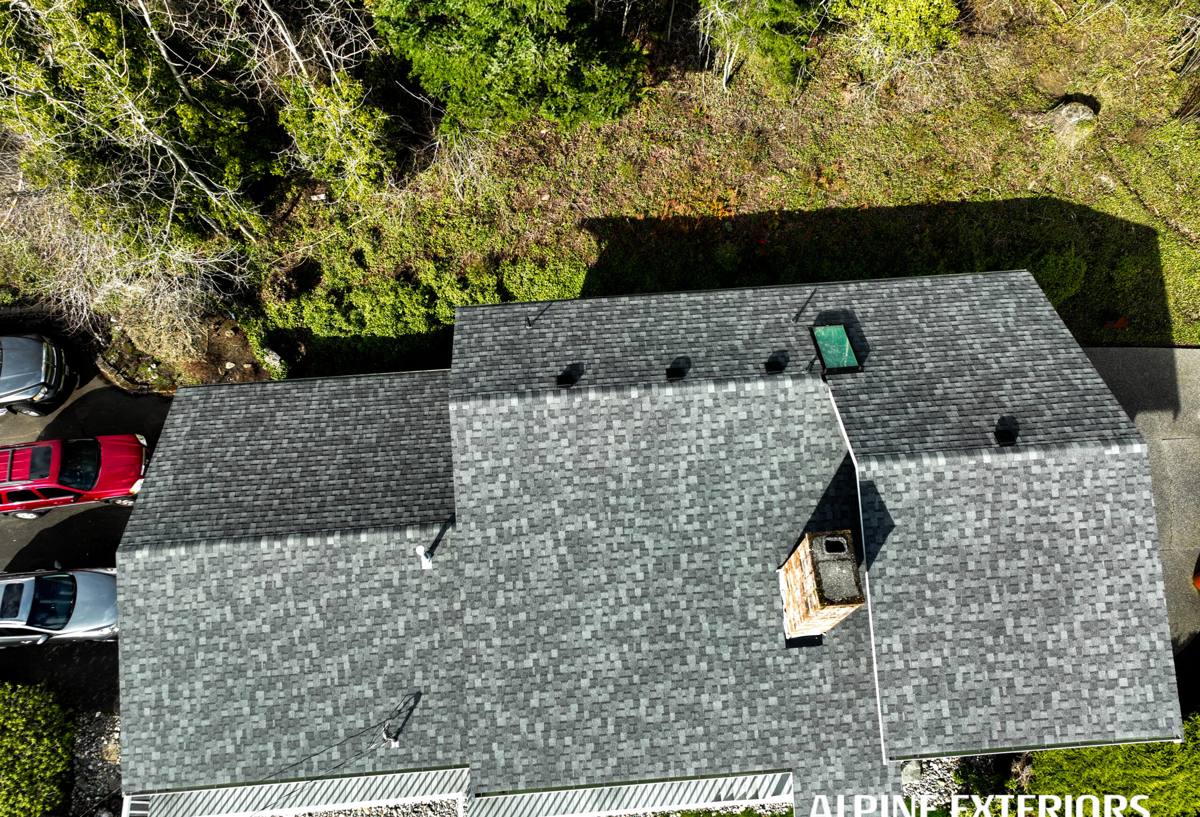
Signs Your Lynden Home Needs a Roof Replacement, Not a Repair
Repairs make sense when the damage is isolated. Replacement makes sense when the roof as a whole has stopped doing its job. In this climate, the tipping point usually shows up as a combination of the following, not just one item on its own:
- Granule loss heavy enough that you're finding grit in gutters every season, not just after a storm
- Moss that keeps returning within a year or two of cleaning, especially on north-facing slopes
- Shingles that are curling, cupping, or cracking rather than lying flat
- Soft spots or sag when walked on, which usually means the decking underneath has taken on moisture
- Staining on interior ceilings or in the attic, even if it's faint or only appears during heavy rain
- A roof that's approaching or past the manufacturer's expected service life for its material
- Daylight visible through the roof deck from inside the attic
If you're only seeing one or two of these and the roof is otherwise young, a targeted repair is often the honest answer. We'll tell you that directly — a full replacement is a bigger investment, and it should only be recommended when the roof's remaining life doesn't justify further patching.
Choosing the Right Roofing System for Whatcom County Weather
There isn't one "correct" material for every home, but there are real trade-offs worth understanding before you decide. The table below reflects how each common option tends to perform under the region's rain and moss pressure.
| Material | Typical Lifespan | How It Handles Local Rain & Moss | What to Consider |
|---|---|---|---|
| Architectural asphalt shingle | 25–30 years | Good with proper ventilation and moss-resistant granules; still needs periodic cleaning on shaded slopes | Most cost-effective; wide color and style range |
| Standing seam metal | 40–50+ years | Sheds moisture fast, very little surface for moss to grip | Higher upfront cost; installation quality matters even more than with shingles |
| Synthetic/composite shingle | 30–50 years | Resists moisture absorption well; performance varies significantly by manufacturer | Product quality and installer experience vary widely — vet both |
| Basic 3-tab asphalt shingle | 15–20 years | Wears faster under repeated wet-dry cycling and moss growth | Lowest upfront cost, but often the highest cost per year of service |
We don't push one material on every home. What we do insist on is matching the system to the roof's exposure — shaded, north-facing sections that stay damp longer often benefit from a different approach than a sun-exposed south slope on the same house.
What a Correct Roof Replacement Actually Involves
A roof replacement is more than swapping old shingles for new ones. Most of what determines whether a roof lasts 15 years or 30 happens in the layers you never see once the job is done.
Tear-Off and Deck Inspection
We remove the old roofing down to the deck rather than layering over it. That's the only way to actually inspect the plywood or OSB underneath for soft spots, delamination, or rot — problems that are common on older Whatcom County roofs where trapped moisture has been working on the deck for years. Any damaged sections get replaced before anything new goes down; installing new roofing over a compromised deck just hides the problem for a while.
Underlayment and Ice-and-Water Protection
Underlayment is the roof's backup layer if wind-driven rain gets past the surface material, and in this region that backup layer earns its keep more often than in drier climates. We use synthetic underlayment for its water resistance and durability, and we install self-adhering ice-and-water membrane at the eaves, valleys, and around penetrations — the spots where driving rain and ice most commonly force water backward under the shingles.
Ventilation: The Step Homeowners Never See
Proper intake and exhaust ventilation keeps the attic space close to outdoor temperature and humidity, which does two things: it prevents condensation from forming on the underside of the deck, and it dramatically slows moss and algae growth by keeping the roof surface drier overall. A roof that looks identical from the curb can have a completely different lifespan depending on whether the ventilation underneath was done correctly.
Flashing and Moss Prevention
New step flashing, counter-flashing, and pipe boots are installed rather than reused, since flashing failure is one of the most common causes of leaks that get blamed on the roofing material instead. Where moss has been a recurring issue, we can install zinc or copper strips near the ridge, which release trace metal ions that discourage regrowth as rain washes over the roof.
Our Replacement Process, Start to Finish
- On-site inspection. We assess the current roof, attic ventilation, and any visible moisture damage, and take accurate measurements.
- Written estimate and material selection. You get a clear scope of work and pricing before anything is scheduled — no verbal-only quotes.
- Scheduling around the weather. We plan tear-off days around dry forecast windows whenever possible to keep the deck protected.
- Tear-off and deck inspection. Old roofing comes off, the deck is checked, and any damaged sections are replaced.
- Underlayment, flashing, and ventilation installation. The layers that determine long-term performance go in correctly, not just quickly.
- New roofing installation. Shingles or metal panels go on to manufacturer specifications, which matters for warranty coverage.
- Cleanup and magnetic sweep. Job site debris and stray fasteners are cleared from the yard and driveway.
- Final walkthrough. We go over the finished roof with you and answer any questions before calling the job complete.
What Affects the Cost of a Lynden Roof Replacement
Every roof is different, so we won't quote a number without seeing the house — but these are the factors that actually move the price, in rough order of impact:
| Factor | Why It Matters |
|---|---|
| Roof size and number of facets | More square footage and more corners/valleys mean more material and labor |
| Pitch and accessibility | Steep or hard-to-access roofs take longer and require more safety setup |
| Number of existing layers | Tearing off two layers of old shingles costs more than tearing off one |
| Decking condition | Rotted or soft decking sections need replacement, which isn't known until tear-off |
| Material choice | Basic asphalt, architectural shingle, and metal carry different material costs |
| Penetrations and features | Chimneys, skylights, and multiple vent stacks each need proper flashing work |
Be cautious of any quote that's dramatically lower than the others you've collected — it usually means something is being skipped, whether that's tear-off, proper underlayment, or code-required ventilation.
Permits and Working Within Whatcom County Requirements
Most full roof replacements require a permit, and requirements can differ depending on where in Whatcom County the property sits and what jurisdiction it falls under. A contractor who regularly works in and around Lynden should already know which permits apply to your project and handle that paperwork as part of the job, rather than leaving it for the homeowner to sort out. Skipping a required permit can create real problems later — at resale, with insurance claims, or with code enforcement — so it's worth confirming upfront that permitting is included in your scope of work.
Why a Crew That Already Works in Lynden Matters
Roofing crews that work regularly in this part of Whatcom County develop a feel for how local weather actually behaves — when a dry window is reliable enough to start a tear-off, how a given roof's orientation will affect moss regrowth, and which underlayment and ventilation choices consistently hold up here versus in drier regions. That local experience shows up in scheduling decisions, material recommendations, and the small judgment calls made on the roof deck that a generic crew unfamiliar with the area might not think twice about.
It also matters for accountability after the job is done. A local company is easy to reach if a question comes up during the first heavy rain of the season, and has a reputation in the community worth protecting.
If your roof is showing its age or you just want an honest opinion on repair versus replacement, we're happy to take a look. Fill out the form below for a free, no-pressure estimate on your Lynden roof.