 Bellingham Siding
 Why Puget's Climate Is Hard on Siding
Homes in the Puget area of Bellingham sit in a climate that punishes cheap or poorly installed siding faster than most parts of the country realize. You've got salt-laden air moving off the water, long stretches of driving rain that hits siding sideways instead of straight down, and a moss season that can run most of the year in shaded, north-facing exposures. Individually, each of those is manageable. Together, over years, they find every weak point in a siding system — every gap in flashing, every seam that wasn't caulked right, every panel that was hung too tight to the sheathing.
Salt air accelerates corrosion on fasteners and trim hardware that isn't rated for it. Driving rain doesn't just wet the surface of your siding — it drives moisture up and under laps, seams, and trim if the install wasn't detailed for wind-driven exposure. And moss doesn't just look bad; it holds moisture against the siding surface for extended periods, which is exactly the condition that breaks down materials not built to handle sustained damp contact. This is the environment your siding actually has to perform in, not the mild, dry-summer conditions a lot of siding products are marketed around.
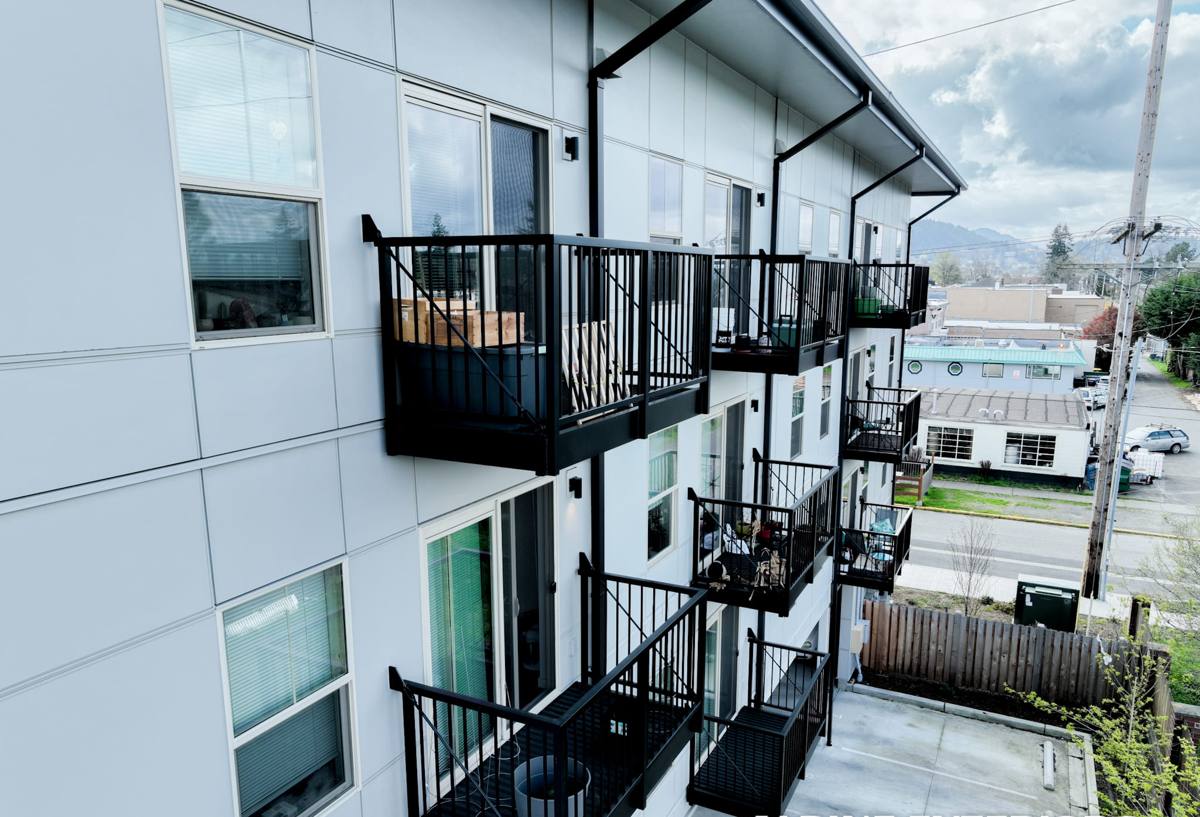
Why We Only Install James Hardie Fiber Cement
We standardized on James Hardie fiber cement siding for every job we take on, including here in Puget, because it's engineered for exactly this kind of exposure. It's non-combustible, it doesn't rot, and it doesn't swell or delaminate the way wood-based and some engineered wood products can when they take on repeated moisture. That matters a lot in a climate where "repeated moisture" is the default condition for six or more months of the year.
ColorPlus Factory Finish
Most of what we install carries Hardie's ColorPlus finish — a baked-on, factory-applied finish that's more consistent and more weather-resistant than a field-applied paint job. In a climate with this much rain and UV cycling, a factory finish holds its color and its bond to the substrate longer than paint applied on-site after installation, and it means fewer repaint cycles over the life of the siding.
Climate-Engineered HZ Product Lines
Hardie makes region-specific formulations under its HZ system, engineered for different combinations of moisture and freeze-thaw exposure. We spec the product line appropriate for Pacific Northwest conditions rather than a generic national formulation. It's a small detail on a spec sheet, but it's the kind of detail that decides whether your siding is still performing well at year twenty or starting to show problems at year eight.
What a Correct Fiber Cement Install Looks Like in Puget
Fiber cement siding is only as good as the installation behind it. We've seen Hardie siding fail early — not because the product was bad, but because it was hung like vinyl or wood siding, without the details that this climate demands. A correct install here involves a few things that aren't optional in our book.
A Real Rain Screen Gap
Siding installed flat against the sheathing with no drainage plane traps moisture that gets past the face of the siding, which happens eventually in any wind-driven rain climate. We install a rain screen gap so water that gets behind the siding has somewhere to go and can dry out, instead of sitting against the wall assembly.
Flashing and Trim Details
Every window, door, and horizontal trim transition is a place water wants to get in. We flash these properly with materials compatible with fiber cement, lap everything so gravity works in your favor, and don't rely on caulk alone to do a flashing detail's job. Caulk is a backup line of defense here, not the primary one.
Fastening and Joint Spacing
Fasteners go where Hardie's install specs say they go, at the depth they specify — not overdriven, not underdriven. Butt joints get spaced, backed, and sealed correctly rather than just butted tight, because tight joints with no room to move are where cracking starts as the material and structure expand and contract.
Comparing Your Siding Options for Puget's Conditions
Homeowners in this area often ask us to compare fiber cement against the alternatives before committing. Here's how the common options actually stack up against the specific conditions Puget deals with — salt air, wind-driven rain, and sustained moss exposure.
| Material | Moisture & Rot Resistance | Moss/Algae Resistance | Salt Air Durability | Typical Maintenance |
|---|---|---|---|---|
| James Hardie Fiber Cement | Excellent — won't rot or swell | Good, especially with factory finish | Strong when installed with rated fasteners | Occasional wash, no repainting for years |
| Vinyl Siding | Doesn't rot, but can warp and gap over time | Moss and mildew can grip textured surfaces | Can become brittle and discolor | Low, but panels are hard to fully seal against wind-driven rain |
| Primed Wood or Cedar | Vulnerable without diligent upkeep | Moss readily colonizes damp wood | Fasteners and finish degrade faster | High — regular repainting and sealing |
| Engineered Wood (LP-type) | Improved over raw wood, but edge and seam moisture intrusion is a known failure point | Moderate | Moderate | Moderate — finish maintenance required |
This is exactly why we don't offer vinyl, primed wood, or engineered wood siding as options. It's not that these products have no place anywhere — it's that we've chosen to build our business around the one product line we're confident performs correctly in this specific climate, installed by a crew that knows how to detail it right.
What Influences Your Project Cost
Every Puget home is different, and we're not going to quote a number without seeing your house, but these are the factors that actually move the price on a fiber cement siding project in this area.
| Factor | Why It Matters Here |
|---|---|
| Existing siding removal and sheathing condition | Moisture-damaged sheathing found under old siding needs repair before new siding goes on — common on homes with a history of poor drainage detailing |
| Home size and wall complexity | Dormers, gables, and multiple stories add cutting, flashing, and staging time |
| Product line and profile | Lap width, shingle-style panels, and trim selections carry different material and labor costs |
| Trim and accent work | Fascia, corner boards, and trim board replacement is often bundled in for a finished, weathertight result |
| Site access and exposure | Homes with heavier wind-driven rain exposure or difficult access may need extra prep and flashing work |
Living With Fiber Cement Siding in a Moss-Prone Climate
Fiber cement is low-maintenance compared to wood, but "low-maintenance" doesn't mean "no maintenance," especially in a climate where moss and algae growth is a fact of life for shaded and north-facing walls. A little regular care keeps your siding looking good and performing the way it's supposed to for decades.
- Rinse siding down once or twice a year with a garden hose and soft brush — avoid high-pressure washing, which can force water behind laps and damage the finish
- Keep gutters clear so overflow doesn't run down the wall and feed moss growth in specific spots
- Trim back vegetation and tree limbs that keep siding shaded and damp longer than the rest of the house
- Check caulked joints around windows, doors, and trim yearly and have any cracked or missing caulk redone
- Address moss or mildew spots early with a mild cleaning solution rather than letting it establish and spread
- Watch for any soft spots, gaps, or discoloration at the base of walls near grade, where splash-back moisture concentrates
Our Installation Process
We keep the process straightforward and communicate at every step, because siding work touches your whole home's exterior and you deserve to know what's happening and why.
- On-site assessment — we look at your existing siding, sheathing condition, exposure, and trim, and talk through what your home specifically needs
- Detailed proposal — a clear scope covering removal, prep, product selection, flashing and trim work, and cleanup
- Prep and repair — any moisture-damaged sheathing or framing gets addressed before new siding goes on, not covered up
- Installation to spec — rain screen gap, correct flashing, proper fastening, and joint detailing throughout
- Final walkthrough — we go over the finished work with you and register your Hardie warranty
Why a Crew That Already Works Puget Matters
Siding installation isn't one-size-fits-all, and a crew that's used to installing in a drier or milder climate can make choices that don't hold up here. A crew that already works in and around Puget knows which walls take the worst of the wind-driven rain, understands how quickly moss establishes on shaded north faces in Whatcom County, and doesn't need to relearn local conditions on your project. That familiarity shows up in the small decisions — flashing laps, fastener spacing, where extra attention goes on a given elevation — that determine whether siding performs well for twenty-plus years or starts causing problems in five.
If you're weighing your siding options for a home in Puget, we're happy to take a look and walk you through what a correct James Hardie installation would involve for your specific house — no pressure, no obligation. Use the form below to request a free estimate.