 Bellingham Siding
 Edgemoor's Roofs Work Harder Than Most
Edgemoor sits close to the water, tucked under a heavy tree canopy, which is a beautiful place to live and a demanding place to keep a roof. The combination of salt-laden air off the bay, driving rain that comes in sideways during winter storms, and shade from mature conifers creates conditions that push roofing materials harder than they're pushed in drier, more open parts of Whatcom County. A roof that would last three decades in a sunny, exposed location can develop real problems in Edgemoor in half that time if it wasn't installed or maintained with these conditions in mind.
We've done roof repair work in this neighborhood long enough to know the pattern: moss finds a foothold in shaded valleys and north-facing slopes first, salt air accelerates corrosion on exposed metal, and heavy rain finds every weak seam within a season or two. Repairing a roof here isn't just patching a leak — it's understanding why that leak happened in this specific spot, on this specific roof, in this specific climate.
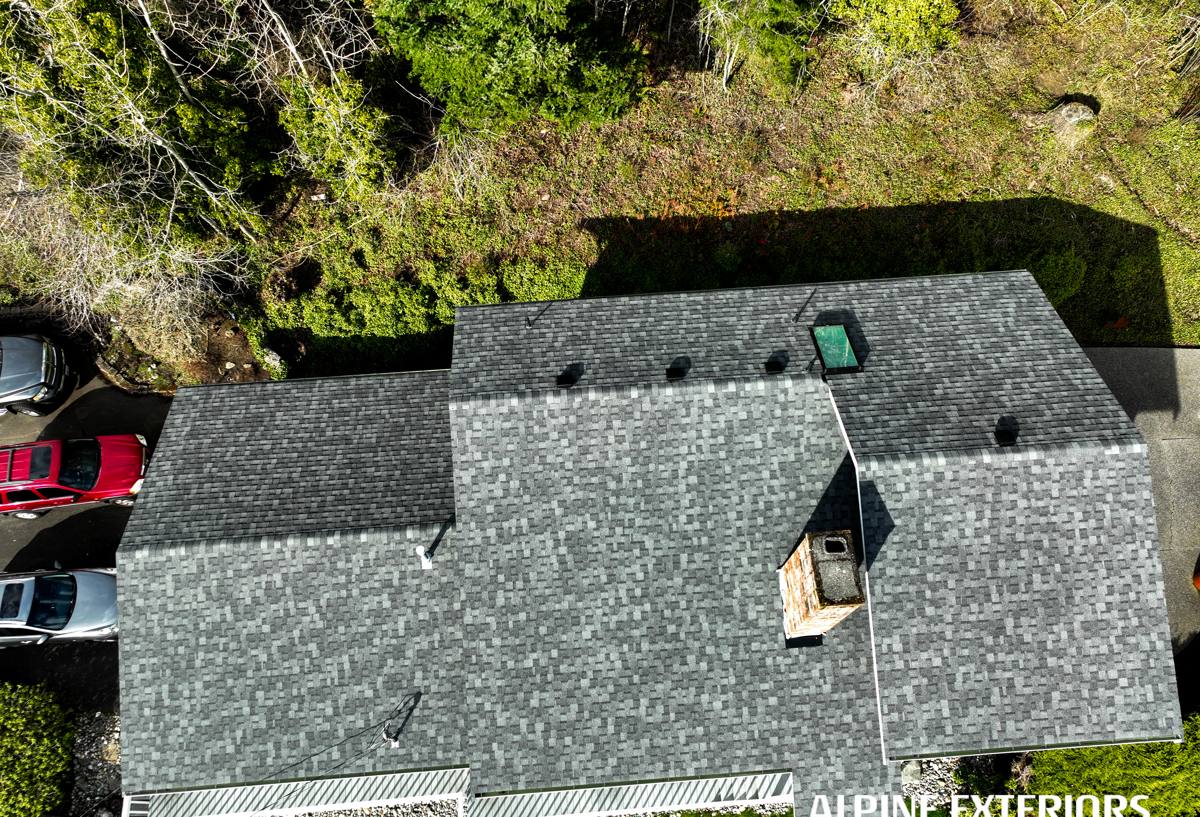
What Bellingham's Climate Does to a Roof Over Time
Whatcom County gets a lot of rain, but it's the type and duration of that rain, combined with limited direct sun in tree-covered lots, that causes the most damage. Roofs need time to dry out between storms. In Edgemoor, with tall trees blocking sun and wind, some sections of a roof may stay damp for days after a storm passes.
Salt Air and Metal Fatigue
Being close to the water means airborne salt settles on every exterior surface, including the roof. Salt accelerates corrosion on flashing, fasteners, and any exposed metal components. A nail that would hold for 25 years inland might start rusting and losing grip well before that near the water, which is why fastener and flashing material choice matters more here than in a lot of other areas we work.
Moss and Sustained Moisture
Moss doesn't just look bad — it holds water against the roofing surface, works its way under shingle tabs and shakes, and lifts material as it grows. On a shaded, tree-covered lot, moss can re-establish within a year or two of a cleaning if there's no plan to manage it going forward.
Driving Rain and Wind-Driven Water
Storms coming off the water often bring wind-driven rain that hits roofs at an angle rather than falling straight down. This kind of rain finds gaps in flashing, worn ridge caps, and undersized overlaps that would never leak in calmer weather. It's one of the most common causes of the "mystery leak" calls we get from this part of Bellingham.
The Roof Problems We See Most Often in Edgemoor
Every roof is different, but certain issues show up again and again on homes in this neighborhood:
- Moss buildup in shaded valleys, north slopes, and areas under overhanging branches
- Rusted or failing flashing around chimneys, skylights, and roof-to-wall transitions
- Shingle granule loss and premature aging on the sections that stay damp longest
- Gutters and downspouts overwhelmed by needle and leaf debris, backing water up under the roof edge
- Soft or delaminating roof decking where a slow leak has gone unnoticed for a season or more
- Lifted or cracked shingles from moss growth prying up the tabs underneath
Most of these problems start small. A few lifted shingles or a strip of moss along a valley doesn't look urgent, but left alone through one more wet season, it usually turns into a decking repair instead of a shingle repair — a much bigger job.
What a Correct Roof Repair Actually Involves
A roof repair done right isn't just about stopping the drip you can see from inside. It starts with figuring out where water is actually getting in, which is often several feet away from where it shows up on a ceiling. Water travels along rafters and decking before it finds a path through drywall or insulation, so a repair based only on the interior stain frequently misses the real entry point.
Diagnosis Before Repair
We inspect the full roof plane involved, not just the spot that's leaking — checking flashing, fastener condition, underlayment where it's exposed, and the state of the decking underneath. On a roof with moss or algae staining, we also look at how far the damage extends beyond what's visible from the ground.
Matching Materials and Technique
Repairs need to match the existing roofing system, not just in appearance but in how the materials interact. Mixing incompatible flashing metals, for instance, can actually speed up corrosion through galvanic reaction — a detail that matters more in a salt-air environment like Edgemoor than it would inland.
Getting the Water Path Right
Every flashing detail, shingle overlap, and valley is built around directing water downhill and off the roof. A repair that looks fine but disrupts that path — even slightly — can create a new leak somewhere else within a season. This is the part of roof repair that separates a lasting fix from one that reopens the following winter.
Our Roof Repair Process
- Inspection and diagnosis — We walk the roof (or use a lift/ladder where pitch or access requires it) and check the full area around the reported problem, not just the leak point.
- Honest assessment — We tell you what's actually wrong, what's causing it, and whether repair is the right call or if the roof's condition means replacement makes more sense long-term.
- Written scope and estimate — You get a clear explanation of what work is being done and why, with a straightforward price — no vague line items.
- The repair itself — Removal of damaged material, correction of the underlying cause (not just the symptom), and installation matched to the existing roofing system.
- Cleanup and debris removal — Old material, nails, and moss debris are cleared from the roof and gutters, not just the ground below.
- Follow-up — We stand behind the work and are reachable if anything comes up after the repair settles in through a wet season.
Repair or Replace? How We Help You Decide
Not every roof problem in Edgemoor calls for a full replacement, and not every leak can be permanently solved with a patch. The right call usually comes down to a few factors:
| Factor | Leans Toward Repair | Leans Toward Replacement |
|---|---|---|
| Roof age | Under 15–20 years, within expected lifespan | Near or past manufacturer's expected life |
| Extent of damage | Isolated to one section or detail | Widespread across multiple slopes |
| Decking condition | Solid, dry, no soft spots | Soft, delaminated, or rotted in multiple areas |
| Moss/algae history | First occurrence or well-managed | Repeated regrowth despite cleaning and treatment |
| Overall goal | Extend life a few more years | Reset the clock and stop recurring repairs |
We'll walk you through where your roof falls on this and give you a straight answer, not a sales pitch toward the bigger job.
Materials and Products: Our Standards for This Environment
We don't push one product line as a cure-all, and we're upfront about trade-offs rather than making blanket claims about what's "best." For homes in Edgemoor's climate, a few standards guide the materials we use and recommend:
Flashing and Fasteners
Given the salt air near the water, we favor corrosion-resistant flashing and fastener materials over standard-grade options, even where it costs a bit more upfront. This is a maintenance and longevity decision, not a brand preference — cheaper fasteners simply corrode faster in this environment and turn into recurring repairs.
Shingle and Roofing Material Choices
Composition (asphalt) shingles remain the most practical option for most Edgemoor homes because of their track record, repairability, and moderate cost. Cedar shake has a strong traditional look but comes with a real maintenance burden in a moss-prone, shaded environment — it needs more diligent upkeep to avoid the moisture retention that shortens its life. We'll explain these trade-offs honestly rather than defaulting to whatever's easiest for us to install.
Moss Treatment Products
Zinc or copper strips near the ridge, along with periodic treatment, are a proven approach for slowing moss regrowth on shaded roofs. We install these as part of many repairs where moss has been a recurring issue, since a repair that doesn't address the regrowth cause tends to need revisiting.
Ongoing Maintenance: What Keeps a Repair From Becoming a Recurring Job
A repair only lasts if the conditions that caused the original problem are managed going forward. For most Edgemoor homes, that means:
- Clearing moss and debris from valleys and shaded slopes at least once a year, more often under heavy tree cover
- Keeping gutters and downspouts clear so water isn't backing up under roof edges
- Trimming back overhanging branches where practical to improve airflow and sun exposure on the roof
- Checking attic ventilation, since poor airflow traps moisture underneath the roofing and accelerates decking damage
- Having flashing and fasteners inspected every few years, especially on homes closer to the water
- Addressing small leaks or lifted shingles promptly, before a wet season turns them into decking repairs
Signs You Should Call a Roofer, Not Wait Until Spring
- Water stains on ceilings or upper walls, even if they seem to have dried up
- Granules collecting in gutters or at the base of downspouts
- Visible moss mats, not just green staining, on any part of the roof
- Shingles that look lifted, curled, or out of place from the ground
- Daylight visible through the roof deck from inside the attic
- A spongy or soft feeling underfoot if you're ever on the roof for another reason
Why It Matters to Hire a Crew That Already Works in Edgemoor
Roofing crews that mostly work drier, more exposed parts of the region don't always account for how much longer a shaded, near-water roof stays damp, or how aggressively moss returns without ongoing management. A repair approach that works fine in a sunny subdivision can underperform on a tree-covered Edgemoor lot if it doesn't account for that extended moisture exposure.
Access matters too — steep driveways, mature landscaping, and tree cover common in this neighborhood affect how a crew stages equipment and protects your property during the work. A crew that's worked in the area knows what to expect before the truck even arrives, which means less guesswork and fewer surprises during the job.
Beyond the technical side, we've found that homeowners here want a straight answer about what their roof actually needs — not an upsell, and not a quick patch that ignores the underlying cause. That's the standard we hold ourselves to on every repair, in Edgemoor and throughout Bellingham and Whatcom County.
If you're dealing with a leak, moss buildup, or just want an honest read on your roof's condition, we're happy to take a look. Use the form below to request a free, no-pressure estimate — we'll tell you what we find and what we'd actually recommend, whether that's a targeted repair or something bigger.