 Bellingham Siding
 Why Barkley Roofs Wear Differently Than Roofs Inland
Barkley sits within Bellingham, close enough to Bellingham Bay and the broader Puget Sound airshed that homes here deal with a specific combination of weather stress: salt-laden air moving in off the water, long stretches of driving rain through fall and winter, and a moss season that can run eight months or more depending on the year. None of these three things is dramatic on its own. Together, over ten or fifteen years, they're what actually shortens a roof's useful life in this part of Whatcom County.
Salt air accelerates corrosion on exposed metal — fasteners, flashing, and vent stacks — faster than it would forty or fifty miles inland. Driving rain, especially wind-driven rain that hits shingles at an angle instead of falling straight down, finds weaknesses at laps, valleys, and penetrations that a calmer climate would never expose. And moss doesn't just look bad — it holds moisture against the roof surface for months at a time, which is exactly the condition that breaks down asphalt shingles and rots wood decking underneath.
A roof replacement done right in Barkley accounts for all three of these factors from the start, not as an afterthought or an upsell.
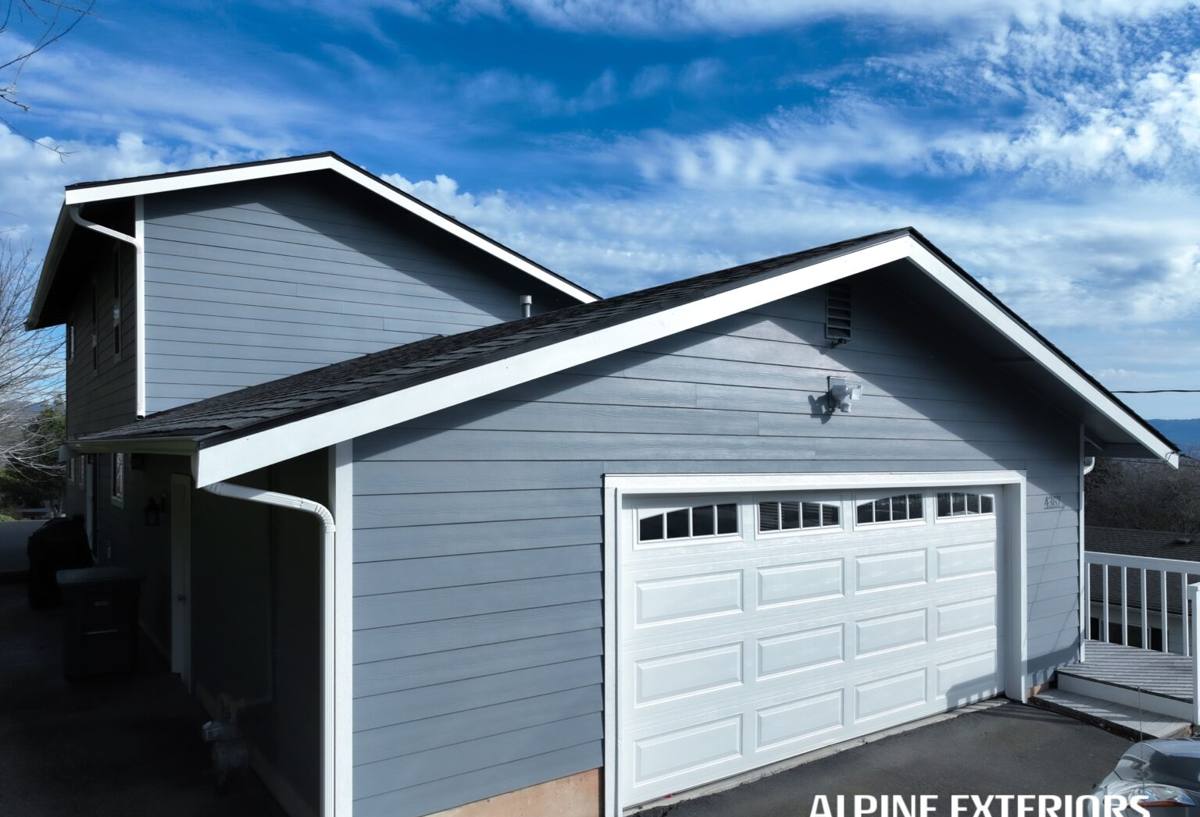
Signs a Barkley Home Needs Replacement, Not Another Repair
Most homeowners call us after noticing one obvious problem — a stain on a ceiling, a shingle in the yard after a windstorm — but the roof's real condition is usually more telling once we're up there. Some signs point clearly toward full replacement rather than another patch:
- Granule loss heavy enough that shingles look patchy or bald in sun-exposed areas
- Moss established at the shingle tabs, not just on ridge caps or shaded valleys
- Soft or spongy decking felt underfoot during inspection, especially near valleys and eaves
- Multiple past repairs in different areas, suggesting the underlayment is failing broadly, not locally
- A roof already past 20–25 years old (asphalt) or showing widespread curling and cracking
- Daylight visible through the roof deck from the attic, or consistent damp insulation
If a roof is showing one or two of these in isolation, targeted repair can still make sense. Once several show up together, patching becomes a pattern of spending money to delay a decision that's already been made by the roof itself.
What a Correct Roof Replacement Actually Involves
Tear-Off and Deck Inspection
We remove the existing roofing down to bare decking rather than layering new material over old — layering traps moisture and hides deck damage that needs to be addressed before anything new goes down. Every sheet of decking gets checked for rot, delamination, and fastener pull-through, which is common on older Bellingham homes where roofs have taken on decades of wet-dry cycling.
Underlayment and Water Protection
Given how much wind-driven rain this area sees, underlayment choice matters more here than in drier climates. We use synthetic underlayment as a baseline for its tear resistance and water shedding, and we run self-adhered ice-and-water membrane at vulnerable points — eaves, valleys, and roof-to-wall transitions — where wind-driven rain is most likely to force water sideways under the shingles rather than off them.
Flashing and Penetrations
Flashing failure, not shingle failure, is the most common source of leaks we find during tear-off. Chimneys, skylights, vent stacks, and roof-to-wall intersections all get new flashing as part of a proper replacement, sealed and lapped correctly for water to shed downhill at every layer.
Ventilation
A roof that can't breathe traps moisture in the attic, and trapped moisture is a major contributor to premature decking rot and interior mold — a bigger risk in a climate as consistently damp as Bellingham's than in drier regions. We check intake (soffit) and exhaust (ridge or box vents) balance and correct it as part of the job, not as a separate line item discovered later.
Choosing Roofing Materials for This Climate
There's no single "best" roofing material for every Barkley home — it depends on the roof's pitch, the home's style, and the budget. What matters is choosing with the local climate in mind rather than by looks alone.
| Material | Moss & Moisture Resistance | Typical Lifespan Here | Notes |
|---|---|---|---|
| Architectural asphalt shingle | Good with proper ventilation and periodic cleaning | 20–30 years | Most common choice; wide style and color range |
| Standing seam metal | Very good — sheds moss growth naturally on steeper pitches | 40–50+ years | Higher upfront cost; fasteners need corrosion-resistant coating near the bay |
| Cedar shake | Requires the most upkeep in a moss-prone, wet climate | 20–30 years with maintenance | Traditional look, but moisture management is critical to avoid early rot |
| Synthetic composite shingle | Good, engineered specifically to resist moisture absorption | 30–50 years | Mimics wood or slate appearance with lower maintenance demands |
We'll walk through these trade-offs honestly during an estimate rather than steering every homeowner toward the same product. A steep-pitched roof in a shaded, tree-lined part of Barkley has different moss exposure than an open, sun-exposed roof a few streets over, and that difference should inform the material choice.
Our Roof Replacement Process, Start to Finish
- On-site inspection and estimate. We assess the current roof, decking condition where visible, ventilation setup, and any problem areas you've already noticed.
- Material selection and scope. We go over material options, warranty structure, and a clear, itemized scope of work — no vague "labor and materials" line item.
- Scheduling around Bellingham weather. Roof replacement requires a dry work window, so we plan around forecasts rather than promising a fixed start date months out regardless of rain.
- Tear-off and deck repair. Old roofing comes off, decking is inspected and repaired as needed, and the site is protected daily against surprise rain.
- Underlayment, flashing, and new roofing installation. Installed in the sequence and to the specifications the manufacturer requires to keep any material warranty valid.
- Ventilation check and cleanup. Intake and exhaust balance is confirmed, and the site is cleared of debris and nails using a magnetic sweep.
- Final walkthrough. We review the completed roof with you before calling the job done.
What Drives Cost on a Barkley Roof Replacement
Every roof is priced individually, but the same handful of factors move the number up or down on most jobs in this area.
| Cost Factor | Why It Matters |
|---|---|
| Roof size and number of facets | More square footage and more valleys/hips mean more material and labor |
| Pitch and accessibility | Steep or hard-to-access roofs require more safety setup and time |
| Decking condition | Rot found during tear-off adds material and labor not visible from the ground |
| Material choice | Asphalt, metal, and composite products carry different material and install costs |
| Layers of existing roofing | Multiple old layers add tear-off time and disposal cost |
| Ventilation and flashing upgrades | Correcting decades-old ventilation mistakes is worth doing during a full replacement |
We're not going to publish a one-size-fits-all price here, because doing so before seeing the actual roof would be a guess dressed up as a number. What we can say is that a full replacement is a multi-thousand-dollar investment, and the honest range depends heavily on the size, pitch, and material decisions above — which is exactly what a free, no-pressure estimate is for.
Why Local Experience in Barkley Actually Matters
Roofing code, permitting, and inspection expectations are set at the city and county level, and a crew that already works Bellingham and Whatcom County jobs isn't learning those requirements on your project. Local experience also means knowing how a roof on a shaded, tree-lined lot in Barkley behaves differently than one on an open, wind-exposed lot elsewhere in town — and adjusting ventilation, underlayment, and material recommendations accordingly instead of applying a generic template.
It also matters for accountability. A contractor with an ongoing presence in the area has a reputation to protect within the community they keep working in — not just on the day the check clears.
Caring for Your New Roof Through Bellingham's Moss Season
A correctly installed roof still benefits from basic maintenance in this climate. A little attention each year goes a long way toward hitting the full expected lifespan of the materials you paid for.
- Clear gutters and downspouts at least twice a year, more often under overhanging trees
- Have moss growth treated before it spreads across shingle tabs, not after
- Trim back branches that keep sections of the roof shaded and slow to dry
- Schedule a visual inspection after major windstorms, especially ones with driving rain
- Watch for granules collecting in gutters, which can signal accelerated shingle wear
- Keep attic ventilation paths (soffit and ridge vents) clear of insulation blocking airflow
None of this replaces professional inspection, but it does reduce the odds of small issues turning into deck damage before anyone notices.
If your Barkley home's roof is showing its age or you just want an honest read on its condition, we're happy to take a look. Use the form below to request a free, no-pressure estimate — we'll tell you what we actually see, not just what sells a job.