 Bellingham Siding
 The South Hill Roof Problem: Salt Air, Rain, and Moss
South Hill sits above Bellingham Bay, which is exactly why the neighborhood's roofs take more of a beating than people expect from a "mild" Pacific Northwest climate. The elevation and bay exposure mean roofs here catch salt-laden air off the water, driving rain that comes in sideways during winter storms, and a moss and algae season that can run eight or nine months out of the year under the tree cover common to older Whatcom County neighborhoods. None of these things destroy a roof overnight. They work slowly, and that's the trap — a roof can look fine from the ground for years while moisture and organic growth quietly break down the materials underneath.
A roof replacement built for South Hill isn't just "install new shingles." It's choosing materials and installation details that account for salt exposure on metal components, near-constant dampness under moss mats, and wind-driven rain that finds every weak seam. Homes on the hill with more open exposure to the bay deal with wind uplift on top of everything else. Get any one of these wrong and you're looking at a roof that fails well short of its rated lifespan.
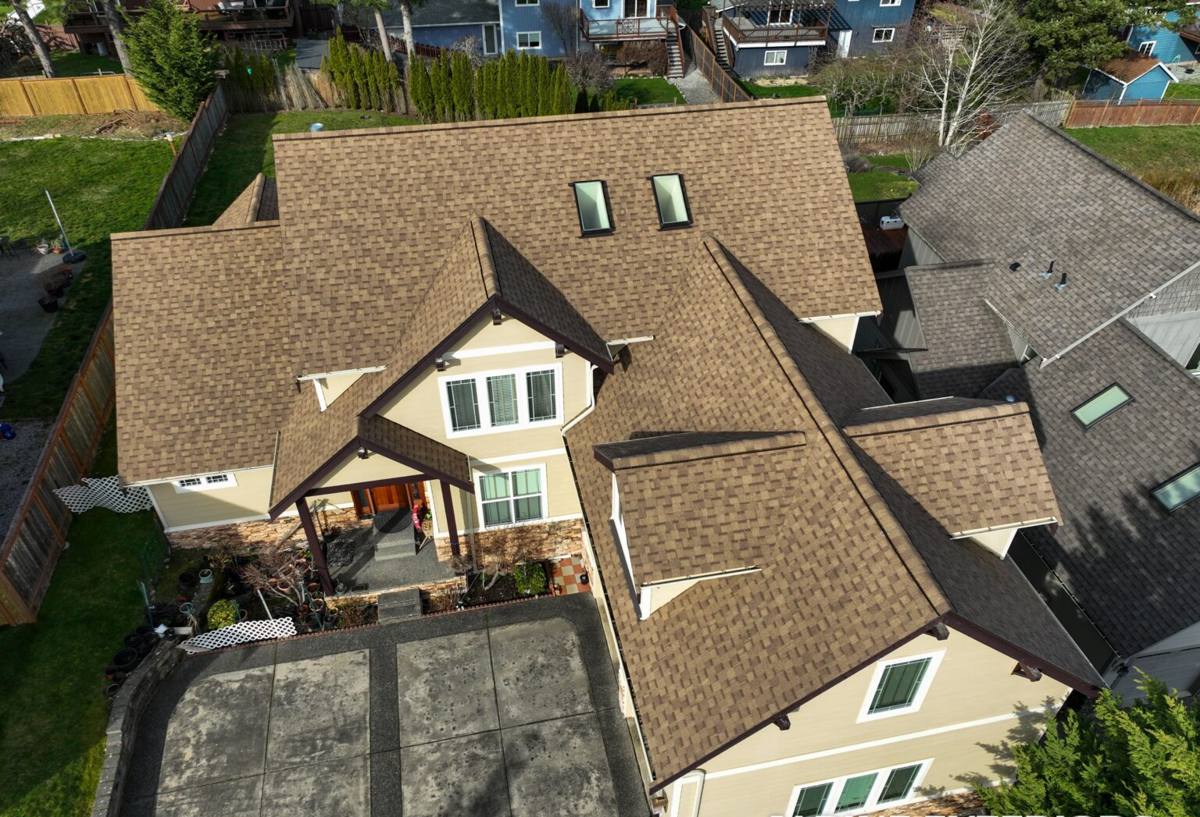
Signs a South Hill Roof Needs Replacement, Not Just a Repair
Repairs make sense when the damage is localized and the roof underneath is still sound. Replacement makes sense when the roof's ability to shed water is compromised system-wide. The honest answer usually comes down to age, extent of damage, and what's happening under the surface — not just what's visible from the curb.
- Shingles are cupping, curling at the edges, or missing granules in patches larger than a repair area
- Moss has been growing on the roof for more than one season, especially in the shaded, north-facing sections common on hillside lots
- You've had two or more leak repairs in different spots within the last two years
- Daylight is visible through the roof deck from inside the attic
- Shingles feel soft, spongy, or crack when walked on during inspection
- Flashing around chimneys, vents, or skylights is rusted, lifted, or was never properly step-flashed
- The roof is at or past the manufacturer's rated lifespan for its material (roughly 20–25 years for standard asphalt shingles in this climate)
- Granules are collecting in gutters in noticeable amounts after every rain
If you're only seeing one or two of these, a repair may still buy you time. If several apply at once, patching individual spots usually ends up costing more over a few years than doing the replacement once, correctly.
What a Correct Roof Replacement Involves
Full Tear-Off and Deck Inspection
We don't install over existing layers. A full tear-off is the only way to actually see the roof deck — and on older South Hill homes, that deck inspection matters. Years of slow moisture intrusion under moss or failed flashing can rot sections of plywood or plank decking that look fine from above. Any soft or delaminated decking gets replaced before anything new goes down. Skipping this step is the single most common reason a "new roof" fails early.
Underlayment Built for Wind-Driven Rain
Standard felt underlayment is a minimum, not a standard we're comfortable stopping at in a climate that gets sustained, sideways rain off the bay. We use synthetic underlayment for its tear resistance and better water-shedding performance, and we add self-adhered ice-and-water membrane at the eaves, valleys, and any low-slope transitions — the spots where wind-driven rain is most likely to work its way backward under the shingles.
Flashing Done Right, Not Just Caulked
Most roof leaks don't come from the shingle field — they come from flashing. Chimneys, skylights, wall-to-roof transitions, and vent penetrations all need properly layered, step-flashed metal, not a bead of sealant covering a shortcut. Sealant fails; correctly lapped flashing sheds water by design and doesn't depend on caulk staying intact for twenty years.
Ventilation That Matches the Attic
A roof that can't breathe traps moisture, which accelerates deck rot and can void shingle warranties. We check existing intake and exhaust ventilation against the attic's actual size and correct it as part of the replacement — not as an upsell afterward.
Roofing Material Options for South Hill Homes
There's no single "best" roofing material — there's the right material for your home's exposure, roof pitch, and budget. Here's how the common options stack up for a bay-exposed, moss-prone hillside lot.
| Material | Moss/Algae Resistance | Wind & Rain Performance | Typical Lifespan | Maintenance |
|---|---|---|---|---|
| Architectural asphalt shingle | Good with algae-resistant granules | Strong when properly nailed and sealed | 25–30 years | Periodic moss treatment recommended |
| Standard 3-tab shingle | Fair; wears faster under moss | Adequate, lower wind rating | 15–20 years | More frequent moss removal needed |
| Standing seam metal | Excellent; moss struggles to root | Excellent, very high wind resistance | 40–50+ years | Low; occasional rinse recommended near the bay |
| Cedar shake | Poor without diligent upkeep | Moderate; installation-sensitive | 20–30 years with maintenance | High — regular treatment required in this climate |
We're upfront that cedar shake, while a classic look for older Whatcom County homes, asks a lot of a homeowner in a climate this damp — it holds moisture longer than other materials and needs consistent upkeep to avoid rot and moss colonization. If you love the look, it can still be the right call; we just want you choosing it with clear eyes on the maintenance commitment, not surprised by it two winters in.
What Actually Drives the Cost of a Roof Replacement
| Factor | Why It Matters on South Hill |
|---|---|
| Roof pitch and access | Steeper hillside roofs and homes with limited driveway or yard access take longer and require more safety setup |
| Deck condition | Rot found during tear-off means additional plywood replacement not visible in an initial estimate |
| Material choice | Metal and premium architectural shingles cost more upfront but reduce long-term moss and repair costs |
| Number of penetrations | Chimneys, skylights, and multiple vents each need individual flashing work |
| Tree cover | Heavy overhead branches near the roofline may need trimming for proper drying and moss prevention, and to protect the new roof |
| Layers to remove | Homes with more than one existing layer of shingles take longer to tear off and dispose of |
We'll always walk the roof and attic before giving a number, and we'll flag anything — like deck rot or ventilation problems — that could change the scope, rather than let it surface as a surprise mid-job.
How Our Process Works
- Inspection and estimate — we walk the roof and check the attic, note deck condition, ventilation, and flashing issues, and give you a written estimate with no pressure to sign on the spot
- Material selection — we go over the trade-offs above based on your home's exposure and your budget, not a one-size-fits-all recommendation
- Scheduling around weather — we plan tear-off days around Bellingham's forecast windows so your home isn't left exposed
- Tear-off and deck repair — full removal of old roofing, replacement of any compromised decking, disposal handled by us
- Underlayment, flashing, and installation — done in the order above, not shortcuts to save a day
- Final walkthrough — we inspect the finished roof with you, clean the property, and do a magnetic sweep for stray nails
Why a Crew That Already Works South Hill Matters
Roofing is roofing, but a crew that regularly works South Hill's hillside lots, tree cover, and older housing stock isn't guessing at how those conditions affect the job. We know what deck condition tends to look like on homes of a certain age in this area, how much moss buildup is normal versus a sign of a deeper drainage problem, and how to plan access and staging on steeper or tighter lots without extra delays. That familiarity shows up in fewer surprises during tear-off and a more accurate estimate up front — not a lowball number that grows once the old roofing comes off.
It also means we're not learning Bellingham's permitting requirements or inspection process on your project. That's time and friction you don't have to pay for.
After the Install: Keeping Moss and Algae Off
A new roof still lives in the same climate as the old one. A few habits go a long way toward protecting the investment:
- Keep overhanging branches trimmed back so the roof gets sunlight and airflow to dry out between rain events
- Clean gutters at least twice a year — clogged gutters hold water against the roof edge and feed moss growth
- Do a visual check after major windstorms for lifted or displaced shingles rather than waiting for a leak to show up inside
- Treat moss early with a roof-safe treatment rather than letting it establish; once it's rooted under shingle edges, removal risks damaging the roofing itself
- Avoid pressure washing shingles — it strips protective granules and shortens the roof's life
If your South Hill roof is showing its age, or you just want an honest read on whether it's a repair or a replacement, we're happy to take a look. The estimate is free, there's no pressure, and you'll get a straight answer either way — just fill out the form below.