 Bellingham Siding
 Sehome's Climate Is Harder on Siding Than It Looks
Sehome sits close enough to Bellingham Bay to catch salt-laden air off the water, and close enough to the hills and tree cover to stay damp and shaded for long stretches of the year. That combination is tougher on exterior siding than either factor alone. Salt air accelerates corrosion on fasteners and metal flashing. Shade and moisture keep siding surfaces wet longer after every rain, which is exactly the condition moss, algae, and mildew need to take hold. Add in Whatcom County's long, driving-rain winters, and you have a climate that punishes any siding system with weak seams, absorbent cores, or coatings that can't stand up to repeated wet-dry cycling.
Homes in this neighborhood run the gamut from older construction with decades of prior repairs to newer builds finished within the last fifteen to twenty years. What they share is exposure: a long wet season, persistent shade in many yards, and enough elevation change on some lots that wind-driven rain hits walls at an angle rather than falling straight down. Siding that's merely "good enough" in a drier climate often struggles here within a decade.
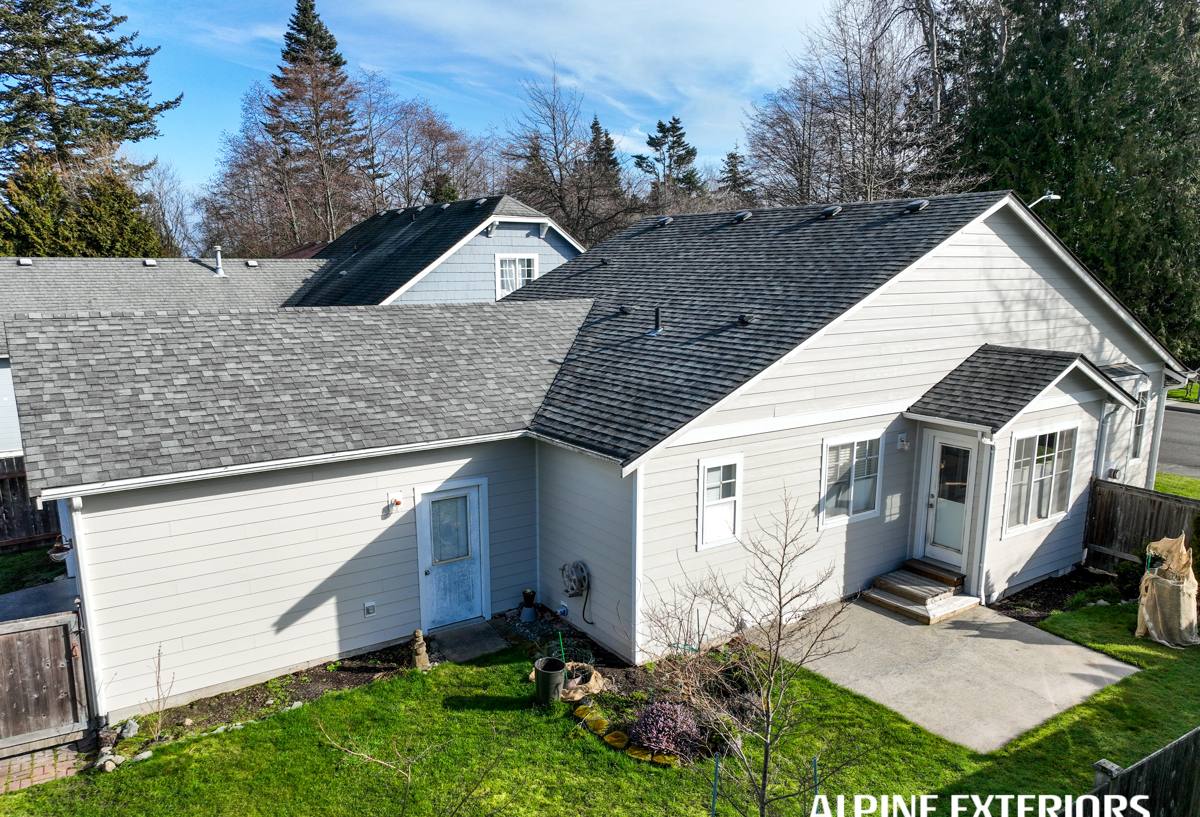
Signs a Sehome Home Is Due for Siding Replacement
Siding failure is usually gradual, and by the time it's obvious from the street, moisture has often been getting behind the cladding for a while. Homeowners in Sehome should watch for:
- Soft, spongy, or crumbling spots when you press on the siding, especially near the bottom courses and around windows
- Paint that keeps failing in the same spots no matter how often it's touched up
- Persistent moss or dark streaking that returns within a season or two of cleaning
- Visible warping, buckling, or panels pulling away from the wall
- Rising energy bills or noticeably drafty rooms along exterior walls
- Cracked or delaminating seams where panels or boards meet
Any one of these can be an isolated repair. Several at once, especially combined with age, usually means the underlying material or the original installation has reached its limit and a full replacement is the more honest answer than another round of patching.
What a Correct Siding Replacement Actually Involves
A siding replacement is not just swapping old boards for new ones. Done right, it's a full reset of the wall's moisture management system, and that's where most of the long-term value comes from.
Tear-off and inspection
Old siding comes off in full, not patched around, so the sheathing underneath can be inspected. In a climate like Sehome's, it's common to find soft or water-stained sheathing behind siding that looked fine from the outside. That damage gets addressed before anything new goes back on — covering it up only guarantees a repeat failure.
Weather-resistive barrier and flashing
A new, correctly lapped weather-resistive barrier goes over the sheathing, with flashing detailed around every window, door, and penetration so water is directed out and down rather than trapped behind the cladding. This step matters more in wind-driven rain than the siding material itself — even the best siding fails early if the drainage plane behind it is done poorly.
Fastening and clearances
Corrosion-resistant fasteners, correct nailing patterns, and proper clearance at grade, roofs, and decks all matter for long-term performance, particularly given the salt-air exposure common this close to the water. Skipping ground clearance or nailing too tight are two of the most common causes of early siding failure we see on re-side jobs.
Finish installation
Panels or planks go up to manufacturer spec, with correct joint treatment, caulking only where it belongs, and trim and corner details finished so water sheds away from the wall rather than pooling at transitions.
Our Process, Start to Finish
We keep the process straightforward and communicate at each stage rather than disappearing until the job is done:
- On-site assessment — we walk the exterior, check for moisture damage and problem areas, and talk through what we're seeing with you directly.
- Written estimate — a clear scope of work and price, no vague allowances buried in fine print.
- Tear-off and sheathing repair — old material removed, damaged sheathing replaced, and everything documented before it's covered up.
- Weather barrier and flashing — the moisture management layer installed to manufacturer and code detail.
- Siding installation — James Hardie fiber cement installed to the manufacturer's fastening, clearance, and joint specifications.
- Final walkthrough — we go over the finished job with you before calling it complete.
Why We Install Only James Hardie Fiber Cement
We've made a deliberate decision not to install vinyl, LP SmartSide, or other engineered-wood and fiber cement alternatives, even though we could. In a climate like Sehome's — sustained moisture, moss pressure, and salt air — the trade-offs of those products show up faster than they do in milder, drier regions. Vinyl can warp and become brittle with age and doesn't stand up as well to impact. Engineered wood products rely on factory coatings and sealed edges staying intact; once moisture gets into a cut edge or a coating failure, the wood-based core is vulnerable to rot in a way fiber cement is not.
James Hardie fiber cement is non-combustible, dimensionally stable in wet-dry cycling, and its ColorPlus factory finish is baked on rather than field-applied, which holds up better against the region's damp, shaded conditions than repeated site-applied paint. Hardie's HZ5 product line is engineered specifically for cold, wet climates like ours. It costs more up front than vinyl and holds a strong track record over the long run when installed to spec — which is the entire reason we standardized on it rather than offering a menu of cheaper alternatives.
Comparing Siding Options for Sehome's Climate
| Material | Moisture & Moss Resistance | Salt Air Durability | Typical Lifespan |
|---|---|---|---|
| Vinyl | Sheds water but traps moisture behind panels if installed loosely; can support moss in shaded, damp areas | Can become brittle over time; fasteners are a weak point | 15–25 years |
| LP SmartSide / engineered wood | Good if coatings stay intact; vulnerable once edges or cuts are exposed | Corrosion risk mainly at fasteners and trim | 20–30 years with diligent maintenance |
| Cedar | Absorbs moisture; needs regular refinishing to resist moss and rot | Salt air accelerates weathering of the wood surface | 20–40 years with intensive upkeep |
| James Hardie fiber cement | Dimensionally stable, resists moisture-driven warping | Non-combustible core, factory finish holds up well | 30+ years to manufacturer spec |
No siding is maintenance-free, and every material listed above has been installed successfully somewhere. This table reflects why, specifically for this climate and for our own standards of what we're willing to warranty and stand behind, we settled on one product line rather than offering all of them.
What Drives Siding Replacement Cost in Sehome
Every home is different, but the same handful of factors move the price up or down on most Sehome projects:
| Factor | Why It Matters |
|---|---|
| Home size and wall complexity | More corners, gables, and dormers mean more cutting, flashing, and labor time |
| Existing sheathing condition | Rot or water damage found during tear-off requires repair before new siding goes on |
| Access and lot terrain | Sloped lots and tight side yards, common in this neighborhood, can affect staging and scaffolding needs |
| Trim and finish level | Detailed trim, board-and-batten accents, or custom color choices add labor and material cost |
| Number of stories | Two-story walls require more scaffolding and safety setup than single-story elevations |
Full siding replacements on typical homes in this area generally run in the low five figures on the small end up to significantly more for larger homes with complex rooflines or extensive rot repair. The only way to get a real number is a walkthrough of your specific home, which is why we don't quote sight unseen.
Why Hiring a Crew That Already Works in Sehome Matters
Siding work in this neighborhood benefits from knowing the conditions before the crew ever shows up. That means understanding which elevations catch the most driving rain, recognizing the moisture patterns that come with mature tree cover and hillside lots, and knowing how Whatcom County's permitting and inspection process runs for exterior work. It also means scheduling around this region's wet season realistically — a crew unfamiliar with local weather patterns can get caught mid-tear-off by a stretch of rain that a Bellingham-based crew would have planned around. None of this is exotic knowledge, but it's the difference between a crew learning the neighborhood on your job and one that already knows what to expect.
A Simple Pre-Estimate Checklist for Homeowners
- Note any soft spots, staining, or recurring moss you've noticed on specific walls
- Check whether siding issues line up with the shadiest or wettest side of the house
- Have a rough idea of your home's age and whether the siding has ever been fully replaced before
- Think about whether you want to change trim style or color as part of the project
- Flag any interior signs — musty smells, peeling paint, or damp drywall on exterior walls
Living With Fiber Cement Siding After Installation
James Hardie siding is low-maintenance compared to wood or repeatedly-repainted surfaces, but "low-maintenance" isn't "no-maintenance," especially in a climate that grows moss well. A yearly rinse-down with a garden hose or soft wash, prompt attention to caulking at trim joints, and keeping gutters clear so water isn't dumping directly onto walls will keep the siding performing the way it's designed to for decades. Because the ColorPlus finish is factory-applied, you're not on a five-year repainting cycle the way you would be with site-finished wood siding, which is a real, tangible difference in long-term upkeep.
If your Sehome home is showing signs of siding wear or you're simply planning ahead, we're happy to take a look and give you an honest read on what your home actually needs. Use the form below to request a free, no-pressure estimate.