 Bellingham Siding
 Siding Installation for York Homes in Bellingham
York is one of Bellingham's older, established residential pockets, and that shows in the housing stock: a mix of early-to-mid-century homes and newer infill, many of them carrying original wood siding, aging cedar, or a first-generation vinyl retrofit that's starting to show its age. When we get a call from this part of town, the siding problems we find are rarely random. They're the predictable result of Whatcom County's coastal climate working on a wall system for twenty, thirty, or fifty years without the right materials or details behind it.
This page is specifically about siding installation for York — not a generic overview of siding in general. It covers what this climate does to exterior walls here, what a correct installation actually requires, how our process works, and why a crew that already works this neighborhood is worth choosing over one that doesn't.
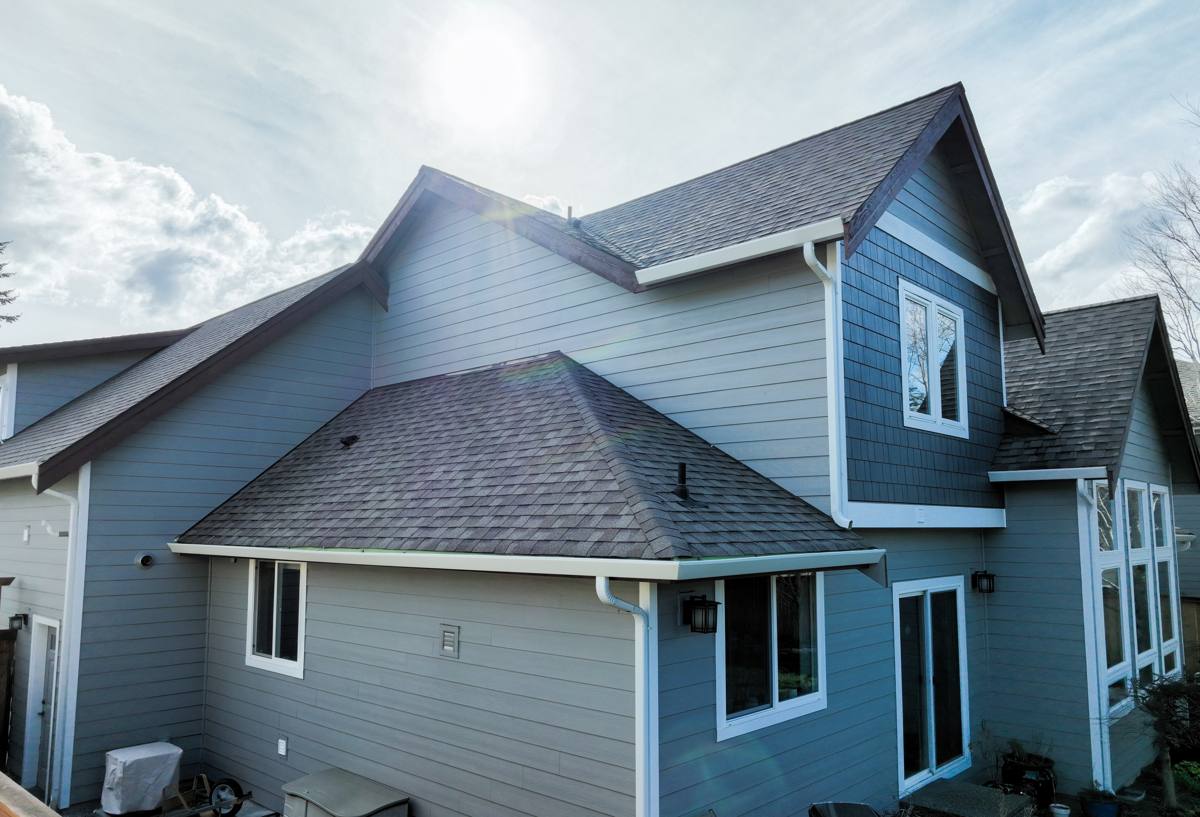
What Bellingham's Climate Does to Siding in York
Bellingham sits close enough to Bellingham Bay and the Salish Sea that salt-laden air is a real factor on exterior materials, not a talking point. Combine that with the driving, wind-pushed rain that comes through Whatcom County in fall and winter storms, and you get moisture that doesn't just fall straight down — it gets pushed sideways into laps, seams, and trim joints that a drier climate would never test.
Then there's moss. Bellingham's long, mild, wet season gives moss and algae months at a stretch to establish themselves on any siding surface that stays damp — north-facing walls, areas shaded by mature trees (common on older York lots), and anywhere water is slow to shed. Moss isn't just cosmetic. It holds moisture against the siding surface far longer than open air would, and on organic materials like wood or wood-based composites, that sustained dampness is exactly what drives rot.
The combination that matters
Individually, salt air, wind-driven rain, and moss are each manageable. Together, over years, they punish any siding material or installation detail that isn't built for sustained moisture exposure. That's the lens we install through in York: not "will this look good on day one," but "will this wall assembly still be doing its job in fifteen years."
What Correct Siding Installation Actually Involves
Siding is a system, not a single product nailed to a wall. A correct installation in this climate has several layers working together, and skipping or under-detailing any one of them is where premature failures start.
- Weather-resistive barrier: A continuous, properly lapped house wrap or building paper behind the siding, sealed at every penetration.
- Drainage plane / rainscreen gap: A small air gap between the siding and the wall so any moisture that gets past the siding face can drain and dry instead of sitting against the sheathing.
- Flashing at every transition: Windows, doors, deck ledgers, roof-to-wall intersections, and any horizontal trim need flashing that directs water outward, not into the wall.
- Correct fastening: Manufacturer-specified nail type, spacing, and placement — not just "close enough" — so the siding can expand, contract, and stay sealed over decades.
- Proper caulking and sealant use: Sealed where sealant belongs, and left open where the assembly needs to breathe or drain. Over-caulking is as much a problem as under-caulking.
- Clearance and grade details: Siding held up off decks, patios, and soil so it isn't wicking ground moisture.
Any one of these done wrong can undercut an otherwise good material. We've seen high-quality siding fail early because of a missed flashing detail, and we've seen a modest budget hold up for decades because every layer behind the surface was done right.
Why We Install James Hardie Fiber Cement — and Nothing Else
We install James Hardie fiber cement siding exclusively. We don't install vinyl, LP SmartSide, primed spruce, cedar, Cemplank, or Allura. That's not a marketing position — it's a standard we hold because of what we've seen happen to the alternatives in exactly this climate over time.
Wood and wood-based composite sidings are organic materials. Even with good paint and good detailing, they depend on staying dry to avoid rot, and Bellingham's wet season doesn't make that easy — especially on shaded or north-facing walls where moss takes hold. Vinyl is inexpensive and low-maintenance in the sense that it doesn't rot, but it can warp or become brittle with temperature swings, its seams and laps are a weak point against wind-driven rain, and it's a fuel source in a wildfire-adjacent region where non-combustible materials matter more each year.
James Hardie fiber cement is cement, sand, and cellulose fiber — it doesn't rot, it isn't a food source for moss or algae the way wood is, and it's non-combustible. Hardie's ColorPlus finish is baked on at the factory under controlled conditions, which gives a more consistent, fade-resistant color than field-applied paint typically achieves, and it comes backed by a real transferable warranty. For a coastal, wet-winter climate like Bellingham's, it's the material we're willing to put our name behind.
The HZ5 climate designation
James Hardie engineers its products by climate zone, and the Pacific Northwest falls under Hardie's HZ5 designation — formulated for regions with sustained moisture and freeze-thaw cycling. That's not a marketing detail; it's the actual product engineering, and it's part of why we don't substitute a generic or off-region product on a York home.
How Siding Fails in York — And Why It's Preventable
Most of the siding failures we get called out to inspect in this neighborhood trace back to one of a small number of causes, and almost none of them are "the house is just old."
| What we find | Why it happens here |
|---|---|
| Rot at the bottom courses near grade or decks | Siding installed with insufficient clearance, holding moisture from splashback and driving rain |
| Moss and algae staining, especially north-facing walls | Shaded, slow-to-dry surfaces during Bellingham's long wet season |
| Soft or delaminating panels around windows and trim | Missing or poorly lapped flashing letting wind-driven rain behind the siding |
| Cracked or warped vinyl panels | Temperature swings and age working on a material with limited dimensional stability |
| Paint failure and repeated repainting | Field-applied finishes breaking down faster under sustained coastal moisture than factory-cured finishes |
Every one of these is addressed by the combination of the right material and the right installation details — not by a thicker coat of paint or a caulk gun.
Our Process for a York Siding Installation
The steps are the same craft on every job, but the specifics — how much old material we're removing, what condition the sheathing is in, how the existing trim details work — get assessed on your house, not assumed from a template.
- On-site assessment: We walk the exterior, check for existing moisture damage, evaluate the current wall assembly, and identify problem areas — shaded sides, low-clearance zones, past repair patches.
- Tear-off and sheathing check: Old siding comes off and we inspect the sheathing underneath. Any soft, rotted, or compromised sheathing gets addressed before anything new goes up — covering a bad substrate is not an option.
- Weather-resistive barrier and flashing: A continuous, properly lapped barrier goes on, with flashing detailed at every window, door, and horizontal transition.
- Rainscreen gap installation: A drainage gap is built in behind the siding so incidental moisture can drain and the wall can dry rather than trap water.
- James Hardie installation: Panels, lap siding, or shingle-style Hardie products go up per manufacturer fastening specs — correct nail type, spacing, and clearance at every course.
- Trim, caulking, and final details: Trim is installed and sealed at the joints that need it, left open where the assembly needs to drain or breathe.
- Walkthrough and cleanup: We review the finished work with you and clear the site of debris and old material.
What to Check When Hiring for This Kind of Work
Siding installation is easy to sell and hard to verify from the curb — a bad installation and a good one can look identical for the first year or two. A few questions separate crews who understand this climate from crews who are just hanging panels.
- Do they install a rainscreen/drainage gap, or just nail siding directly to the barrier?
- Can they explain their flashing approach at windows, doors, and roof-to-wall intersections specifically?
- Are they using manufacturer-specified fasteners and spacing, or "whatever's close enough"?
- Will they inspect and address sheathing condition before re-siding, not just cover it?
- Do they carry proper licensing, insurance, and manufacturer training for the product they're installing?
- Can they speak to how the material performs specifically in a coastal, high-moisture climate — not just generic claims?
A crew that's worked in and around York and greater Bellingham long enough has already seen how these details play out on real houses in this exact climate — which sides of a house fail first, where moss takes hold, what happens to a wall that's missing a rainscreen after a decade of driving rain. That local pattern recognition is worth more than a lower bid from a crew unfamiliar with the area.
Cost Factors to Expect
Every home is different, so we won't quote a number without seeing the house, but the variables that move the price are consistent from job to job.
| Factor | How it affects the project |
|---|---|
| Existing siding removal | Tear-off of old wood, vinyl, or damaged material adds labor before installation starts |
| Sheathing condition | Rot or moisture damage found underneath must be repaired before new siding goes up |
| Home size and wall complexity | More corners, dormers, and trim details mean more cutting, flashing, and labor time |
| Siding profile chosen | Lap siding, shingle-style panels, and board-and-batten Hardie products vary in material and labor cost |
| Trim and accessory scope | Full trim replacement versus reusing sound existing trim changes the total |
| Access and site conditions | Mature landscaping, tight lot lines, and multi-story walls affect staging and labor time |
Maintenance After Installation
One of the practical advantages of James Hardie fiber cement in a climate like this is how little ongoing maintenance it asks for compared to wood or repeatedly repainted siding. It still benefits from basic upkeep:
- Periodic rinsing to keep moss and algae from building up, especially on shaded, north-facing walls
- Keeping gutters clear so overflow isn't running down the siding face
- Trimming back vegetation that keeps a wall section shaded and slow to dry
- Prompt caulking touch-ups if a joint ever opens up from settling or impact
That's a shorter list than what most wood or older vinyl siding demands, and it's a direct result of choosing a material engineered for exactly this kind of weather.
Get an Estimate for Your York Home
If your siding is original to the house, showing moss staining, soft spots, or repeated paint failure, or you're simply planning ahead for a replacement, we're glad to take a look. We'll walk the exterior, tell you honestly what we find, and put together a straightforward estimate — no pressure, no obligation. Use the form below to request a free estimate.