 Bellingham Siding
 Siding Replacement in Sunnyland: Matched to This Neighborhood's Conditions
Sunnyland is one of Bellingham's established residential neighborhoods, with a housing stock that spans early-to-mid-20th-century bungalows and cottages alongside newer infill homes. That mix means the siding on any given block can range from original wood clapboard patched together over decades to vinyl or engineered wood installed during a more recent remodel — and a lot of it is due, or overdue, for a real replacement rather than another round of caulk and touch-up paint. Because these homes have weathered so many Whatcom County winters already, a siding replacement here isn't just a cosmetic upgrade. It's a chance to correct decades of accumulated moisture exposure and put a system on the house that's actually built for this climate going forward.
We install James Hardie fiber cement siding exclusively, and Sunnyland is a good example of why. Older homes in this neighborhood often reveal, once the old siding comes off, exactly what happens when a wall assembly deals with years of marine air, wind-driven rain, and shaded, moss-prone conditions without the right materials or detailing behind the cladding. A replacement done right addresses that history instead of covering it back up.
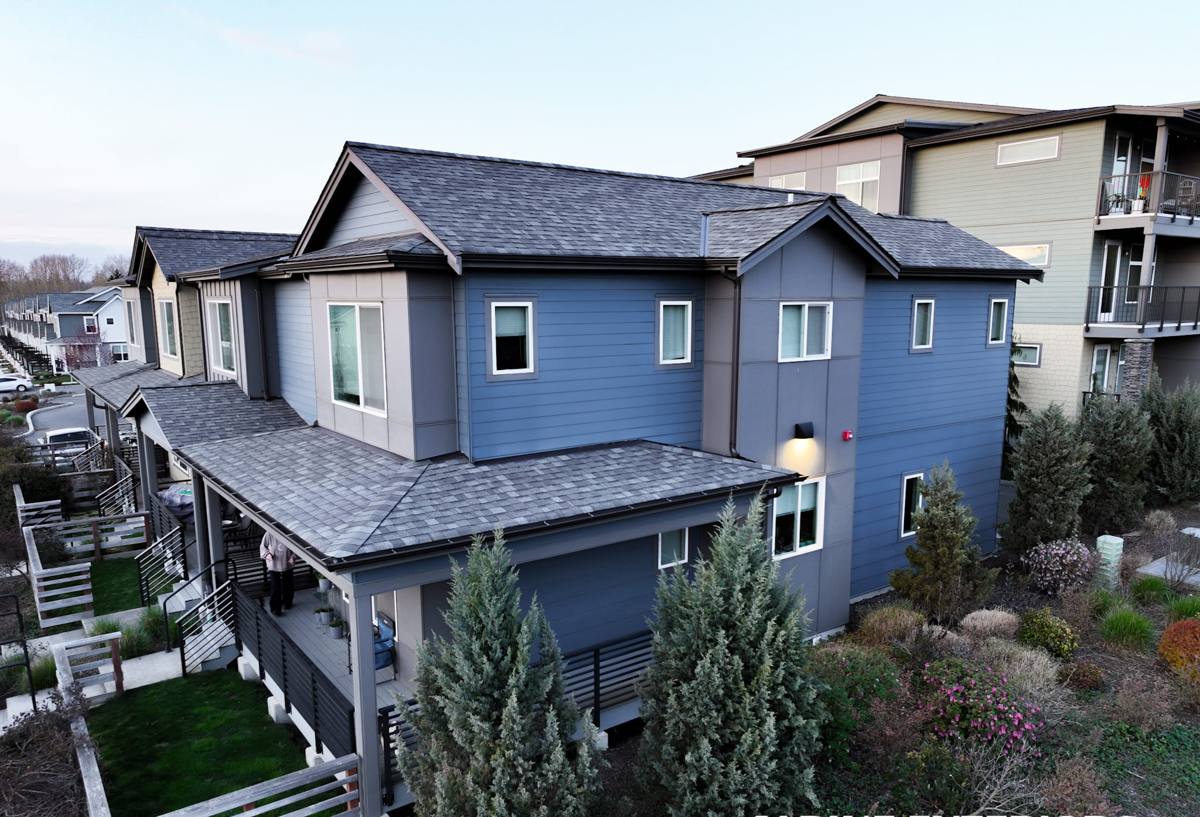
What Bellingham's Climate Does to a Sunnyland Home
Salt-Laden Marine Air
Bellingham sits on Bellingham Bay, and the marine air that moves through the wider area carries a fine load of salt that settles on exterior surfaces across the city, including inland neighborhoods like Sunnyland. Salt-laden air accelerates corrosion in fasteners, flashing, and any exposed metal trim, and it speeds up the breakdown of finishes that aren't formulated to resist it. Over years, that steady low-level exposure is part of why older siding and trim in this area often shows more wear than the same materials would in a drier, inland climate.
Driving Rain and Wind-Driven Exposure
Whatcom County doesn't just get a lot of rain — it gets a lot of wind-driven rain, which behaves differently than a straight-down shower. Wind pushes water sideways and upward into laps, seams, and trim joints that would stay dry in calmer conditions. Sunnyland's mature tree cover and varied lot orientations mean some walls on the same house catch far more of that driving rain than others, which is exactly the kind of uneven exposure that punishes siding installed without attention to flashing and drainage detail on every elevation, not just the ones that face the weather head-on.
A Long Moss and Mildew Season
Cool temperatures, persistent moisture, and shade from established trees add up to a moss and mildew season that runs a good part of the year in this part of Whatcom County. Roofs usually show it first, but siding that stays damp — behind overgrown landscaping, in shaded corners, or wherever water isn't shedding cleanly — picks up the same growth and holds onto moisture longer as a result. Porous or absorptive siding materials are especially vulnerable, since they don't just host moss on the surface, they can take on moisture underneath it.
Signs a Sunnyland Home Needs Siding Replacement, Not Just Repair
Not every problem calls for a full replacement, but on a house that's carried its original or aging siding through many wet seasons, the following signs usually mean patching won't solve the underlying issue:
- Soft, spongy, or crumbling siding when pressed, especially near the bottom courses or window sills
- Paint that won't hold — repeated peeling or bubbling within a year or two of repainting
- Visible warping, cupping, or gaps opening up between boards or panels
- Moss or dark staining that returns quickly after cleaning, particularly on shaded walls
- Interior signs like musty odors, peeling interior paint, or soft drywall near exterior walls
- Siding that's noticeably older than the roof and windows and was never upgraded during a past remodel
If more than one of these shows up on the same wall, that's usually a sign moisture has been getting behind the siding for a while, not just sitting on top of it.
What a Correct Siding Replacement Job Involves
Tear-Off and What's Underneath
A real replacement starts with removing the old siding down to the sheathing, not installing over it. That step matters most on older Sunnyland homes, because it's the only way to actually find rot, damaged framing, or compromised sheathing that's been hidden behind the old material — sometimes for years. Skipping this step to save time just seals existing damage back inside the wall.
Moisture Barrier, Flashing, and Drainage
Once the sheathing is exposed, it needs a properly lapped weather-resistant barrier, correctly integrated flashing at every window, door, and roof-to-wall transition, and drainage detailing that gives any water that does get behind the cladding a way out. Given how much wind-driven rain this area sees, these details do more to determine how the wall performs over the next few decades than the siding material itself. A high-quality product installed over poor flashing will still fail; a well-detailed wall gives whatever's on the outside a real chance to perform as designed.
Fastening, Clearances, and Finish Detailing
Correct fastener type and spacing, proper clearance from grade, roofing, and decks, and sealed or properly lapped joints round out the work that actually determines longevity. On a shaded, moisture-prone lot, corners that get skipped here tend to show up as problems within a few wet seasons rather than a few decades.
Why We Only Install James Hardie Fiber Cement in Sunnyland
We used to offer a wider range of siding products. We stopped, because what we kept finding on tear-offs — including on older homes in neighborhoods like Sunnyland — pointed consistently to the same conclusion: fiber cement holds up to this climate in a way other common options don't.
- Non-combustible core: Fiber cement doesn't feed a fire the way wood-based siding can, which matters for both safety and, often, insurance considerations.
- Factory-applied ColorPlus finish: The color is baked on under controlled conditions rather than applied on-site, and it holds up to salt air and prolonged dampness far better than field-applied paint.
- Climate-engineered HZ product lines: Hardie's HZ5 formulation is built for regions with heavy moisture exposure and freeze-thaw cycling, which fits Whatcom County's marine climate well.
- Dimensional stability: Fiber cement doesn't swell, cup, or warp through repeated wetting cycles the way engineered wood products can.
- Strong transferable warranty: Hardie backs its products with a substantial warranty structure when installation follows their published specifications.
We won't install LP SmartSide, vinyl siding, Cemplank, Allura, primed spruce, or cedar. Each has a place in the market and plenty of homeowners elsewhere are satisfied with them. But we've made a professional call to stand behind one system we trust completely rather than offer options that quietly shift long-term maintenance risk back onto a homeowner who's already dealing with an older home in a demanding climate.
Comparing Siding Materials for a Neighborhood Like Sunnyland
| Material | Behavior in Salt Air & Wind-Driven Rain | Maintenance Burden Here | Typical Longevity in This Climate |
|---|---|---|---|
| James Hardie fiber cement | Dimensionally stable; factory finish resists salt and moisture-driven fading | Low; occasional washing, no refinishing needed | 30+ years with correct installation |
| Vinyl siding | Can become brittle and fade faster under salt exposure and UV over time | Low upfront, but seams can trap moisture on shaded walls | Variable; often shorter on exposed or shaded elevations |
| LP SmartSide / engineered wood | Wood-based core sensitive to moisture at cut edges and joints | Moderate to high; edge sealing and touch-up matter more here | Depends heavily on installation quality and upkeep |
| Cedar / primed wood | Absorbs and releases moisture readily; salt air accelerates weathering | High; needs regular refinishing to hold up | Shorter without consistent, ongoing maintenance |
Our Siding Replacement Process
- On-site assessment of the existing siding, sheathing, and framing, with attention to which walls show the most wear from wind, shade, or moisture
- A clear, written scope of work and timeline before any contract is signed — no verbal-only agreements
- Full tear-off to the sheathing, with any rot or damaged framing addressed before new material goes on
- Installation of moisture barrier, flashing, and drainage detailing appropriate to Bellingham's wind and rain patterns
- James Hardie fiber cement installed to manufacturer specification, including correct fastening and clearances
- Final walkthrough so you understand exactly what was done and why
Why Hiring a Crew That Already Works in Sunnyland Matters
Sunnyland's older housing stock brings its own quirks — original framing dimensions that don't always match modern lumber, additions built at different times with different detailing, and lots with tree cover that shades some walls far more than others. A crew that already works this neighborhood has seen those patterns before and knows what to check for before the first piece of old siding comes off, rather than discovering surprises mid-project. That familiarity also extends to working within City of Bellingham permitting requirements for exterior work, which keeps a project moving instead of stalling on paperwork nobody anticipated.
A Simple Checklist Before Hiring for Siding Replacement
- Ask what siding material they install and why, and whether they back it with a written warranty
- Confirm current Washington contractor licensing and active liability insurance
- Ask how they handle tear-off on older homes — do they inspect sheathing and framing before re-siding?
- Ask specifically about flashing and drainage detailing, not just the finished look
- Get a written scope of work, including cleanup and disposal of old material, before signing anything
What Siding Replacement Typically Costs
Every home is different, but a few factors consistently drive the price of a siding replacement project in a neighborhood like Sunnyland:
| Cost Factor | Why It Matters |
|---|---|
| Extent of hidden damage | Rot or damaged sheathing found during tear-off adds repair work before new siding can go on |
| Home size and wall complexity | More corners, dormers, and trim detail mean more labor and material cutting |
| Siding profile and accessories | Trim boards, corner details, and accent elements add cost beyond flat panel coverage |
| Access and site conditions | Mature landscaping, tight lot lines, or limited access can slow staging and installation |
| Existing material removal | Tear-off and disposal of old siding is part of doing the job correctly rather than siding over it |
We give a firm, written estimate after seeing the specific home, not a phone-quoted range, because these factors vary too much house to house to guess accurately in advance.
If your Sunnyland home's siding is showing its age or you're planning ahead for a replacement, we're happy to take a look and give you an honest read on what it actually needs. Reach out below for a free, no-pressure estimate.